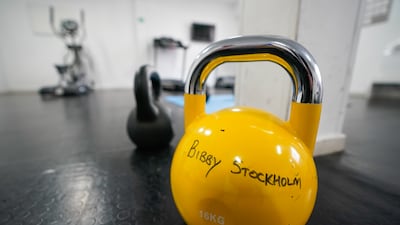
The UK's immigration minister has suggested it could be weeks before migrants are moved back on board the Bibby Stockholm barge.
Robert Jenrick told MPs asylum seekers would be moved back on to the barge in Dorset “as soon as possible”, providing safety checks showed no “cause for concern”. He added that he expected this to take place “within weeks”.
His comments came as figures showed cases of diphtheria have been reported among asylum seekers in England for the first time since January, as Channel crossings continued for a fourth day in a row.
The first asylum seekers arrived on the Bibby barge last month but were moved off again days later after tests revealed the presence of Legionella – the bacteria that can cause the potentially fatal Legionnaires’ disease.
Since then, ministers and officials have been unable to say when migrants would be back on board.
Home Secretary Suella Braverman insisted the vessel is safe amid threats of legal action from firefighters.
Conservative MP Richard Drax, whose South Dorset constituency is home to the barge, asked in the Commons on Tuesday “when and if” migrants would return.
Mr Jenrick said that it was “very unfortunate” that migrants had to be moved off the barge over the summer.
“Tests have subsequently been carried out and the definitive answers to those tests will be received very shortly,” he said.
“Assuming that they show no signs of Legionella or indeed any other bacteria or cause of concern, then we will move people back on to the boat as soon as possible. I think we can expect that within weeks.”
It comes as UK Health Security Agency data showed three cases of diphtheria among asylum seekers were reported in England in August, taking the total number of cases for 2022 and 2023 to 77.
The total previously stood at 74 after one case was reported in January. No further cases were recorded between February and July, the figures show.
When asked by the PA news agency, the Home Office refused to confirm if any of the latest cases were found among people on board the Bibby Stockholm or those staying at former RAF airbase Wethersfield Airfield in Essex, which opened to migrants for the first time in July.
Fifty-five diphtheria cases have been recorded in the south-east as well as seven in London.
“The health and welfare of asylum seekers in our care is of the utmost importance. There has been a very small number of cases of diphtheria and all individuals have been treated,” a department spokeswoman said.
“The Home Office liaises with the UKHSA regarding suspected diphtheria and infection cases. This can include safely moving individuals to more appropriate accommodation to support their safe isolation.”
Asylum seekers with symptoms of the highly contagious disease were put into isolation last year amid an increase in the number of infections among people arriving in the UK.
But ministers and health officials insisted the risk of the public getting diphtheria is low and infections are rare.
Since the start of September, 1,271 migrants have been detected crossing the Channel, according to Home Office figures.
Pictures showed groups of men being brought ashore on Tuesday amid hot, dry and calm conditions at sea before boarding a coach to be driven away from a Border Force compound in Dover, Kent.
On Monday, 286 people made the journey in five boats, taking the provisional total for the year so far to 21,372.
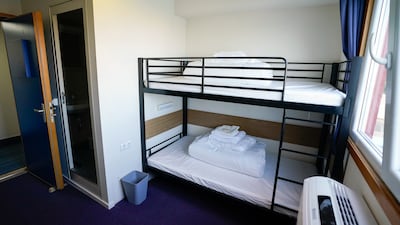
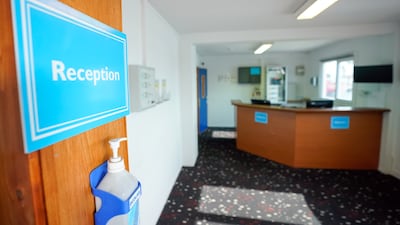
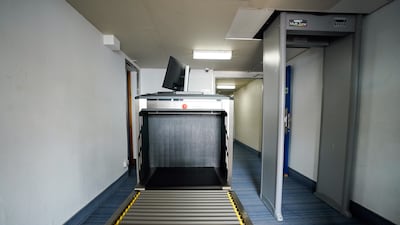
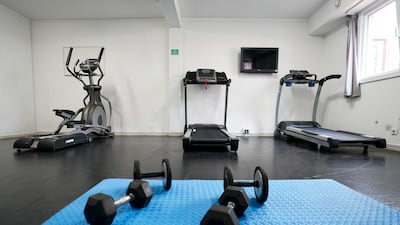
Inside the Bibby Stockholm barge – in pictures
Tomb%20Raider%20I%E2%80%93III%20Remastered
%3Cp%3EDeveloper%3A%20Aspyr%0D%3Cbr%3EPublisher%3A%20Aspyr%0D%3Cbr%3EConsole%3A%20Nintendo%20Switch%2C%20PlayStation%204%26amp%3B5%2C%20PC%20and%20Xbox%20series%20X%2FS%0D%3Cbr%3ERating%3A%203%2F5%3C%2Fp%3E%0A
Mercer, the investment consulting arm of US services company Marsh & McLennan, expects its wealth division to at least double its assets under management (AUM) in the Middle East as wealth in the region continues to grow despite economic headwinds, a company official said.
Mercer Wealth, which globally has $160 billion in AUM, plans to boost its AUM in the region to $2-$3bn in the next 2-3 years from the present $1bn, said Yasir AbuShaban, a Dubai-based principal with Mercer Wealth.
“Within the next two to three years, we are looking at reaching $2 to $3 billion as a conservative estimate and we do see an opportunity to do so,” said Mr AbuShaban.
Mercer does not directly make investments, but allocates clients’ money they have discretion to, to professional asset managers. They also provide advice to clients.
“We have buying power. We can negotiate on their (client’s) behalf with asset managers to provide them lower fees than they otherwise would have to get on their own,” he added.
Mercer Wealth’s clients include sovereign wealth funds, family offices, and insurance companies among others.
From its office in Dubai, Mercer also looks after Africa, India and Turkey, where they also see opportunity for growth.
Wealth creation in Middle East and Africa (MEA) grew 8.5 per cent to $8.1 trillion last year from $7.5tn in 2015, higher than last year’s global average of 6 per cent and the second-highest growth in a region after Asia-Pacific which grew 9.9 per cent, according to consultancy Boston Consulting Group (BCG). In the region, where wealth grew just 1.9 per cent in 2015 compared with 2014, a pickup in oil prices has helped in wealth generation.
BCG is forecasting MEA wealth will rise to $12tn by 2021, growing at an annual average of 8 per cent.
Drivers of wealth generation in the region will be split evenly between new wealth creation and growth of performance of existing assets, according to BCG.
Another general trend in the region is clients’ looking for a comprehensive approach to investing, according to Mr AbuShaban.
“Institutional investors or some of the families are seeing a slowdown in the available capital they have to invest and in that sense they are looking at optimizing the way they manage their portfolios and making sure they are not investing haphazardly and different parts of their investment are working together,” said Mr AbuShaban.
Some clients also have a higher appetite for risk, given the low interest-rate environment that does not provide enough yield for some institutional investors. These clients are keen to invest in illiquid assets, such as private equity and infrastructure.
“What we have seen is a desire for higher returns in what has been a low-return environment specifically in various fixed income or bonds,” he said.
“In this environment, we have seen a de facto increase in the risk that clients are taking in things like illiquid investments, private equity investments, infrastructure and private debt, those kind of investments were higher illiquidity results in incrementally higher returns.”
The Abu Dhabi Investment Authority, one of the largest sovereign wealth funds, said in its 2016 report that has gradually increased its exposure in direct private equity and private credit transactions, mainly in Asian markets and especially in China and India. The authority’s private equity department focused on structured equities owing to “their defensive characteristics.”
Most sought after workplace benefits in the UAE
- Flexible work arrangements
- Pension support
- Mental well-being assistance
- Insurance coverage for optical, dental, alternative medicine, cancer screening
- Financial well-being incentives
The alternatives
• Founded in 2014, Telr is a payment aggregator and gateway with an office in Silicon Oasis. It’s e-commerce entry plan costs Dh349 monthly (plus VAT). QR codes direct customers to an online payment page and merchants can generate payments through messaging apps.
• Business Bay’s Pallapay claims 40,000-plus active merchants who can invoice customers and receive payment by card. Fees range from 1.99 per cent plus Dh1 per transaction depending on payment method and location, such as online or via UAE mobile.
• Tap started in May 2013 in Kuwait, allowing Middle East businesses to bill, accept, receive and make payments online “easier, faster and smoother” via goSell and goCollect. It supports more than 10,000 merchants. Monthly fees range from US$65-100, plus card charges of 2.75-3.75 per cent and Dh1.2 per sale.
• 2checkout’s “all-in-one payment gateway and merchant account” accepts payments in 200-plus markets for 2.4-3.9 per cent, plus a Dh1.2-Dh1.8 currency conversion charge. The US provider processes online shop and mobile transactions and has 17,000-plus active digital commerce users.
• PayPal is probably the best-known online goods payment method - usually used for eBay purchases - but can be used to receive funds, providing everyone’s signed up. Costs from 2.9 per cent plus Dh1.2 per transaction.
More coverage from the Future Forum
57%20Seconds
%3Cp%3E%3Cstrong%3EDirector%3A%3C%2Fstrong%3E%20Rusty%20Cundieff%0D%3Cbr%3E%3Cstrong%3EStars%3A%20%3C%2Fstrong%3EJosh%20Hutcherson%2C%20Morgan%20Freeman%2C%20Greg%20Germann%2C%20Lovie%20Simone%0D%3Cbr%3E%3Cstrong%3ERating%3A%20%3C%2Fstrong%3E2%2F5%0D%3Cbr%3E%0D%3Cbr%3E%3C%2Fp%3E%0A
Fight card
1. Bantamweight: Victor Nunes (BRA) v Siyovush Gulmamadov (TJK)
2. Featherweight: Hussein Salim (IRQ) v Shakhriyor Juraev (UZB)
3. Catchweight 80kg: Rashed Dawood (UAE) v Khamza Yamadaev (RUS)
4. Lightweight: Ho Taek-oh (KOR) v Ronald Girones (CUB)
5. Lightweight: Arthur Zaynukov (RUS) v Damien Lapilus (FRA)
6. Bantamweight: Vinicius de Oliveira (BRA) v Furkatbek Yokubov (RUS)
7. Featherweight: Movlid Khaybulaev (RUS) v Zaka Fatullazade (AZE)
8. Flyweight: Shannon Ross (TUR) v Donovon Freelow (USA)
9. Lightweight: Mohammad Yahya (UAE) v Dan Collins (GBR)
10. Catchweight 73kg: Islam Mamedov (RUS) v Martun Mezhulmyan (ARM)
11. Bantamweight World title: Jaures Dea (CAM) v Xavier Alaoui (MAR)
12. Flyweight World title: Manon Fiorot (FRA) v Gabriela Campo (ARG)