


People-trafficking gangs have been using mobile phone trackers to find refugee children staying in UK hotels and lure them away to work for them, The National has been told.
At least 400 refugee children have gone missing in recent months and one lawyer has said traffickers have even abducted children off the street at knifepoint.
The authorities in the UK are facing heavy criticism that they are failing to protect child asylum seekers, with more than 200 children – some as young as 11 – having vanished from one hotel in Brighton alone.
Officials in Manchester reported finding children in the area acting as spotters for counterfeiting and drug gangs.
Lawyer Danny Bayraktarova, who represents children who have been placed in hotels, said gangs often target their victims after learning from their home countries that they have arrived in the UK.
Once they are in the country they are placed in “terrible” conditions in which a lack of care leaves them vulnerable to traffickers, who use "sophisticated technology" such as mobile phone trackers as well as social media to find them, Ms Bayraktarova said.
“In my experience traffickers actually know where those children are located so they can go to the hotels and target those children,” she told The National.
“There would be instances where the people trafficker would know when the child would arrive. Sometimes they would track them through their mobile phones.
"It’s happened with a case of mine that traffickers tried to locate a child and intimidate him."
She added: "I have had situations in cases where a client was located on the street and forced into a vehicle, sometimes at knifepoint.”
Ms Bayraktarova, from Wilson Solicitors, explained there are various ways that traffickers can exert control over children to coerce them to work for them.
“Their parents might owe a debt to a loan shark back home. ‘I need to go and work for a gang because my family at home are in danger’ is a factor that then drives those children into the hands of traffickers," she said.
“Threats can be relentless and the traffickers can visit the family at home."
Ms Bayraktarova was speaking to The National after giving evidence to the Home Affairs Select Committee, which is investigating human trafficking.
MPs also heard from Laura Duran, from children’s rights campaigners ECPAT UK, who said that trafficked children “may be recruited through social media” to work for gangs.
-
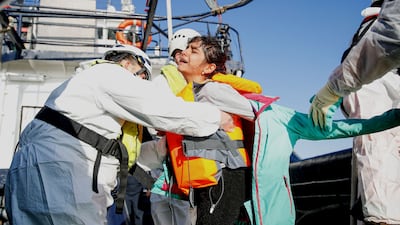
Migrants are rescued by crew members of the 'Abeille Languedoc' ship after their boat's generator broke down in French waters as they were trying to cross the Channel illegally to Britain. All photos: AFP -
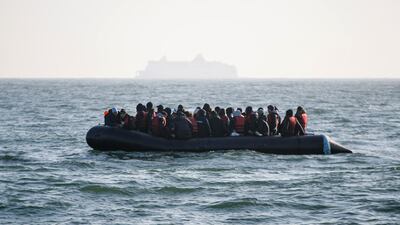
Migrants wait for help in the Channel. -
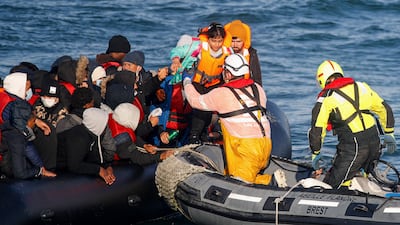
A child is rescued by crew members of the 'Abeille Languedoc'. -
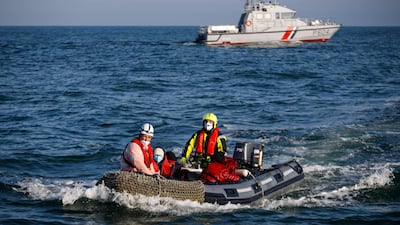
The 'Abeille Languedoc' is an ocean-going tug specialising in the rescue of vessels in distress. -
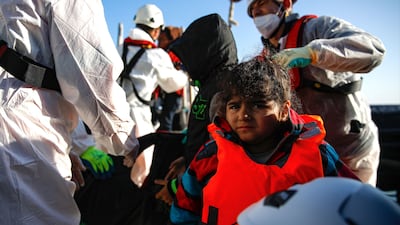
Migrant children on the rescue boat. -
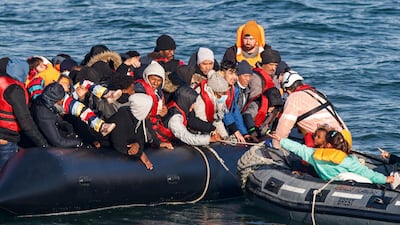
The 'Abeille Languedoc' has been moored in Cherbourg for 26 years, monitoring the Channel between the Cotentin and the Pas-de-Calais. -
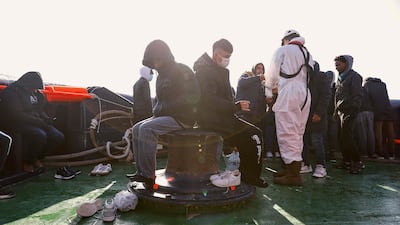
Migrants sit on board the 'Abeille Languedoc' after being rescued. -
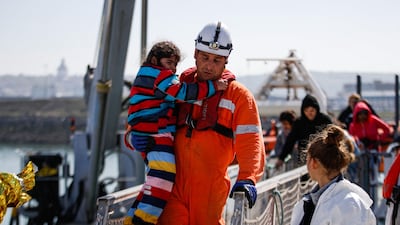
A rescuer carries a child as they disembark from the 'Abeille Languedoc'.


The Home Office has been using six hotels in the UK to house unaccompanied children who have been rescued from small boats in the English Channel.
A lack of proper supervision and care for the migrant children in these hotels means they are vulnerable to being targeted, said Ms Bayraktarova.
There are often just one or two social workers available at the hotels, and a lack of interpreting services means children struggle to get help.
Assessments often fail to identify when children are vulnerable to trafficking, she said.
“With the children in hotels there’s just not enough appropriate safeguarding for them.
“They have no educational provision, so they don’t attend college or school, so they don’t have much to do. There’s no one to organise activities so they’re left to their own devices.”
A Home Office representative said: “Due to the rise in dangerous small boat crossings, the government has had no alternative but to urgently use hotels to give unaccompanied asylum-seeking children arriving in the UK a roof over their heads.
“The wellbeing of children and minors in our care is an absolute priority and there is 24/7 security at every hotel used to accommodate them.
"When a child goes missing, a multi-agency missing persons protocol is mobilised, alongside the police and local authorities, to establish their whereabouts and ensure they are safe.”

