


UK Prime Minister Rishi Sunak on Thursday trumpeted a new accord with Japan to deepen Britain's economic and defence ties with the host of this year's G7 summit.
Amid growing concerns about China, Mr Sunak has promised to send a naval battle fleet to the Indo-Pacific region in 2025 and to double UK troop numbers in coming joint exercises.
Before attending the G7 summit in Hiroshima, he will also agree to a partnership with Japan on semiconductors to reduce reliance on Beijing for supply of microchips.
Mr Sunak is hosting a business reception for companies such as Nissan and Toshiba with Japanese investors committing almost £18 billion ($22.4 billion) of investment, the UK government said.
Toshiba is expected to expand its operations at a laboratory in Cambridge, England, while Sumitomo Electric Industries is planning to make high-voltage electric cable in the Scottish Highlands.
Mr Sunak touted the investments as a "massive vote of confidence in the UK’s dynamic economy, from some of Japan’s top firms".
The so-called Hiroshima Accord was negotiated before a meeting between Mr Sunak and Japanese Prime Minister Fumio Kishida ahead of the meeting of world leaders.
The business reception was taking place in the Roppongi Hills of Tokyo.
Mr Sunak will share talks with world leaders including Joe Biden during the summit, which is expected to focus on economic security and support for Ukraine.
He will not hold personal bilateral talks with Mr Biden, but will with Mr Kishida, French President Emmanuel Macron and Indian Prime Minister Narendra Modi.
Mr Sunak will be joined by his wife Akshata Murty, who will join the G7’s “partners’ programme” on her first official foreign visit since they entered No 10 Downing Street.
Rishi Sunak through the years - in pictures
-
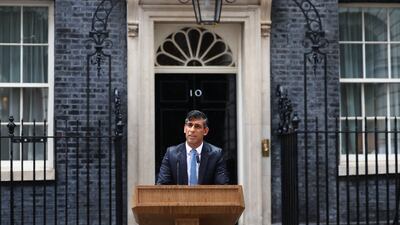
British Prime Minister Rishi Sunak announces July 4 as the date for the 2024 general election at No 10 Downing Street. Here, The National looks back at his political career. Getty Images -
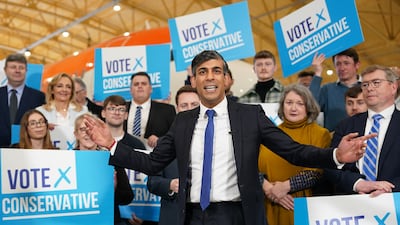
Mr Sunak during local election campaigning in Teesside in May 2024. Getty Images -
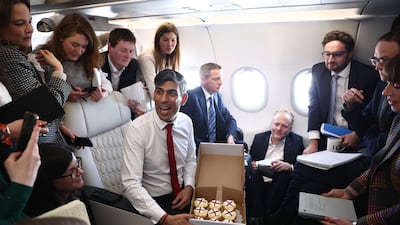
Mr Sunak presents cupcakes to journalists on board a plane on the way to Warsaw in April 2024. Getty Images -
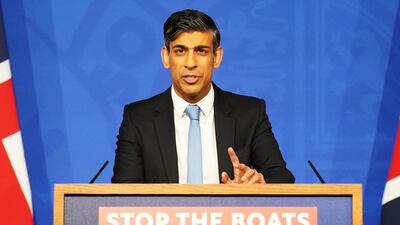
Mr Sunak during a press conference in Downing Street in January after the Safety of Rwanda Bill passed its third reading in the House of Commons. Getty Images -
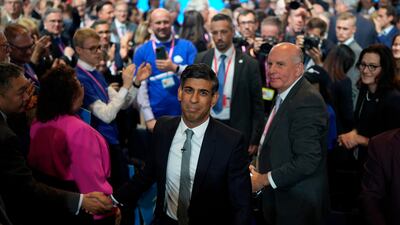
Being applauded after his speech at the Conservative Party conference in October 2023. Getty Images -
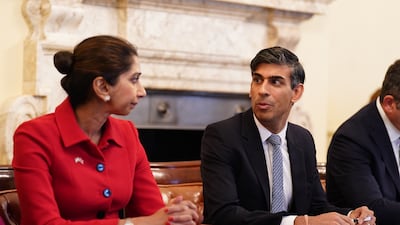
Looking pensive alongside then-home secretary Suella Braverman at No 10 in October 2023. She didn't last much longer in the cabinet. Getty Images -
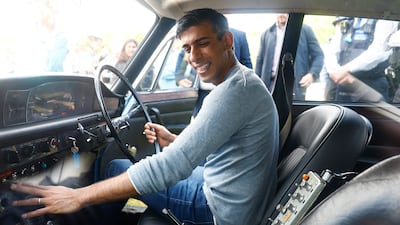
Mr Sunak sits in an old Special Branch police vehicle which was used to transport former prime minister Margaret Thatcher, in July 2023. Getty Images -

On board Border Agency cutter HMC Seeker during a visit to Dover in June 2023. Getty Images -
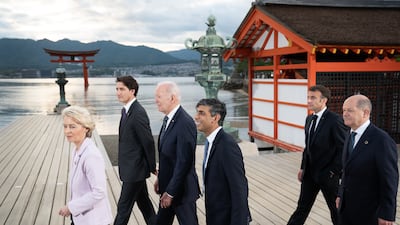
Mr Sunak alongside European Commission President Ursula von der Leyen, Canada's Prime Minister Justin Trudeau, US President Joe Biden, French President Emmanuel Macron and German Chancellor Olaf Scholz during the G7 Summit in May 2023. Getty Images -
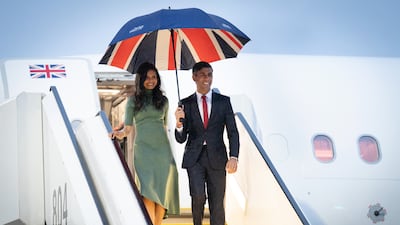
Mr Sunak and his wife Akshata Murty arriving in Japan ahead of the G7 Summit in May 2023. Getty Images -
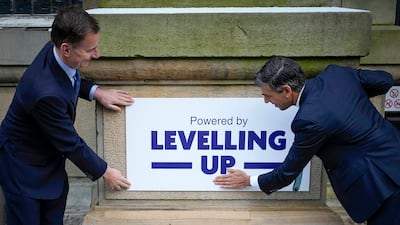
Mr Sunak and Chancellor Jeremy Hunt sending a message at Accrington Market Hall in January 2023. Getty Images -
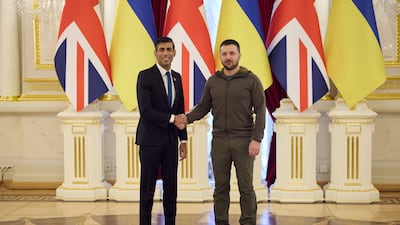
Mr Sunak and Ukrainian President Volodymyr Zelenskyy meet in Ukraine's capital Kyiv in November 2022. Getty Images -

King Charles III welcomes Mr Sunak during an audience at Buckingham Palace, where he invited the newly elected leader of the Conservative Party to become Prime Minister and form a new government in October 2022. Getty Images -
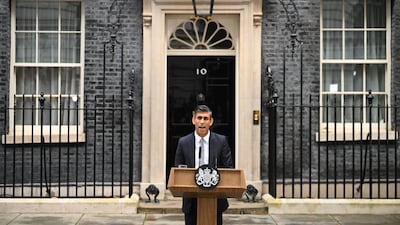
Mr Sunak makes a statement outside No 10 in October 2022 after taking office. Getty Images -
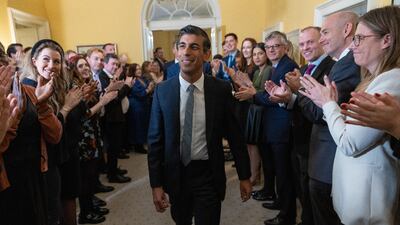
Mr Sunak arrives inside Number 10 in October 2022. Photo: Simon Walker/ No 10 Downing Street -
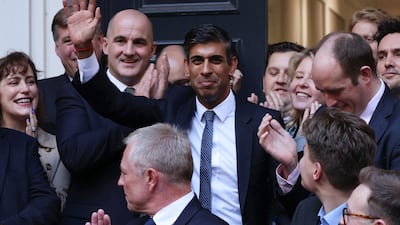
Greeted by colleagues at Conservative Party HQ after having been announced winner of the leadership contest in October 2022. Getty Images -
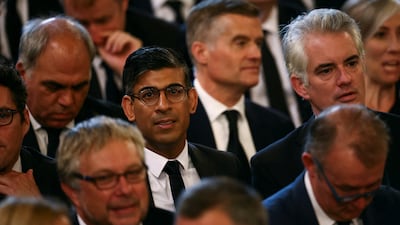
Mr Sunak at Westminster Hall in London following the death of Queen Elizabeth II in September 2022. PA -

Mr Sunak visits his family's old business, Bassett Pharmacy, on the campaign trail in August 2022. Getty Images -
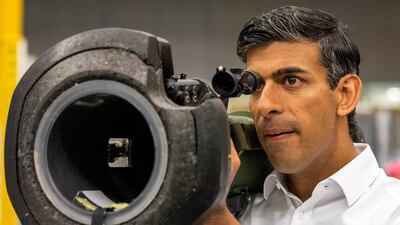
Mr Sunak looks at an NLAW anti-tank launcher during a visit to the Thales Defence System plant in Belfast in August 2022. Getty Images -
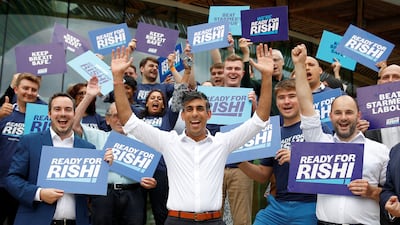
At a hustings event in Exeter in August 2022. Getty Images -
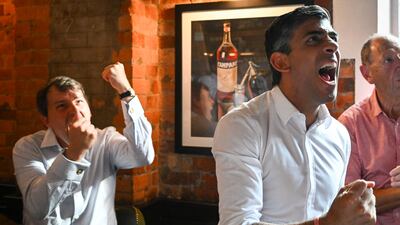
Celebrates England's first goal as he watches the Women's Euro 2022 final in Salisbury in July 2022. Getty Images -
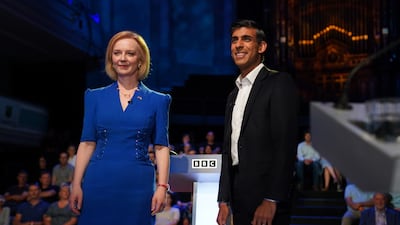
Mr Sunak and Ms Truss take part in the BBC Leadership debate at Victoria Hall, Hanley, in July 2022. Getty Images -
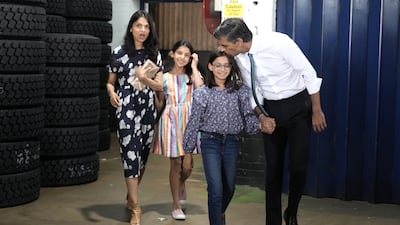
With daughters Krisna and Anoushka and wife Akshata Murthy in July 2022. Getty Images -
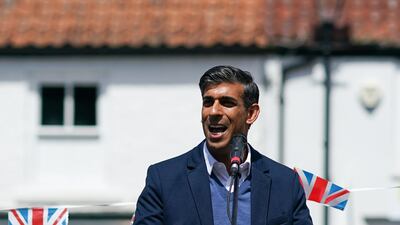
Opening the Great Ayton Village Fete during the queen’s Platinum Jubilee celebrations in June 2022. Getty Images -
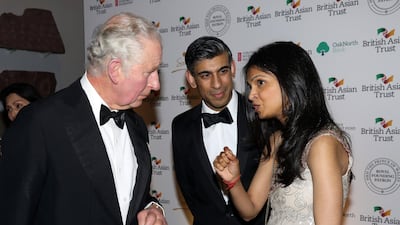
Mr Sunak and Ms Murthy speak to then-Prince Charles at a British Asian Trust event in February 2022. Getty Images -
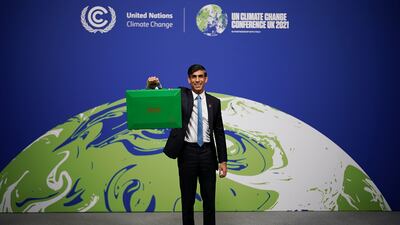
Mr Sunak arrives at COP26 in Glasgow in November 2021 when he was chancellor. Getty Images -
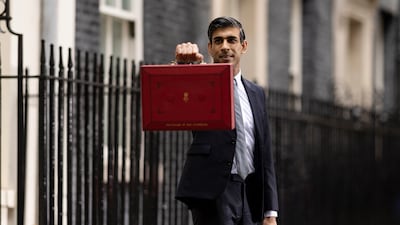
Holding the budget box as he departs 11 Downing Street to deliver his Autumn Budget in October 2021. Getty Images -
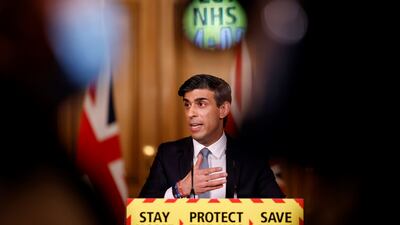
At a press conference on the 2021 Budget in London in March 2021. Getty Images -
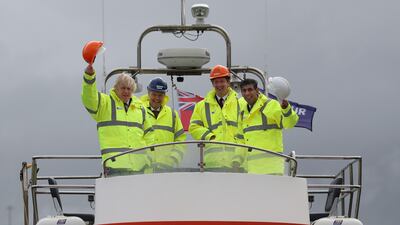
With former prime minister Boris Johnson during a visit to PD Ports on the River Tees in March 2021. Getty Images -
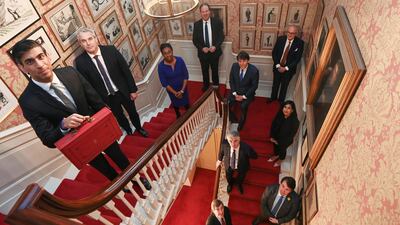
Mr Sunak poses with the budget box at 11 Downing Street in March 2021. Getty Images -
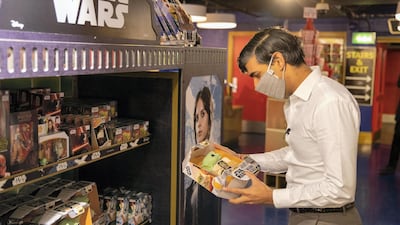
Meeting staff back at work after being furloughed at Hamleys toy shop in London, December 2020. Photo: HM Treasury -
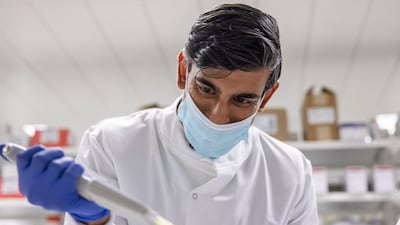
Mr Sunak visits the Imperial Clinic Research Facility at Hammersmith Hospital, London, in November 2020. Getty Images -
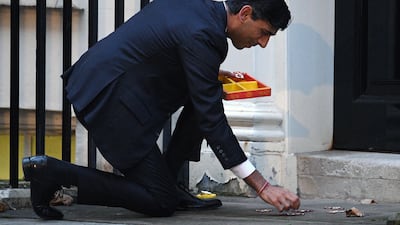
Lighting a candle for Diwali on Downing Street, November 2020. Getty Images -
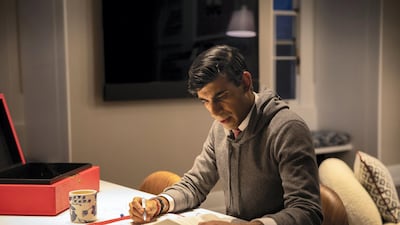
Working on a speech in his flat above 11 Downing Street in November 2020. Photo: HM Treasury -
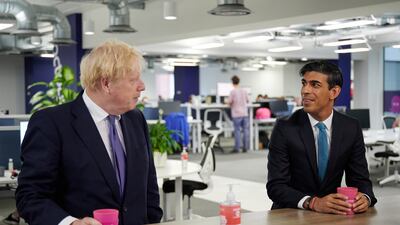
Mr Johnson and Mr Sunak visit the headquarters of Octopus Energy in London in October 2020. Getty Images -
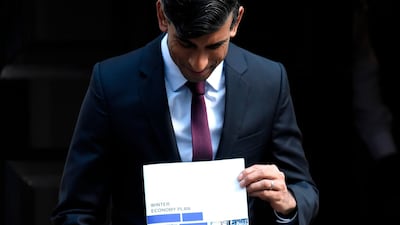
With his 'Winter Economy Plan' outside 11 Downing Street in September 2020. AFP -
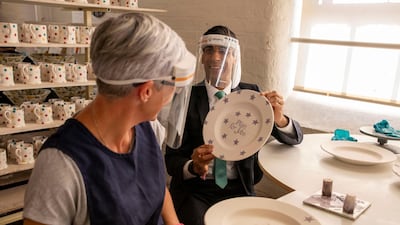
Decorating a plate at Emma Bridgewater pottery in Stoke pottery in September 2020. Getty Images -
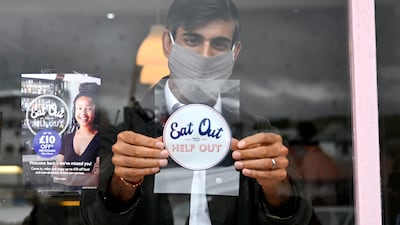
Promoting 'eat out to help out' on the Isle of Bute, Scotland, in August 2020. Getty Images -
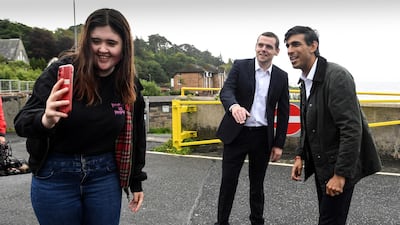
A member of the public takes a selfie with Rishi Sunak during a visit to Scotland in August 2020. AFP -

Visiting a Wagamama restaurant in central London in July 2020. Photo: HM Treasury -
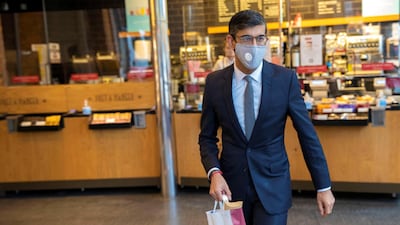
Rishi Sunak visits a Pret A Manger in Westminster in July 2020. HM Treasury -
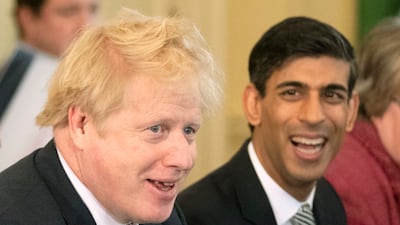
With Mr Johnson at his first Cabinet meeting after a reshuffle at 10 Downing Street in February 2020. Getty Images -
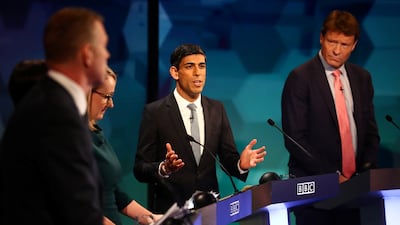
Mr Sunak speaks during a general election debate in Cardiff in November 2019. Getty Images


Under the agreement with Japan, Mr Sunak is committing to sending the Navy’s carrier Strike Group to the Indo-Pacific.
Including an aircraft carrier and fighter jets, the fleet will work with the Japanese military and other allies to defend peace and stability in the region.
A fourth UK-Japan “vigilant isles” military exercise taking place in Japan this year is being billed as the biggest yet and will include about 170 UK service personnel.
The UK and Japan are also expected to commit to consulting each other on key regional and global security issues and to consider measures in response.
The aim of the semiconductors partnership is to make use of British expertise and Japanese materials to bolster supplies.
A new cyber partnership will be announced, as will plans to accelerate the use of clean energy.
On the plane to Tokyo, Mr Sunak told reporters one of his priorities for the summit was ensuring “we as G7 allies, are aligned in our approach to protecting ourselves against the risks and challenges that China poses”.
Rishi Sunak greets world leaders ahead of King Charles III coronation - video
“It is a privilege to be visiting Tokyo and Hiroshima at this historic moment in the United Kingdom’s relationship with Japan," he said in a statement.
“Prime Minister Kishida and I are closely aligned on the importance of protecting peace and security in the Indo-Pacific and defending our values, including free and fair trade.
“The Hiroshima Accord will see us step up co-operation between our armed forces, grow our economies together and develop our world-leading science and technology expertise.
“It marks an exciting next phase in the UK and Japan’s flourishing partnership.”
The trip takes place as Mr Sunak struggles with Tory infighting heightened by the party’s large-scale losses in local elections.
At the G7 summit starting on Friday, Mr Sunak will discuss shoring up support for Ukraine and holding Russia to account for its actions among his priorities.
He will reflect on the “sombre reminder of the human cost of all-out war” while visiting Hiroshima, where he will plant a tree to remember victims of the atomic bomb in 1945.
“The visit is a crucial opportunity to build our relationship with Japan, already one of the UK’s strongest and most important partners," Mr Sunak’s official spokesman said.
“The summit is an opportunity for the G7 to demonstrate unified resolve and action in the face of threats from autocratic states – threats to global prosperity, security and sovereignty.”

