


Liz Truss will use a trip to Taiwan to call on her successor as British Prime Minister, Rishi Sunak, to call China a “threat” to UK security.
In a speech in the capital Taipei on Wednesday, Ms Truss is expected to challenge Mr Sunak to deliver on the language he used during last summer’s Conservative Party leadership contest.
During his unsuccessful campaign to become the next Conservative leader, he said China was “the biggest-long term threat to Britain”, while promising to close all 30 of Beijing’s Confucius Institutes in the UK.
The institutes promote Chinese culture on campus in higher education and in some British schools.
“Last summer the now British Prime Minister described China as ‘the biggest long-term threat to Britain’ and said the Confucius Institutes should be closed," she says in a pre-released extract of her speech to the Prospect Foundation.
“He was right and we need to see those policies enacted urgently.
“The UK’s integrated review needs to be amended to state clearly that China is a threat. Confucius Institutes should be closed down immediately.
"Instead the service could be provided by organisations with the support of Hong Kong nationals and Taiwanese nationals who have come to the UK on a free basis.”
During her brief time as prime minister, Ms Truss was widely expected to make the UK government more hawkish when it came to dealing with Beijing.
Liz Truss through the years - in pictures
-
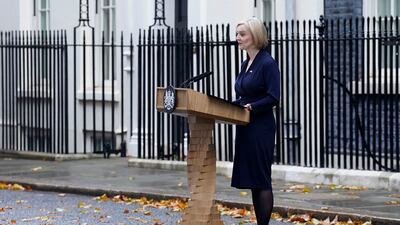
British Prime Minister Liz Truss announces her resignation, outside No 10 Downing Street, London. AP -
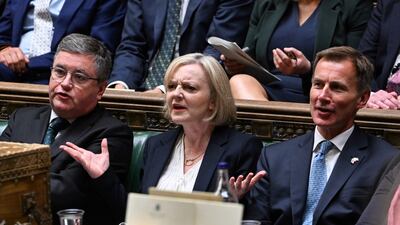
Liz Truss during Prime Minister's Questions in the House of Commons in London, addressing Parliament for the first time since abandoning her disastrous tax-slashing economic policies. AFP -
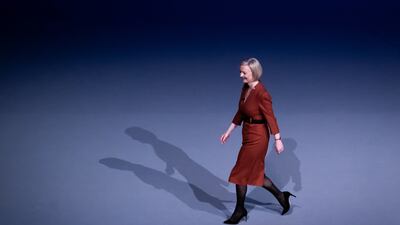
Liz Truss walks off stage after delivering her keynote speech at the Conservative Party annual conference at the International Convention Centre in Birmingham in October. PA -
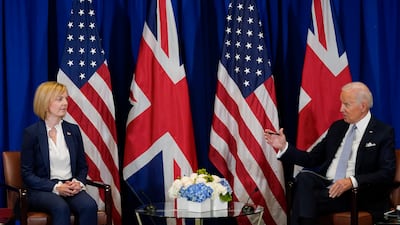
Liz Truss meets US President Joe Biden during the 77th session of the United Nations General Assembly in New York in September. AP -
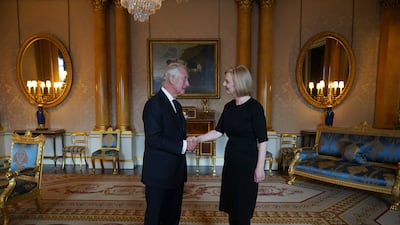
King Charles during his first audience in September with Ms Truss at Buckingham Palace, London, following the death of Queen Elizabeth. Getty Images -

Labour leader Keir Starmer and Liz Truss pay their respects after the service and procession for the coffin of Queen Elizabeth II into Westminster Hall, London, in September. PA -
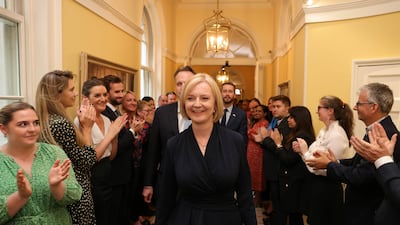
Ms Truss is welcomed by staff in Downing Street as she enters the famous prime ministerial offices for the first time in September. Photo: Andrew Parsons / No 10 Downing Street -
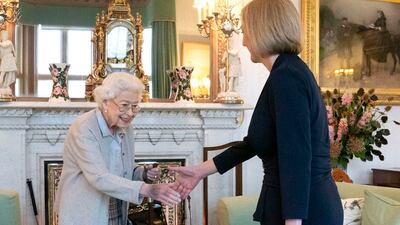
Queen Elizabeth II greets the newly elected leader of the Conservative Party, Ms Truss, at Balmoral Castle in Scotland in September. The queen invited Ms Truss to become prime minister and form a new government. Getty Images -
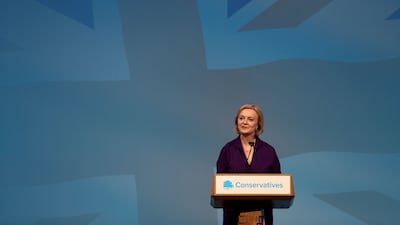
New Conservative Party leader and Britain's Prime Minister-elect Liz Truss delivers a speech after being announced the winner of the Tory Party leadership contest in central London on September 5, 2022. Ms Truss is the UK's third female prime minister following Theresa May and Margaret Thatcher. AFP -
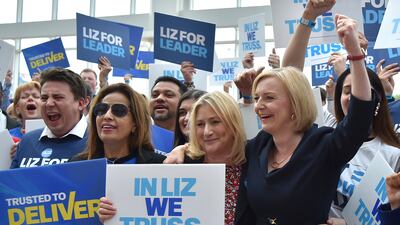
Liz Truss meets supporters as she arrives to attend a Conservative leadership election hustings at the NEC, Birmingham, in August. AP -
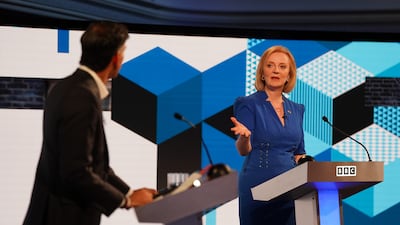
Rishi Sunak and Liz Truss take part in the BBC Leadership debate at Victoria Hall in Hanley in July. Getty Images -

Liz Truss playing pool during a visit to the Onside Future Youth Zone in London in August 2022. PA -
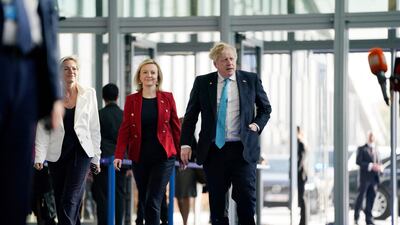
Boris Johnson and Ms Truss arriving for an extraordinary summit at Nato headquarters in Brussels, in March 2022. AFP -
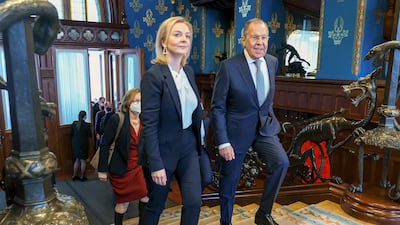
Russian Foreign Minister Sergey Lavrov and Ms Truss arrive for talks in Moscow in February 2022. AP -
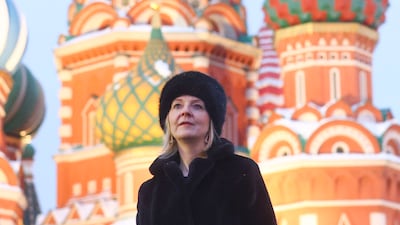
Ms Truss in Red Square during a visit to Moscow in February 2022. Photo: No. 10, Downing Street -
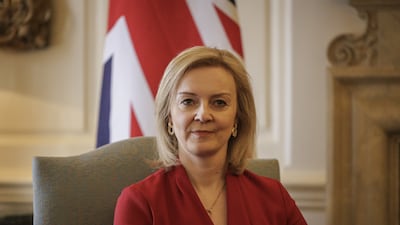
Ms Truss meeting European Commission vice-president Maros Sefcovic (not seen) for talks in central London on the Northern Ireland Protocol on 11th February 2022. PA -
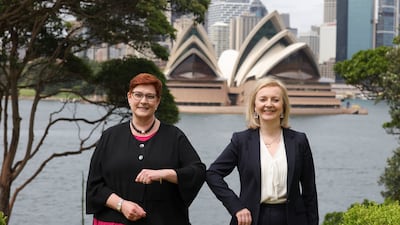
Ms Truss with Marise Payne, the Australian minister of foreign affairs, at Government House in Sydney, Australia, in January 2022. Photo: No. 10, Downing Street -
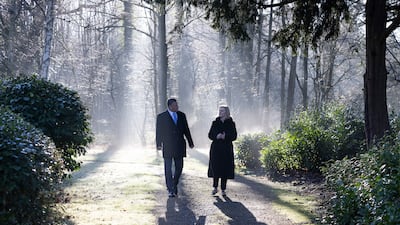
Liz Truss hosts Vice President of the European Commission Maros Sefcovic at Chevening House in January 2022 to discuss the Northern Ireland protocol. Photo: No. 10, Downing Street -
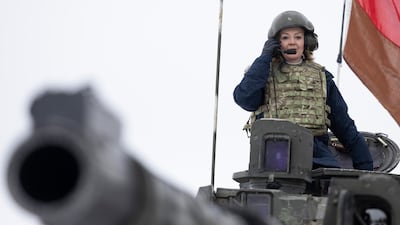
Ms Truss visits British troops in Estonia as they operate alongside other Nato troops in Tapa in November 2021. Photo: No. 10, Downing Street -

Liz Truss walks through the old town in Tallinn, Estonia, in November 2021. Photo: No. 10, Downing Street -
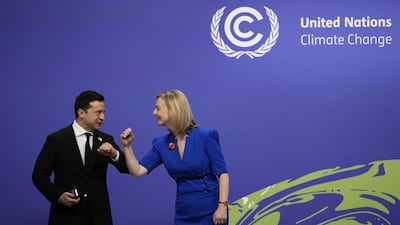
Ms Truss greeting Ukraine's President Volodymyr Zelenskyy at the Cop26 summit in Glasgow, in November 2021. PA -

Ms Truss at the Red Fort in New Delhi during a trip to India in October 2021. Photo: No. 10, Downing Street -
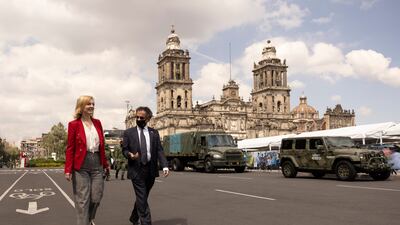
The British foreign secretary on the Plaza de la Constitucion in Mexico City, during a trip to Mexico in September 2021. Photo: No. 10, Downing Street -
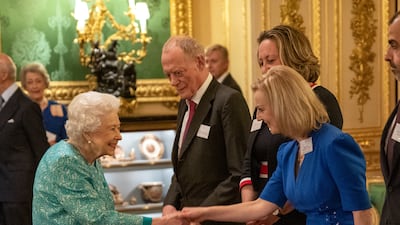
Queen Elizabeth II greeting Ms Truss at a reception for international business and investment leaders at Windsor Castle in October 2021. PA -
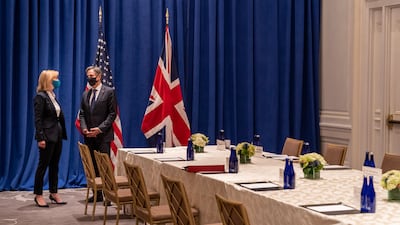
Liz Truss with Antony Blinken, the US secretary of state, in New York, in September 2021. Photo: No. 10, Downing Street -
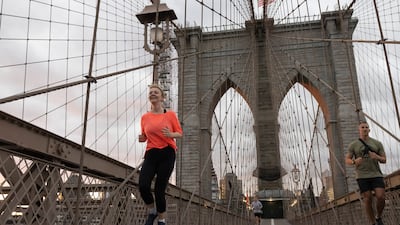
Ms Truss on a morning jog over Brooklyn Bridge in New York in September 2021. Photo: No. 10, Downing Street -
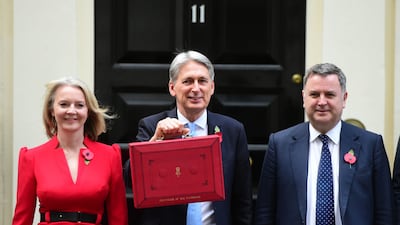
Former Chancellor Philip Hammond, centre, holding his red ministerial box outside 11, Downing Street, flanked by Treasury colleagues Ms Truss and Mel Stride in October 2018. PA -
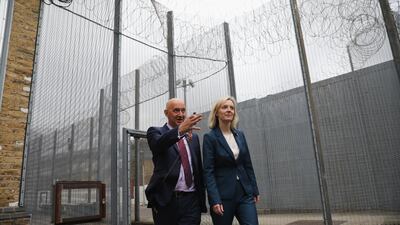
Ms Truss, then secretary of state for justice, being escorted around HMP Brixton by prison governor David Bamford in November 2016. PA -
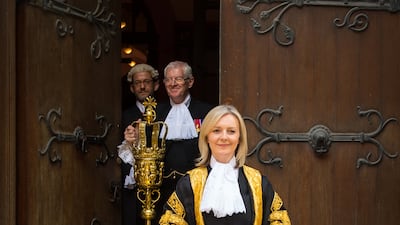
Ms Truss as she became the first woman ever to hold the role of Lord Chancellor, arriving at the Royal Courts of Justice before being installed in July 2016. PA -
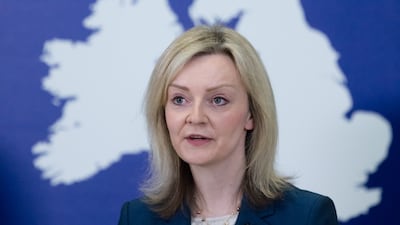
In April 2016, the former environment secretary Liz Truss listening to former chancellor of the exchequer George Osborne (not seen) during his speech at the National Composites Centre in Bristol. PA -
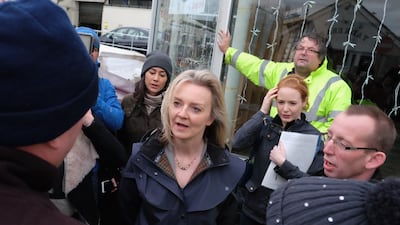
When she was environment minister, Ms Truss visited the bridge over the River Wharfe in Tadcaster, which collapsed after heavy flooding in December 2015. Getty Images -
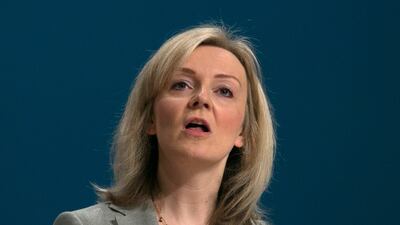
Addressing the Conservative party conference in Birmingham in 2014 when she was secretary of state for environment, food and rural affairs. Getty Images -
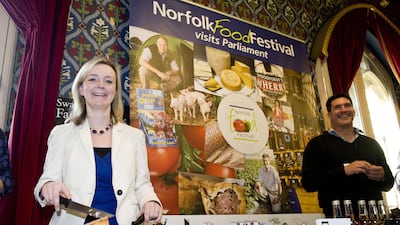
Mr Truss on the Sawnnington Farm to Fork stand at the Norfolk Food Festival at the Houses Of Parliament in October 2011. PA -
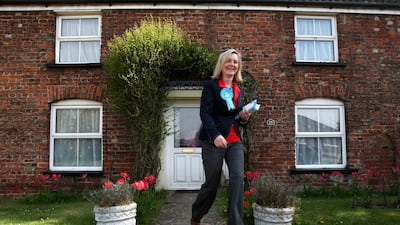
Conservative Parliamentary candidate for South-West Norfolk Elizabeth Truss, while canvassing in the village of West Walton during the 2010 General Election campaign. PA -
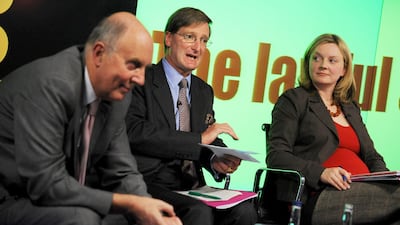
The former Conservative Shadow Home Secretary, Dominic Grieve, centre, speaking at the launch Reform's Lawful Society report on the nature of crime and the incentives in the criminal justice system while Ms Truss looks on, in September 2008. PA -
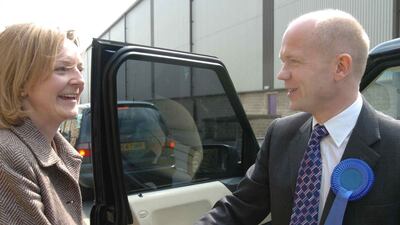
Former Conservative Leader William Hague meeting conservative candidate for Calder valley Ms Truss, during the General Election Campaign for 2005. PA


But her stint in Downing Street, which was cut to only 44 days after her mini-budget's effects on the markets last year saw confidence in her premiership collapse, meant her update to the UK’s foreign policy did not happen.
Mr Sunak chose not to go that far, updating the UK’s integrated review on foreign and defence policy in March to describe China as representing an “epoch-defining and systemic challenge”.
In what is thought to be the first visit of a former British prime minister to Taiwan since Margaret Thatcher made the journey in the 1990s, Ms Truss is expected to urge the West not to work with China.
“There are still too many in the West who are trying to cling on to the idea that we can co-operate with China on issues like climate change, as if there is nothing wrong; that there are bigger issues than Chinese global dominance or the future of freedom and democracy,” she is expected to say.
“But without freedom and democracy there is nothing else.
“We know what happens to the environment or world health under totalitarian regimes that don’t tell the truth.”
Ms Truss is also expected to draw comparisons between the Chinese-Taiwanese tension and the Russian invasion of Ukraine.
China claims Taiwan as its territory and, while western countries say they back Taipei, none have officially recognised it as an independent state.
Beijing is said to be seeking reunification with the autonomous territory.
Truss unrepentant in final speech as UK prime minister - video
But it comes amid fears of a backlash from China against the UK, with Beijing reacting when Nancy Pelosi, then-speaker of the US House of Representatives, visited Taiwan last year.
China retaliated for the visit by staging a naval and air force blockade of Taiwan and cutting off channels of communication with Washington on issues from environmental protection to maritime security.
But Ms Truss will say western allies cannot avoid responding to Chinese aggression out of fear of a new Cold War.
“We in the United Kingdom and the free world must do all we can to back you,” she is expected to say.
A UK government spokesman said it was in Britain’s interests to “continue engagement” with China while recognising the challenges the Far East country presents.
“We have always been clear that China remains the biggest state-based threat to the UK’s economic security," the spokesman said.
“That’s why our integrated review refresh sets out a new approach to dealing with the challenge which China presents for the UK and the wider world.
“Given China is a permanent member of the UN Security Council and the second largest economy in the world, it’s in the national interest to continue engagement particularly on issues such as climate change, global health and macro-economic stability.
“This is an approach that has been reflected by many of our allies.”

