

The Koh-i-noor diamond has been an integral part of the British royal family ever since coming into its possession at the height of the empire more than a century ago.
Its presence among the crown jewels has long been controversial, particularly in India where it awakens painful memories of its colonial past.
On Tuesday, it was announced that it would not feature in the king and queen consort's coronation in Westminster Abbey on May 6, thus avoiding political sensitivities and difficult questions about its provenance.
The gem featured prominently in the coronation of the Queen Mother in 1937 and that of Queen Alexandra in 1902.
It was speculated that Queen Consort Camilla would wear the contested stone in the crown of Queen Mary.
However, the royals will break from tradition and recast the crown ― instead of commissioning a new one ― using other diamonds from the British royal family's collection.
What is its history?
The Koh-i-noor, which means Mountain of Light, was discovered in the Golconda mines in what is now the southern Indian state of Andhra Pradesh.
The diamond's existence was officially documented in the 18th century, although its history could date back hundreds of years before this.
The large, colourless diamond is said to have passed between Mughal princes, Iranian warriors, Afghan rulers and Punjabi maharajas before it was seized by the East India Company after its victory in the Second Anglo-Sikh War of 1849.
It was given to Queen Victoria and has remained in the crown jewels ever since. It is said to bring bad luck to any man who wears it.
In 1851, large crowds viewed the diamond at the Great Exhibition in Hyde Park, but some complained about its dull appearance and asymmetrical shape.
Prince Albert, the husband of Queen Victoria, had the Koh-i-Noor re-cut to improve its brilliance and conform to contemporary European tastes.
It is thought to be the world's most expensive diamond, with 105.6 carats worth an estimated $600 million.
-

The Imperial Crown of India was made for King George V. Getty Images -

A portrait of Queen Victoria by Franz Xaver Winterhalter showing the Koh-i-Noor on a brooch. UK Royal Collection -
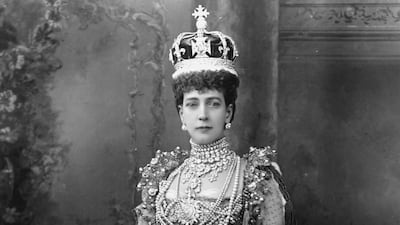
Queen Alexandra (1844 - 1925), consort of King Edward VII, on the day of her husband's coronation. Getty Images -
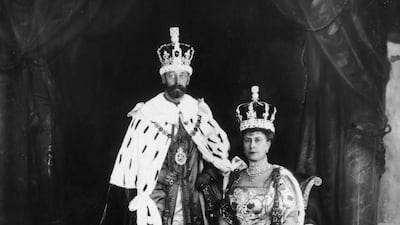
King George V (1865 - 1936) on the day of his coronation, together with his consort Queen Mary (1867 - 1953). Getty Images -
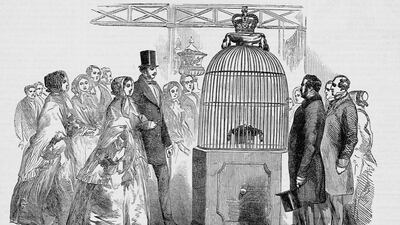
The Koh-I-Noor diamond on display at the world's fair in London. The stone was acquired by the British in 1849. Getty Images -
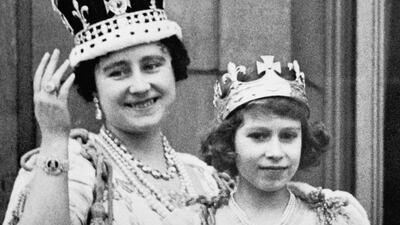
A young Princess Elizabeth (right) with Queen Elizabeth (the Queen Mother) after the coronation of King George VI. PA Wire -
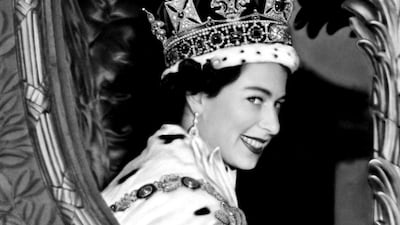
Queen Elizabeth II smiles to the crowd after her coronation in June 1953. -
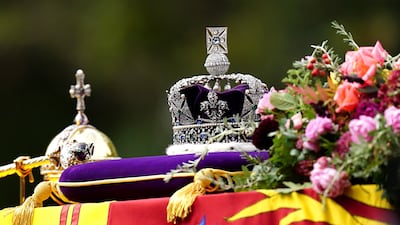
The State Gun Carriage carries the coffin of Queen Elizabeth II following her State Funeral at Westminster Abbey, London.


Why is it controversial?
India, Pakistan and Afghanistan, have long squabbled over who has the rightful claim to the gem.
Popular opinion in India wants the diamond returned, and there have been several attempts to return it, including after independence in 1947 and another attempt before Queen Elizabeth's coronation in 1953.
Each time the British government has rejected the claims, saying that its ownership was non-negotiable.
Last year, a spokesperson for Indian prime minister Narendra Modi’s Bharatiya Janata Party said: “The coronation of Camilla and the use of the crown jewel Koh-i-noor brings back painful memories of the colonial past.
“Most Indians have very little memory of the oppressive past. Five to six generations of Indians suffered under multiple foreign rules for over five centuries.
“Recent occasions, like Queen Elizabeth II’s death, the [impending] coronation of the new Queen [Consort] Camilla and the use of the Koh-i-noor does transport a few Indians back to the days of the British Empire in India.”
What diamonds will feature in the coronation?
The Queen Mary crown will be reset with the Cullinan III, IV and V diamonds, in tribute to the late Queen Elizabeth, the palace said. The diamonds were part of her personal collection and were often worn by her as broaches.
Four of the crown's eight detachable arches will also be removed, the palace said. The crown was taken off display at the Tower of London for the modification work to be carried out.
The last time a queen consort’s crown was re-used was in the 18th century.
The coronation is also expected to feature the Cullinan I, also known as the Star of Africa, which is set in the Sovereign’s Sceptre with Cross.
One of nine stones cut from the largest diamond yet found, known simply as the Cullinan Diamond, there have been calls for the gem to be returned to South Africa.
The uncut stone was discovered near Pretoria in 1905 and presented to King Edward VII in 1907.

