


Russia is amassing aircraft close to the border with Ukraine, according to western intelligence that says Moscow may be preparing to dedicate jets and helicopters to the fight to turn the tide decisively in its favour.
Experts said Russia has used its air force sparingly since the start of the invasion.
But there are indications Moscow may change tactics to break the stalemate on the ground.
Intelligence shared among Nato members has warned of a build-up of “fixed-wing and rotary aircraft” close to Ukraine’s border.
It came as western allies met on Tuesday to plan additional support for Ukraine, with the US expected to announce another package this week focusing on air defence and ammunition.
Prof Malcolm Chalmers, deputy director general of the Royal United Services Institute (Rusi), said Russia was “continuing to press hard” in several places on the front line, while its forces were “achieving some success” around Bakhmut.
“But it doesn’t look anything like the large scale capture, which we saw in the initial phases of the invasion,” he told Radio 4 on Wednesday.
“Not least because Ukrainians are now mobilised and prepared and fighting very hard for their own territory. So it’s a matter of concern. But it’s not an emergency.
“And it’s also the case that Russia is losing a lot of people and a lot of equipment. And there is a real question about how far they can sustain an offensive for a long period.”
On Tuesday, US Defence Secretary Lloyd Austin pointed out Russian forces were depleted, suggesting the “best indication” was that Moscow would turn it into an air fight.
Mr Austin said “Russia has substantial aircraft” and “a lot of capability left”.
He said Ukraine’s current air defences were “not enough”.
“We want to make sure they have the ability to protect themselves in the event Russia decides to introduce its air force into the fight.”
A US official told the Financial Times: “If the Ukrainians are going to survive ... they need to have as many air defence capabilities and as much ammunition ... as possible.”
Russia and Ukraine conflict latest - in pictures
-
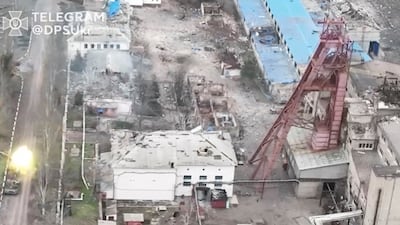
A tank, seen left, fires a round in Soledar, a town in the Donetsk region of eastern Ukraine. Reuters -
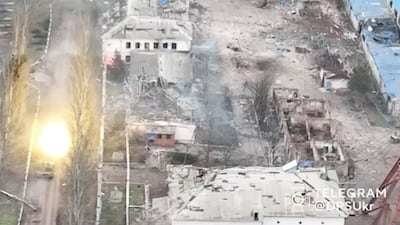
Tank fire in Soledar, Donetsk. Reuters -
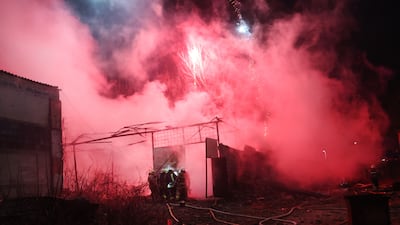
Firefighters work to put out a blaze at a Kharkiv fireworks storage site after it was struck by a Russian missile. Getty -
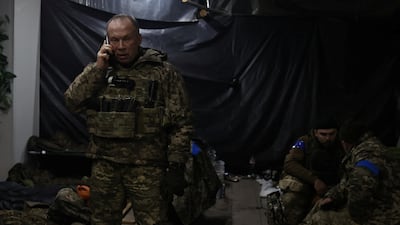
Col Gen Oleksandr Syrskyi, commander of Ukraine's ground forces, visits his troops on the frontline in Soledar, Donetsk. Reuters -
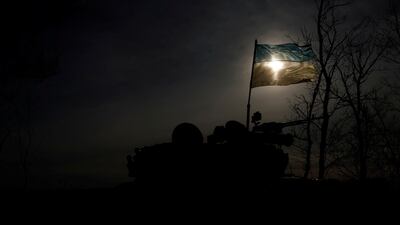
A Ukrainian flag attached to a tank flutters in the wind in Bakhmut. Reuters -
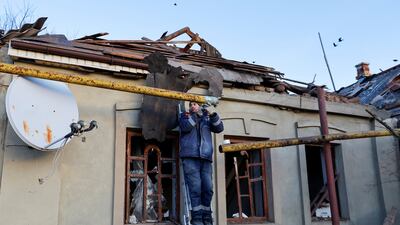
A specialist from an emergency crew works on a residential building in Donetsk that was damaged in recent shelling. Reuters -
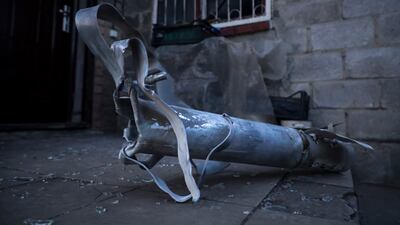
A missile fragment left by shelling in Russian-controlled Donetsk. AP -
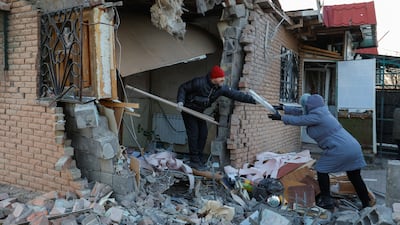
Residents remove debris and carry their belongings out of a building destroyed by recent shelling in Donetsk, Russian-controlled Ukraine. Reuters -
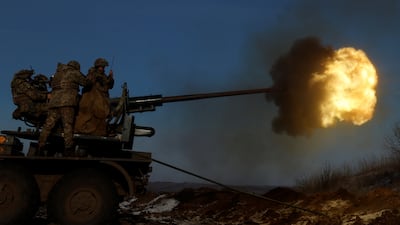
Ukrainian forces fire an anti-aircraft weapon as Russia's attack on the frontline city of Bakhmut continues. Reuters -
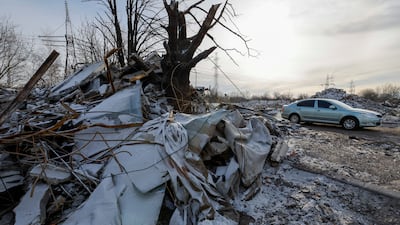
A car drives past a destroyed building purported to have been used as temporary accommodation for Russian soldiers, dozens of whom were killed in a Ukrainian missile strike in Makiivka, Russian-controlled Ukraine. Reuters -
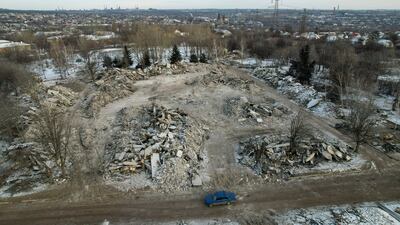
The site of a temporary barracks for Russian soldiers in Makiivka, which was destroyed in a Ukrainian missile attack. Reuters -
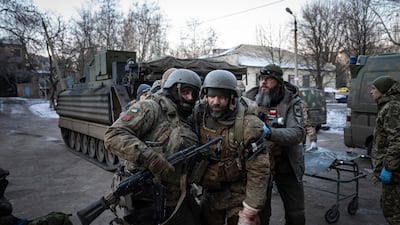
A Ukrainian serviceman carries his injured comrade from the battlefield to a hospital in the Donetsk region. AP -
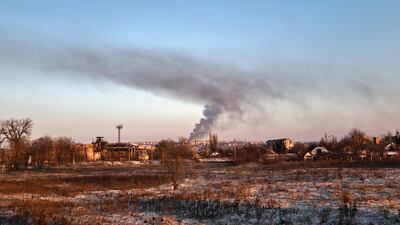
Smoke rises after shelling in Soledar, the site of heavy battles with Russian forces in the Donetsk region. AP


Ukraine’s allies have been prioritising shipments of air defence assets and artillery ammunition to Kyiv, to help it protect itself against the possible new assault.
UK Defence Secretary Ben Wallace said on Wednesday: “At the moment, first and foremost what we are focused on for Ukraine is delivering the effects they need, which is either the ability to strike in the deep, that’s longer range. That’s why things like the M270 or the Himars [rocket launchers] are in.
“And indeed the use of UAVs that can drop munitions is another way of delivering that effect. The other one is the effect of anti-air, which a fighter can deliver. But also, surface to air missiles, which is why the international community has now donated thousands of anti-air missiles,” he told Sky News.
He said in the “long-term” the West had to help Ukraine’s resilience “potentially post conflict” to make sure it could defend itself and its skies.
“That’s why training people to fly fighter jets is an important step in that direction," Mr Wallace said. "But the key here is these are fighter jets. These are not hand-held anti-tank weapons. These are aircraft that take not only months to train on. But also aircraft that require effectively a very substantial pit crew to support it.”
Mr Wallace said Britain was also training Ukrainian soldiers to fight in a more “western way” and use less ammunition than the traditional Soviet way of fighting.
“Ukraine uses huge amounts of ammunition to defend itself, partly that's why we're training them to fight in a Western way,” he said.
He said Britain had been buying and trading ammunition “that is Soviet” in standard while also helping the Ukrainian military convert to unlock “access to our ammunition stocks”.
“At the same time we're training to make sure it's used in a way that's very productive and accurate,” he said.
“The Russian or the Soviet way of fighting is very ammunition heavy, massive artillery barrages, and that's never how we have organised ourselves to fight in Nato,” he said.
Ukraine will receive a delivery worth more than £200 million ($241.06 million), part of the first package of multimillion-pound funding from the International Fund for Ukraine (IFU), it was announced on Wednesday.
The package, agreed by the UK, the Netherlands, Norway, Sweden and Denmark, will include vital capabilities in the form of artillery ammunition, maritime intelligence, surveillance and reconnaissance, and spare parts for equipment, including Ukraine’s current tanks.
The countries have contributed a collective total of more than £520 million to the fund, alongside Iceland and Lithuania.

