


At some UK supermarkets the price of basic groceries such as butter, milk and cheese went up 30 per cent year-on-year last month, new figures from consumer watchdog Which? show.
Across eight major supermarkets, overall food and drink inflation reached 15 per cent but butter and spreads rose by an “astonishing” 29.4 per cent, Which? said.
Higher-than-average price increases also affected milk, which was 26.3 per cent more expensive than a year before, cheese (22.3 per cent), bakery items (19.5 per cent), water (18.6 per cent) and savoury pies, pastries and quiches (18.5 per cent).
Among the worst examples of inflation over the three months to the end of December included Utterly Butterly 500g, up from £1 ($1.23) to £1.95 across several supermarkets, Waitrose Duchy Organic Homogenised Semi-Skimmed Milk (1 pint/568ml), rising 87.1 per cent from 65p to £1.22, and Creamfields French Brie 200g at Tesco, up 81.6 per cent from 79p to £1.43.
The worst individual price increase on a food item across all the supermarkets was Quaker Oat So Simple Simply Apple (8x33g) at Asda, which increased 188 per cent from £1 on average in December 2021 to an average of £2.88 last month.
Across supermarkets, inflation was significantly higher on budget ranges (20.3 per cent) and own-brand items (18.5 per cent) than premium (12.6 per cent) and branded (12.5 per cent) alternatives, just as consumers turned to cheaper options to cut food bills.
Which?’s supermarket food and drink inflation tracker records the annual inflation of tens of thousands of food and drink products across three months at eight major supermarkets — Aldi, Asda, Lidl, Morrisons, Ocado, Sainsbury’s, Tesco and Waitrose.
Inflation around the world - in pictures
-

People queue to buy wheat flour at government-controlled prices in Islamabad. Pakistan's economy has been hit hard by a political crisis, as well as devastating floods and the global energy crisis, with the rupee plummeting and inflation at decades-high levels. AFP -
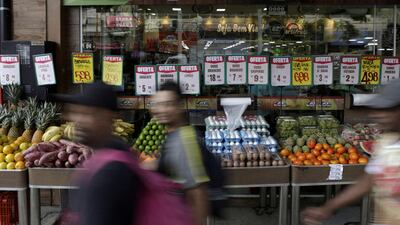
A market in Rio de Janeiro. Brazil's inflation ended 2022 with a sharp slowdown from double-digit peaks seen throughout the year. Reuters -
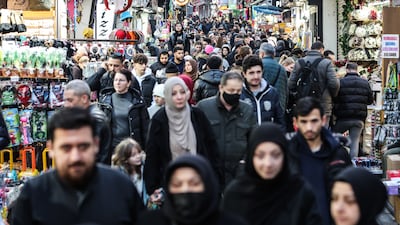
A market in Istanbul. Turkey's inflation at the end of 2022 stood at 64. 27 per cent, the country's Statistical Institute said, while the independent group of inflation researchers ENAG calculated it at 137. 55 per cent. EPA -
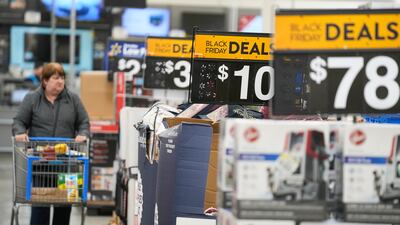
A Walmart in New Jersey. According to a poll, US Republicans and Democrats have distinct views of what’s most important for the government to address amid high inflation. More Republicans name gas and food prices, energy and immigration, while Democrats focus on health care, climate change and poverty. AP -
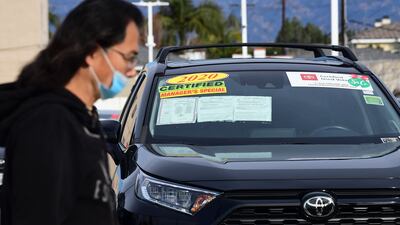
A used car sales lot in California. US Federal Reserve officials have indicated it’s possibly too early to declare victory over inflation. AFP -
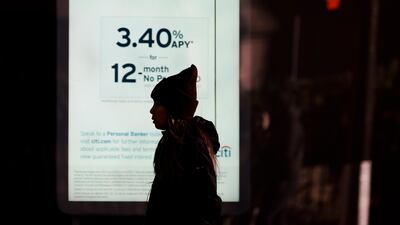
A person walks by a sign showing interest rates at a bank in New York. EPA -
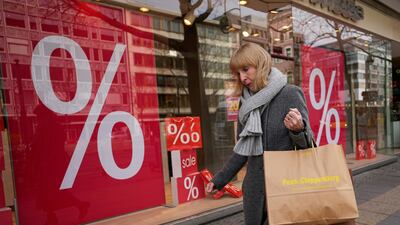
A woman walks with purchases past a store in Berlin. In December, consumer price growth across the Euro zone slowed to 9.2 per cent from 10.1 per cent a month earlier, Eurostat data showed last week. AP -
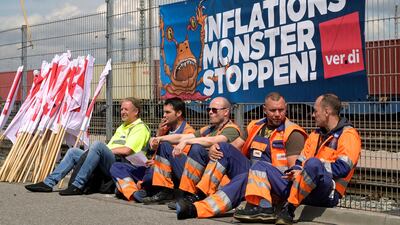
Workers sit in front of a banner reading "Stop the Inflation Monster" at the Burchardkai Container Terminal as they go on strike for higher wages at the harbour in Hamburg, Germany. Reuters -
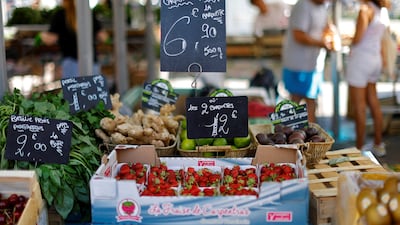
Price tags at a market in Nice, France. Reuters -

Commuters cross Waterloo Bridge in London. The British Retail Consortium said spending in store chains rose by 6.9 per cent in annual terms in December, but this was a long way off consumer price inflation, which hit 10.7 per cent in November. Reuters -
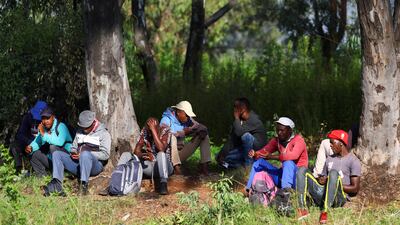
Jobseekers in Johannesburg. South Africa’s governing party wants the central bank’s mandate broadened to shore up the economy and promote employment in addition to its existing task of tackling inflation. Reuters -

Social grant recipients stand in a queue outside a post office, as joblessness takes its toll in Meadowlands, South Africa. Reuters


Despite being the cheapest supermarket overall, Lidl’s prices went up the most last month (21.1 per cent), followed closely by Aldi (20.8 per cent), according to Which?’s figures.
Asda had the third highest inflation at 15.4 per cent – but closer to the industry average of 15 per cent – followed by Waitrose (14.5 per cent), Sainsbury’s (13.7 per cent), Tesco (13.1 per cent), Morrisons (12.9 per cent) and Ocado (10.5 per cent).
But Which?’s latest Consumer Insight survey also shows that trust in supermarkets is plummeting, from positive 67 in May 2021 to positive 42 now.
Trust at Aldi and Lidl tended to be lower than their rivals 18 months ago but has stayed relatively the same during this period, leaving it now higher than average at positive 48 and positive 45, respectively.
Bank of England governor explains decision to increase interest rates - video
Waitrose had the lowest level of trust (positive 29) among all consumers, although trust levels among its own customers is significantly higher at 54.
Price rises emerged as a common reason for a lack of trust, particularly the perception that prices were sometimes artificially inflated and went beyond what was necessary for businesses to offset their own rising costs.
Which? is campaigning for all supermarkets to ensure budget line items that enable a healthy diet are widely available, particularly in areas where people are most in need.
It is also calling on retailers to make offers more transparent and provide targeted promotions to support people in the areas struggling the most with access to reasonably priced food.
“We know food prices have risen exponentially in the last year and our inflation tracker shows the dramatic impact this is having on everyday products at the supermarket," said Which? head of food policy Sue Davies.
What is a recession? - video
“Some households are already skipping meals to make ends meet and our findings show trust in supermarkets taking a hit as many people worry they are putting profits before the people suffering during this cost-of-living crisis.
“Supermarkets must do more. Which? is calling for them to ensure everyone has easy access to basic, affordable food ranges at a store near them, particularly in areas where people are most in need, as well as pricing which enables people to easily work out best value and promotions to support people who are particularly struggling.”
A Waitrose spokeswoman said: “Which?’s own research released today shows that our price inflation was in fact lower than the market average. We’re working very hard with our suppliers to ensure we offer great value, while continuing to deliver industry-leading animal welfare standards, fresh produce grown with care and fair deals for farmers.
An Aldi spokeswoman said: “We are the lowest-priced supermarket in Britain. Our customers will always pay less for their shop with Aldi and that is why Which? has named us as the cheapest supermarket in 2022.
Tesco said: “With household budgets under increasing pressure, we are absolutely committed to helping our customers by keeping a laser focus on the cost of the weekly shop. Earlier this week, we were pleased to be recognised by The Grocer as the retailer doing the most to keep prices down right now."
Andrew Opie, director of food and sustainability at the British Retail Consortium, said: “Retailers understand the pressure households are under and are doing everything they can to limit price rises on their products.
“Unfortunately, the war in Ukraine has pushed up the cost of many items including wheat, fertiliser and animal feed, as well as global energy prices, leading to higher prices for many staples.
“Despite these challenges, retailers are determined to support their consumers with the cost of living and provide local communities with easy access to affordable food by expanding value ranges, keeping the price of essentials down and introducing discounts for vulnerable groups.
“Fierce competition for customers is also helping to keep prices as low as possible, despite the spiralling costs retailers face.”

