
The British military subjected Prince Harry to Muslim taunts to prepare him for possible capture in Afghanistan, his new book claims.
In his memoir Spare, Harry writes about an army exercise in Cornwall, one of “the last hurdles for flight crews and pilots before deployment” in Afghanistan.
The exercise involved teaching survival techniques, such as how to catch and kill a chicken, and simulated a helicopter crash-landing behind enemy lines.
As they reached what they thought was the end, Prince Harry and his comrades were ambushed by a group of men in “camo jackets and black balaclavas”.
They wrapped blacked-out ski goggles over their eyes and zip-tied their hands before interrogating them.
Role-playing captors were used in the exercise with a woman in a scarf, seeking to exploit the duke's mother’s friendship with Dodi Fayed in the weeks before her death in a Paris car accident in 1997.
“She was wearing a shemagh over her face,” he writes. “She went on and on about something I didn’t understand. I couldn’t keep up.
“Then I realised. Mummy. She was talking about my mother. Your mother was pregnant when she died, eh? With your sibling? A Muslim baby!”
He said nothing, but “screamed with his eyes”, before she stormed out and one of the captors spat in his face. Senior officers later defended the exercise, saying “we felt you needed to be tested”, Prince Harry claims.

“I didn’t answer,” he says. “But that took it a bit too far.”
The book details how Prince Harry was steeled to be captured by the Taliban in Afghanistan on his first Apache helicopter mission.
He writes of how he had been prepared to ignore a “land now” warning light in his helicopter cockpit, which meant an operation during his second frontline tour in 2012 had to be abandoned.
A more experienced pilot turned them back to Camp Bastion in Helmand province, leaving the prince feeling cheated.
-
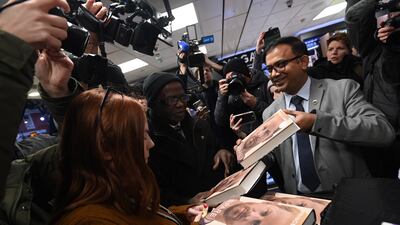
The first copies of Prince Harry's new book Spare are unpacked during a midnight sale at a book shop in London. EPA -
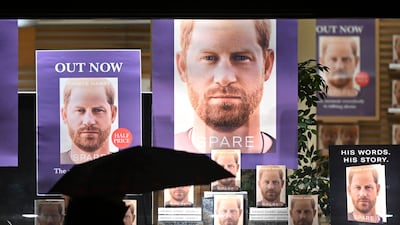
After months of anticipation and a sustained publicity blitz, Prince Harry's book is on sale in the UK. AFP -
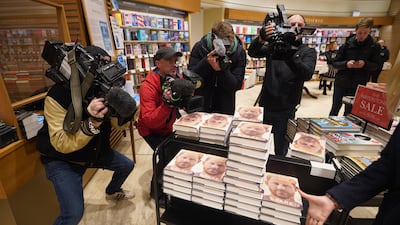
Photographers surround a trolley containing copies of Spare. PA -
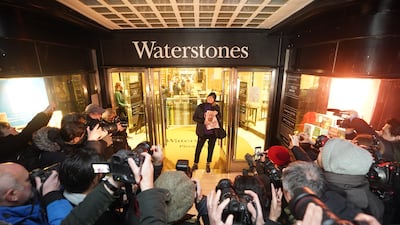
Caroline Lennon, the first customer to purchase a copy of Spare, poses for photographers at Waterstones in Piccadilly, London. PA -
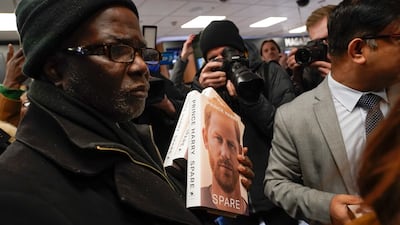
There is no mention of royal family members in the foreword to Spare. AP -
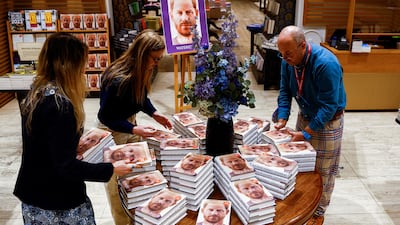
The book reveals that Prince Harry took cocaine and magic mushrooms. Reuters -
Spare also lifts the lid on the prince's relationships with the royal family. EPA -
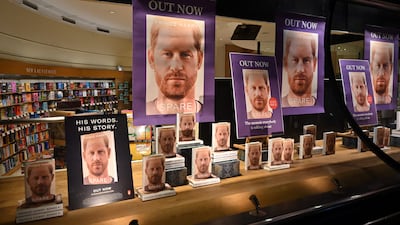
The book contains allegations of racism within the royal family and accounts of a fight with Prince William. AFP


His admission in Spare that he killed 25 Taliban members during the war has sparked criticism from former military figures and protests in Helmand last weekend.
The prince was sent to Afghanistan in 2007, when the military posting was accompanied by a media blackout, and again in 2012.
“I wanted to go, go, go. I was willing to risk crashing, being taken prisoner — whatever,” he says of the 2012 Apache mission that was aborted.
He has written at length about his military experience, describing how he narrowly escaped being hit in a huge explosion during his first stint in the country in 2007-08.
“I felt it in my brain. I looked around. Everyone was on their stomachs,” he says.
On his second tour, for which he had retrained as an Apache helicopter pilot, the prince writes: “I was the first in my squadron to pull the trigger in anger.”
Prince Harry says he had killed before but it was “my most direct contact with the enemy ever” as he fired on Taliban fighters riding motorbikes.
In the book he says the thumbstick he fired was “remarkably similar” to the controls for a PlayStation game he played at the camp.
“We swooped back to camp, critiqued the video. Perfect kill. We played some more PlayStation."
But later in the memoir he says he threw down a newspaper in disgust when he saw the headline “Harry compares killing to video game” after mentioning the similarity in a media interview.
The duke recounts how he realised his secret tour of duty had been exposed in 2008 when he overheard coded messages that suggested “Red Fox” was about to be murdered.
-
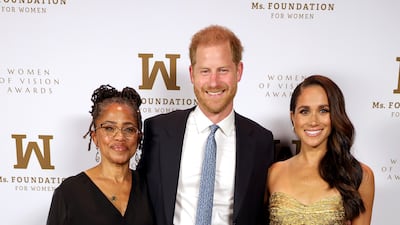
Doria Ragland, Prince Harry and Meghan, Duchess of Sussex, attend the Ms Foundation Women of Vision Awards in New York City. Getty -
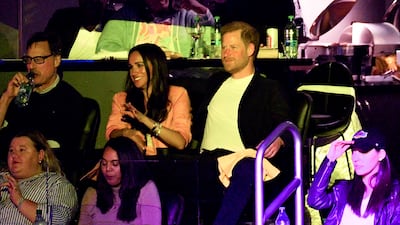
Prince Harry and his wife Meghan attend a basketball game between the Los Angeles Lakers and the Memphis Grizzlies in Los Angeles in April. Getty -
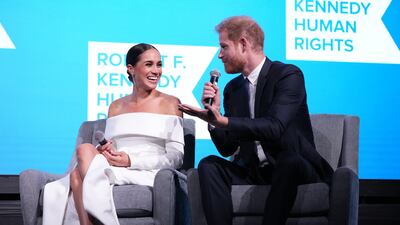
The royal couple speak onstage at the Robert F Kennedy Human Rights Ripple of Hope Gala in New York in December 2022. Getty -
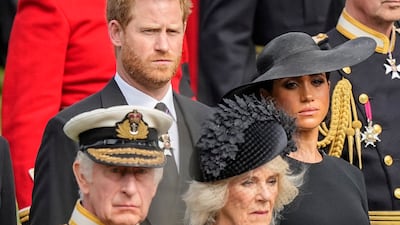
Prince Harry and Meghan watch as the coffin of Queen Elizabeth II is placed into the hearse following the state funeral service at Westminster Abbey in central London in September 2022. AP -
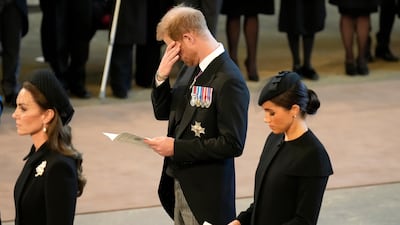
Prince Harry and Meghan pay their respects at the Palace of Westminster. Getty -
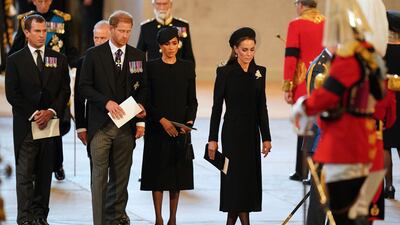
Prince Harry, Meghan and Kate, Princess of Wales, attend a service for the reception of Queen Elizabeth's coffin at Westminster Hall. AFP -
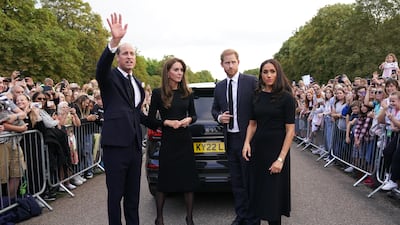
The Princess of Wales, Prince William, Prince Harry and Meghan meet members of the public outside Windsor Castle. Getty -
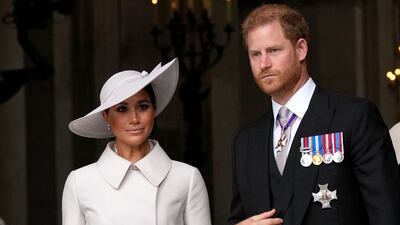
Prince Harry and Meghan leave after a service of thanksgiving for the queen. Getty -
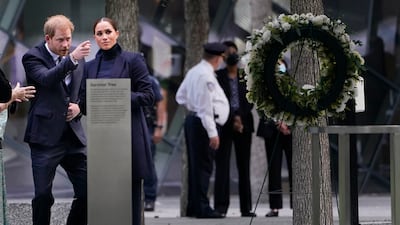
Prince Harry and Meghan at the National September 11 Memorial and Museum in New York in September 2021. AP -
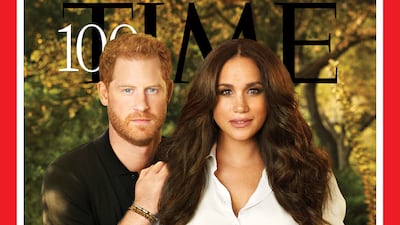
Prince Harry and Meghan on the cover of Time magazine's 100 most influential people in the world edition, in September 2021. Reuters -
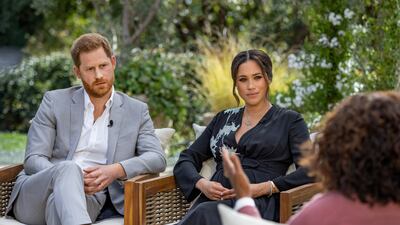
Prince Harry and Meghan are interviewed by Oprah Winfrey in March 2021. Reuters -
Prince Harry and Meghan shared this image on social media in February 2021 to announce they were expecting their second child. AFP -
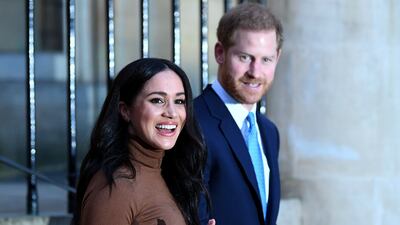
Prince Harry and Meghan visit Canada House, London, in January 2020. Getty -
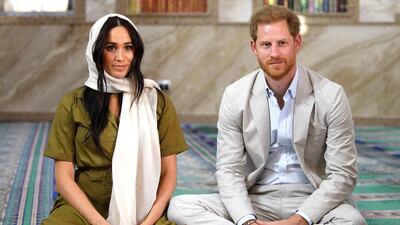
Prince Harry and Meghan visit Auwal Mosque on Heritage Day during their royal tour of South Africa in September 2019. Getty -
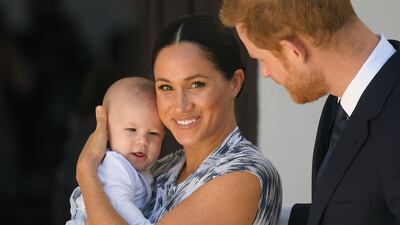
Prince Harry, Meghan and their son Archie Mountbatten-Windsor in South Africa in September 2019. Getty -
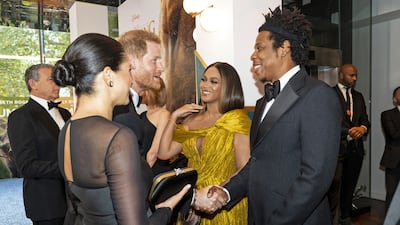
Prince Harry and Meghan meet Beyonce Knowles-Carter and Jay-Z at the European Premiere of Disney's The Lion King at Odeon Luxe Leicester Square, London, in July 2019. Getty -
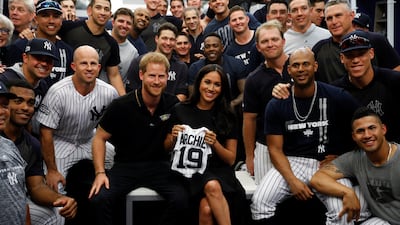
Prince Harry and Meghan pose for a photo with the New York Yankees before their baseball game against the Boston Red Sox at London Stadium in June 2019. Getty -
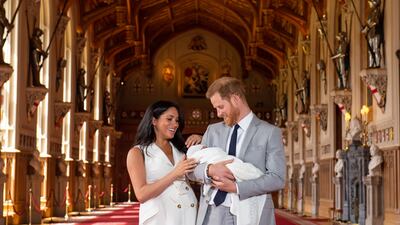
Prince Harry and Meghan pose with their newborn son Archie in St George's Hall at Windsor Castle in May 2019. Getty -
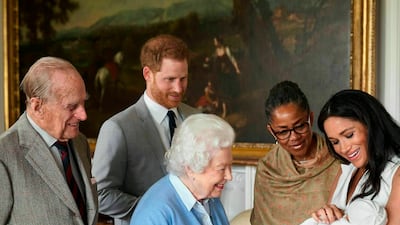
Meghan, joined by her mother Ms Ragland, shows her new son to Queen Elizabeth and Prince Philip at Windsor Castle in May 2019. AP -
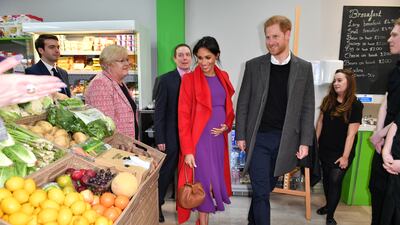
Prince Harry and Meghan officially open Number 7, a Feeding Birkenhead citizen’s supermarket and community cafe in Merseyside in January 2019. Getty -

Prince William, the Princess of Wales, Meghan and Prince Harry attend a Christmas Day church service at the Church of St Mary Magdalene on the Sandringham estate in December 2018. Getty -

Prince William, Prince Harry, Meghan and the Duchess of Cambridge attend a service marking the centenary of the First World War armistice at Westminster Abbey in November 2018. Getty -
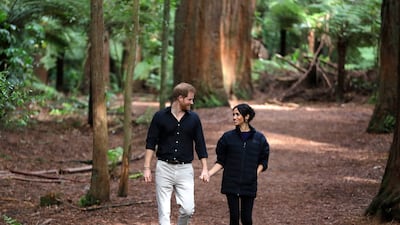
Prince Harry and Meghan visit Redwoods Tree Walk in October 2018 in Rotorua, New Zealand. Getty -
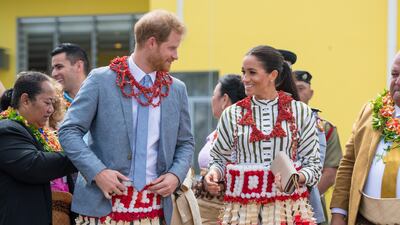
Prince Harry and Meghan visit an exhibition of Tongan handicrafts at the Fa'onelua Convention Centre in October 2018 in Nuku'alofa, Tonga. Getty -
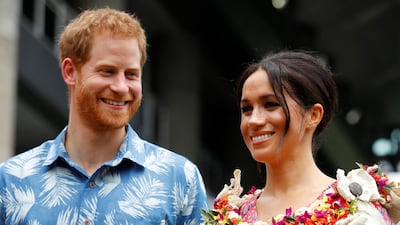
Prince Harry and Meghan visit the University of the South Pacific in October 2018 in Suva, Fiji. Getty -
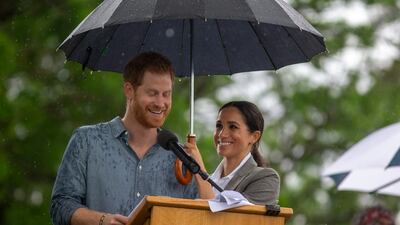
Prince Harry and Meghan address the public during a Community Event at Victoria Park in October 2018 in Dubbo, Australia. Getty -

Prince Harry and Meghan meet a koala during a visit to Taronga Zoo in October 2018 in Sydney, Australia. Getty -
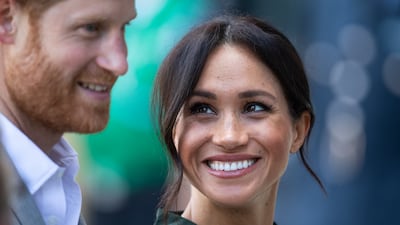
Prince Harry and Meghan arrive at the University of Chichester's Engineering and Digital Technology Park during an official visit to West Sussex in October 2018. Getty -
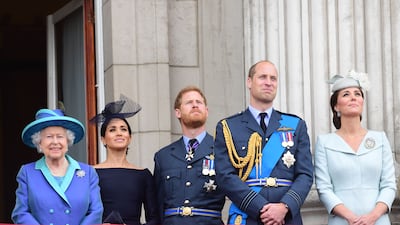
The queen, Meghan, Prince Harry, Prince William and the Duchess of Cambridge watch the RAF 100th anniversary fly-past from the balcony of Buckingham Palace in July 2018. Getty -
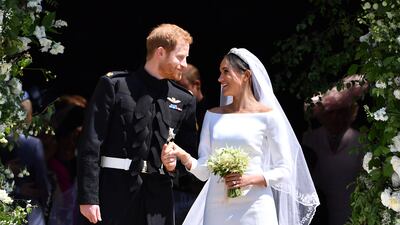
Prince Harry and Meghan on their wedding day in May 2018. Getty -
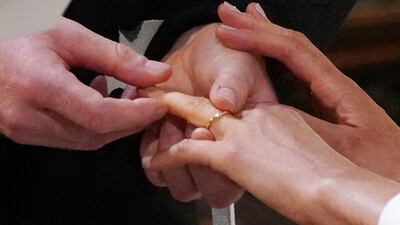
Prince Harry places a wedding ring on his new wife's finger. Getty -
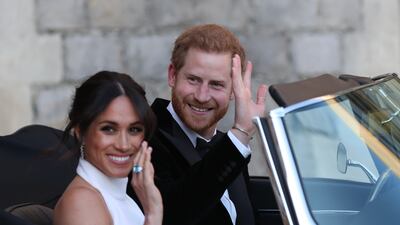
Meghan and Prince Harry head to their evening wedding reception at Frogmore House. Getty -
Prince Harry and Meghan walk through the corridors of the Palace of Holyroodhouse on their way to a reception for young people at the Palace in February 2018 in Edinburgh, Scotland. Getty -
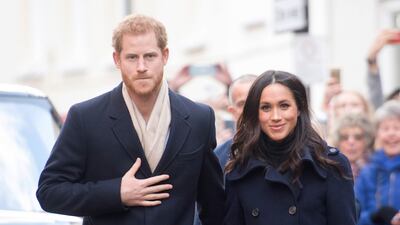
Prince Harry and his then-fiancee Meghan visit Nottingham for their first official public engagement together in December 2017. Getty


“I blinked at the radio and knew with total certainty that Red Fox was me,” he says.
Harry had his cover blown when an Australian magazine leaked the news that he was serving on the ground in the conflict. He was pulled out of the country.
But he also opens up about the impact the war had on him.
When he returned home in 2012 to meet then-girlfriend Cressida Bonas, he says she and his cousin Princess Eugenie told him he looked in some way like a different person, which he described as frightening and off-putting for Ms Bonas.

