



The crowning of a monarch is one of Britain's most ancient ceremonies – deeply religious and packed with symbolism and historic artefacts, such as the crown jewels.
The coronation of Queen Elizabeth in 1953 was one of the defining moments of the 20th century. King Charles's coronation will be shorter and on a smaller scale, but will still feature the kind of pageantry and tradition that was on display at the queen's funeral.
When is King Charles's coronation?
It will take place on May 6. The coronation of the new sovereign traditionally takes place some months after accession to the throne, after a period of national and royal mourning as well as allowing time for the preparation required for the ceremony.
The Duke of Norfolk, who organised the queen’s funeral, also has the role of staging the coronation.
Where will King Charles's coronation take place?
It will be held at Westminster Abbey, the setting for Queen Elizabeth's funeral.
For the past 900 years, the ceremony has taken place at the abbey in the heart of London. Since 1066, the service has almost always been conducted by the Archbishop of Canterbury.
How will King Charles's coronation play out?
There are six basic phases to the coronation: The recognition, the oath, the anointing, the investiture – which includes the crowning, the enthronement and the homage.
Here is what is expected at the king’s coronation.
Travelling to the Abbey
The journey to Westminster Abbey begins at Buckingham Palace and proceeds down The Mall to the abbey.
King Charles III and Queen Consort are accompanied by members of the royal family, clergy, and dignitaries.
The procession is led by the Yeomen of the Guard, followed by the King's Champion on horseback, who challenges anyone opposing the coronation.
At Westminster Abbey, the Archbishop of Canterbury, Justin Welby, and other clergy greet the king and queen consort.
The Dean of Westminster, David Hoyle, welcomes the king and queen consort to Westminster Abbey and leads them to the coronation chair, a wooden chair located in the centre of the Abbey.
-
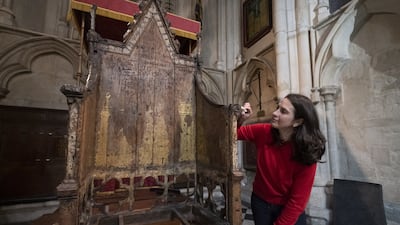
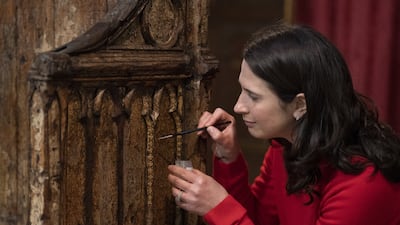
Conservator Krista Blessley works on the restoration of the Coronation Chair at Westminster Abbey in London, before the coronation of King Charles III. All photos: PA -
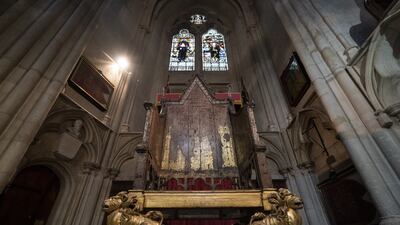
The chair was made around the year 1300 for King Edward I -
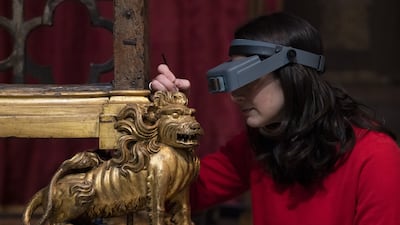
Experts debate about when the chair was first used to crown a monarch: It had featured in coronation ceremonies since 1308 but the first confirmed use was to crown Henry IV in 1399 -
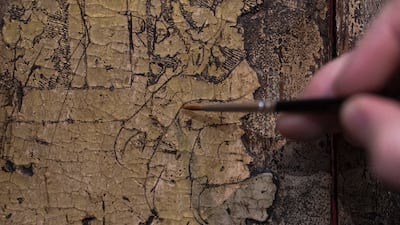
Ms Blessley has spent four months meticulously preserving the flaking gilding and cleaning the chair’s surface using sponges and cotton swabs -
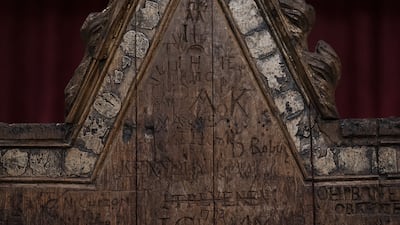
Much of the graffiti on the inside of the chair’s back rest was carved by Westminster schoolboys and visitors to Westminster Abbey during the 18th and 19th centuries -
Pieces of wood were also taken as souvenirs and during a 1914 bomb attack, thought to be the work of the suffragettes, a small corner was knocked off


It is the chair in which the king or queen will sit during the coronation ceremony.
During the coronation, the regalia will be carried in procession.
Various people will carry the king and queen consort's regalia:
- Baroness Helena Kennedy of The Shaws with the rod
- General Sir Patrick Sanders with the sceptre
- The Duke of Wellington with Queen Mary's crown
- Rt Reverend and Lord Chartres with the ring (for the queen consort)
- General Sir Gordon Messenger, the governor of the Tower of London with St Edward's crown as Lord High Steward of England
- Baroness Elizabeth Manningham-Buller LG with St Edward's staff
- Duke of Buccleuch and Queensberry KT with the sceptre with cross
- Baroness Floella Benjamin with sceptre with the dove
- Dame Elizabeth Anionwu with the orb
- The Keeper of the Jewel House, Brigadier Andrew Jackson with the sovereign's ring
- Petty Officer Amy Taylor with the sword of offering
- Lord Hastings and The Earl of Loudoun with the spurs
- Lord President of the Council, Penny Mordaunt, with the sword of state in the king's procession
- Air Chief Marshal the Lord Peach with the sword of mercy (The Curtana)
- General the Lord Richards of Herstmonceux with the sword of spiritual justice
- General the Lord Houghton of Richmond with the sword of temporal justice (for the king)
-

St Edward's Crown will be used for the crowning at the coronation ceremony of King Charles III at Westminster Abbey. All photos: PA -
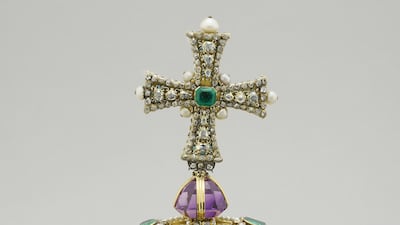
The Sovereign's Orb -
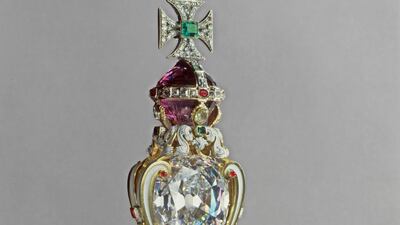
The Sovereign's Sceptre with Cross -
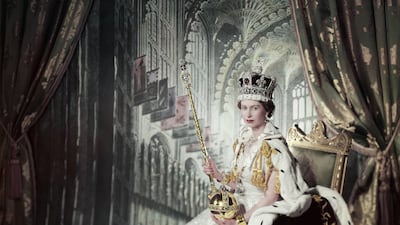
Queen Elizabeth II on her coronation day in 1953, holding the orb and sceptre -
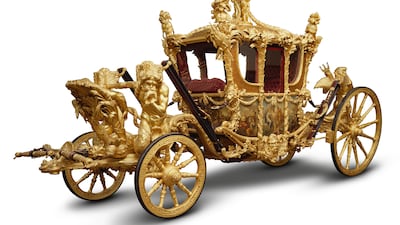
The Gold State Coach will feature during the coronation. -
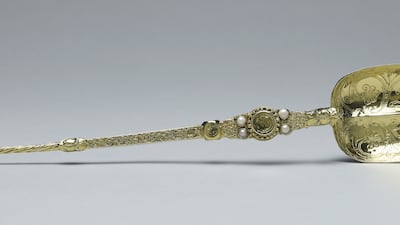
The Coronation Spoon, which will be used to anoint the king with holy oil -
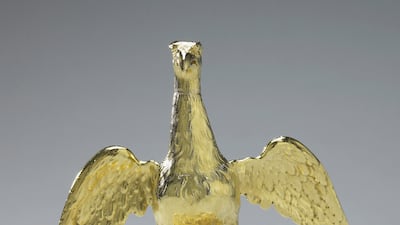
The ampulla holds the holy oil -
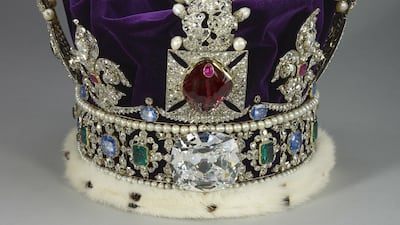
The Imperial State Crown, which was made for the coronation of King George VI in 1937 -
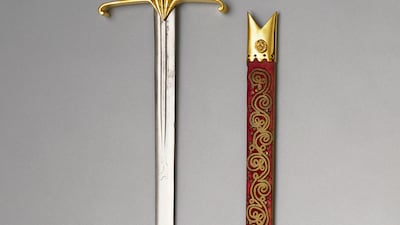
The Sword of Spiritual Justice -
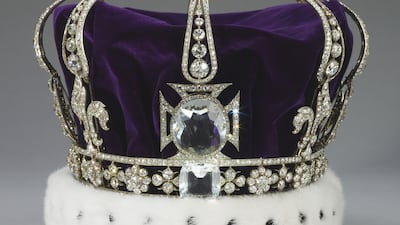
Queen Mary's Crown, which was designed for the coronation of Queen Mary in 1911 -
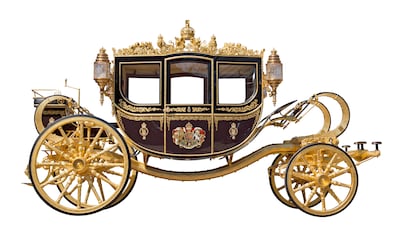
The Diamond Jubilee State Coach


The anointing
After the oath, the sovereign is “anointed, blessed and consecrated” by the Archbishop of Canterbury. The Archbishop of Canterbury anoints the king and queen consort with holy oil. This is a sign that they have been chosen by God to rule over the country.
The anointing with holy oil is the central act of the religious ceremony.
The anointing is a very important part of the coronation ceremony because it signifies the divine right to rule.
The king will remove his crimson robe and sit in King Edward’s chair, which was made in 1300 and has been used by every monarch since 1626, under a canopy of silk or cloth of gold held by four Knights of the Garter.
The archbishop will use the golden eagle-shaped ampulla — which pours the oil from its beak — and the 12th-century, silver-gilt, anointing spoon, which is the most ancient treasure of the crown jewels, to anoint the king in the form of a cross.
Traditionally the choir sings the anthem Zadok the Priest as the anointing is carried out.
Under the chair is expected to be the Stone of Destiny. The ancient, sacred symbol of Scotland’s monarchy, which was once captured by King Edward I of England, now leaves Edinburgh Castle only for coronations.
The Archbishop of Canterbury places the St Edward's crown on the king's head.
The queen consort will then be crowned with the queen's crown. The crowns are the most important symbols of the monarchy and represent the authority and responsibility to rule justly.
Having been sanctified, the sovereign puts on a sleeveless white garment — the colobium sindonis — and then a robe of cloth of gold — the supertunica.
The king is presented with a jewelled sword and the golden spurs — the symbol of chivalry — and the armills — golden bracelets of sincerity and wisdom.
He will put on the robe royal of gold cloth and be presented with the orb, the coronation ring on the fourth finger of his right hand, the sceptre and the rod.
Then Charles, sitting in King Edward’s chair, will be crowned by the archbishop with St Edward’s crown, with the congregation shouting out “God Save the King”.
After a blessing, the king will go to his throne and be “lifted up into it by the archbishops and bishops, and other peers of the kingdom”.
The homage
The archbishop, royal blood princes — likely to include the Prince of Wales — and senior peers pay homage to the monarch, placing their hands between the king’s and swearing allegiance, touching the crown and kissing the king’s right hand. The House of Commons does not pay homage.
The queen’s coronation
Queen Consort Camilla will also be crowned, in a similar but simpler ceremony which follows the homage.
After Prince Charles’s marriage to Camilla, the royal family’s website added the get-out clause “unless decided otherwise” to the phrase: “A queen consort is crowned with the king, in a similar but simpler ceremony.”
Coronation oath
The king and queen consort take the coronation oath, which is a solemn promise to uphold the laws of the land and to defend the Church of England.
The coronation oath is a reminder that the monarchy is not above the law, but is instead subject to it.
The form and wording of the oath has varied over the centuries. The king will promise to reign according to law, exercise justice with mercy and maintain the Church of England.
The king, with the sword of state carried before him, will go to the altar and declare: “The things which I have here before promised, I will perform, and keep. So help me God.” He will kiss the Bible and sign the oath.
The king and queen consort are presented to the people of the United Kingdom.
Participating in the act of recognition will be the Archbishop of Canterbury, Baroness Valerie Amos, Lady Elish Angiolini, and Christopher Finney, chair of the Victoria Cross and George Cross Association.
The monarchs wave to the crowds before returning to Buckingham Palace.
The return to the palace
After waving to the crowds the king and queen consort will make their way back to Buckingham Palace.
The presentation of the king or queen to the people is the final part of the coronation ceremony. It is a time for the new monarch to formally take up their duties and to begin their reign.
The regalia is presented to them, chosen on the advice of the government. The following individuals will be presenting the regalia to their majesties:
- The Lord Carrington (St Edward's crown)
- Lord Great Chamberlain (the spurs)
- The Lord Syed Kamall (the armills)
- Baroness Gillian Merron (the robe royal)
- The Most Reverend John McDowell, the Church of Ireland Archbishop of Armagh (the orb)
- Lord Narendra Patel (the ring)
- Lord Indarjit Singh of Wimbledon (the coronation glove)
- The Most Reverend Mark Strange, Bishop of Moray, Ross and Caithness, and Episcopal Primus of Scotland (the sceptre with cross)
- The Most Reverend Andrew John, the Archbishop of Wales (the sceptre with dove)
- The Archbishop of Canterbury will perform the crowning with St Edward's crown for the king and Queen Mary's crown for the queen consort.
Overall, the coronation is a grand and historic event that signifies the beginning of a new monarch's reign. It is a time when the new monarch is officially invested with the powers and responsibilities of their office, and it is a time for the people of the United Kingdom to celebrate the continuity of their monarchy.

