


Queen Elizabeth II will be laid to rest on Monday alongside her husband, Prince Philip, in the King George VI Memorial Chapel at Windsor Castle's St George's Chapel.
Due to Covid restrictions, only 30 guests were in attendance at the funeral of her husband, who had stood beside her for all bar the last 16 months of her reign. The sight of the queen sitting alone at his funeral added to the poignancy of the moment.
Philip, who died in April 2021, left instructions for his remains to be transferred from the Royal Vault to the memorial chapel on his wife's death.
But the Duke of Edinburgh is not the only royal she will be buried alongside. She will also join her mother, father, sister and husband.
Before his premature death, George VI enjoyed a happy family life with his wife and two daughters, referring to the tight-knit foursome as "us four".
The death of the queen means that all four will finally be laid to rest together.
The Queen Mother, also called Elizabeth, was buried in the chapel on April 9, 2002, after her death aged 101.
Princess Margaret's ashes were moved to the chapel from the Royal Vault, where they had been placed initially after her death in February 2002.

A host of other royals are interred in the Royal Vault beneath the chapel.
Construction of the memorial chapel, designed by George Pace, was completed in 1969.
It was commissioned by the queen as a permanent resting place for her father.
The king died aged 56 in February 1952 but his death had been unexpected and as a result no specific resting place had been allocated.
At the time, the king's remains were interred in the Royal Vault.
The Royal Vault is the final resting place of a long list of mostly 18th and 19th-century royals, including George III who died in 1820.
-

King Charles III in Westminster Abbey for the state funeral of his mother, Queen Elizabeth II. PA -
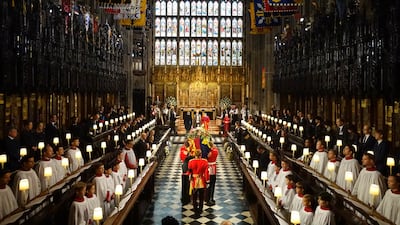
The coffin of Queen Elizabeth is carried into St George's Chapel in Windsor Castle for the committal service. PA -

The hearse arrives at Windsor Castle for the committal service. Getty Images -
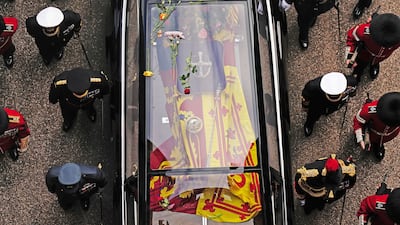
Flowers are seen on the hearse as it arrives at Windsor Castle. AP -

King Charles and Prince William join the procession in the Quadrangle inside Windsor Castle. AFP -
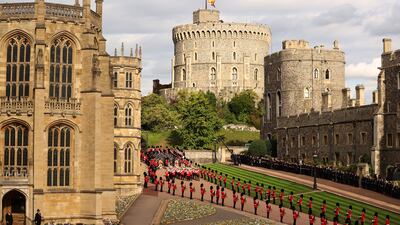
The procession, led by the dismounted detachment of the Household Cavalry, followed by massed Pipes and Drums of Scottish and Irish regiments, the Brigade of Gurkhas, the Royal Air Force and the Band of the Grenadier Guards, arrives at Windsor Castle. Getty Images -
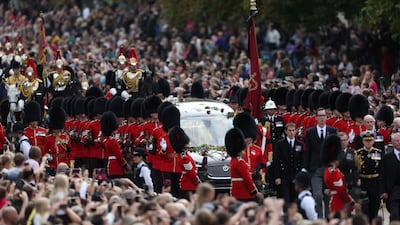
The hearse travels along the Long Walk as it makes its way to Windsor Castle. Reuters -
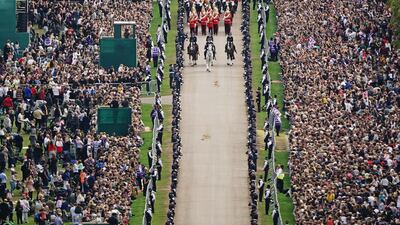
The ceremonial procession travels down the Long Walk in Windsor. PA -
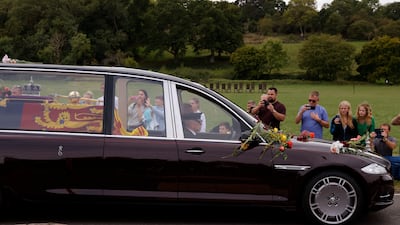
The hearse travels to Windsor. Reuters -
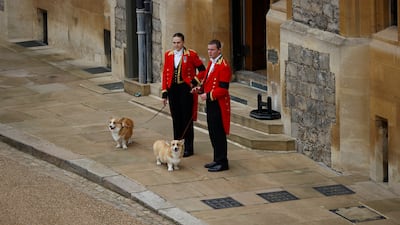
The royal corgis await the cortege at Windsor Castle. Reuters -
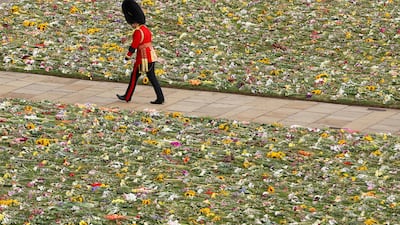
A member of the Coldstream Guards walks past flowers at St George's Chapel in Windsor Castle. AP -

A mourner throws a flower towards Queen Elizabeth's hearse as it is driven to Windsor from London. Reuters -
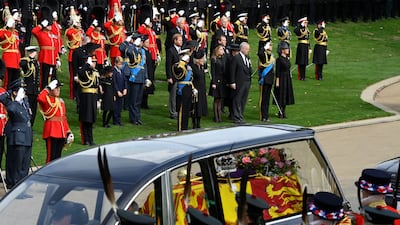
Members of the royal family pay their respects as the hearse carries the coffin of Queen Elizabeth in London. Reuters -
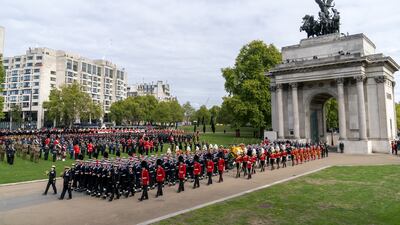
The state gun carriage carrying the coffin of Queen Elizabeth arrives at Wellington Arch during the ceremonial procession following her state funeral. PA -
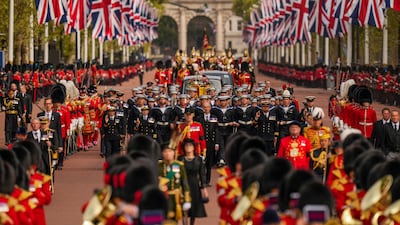
The funeral procession marches down The Mall following the service at Westminster Abbey. AP -
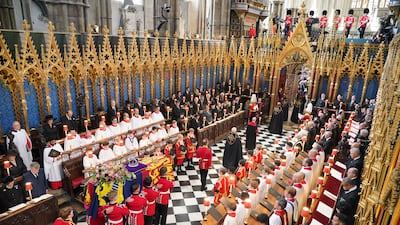
The coffin of Queen Elizabeth is carried from her state funeral at Westminster Abbey. PA -

King Charles walks with Princess Anne, Prince Harry and Prince Andrew behind the coffin of Queen Elizabeth as it is pulled on a gun carriage through the streets of London following her funeral service. AP -
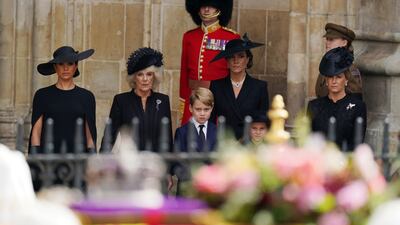
Meghan, Duchess of Sussex, Queen Consort Camilla, Prince George, Catherine, Princess of Wales, Princess Charlotte and Sophie, Countess of Wessex, stand outside Westminster Abbey after the funeral. PA -
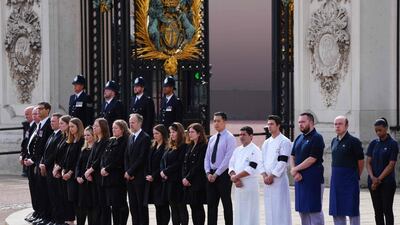
Buckingham Palace household staff pay their respects. AFP -
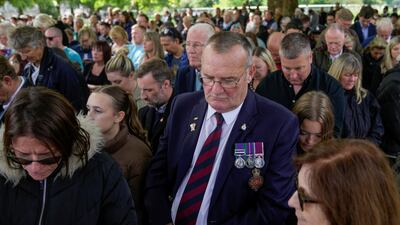
Mourners pause for two minutes' silence during the funeral service in London. Reuters -

The coffin of Queen Elizabeth, draped in a Royal Standard and adorned with the Imperial State Crown and the sovereign's orb and sceptre, arrives in Westminster Abbey. AP -

Prince William, his wife Catherine, the Princess of Wales, and their children Prince George and Princess Charlotte arrive at Westminster Abbey. AP -
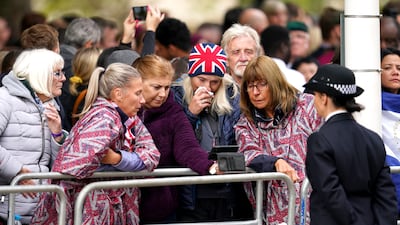
Members of the public watch the funeral from Horse Guards Road in London. PA -
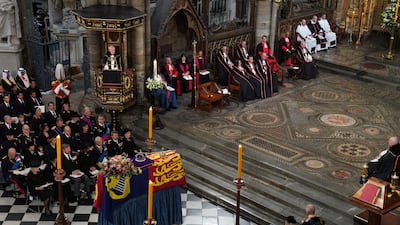
Archbishop of Canterbury Justin Welby speaking during the funeral. PA -
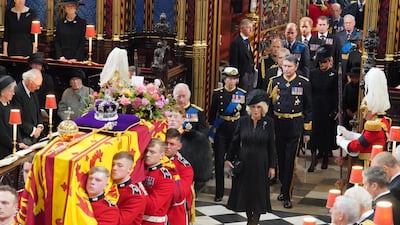
The coffin of Queen Elizabeth is carried into Westminster Abbey, followed by King Charles and Queen Consort Camilla for the state funeral in London. PA -
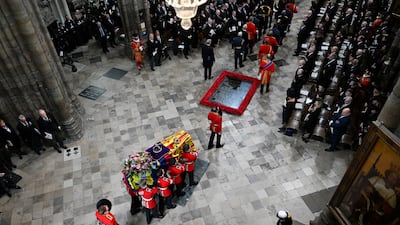
The coffin of Queen Elizabeth is carried by the Bearer Party into Westminster Abbey. Getty -
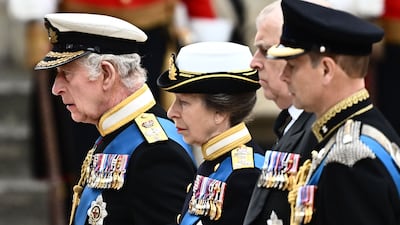
King Charles, Princess Anne, Prince Andrew and Prince Edward arrive at Westminster Abbey. AFP -
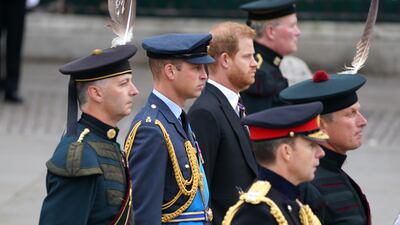
Prince William and Prince Harry make their way to Westminster Abbey. PA -
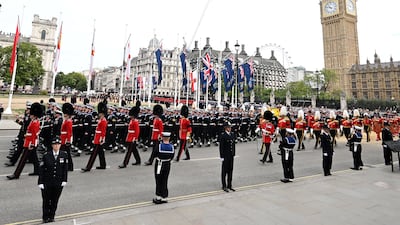
The State Gun Carriage carries the coffin of Queen Elizabeth through central London. PA -
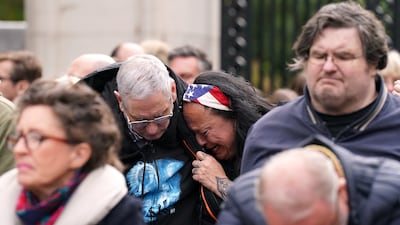
Members of the public on the Mall become emotional during the funeral. PA -
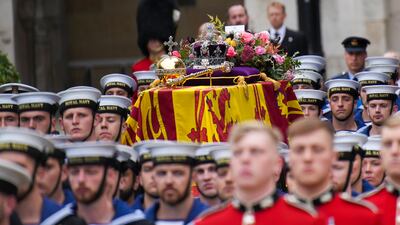
The coffin of Queen Elizabeth II is placed on a gun carriage for her state funeral service in central London. AP -

The coffin of Queen Elizabeth leaves Westminster Hall. AP -

The Yeoman of the Guard arrive in Westminster Abbey. AP -

Guests take their seats inside Westminster Abbey in London for the state funeral of Queen Elizabeth. AFP -
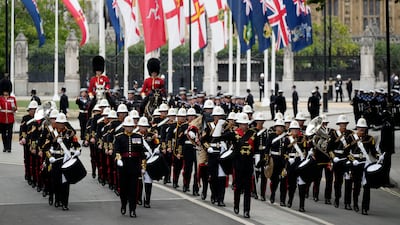
The Royal Marines band marches to Westminster Abbey. Getty Images -
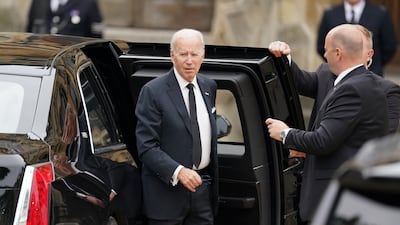
US President Joe Biden arrives for the funeral. PA -
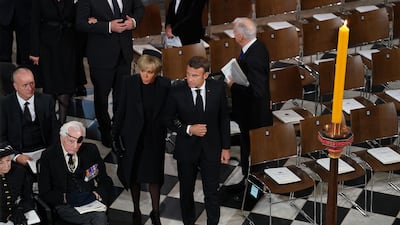
French President Emanuel Macron and wife Brigitte walk into Westminster Abbey. PA -
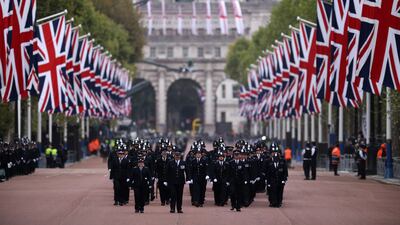
Metropolitan Police Officers walk in formation down The Mall in preparation for the state funeral Of Queen Elizabeth II. Getty -

A Pearly king and queen, who raise money for charity, on the procession route in London. AFP -
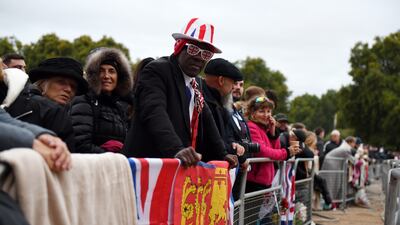
People line the funeral procession route. Getty -
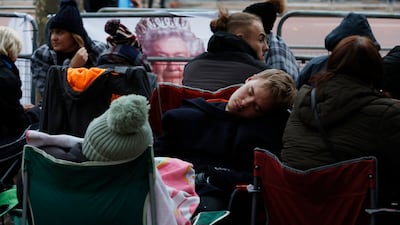
Mourners take a moment to rest on The Mall in London. Reuters -
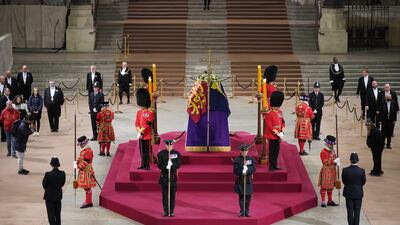
At 6.28am on the day of her funeral, the final members of the public pay their respects at the coffin of Queen Elizabeth at the Palace of Westminster, London. PA -
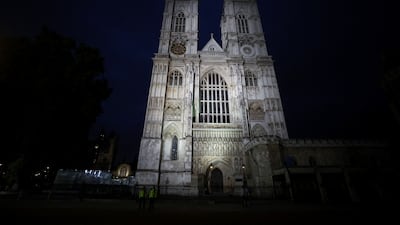
London's Westminster Abbey on the day of the state funeral and burial of Britain's Queen Elizabeth II. Reuters -
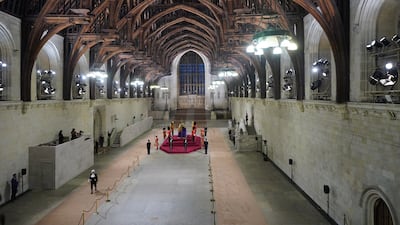
Black Rod, the House of Lords' senior figure, walks through Westminster Hall at 6.30am after paying her respects on the final day of the lying in state at the coffin of Queen Elizabeth II in London. PA -
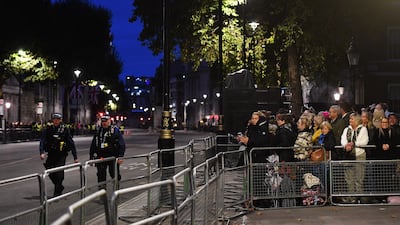
Police on patrol in Whitehall before Queen Elizabeth II's funeral at Westminster Abbey in London. EPA -
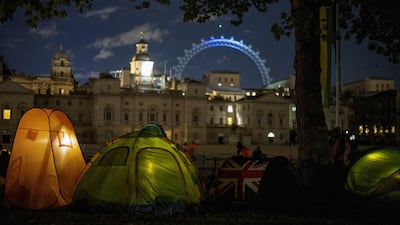
People in London camp during the night before the funeral of Queen Elizabeth II. Reuters -

Vehicles in the motorcade of US President Joe Biden and first lady Jill Biden arrive to pay their respects to Queen Elizabeth II in London. Getty Images -
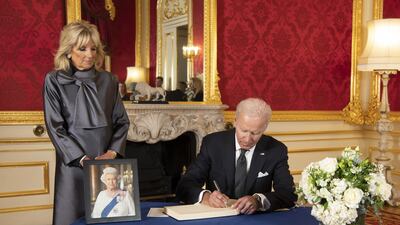
US President Joe Biden accompanied by the First Lady Jill Biden signs a book of condolence at Lancaster House in London. PA -
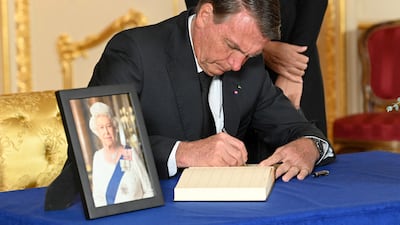
Brazilian President Jair Bolsonaro signs a book of condolence at Lancaster House in London, after the death of Queen Elizabeth II. Reuters -

The first lady of Ukraine, Olena Zelenska (R) views the coffin of Queen Elizabeth II, lying in state on the catafalque in Westminster Hall in London. Getty Images -
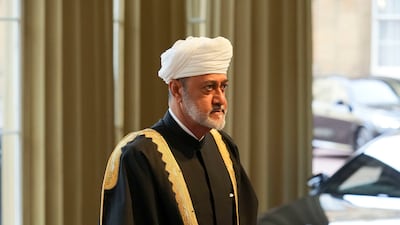
Oman's Sultan Haitham arrives for a reception hosted by Britain's King Charles III for heads of state and official overseas guests, at Buckingham Palace in London, the night before the funeral of Queen Elizabeth II. AP -
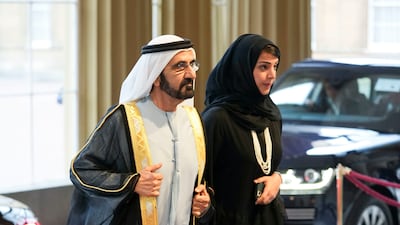
Sheikh Mohammed bin Rashid, Vice President and Ruler of Dubai, arrives for a reception hosted by Britain's King Charles III for heads of state and official overseas guests, at Buckingham Palace in London, before the funeral of Queen Elizabeth II. AP -
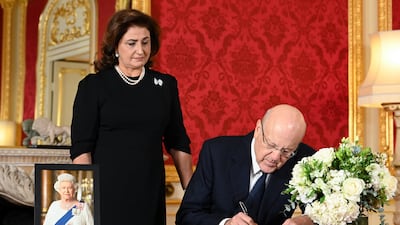
Lebanon's Prime Minister-designate Najib Mikati and his wife May sign a book of condolence at Lancaster House in London, after the death of Queen Elizabeth II. PA


With no more space to accommodate a second vault at St George's, it was decided that another chantry chapel would be built — the first addition to St George's since it was consecrated in the 15th century.
The queen rejected the idea of the traditional marble chest tomb with life-size effigies favoured by earlier royals for her father.
Instead, the king's grave was marked with a simple stone of black Belgian marble inlaid into the floor with the inscription "George VI".
The dedication took place on March 31, 1969, in a ceremony attended by George's widow Queen Elizabeth the Queen Mother, the queen, Prince Philip, Elizabeth's sister Princess Margaret and all four of the monarch's children.

