


Volcanoes are the latest natural threats to humanity that experts are sounding the alarm over.
Teams at two universities in the UK say the world is “woefully underprepared” for what a massive volcanic eruption will do to global supply chains, climate and food.
In an article published in the journal Nature, researchers from the University of Cambridge’s Centre for the Study of Existential Risk (CSER), and the University of Birmingham say there is a “broad misconception” that risks of major eruptions are low.
They describe the current lack of governmental investment in monitoring and responding to potential volcano disasters as reckless.
“Data gathered from ice cores on the frequency of eruptions over deep time suggests there is a one-in-six chance of a magnitude seven explosion in the next one hundred years. That’s a roll of the dice,” said article co-author and CSER researcher Dr Lara Mani.
“Such gigantic eruptions have caused abrupt climate change and collapse of civilisations in the distant past.”
An expert in global risk, Dr Mani compares the possibility of a giant eruption to that of a 1km-wide asteroid crashing into Earth.
-
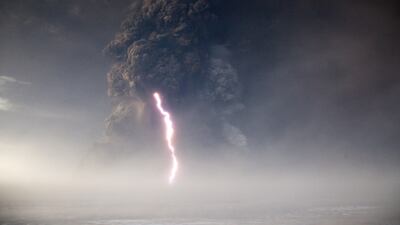
Grimsvotn in Iceland sends thousands of tonnes of volcanic ash into the sky after erupting in May 2011. The ash cloud forced Iceland to close its airspace. Getty -

Mount Sakurajima erupted in 2014 and is the most active volcano in Japan. Getty -
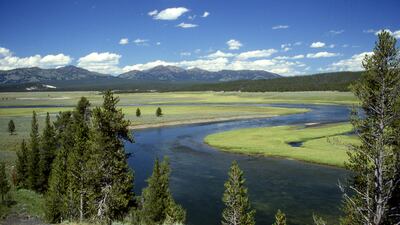
The Yellowstone Caldera in the western US is about 70 kilometres long and 50km wide. Wikimedia Commons -
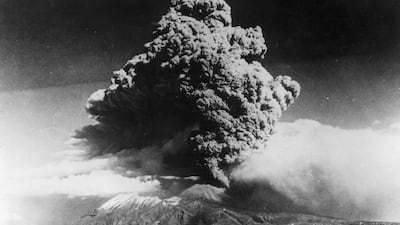
Mount Vesuvius in southern Italy erupts in 1944. It buried the ancient city of Pompeii in lava and ash in 79 AD. Getty -
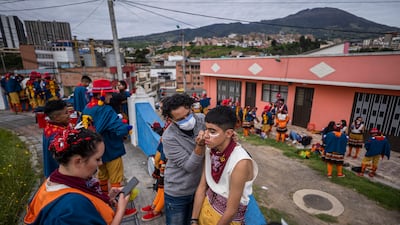
Galeras is the most active volcano in Colombia. Getty -

Mauna Loa is one of five volcanoes that form Hawaii and is the largest active volcano in the world. Getty -

The Colima volcano in western Mexico sends a plume of ash into the sky in 2016. Wikimedia Commons


Even though the two events would have similar climatic consequences, she says the likelihood of a volcanic catastrophe is hundreds of times higher than the combined chances of an asteroid or comet collision and criticised the “severe” shortfall in funding for the greater, volcanic threat.
“Hundreds of millions of dollars are pumped into asteroid threats every year, yet there is a severe lack of global financing and coordination for volcano preparedness,” said Dr Mani.
“This urgently needs to change. We are completely underestimating the risk to our societies that volcanoes pose.”
With the appropriate resources, researchers argue that steps can be taken to protect against volcanic devastation – from improved surveillance to increased public education and the manipulation of magma – the extremely hot liquid located under the Earth's surface.
A record-breaking underwater volcanic eruption in January near the Pacific nation of Tonga created waves that reverberated around the Earth, reaching 100km into the ionosphere.
A study by the University of Oxford later confirmed that the eruption was one of the most explosive volcanic events of the modern era and produced a vertical plume that extended more than 50km above the Earth’s surface.
The heat and ash released at the time was the most significant source of gravity waves on Earth for the 12 hours that followed the eruption.

Subsequent studies showed that the last volcano to generate such large ripples in the atmosphere was Krakatau in Indonesia in 1883, during one of the most destructive volcanic eruptions in recorded history.
Calling it the “volcanic equivalent of an asteroid just missing the Earth”, Dr Mani says the Tonga eruption should be “treated as a wake-up call”.
An analysis of sulphur spikes in ancient ice samples has led the CSER experts to the worrying realisation that an eruption ten to a hundred times larger than the Tonga blast occurs once every 625 years – twice as often as had been previously thought.
Dr Mike Cassidy, a volcano expert and visiting CSER researcher, now based at the University of Birmingham, compared the magnitude of the Tonga eruption to that of Mount Tambora in present-day Indonesia in 1815.
“An estimated 100,000 people died locally, and global temperatures dropped by a degree on average, causing mass crop failures that led to famine, violent uprisings and epidemics in what was known as the year without summer,” he said.
“We now live in a world with eight times the population and over forty times the level of trade. Our complex global networks could make us even more vulnerable to the shocks of a major eruption.”
Financial losses from a large magnitude eruption would be in the multi-trillions, and on a comparable scale to the pandemic, say experts.
Knowing where the dangerous volcanoes are located is crucial to mitigating risk and damage of potential eruptions.
“We may not know about even relatively recent eruptions due to a lack of research into marine and lake cores, particularly in neglected regions such as Southeast Asia,” said Dr Cassidy, adding that only a “handful” of volcanic locations are known.
“Volcanoes can lie dormant for a long time, but still be capable of sudden and extraordinary destruction.”
Monitoring must be improved, say the CSER experts. Only 27 per cent of eruptions since 1950 have had a seismometer anywhere near them, and only a third of that data again has been fed into the global database for “volcanic unrest”.
“Volcanologists have been calling for a dedicated volcano-monitoring satellite for over twenty years,” said Dr Mani. “Sometimes we have to rely on the generosity of private satellite companies for rapid imagery.”
The experts also call for increased research into volcano “geoengineering”. This includes the need to study means of countering aerosols released by a massive eruption, which could lead to a “volcanic winter”. They also say that work to investigate manipulating pockets of magma beneath active volcanoes should be undertaken.

