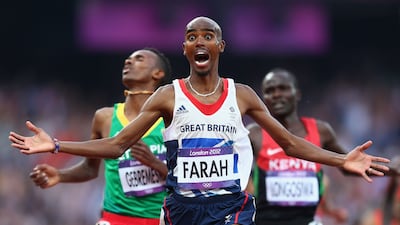
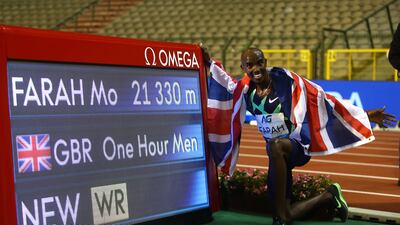
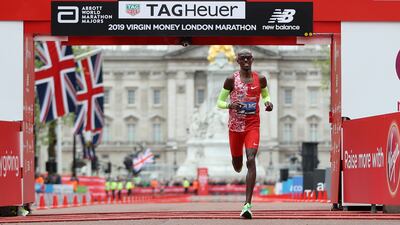
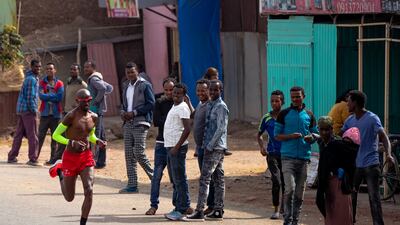
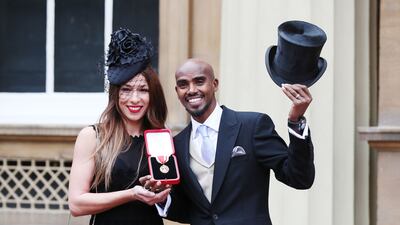
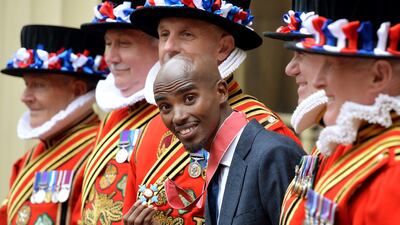
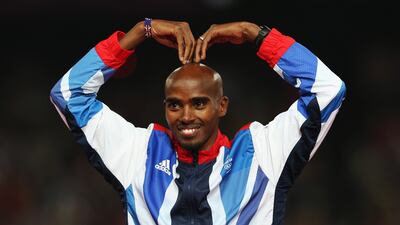
A police investigation has opened into Sir Mo Farah’s stunning revelations that he was trafficked into Britain as a child slave.
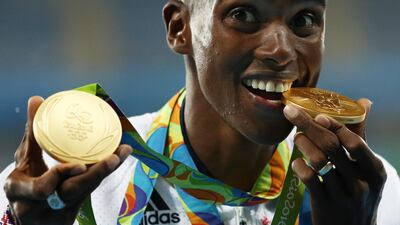
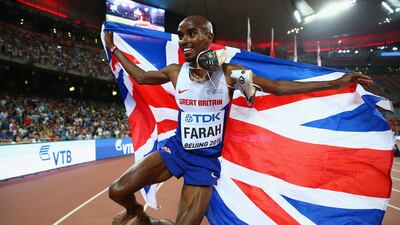
The Somalia-born athlete, who won double Olympic gold for his adopted country at both the 2012 and 2016 Games, revealed in a BBC documentary this week his real name is Hussein Abdi Kahin.
Farah, 39, said he was forced to work in domestic servitude after entering the UK aged 9.
London’s Metropolitan Police confirmed on Thursday that an investigation had begun.
“We are aware of reports in the media concerning Sir Mo Farah,” the Metropolitan Police said.
“No reports have been made to the MPS [Metropolitan Police Service] at this time. Specialist officers have opened an investigation and are currently assessing the available information.
“Where offences are reported in the media, which are deemed significant public interest and there is no cause to disbelieve [them], then the Met can create a crime report.”
The long-distance runner's documentary, The Real Mo Farah, provides shocking details of how he was taken into the UK illegally under the name of another child.
Farah said he thought he was going to Europe to live with relatives — and recalled going through a UK passport check under the guise of Mohamed.
“I had all the contact details for my relative and, once we got to her house, the lady took it off me and right in front of me ripped them up and put it in the bin, and at that moment I knew I was in trouble,” he said.
The athlete also travelled back to his childhood home in Hounslow, England, recalling “not great memories” where he was not treated as part of the family.
Rather than moving to the UK as a refugee from Somalia with his mother and two of his brothers to join his IT consultant father as previously claimed, Farah’s documentary said he came from Djibouti. This was with a woman he had never met, before he was made to look after another family's children.
He said his father was killed in civil unrest in Somalia when Farah was aged 4.
The runner also credits his former PE teacher Alan Watkinson with saving him from domestic servitude.
On Wednesday, Farah was assured by the British government he would not be stripped of his citizenship, with a spokesman for Prime Minister Boris Johnson describing him as “a sporting hero”.

Timeline
2012-2015
The company offers payments/bribes to win key contracts in the Middle East
May 2017
The UK SFO officially opens investigation into Petrofac’s use of agents, corruption, and potential bribery to secure contracts
September 2021
Petrofac pleads guilty to seven counts of failing to prevent bribery under the UK Bribery Act
October 2021
Court fines Petrofac £77 million for bribery. Former executive receives a two-year suspended sentence
December 2024
Petrofac enters into comprehensive restructuring to strengthen the financial position of the group
May 2025
The High Court of England and Wales approves the company’s restructuring plan
July 2025
The Court of Appeal issues a judgment challenging parts of the restructuring plan
August 2025
Petrofac issues a business update to execute the restructuring and confirms it will appeal the Court of Appeal decision
October 2025
Petrofac loses a major TenneT offshore wind contract worth €13 billion. Holding company files for administration in the UK. Petrofac delisted from the London Stock Exchange
November 2025
180 Petrofac employees laid off in the UAE
What is blockchain?
Blockchain is a form of distributed ledger technology, a digital system in which data is recorded across multiple places at the same time. Unlike traditional databases, DLTs have no central administrator or centralised data storage. They are transparent because the data is visible and, because they are automatically replicated and impossible to be tampered with, they are secure.
The main difference between blockchain and other forms of DLT is the way data is stored as ‘blocks’ – new transactions are added to the existing ‘chain’ of past transactions, hence the name ‘blockchain’. It is impossible to delete or modify information on the chain due to the replication of blocks across various locations.
Blockchain is mostly associated with cryptocurrency Bitcoin. Due to the inability to tamper with transactions, advocates say this makes the currency more secure and safer than traditional systems. It is maintained by a network of people referred to as ‘miners’, who receive rewards for solving complex mathematical equations that enable transactions to go through.
However, one of the major problems that has come to light has been the presence of illicit material buried in the Bitcoin blockchain, linking it to the dark web.
Other blockchain platforms can offer things like smart contracts, which are automatically implemented when specific conditions from all interested parties are reached, cutting the time involved and the risk of mistakes. Another use could be storing medical records, as patients can be confident their information cannot be changed. The technology can also be used in supply chains, voting and has the potential to used for storing property records.
UAE currency: the story behind the money in your pockets
Two-step truce
The UN-brokered ceasefire deal for Hodeidah will be implemented in two stages, with the first to be completed before the New Year begins, according to the Arab Coalition supporting the Yemeni government.
By midnight on December 31, the Houthi rebels will have to withdraw from the ports of Hodeidah, Ras Issa and Al Saqef, coalition officials told The National.
The second stage will be the complete withdrawal of all pro-government forces and rebels from Hodeidah city, to be completed by midnight on January 7.
The process is to be overseen by a Redeployment Co-ordination Committee (RCC) comprising UN monitors and representatives of the government and the rebels.
The agreement also calls the deployment of UN-supervised neutral forces in the city and the establishment of humanitarian corridors to ensure distribution of aid across the country.
Company%20profile
%3Cp%3E%3Cstrong%3EName%3A%3C%2Fstrong%3E%20WonderTree%3Cbr%3E%3Cstrong%3EStarted%3A%3C%2Fstrong%3E%20April%202016%3Cbr%3E%3Cstrong%3ECo-founders%3A%3C%2Fstrong%3E%20Muhammad%20Waqas%20and%20Muhammad%20Usman%3Cbr%3E%3Cstrong%3EBased%3A%3C%2Fstrong%3E%20Karachi%2C%20Pakistan%2C%20Abu%20Dhabi%2C%20UAE%2C%20and%20Delaware%2C%20US%3Cbr%3E%3Cstrong%3ESector%3A%3C%2Fstrong%3E%20Special%20education%2C%20education%20technology%2C%20assistive%20technology%2C%20augmented%20reality%3Cbr%3EN%3Cstrong%3Eumber%20of%20staff%3A%20%3C%2Fstrong%3E16%3Cbr%3E%3Cstrong%3EInvestment%20stage%3A%20%3C%2Fstrong%3EGrowth%3Cbr%3E%3Cstrong%3EInvestors%3A%3C%2Fstrong%3E%20Grants%20from%20the%20Lego%20Foundation%2C%20UAE's%20Anjal%20Z%2C%20Unicef%2C%20Pakistan's%20Ignite%20National%20Technology%20Fund%3C%2Fp%3E%0A
Muslim Council of Elders condemns terrorism on religious sites
The Muslim Council of Elders has strongly condemned the criminal attacks on religious sites in Britain.
It firmly rejected “acts of terrorism, which constitute a flagrant violation of the sanctity of houses of worship”.
“Attacking places of worship is a form of terrorism and extremism that threatens peace and stability within societies,” it said.
The council also warned against the rise of hate speech, racism, extremism and Islamophobia. It urged the international community to join efforts to promote tolerance and peaceful coexistence.
SPECS
%3Cp%3E%0D%3Cstrong%3EEngine%3A%3C%2Fstrong%3E%204.0-litre%20twin-turbo%20V8%0D%3Cbr%3E%3Cstrong%3EPower%3A%3C%2Fstrong%3E%20750hp%20at%207%2C500rpm%0D%3Cbr%3E%3Cstrong%3ETorque%3A%3C%2Fstrong%3E%20800Nm%20at%205%2C500rpm%0D%3Cbr%3E%3Cstrong%3ETransmission%3A%3C%2Fstrong%3E%207%20Speed%20dual-clutch%20auto%0D%0D%3Cbr%3E%3Cstrong%3ETop%20speed%3A%3C%2Fstrong%3E%20332kph%0D%3Cbr%3E%3Cstrong%3EFuel%20consumption%3A%3C%2Fstrong%3E%2012.2L%2F100km%0D%3Cbr%3E%3Cstrong%3EOn%20sale%3A%20%3C%2Fstrong%3EYear%20end%0D%3Cbr%3E%3Cstrong%3EPrice%3A%3C%2Fstrong%3E%20From%20Dh1%2C430%2C000%20(coupe)%3B%20From%20Dh1%2C566%2C000%20(Spider)%3C%2Fp%3E%0A