

It was meant to be the summer of travel — a chance to finally holiday abroad and visit family and friends.
However, a significant surge in Covid-19 infections in several tourist hotspots, coupled with the existing travel chaos brought on by thousands of cancelled flights, is now threatening holidaymakers’ plans.
After more than two years battling the spread of the virus, the removal of pandemic-related restrictions amid falling infection rates ushered in a flurry of movement across Europe.
But scientists are saying a new wave of infections, driven by two Covid sub-variants, has led to a surge in cases across mainland Europe and the UK.
On Thursday, a senior official at the European Union medicines agency said that many nations in the bloc are seeing a new wave of COVID-19, driven by highly-transmissible mutations of the omicron variant.
Marco Cavaleri of the European Medicines Agency told an online briefing that the BA.4 and BA.5 mutations are expected to become dominant across the continent, “likely replacing all other variants by the end of July.”
While there is no evidence the variants make people more sick than earlier strains of the virus, “the increase in transmission among older age groups is starting to translate into severe disease,” said Mr Cavaleri.
A low take-up of the booster vaccine, widespread removal of restrictions and a complacency among people who are keen to socialise once more, are some of the reasons for the increase.
In the UK, a total of 2.3 million people are estimated to have had the virus last week, up 32 per cent from a week earlier, according to the Office for National Statistics.
The trend is spreading across Europe, especially in tourist hotspots where, according to Our World in Data, popular destinations like France now have 1.8 million confirmed cases and Italy more than 1.4 million cases — a five-month high.
-

Travellers must fill out a form online before heading to the Maldives. Photo: Baros -
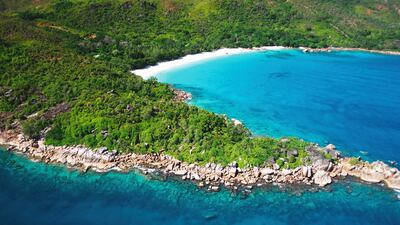
Fully vaccinated passengers travelling to the Seychelles are exempt from Covid-19 PCR testing requirements. Photo: Seychelles Tourism Board -

Travellers must complete a health form online before heading to Mauritius. Photo: Unsplash -
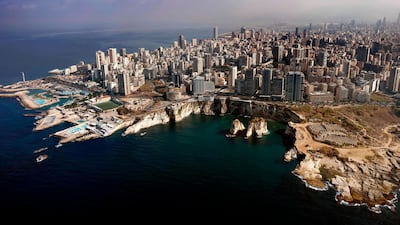
From March 28, registration on the MOPH Pass Platform of the Ministry of Public Health is no longer required for travel to Lebanon. AFP -

There are no longer any Covid‑19 entry restrictions for travel to Jordan. Photo: Alamy -

From May 1, there are no longer any Covid‑19 entry restrictions for travel to Kuwait. Photo: Four Seasons Hotel Kuwait -

From August 1, the New Zealand border is reopening to all tourists and visa holders. Courtesy: Tom Roberton -

There are no longer any entry restrictions for travel to Australia. AP -

There are no longer any Covid-19 entry restrictions for travel to South Africa. Alamy Stock Photo -
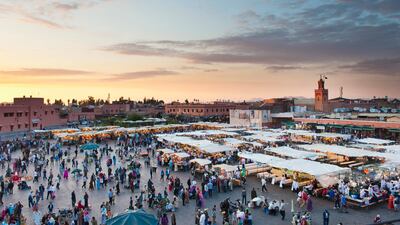
Passengers must fill out an online Public Health Passenger Form before departure to Morocco. Photo: Matthew Williams-Ellis/Robert Harding World Imagery/Corbis -

There are no longer any Covid‑19 entry requirements for travel to Egypt. AP Photo -

Travellers to Greece are no longer required to have a Covid-19 vaccination certificate or a Covid-19 test result. AFP -

Passengers travelling to France from the UAE need proof of vaccination, or a negative PCR result from the previous 72 hours. AFP -

Visitors to Switzerland will no longer be required to carry Covid‑19 test, recovery or vaccination certificates to enter the country. AFP -

Travellers to Spain must make sure they have had a booster shot if their second vaccine dose was more than 270 days ago. Getty -

There are no longer any vaccination, PCR test or quarantine requirements to enter the UK. EPA


Mask-wearing in public is still mandatory in Italy and the country’s health minister, Roberto Speranza, has urged people who are infected to “do their duty” and stay at home.
On the eve of the start of the school summer holidays on Thursday, France recorded more than 200,000 Covid-19 cases in 24 hours, prompting the newly-appointed French Health Minister Francois Braun to recommend that people wear a mask in crowded places and on public transport.
The mayor of Nice, a hub for vacationers on the French Riviera, is making mask-wearing obligatory on all local transport from Monday.
There are concerns that the rapidly rising number of cases risk ruining travel plans, as well as burdening an already stretched healthcare system with sick tourists.
Health officials are worried that soaring cases could lead to more deaths and, in some cases, are calling for a reintroduction of face masks and other measures to curb the spread.
Greece, Spain and Germany, as well as more distant popular holiday destinations like Morocco and Tunisia, are all recording significant rises in cases.
In Germany, where the number of deaths from Covid-19 are at about 500 a week, people are required to wear medical masks on public transport and in hospitals and medical practices, but the German chancellor, Olaf Scholz, has said widespread mask-wearing could be obligatory again in autumn and winter.
Greece, where British nationals usually make more than three million visits to annually, has seen a surge in infections as the country opens itself up to tourists with virtually no restrictions.
After imposing one of the strictest border rules in Europe at the peak of the pandemic, all but decimating Greece’s much-needed tourist industry, the Mediterranean country has now dispensed with its former entry requirements, including vaccinations or negative PCR tests.
Face masks are still obligatory in public indoor spaces, however, including hospitals, as well as on public transport and cruise ships.
The country’s health minister, Thanos Plevris, said in April the rules would be suspended from May 1 until the end of August and would be reviewed again in September.
Travellers are being urged to exercise personal responsibility with some encouraged to take out additional travel and health insurance in the event they are taken ill abroad or holidays are cancelled.
The EMA is advising people aged 60 and “medically vulnerable persons of any age” to get a second booster.

