

The UK's Queen Elizabeth II used a buggy to tour the Chelsea Flower Show on Monday, the first time she has opted to use the mode of transport at the annual event.
A day before the event opens to the public, the 96-year-old monarch toured about 10 gardens.
To help with her mobility problems, she was transported around the vast site in the vehicle, driven by a chauffeur in a peaked cap.
“Adjustments have been made for the queen’s comfort,” said a Buckingham Palace spokeswoman.
It is the first time in nearly a decade that the monarch is believed to have used a buggy at an official engagement.
The palace confirmed the vehicle, which was built by Danish firm Garia, was a Royal Household buggy.
The Sun reported in March that the queen had taken delivery of the new £62,000 ($78.000) luxury golf buggy, which has a lithium battery, leather seats and bluetooth speakers, to help her get around Windsor.
The queen was seen in a golf buggy nine years ago in 2013 during the Coronation Festival in the gardens of Buckingham Palace.
-
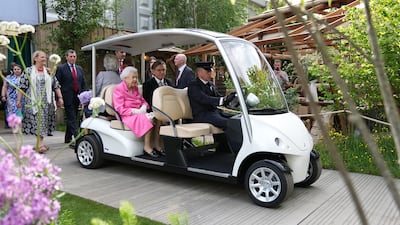
Britain's Queen Elizabeth II begins her tour of the annual Chelsea Flower Show in west London in an electric buggy. PA -
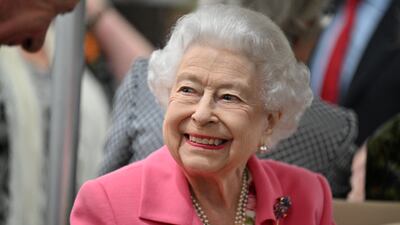
Among the attractions at the Chelsea Flower Show, Queen Elizabeth visited a display dedicated to her 70 years on the British throne. Reuters -
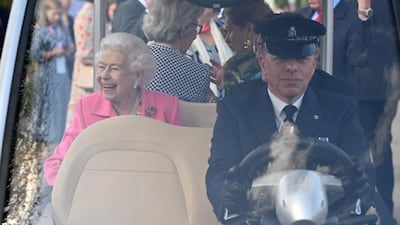
To help with her mobility, Queen Elizabeth was driven around the vast Chelsea Flower Show site in an electric buggy with a uniformed chauffeur at the wheel. AFP -
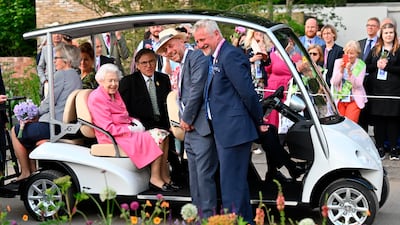
This year's visit to the Chelsea Flower Show is the first time in nearly a decade that Queen Elizabeth is believed to have used a buggy at an official engagement. AP -
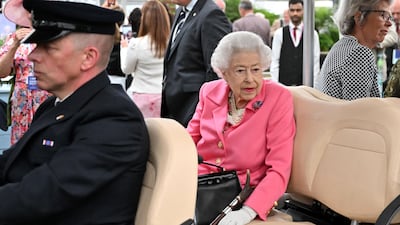
Buckingham Palace, the administrative centre of the British monarchy, said the vehicle used by Queen Elizabeth was built by Danish firm Garia and designated a Royal Household buggy. AFP -
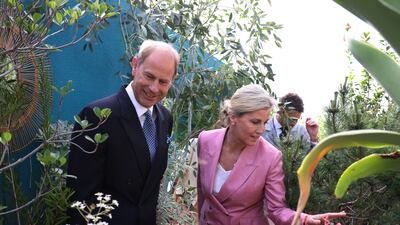
Prince Edward, Earl of Wessex, Queen Elizabeth's youngest son, and Sophie, Countess of Wessex, enjoy a tour of the Chelsea Flower Show. Getty Images -
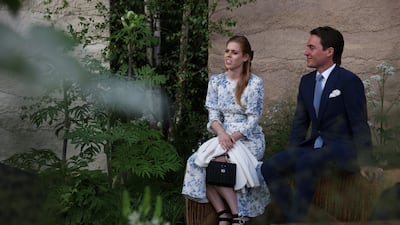
Princess Beatrice, elder daughter of Prince Andrew, Duke of York, and Edoardo Mapelli Mozzi, her husband, admire one of the gardens at the Chelsea Flower Show. Getty


She also used one during a tour of Australia in 2011, when she visited Government House in Canberra.
“It’s an extremely practical arrangement that will allow the queen to take part in as many engagements as she is able to do,” said Joe Little of Majesty magazine.
The move follows in the footsteps of the Queen Mother, who toured the grounds of the Chelsea Flower Show in 2001 in what was nicknamed the Queen Mum Mobile — a bespoke golf cart painted in light blue and gold candy-stripe racing colours.
The queen, who confessed during an audience in February to not being able to move, is 10 days away from the start of her high-profile jubilee celebrations.
Queen Elizabeth II at the Chelsea Flower Show through the years – in pictures
-
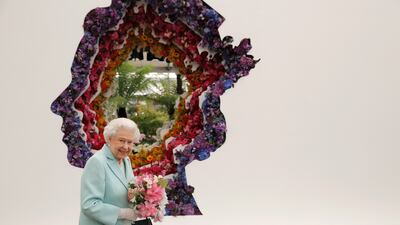
Queen Elizabeth II has been a regular visitor at Chelsea Flower Show over the years. The world famous Royal Horticultural Society event has run annually since 1913. Getty Images -
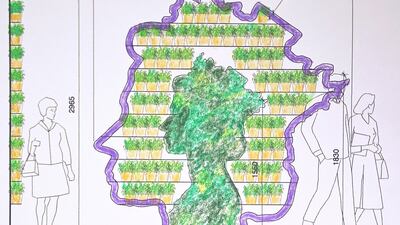
This year there are plans for a floral sculpture portrait of the queen, which will be among the tributes in celebration of her platinum jubilee. PA -
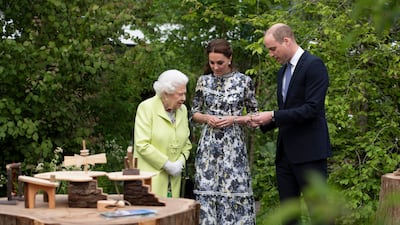
Queen Elizabeth is shown around 'Back to Nature' by Prince William and his wife Catherine at the Chelsea Flower Show in 2019. Getty Images -
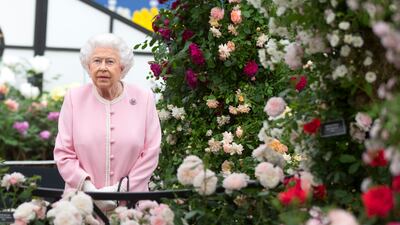
Queen Elizabeth looks at a display of roses in 2018. Getty Images -
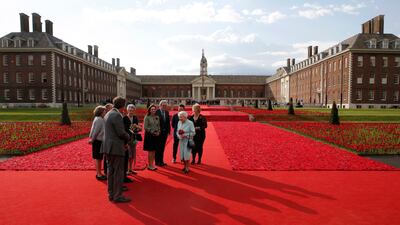
Queen Elizabeth visits the 5000 Poppies Garden at the 2016 Chelsea Flower Show. Getty Images -
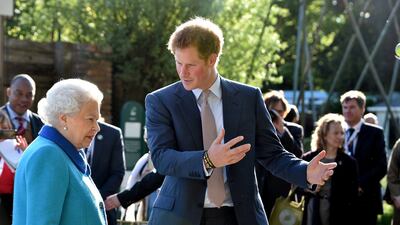
Queen Elizabeth and her grandson Prince Harry attend the 2015 show. Getty Images -
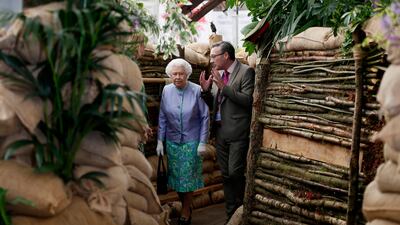
Queen Elizabeth looks at the Birmingham City Council garden in 2014. Getty Images -
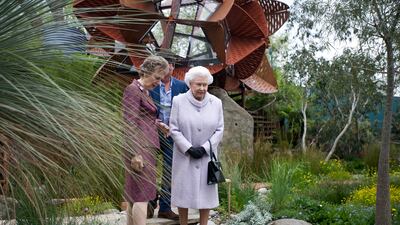
Queen Elizabeth visits the Australian Garden at the Chelsea Flower Show in 2013. Getty Images -
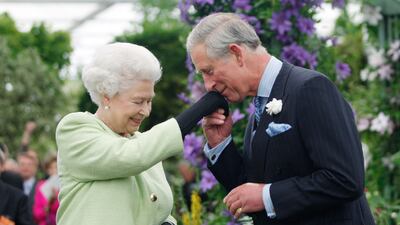
Queen Elizabeth presents her son Prince Charles with the Royal Horticultural Society's Victoria Medal of Honour at the 2009 show. Getty Images -
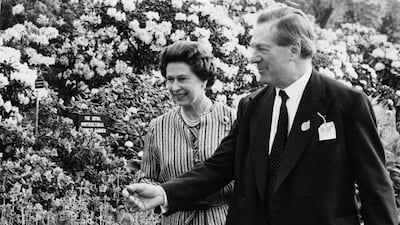
Queen Elizabeth on a tour of the Chelsea Flower Show in 1980. Getty Images -
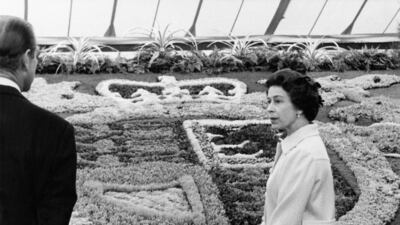
Queen Elizabeth and her husband Prince Philip viewing the carpet bedding of the Royal Coat of Arms in 1975. Getty Images -

Queen Elizabeth views the garden displays in 1973. Getty Images -
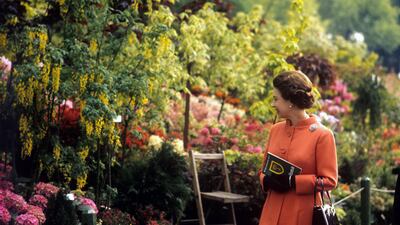
Queen Elizabeth during her 1971 visit to the Chelsea Flower Show. PA -
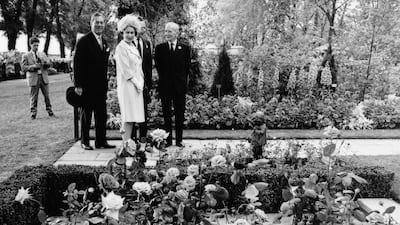
Queen Elizabeth viewing a rose bed, exhibited by 'Popular Gardening' magazine, during a tour in 1962. Getty Images


She made a surprise appearance at the opening of the Elizabeth Line last week and went to the Royal Windsor Horse Show as well as the Gallop Through History equestrian event this month, but missed the State Opening of Parliament.
The palace said last week that the queen was hoping to be able to visit Chelsea and she arrived a little after 5.40pm, dressed in a vibrant pink outfit, smiling as she sat in the white, open-sided vehicle.
Other members of the royal family — the Earl and Countess of Wessex, Princess Beatrice, the Duke and Duchess of Gloucester, the Duke of Kent, Prince and Princess Michael of Kent and Princess Alexandra — are also touring the show at the Royal Hospital Chelsea in London.
The monarch’s jubilee is one of the themes of this year’s show.
Among the displays is The Queen’s Platinum Jubilee Garden by renowned florist Simon Lycett, which features laser-cut steel silhouettes of the monarch, surrounded by 70 planted terracotta pots, representing each year of her reign.
It is covered on both sides with an assortment of native British-grown tree branches with connecting inner shelves arranged in the pots, handmade in Warwickshire, and planted with lily of the valley, one of the queen’s favourite plants and which featured in her coronation bouquet.
Another installation transports visitors to one of the queen’s favourite places, with a canopy of flowers including fresh delphiniums, emulating the colours and plants of the Scottish landscape near the royal family’s Balmoral Castle estate in Aberdeenshire.
In the show’s Great Pavilion, the monument is surrounded by a photography exhibition of the queen visiting the show throughout her reign.
The show has returned to its traditional May slot for the first time since the pandemic struck, with other themes including wildlife and well-being.
The queen has been the Royal Horticultural Society’s royal patron since 1952 and was a regular visitor to the garden show with her parents as a child.
She has attended more than 50 times during her 70-year reign.
Queen Elizabeth II's 70-year reign - in pictures
-
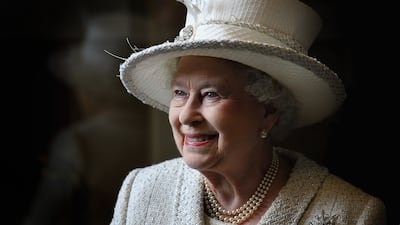
Queen Elizabeth II celebrated her platinum jubilee in 2022, the first British monarch to reign for 70 years. Here 'The National' looks back at each of the years the queen has been on the throne. All photos: Getty Images -
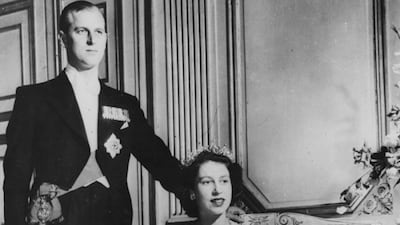
1952: A portrait of the queen and Prince Philip, the Duke of Edinburgh. -
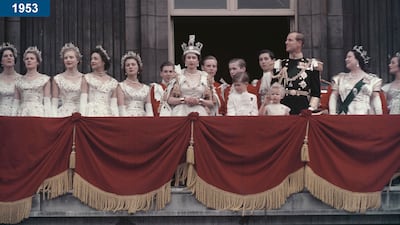
1953: The queen and the Duke of Edinburgh wave at the crowds from the balcony of Buckingham Palace in London, after the queen's coronation, on June 2. -

1954: The queen talking to an injured ex-serviceman during a visit to Repatriation General Hospital in Hobart, Australia. -
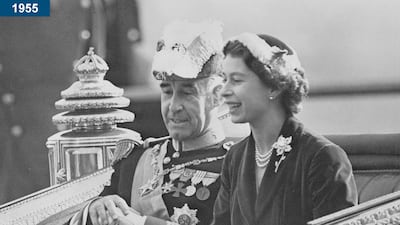
1955: Gen Francisco Craveiro Lopes, President of Portugal, leaves Westminster Pier for Buckingham Palace by coach, with the queen. -
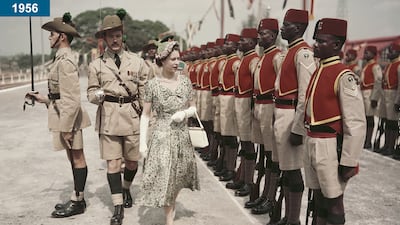
1956: The queen inspects the Queen's Own Nigeria Regiment, at Kaduna Airport, Nigeria, during her Commonwealth tour. -
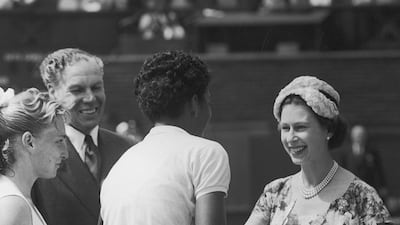
1957: The queen presents the trophy to American tennis player Althea Gibson after she won the women's singles tennis title at Wimbledon. -
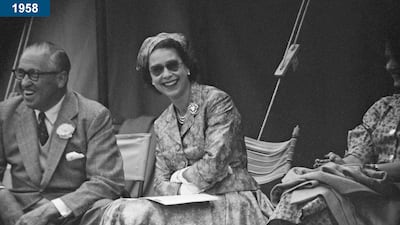
1958: The queen shares a joke while watching Prince Philip during a cricket match at Highclere Castle, Hampshire. -
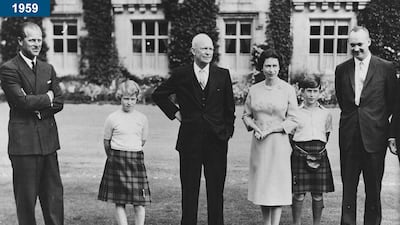
1959: US president Dwight D Eisenhower with Prince Philip, Princess Anne, the queen, Prince Charles and John Eisenhower, at Balmoral Castle, Scotland. -
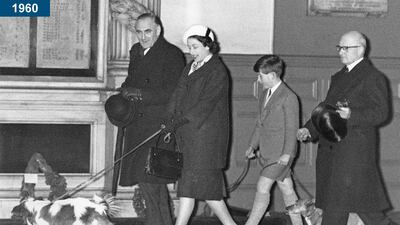
1960: The queen and Prince Charles walk through Liverpool Street Station in London with their dogs, having returned by train from Sandringham after the Christmas holidays. -
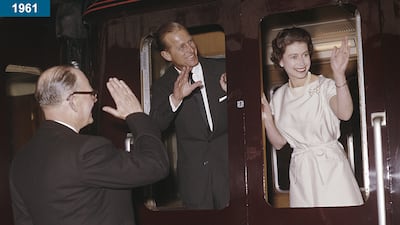
1961: The queen and Prince Philip leave Manchester by train. -
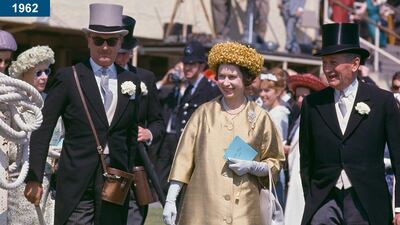
1962: The queen attends the races at Epsom Downs Racecourse in Surrey. -
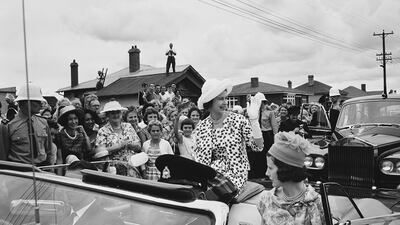
1963: The queen waves to residents from the rear of an open top car in the town of Russell, during a Commonwealth visit to New Zealand. -
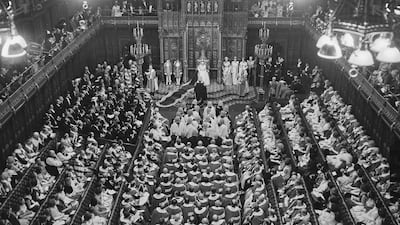
1964: The queen during the State Opening of Parliament ceremony in the chamber of the House of Lords, at the Palace of Westminster in London. -
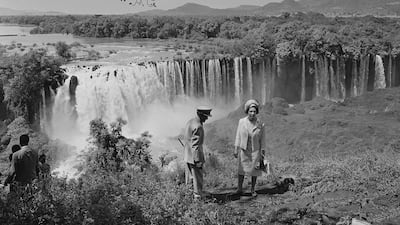
1965: At the Tissisal Falls, where the Blue Nile begins, with Emperor Haile Selassie during a royal visit to Ethiopia. -
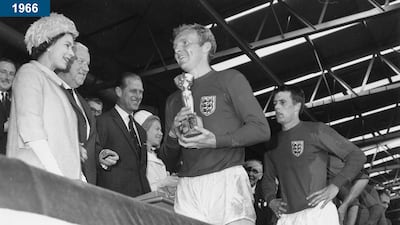
1966: The queen smiling after presenting England captain Bobby Moore with the Jules Rimet trophy, following England's 4-2 victory over West Germany in the World Cup Final at Wembley Stadium, London. -
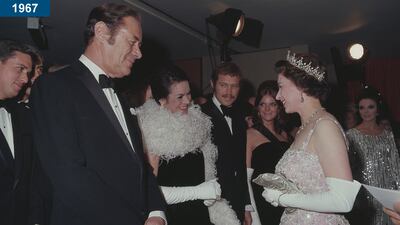
1967: The queen meets actor Rex Harrison and his wife Rachel Roberts at the premiere of the film 'Dr Dolittle' at the Odeon Marble Arch, London. -
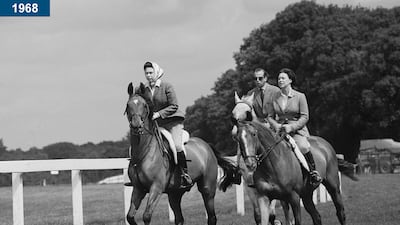
1968: The queen, Princess Margaret, and Prince Edward, Duke of Kent, riding at Ascot Racecourse. -
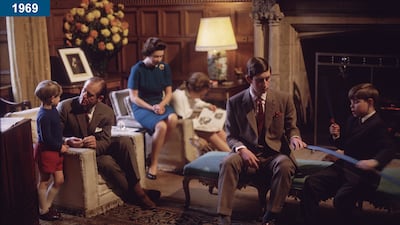
1969: The royal family at Windsor: Prince Edward, the queen, Princess Anne, Prince Charles and Prince Andrew. -
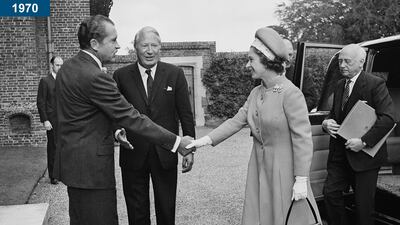
1970: US president Richard Nixon and British prime minister Edward Heath meet the queen for lunch at Chequers. -
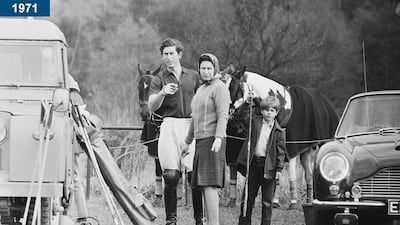
1971: Prince Charles takes part in a polo match in Windsor Great Park, accompanied by the queen and Prince Edward. -
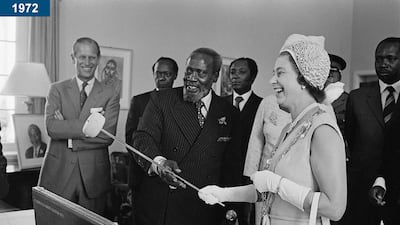
1972: The queen and Prince Philip with the president of Kenya, Jomo Kenyatta, during a visit to Kenya. -
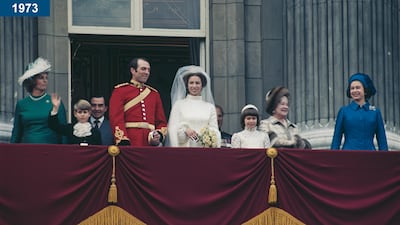
1973: Anne, the Princess Royal and Mark Phillips with the queen on the balcony of Buckingham Palace in London after their wedding. -
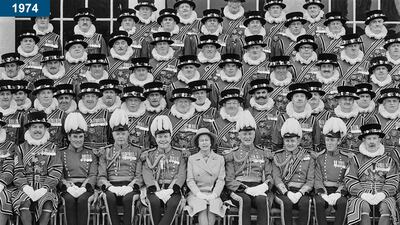
1974: The queen with the Queen's Body Guard of the Yeomen of the Guard at Buckingham Palace in London. -
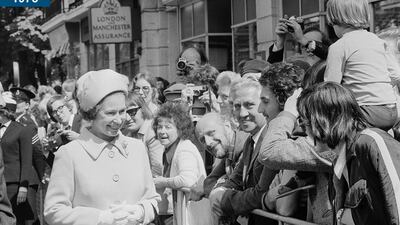
1975: The queen greets the public while visiting Greenwich, London. -
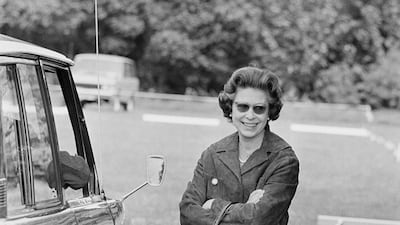
1976: The queen looking relaxed standing next to her car. -
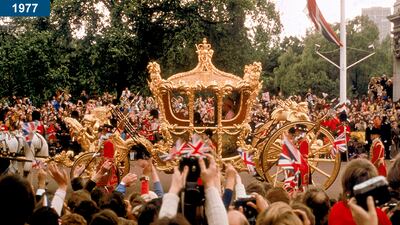
1977: The crowd cheers the queen in her gilded state coach during her silver jubilee procession. -
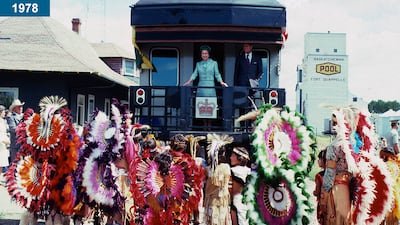
1978: The queen and Prince Philip are greeted by Native Canadians as they arrive by train during a tour of Canada. -
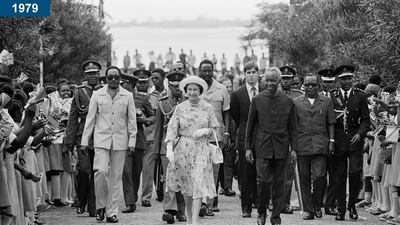
1979: The queen is met by president Julius Nyerere at Dar es Salaam airport, at the start of a three-day state visit to Tanzania. -
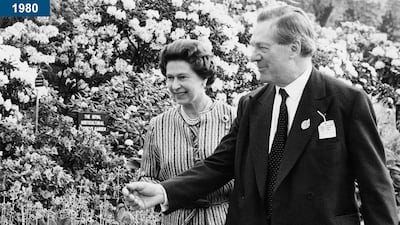
1980: On a tour of the Chelsea Flower Show, London. -
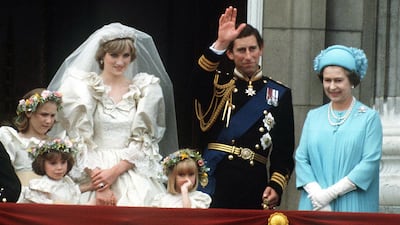
1981: The Prince and Princess of Wales pose on the balcony of Buckingham Palace on their wedding day, with the queen. -
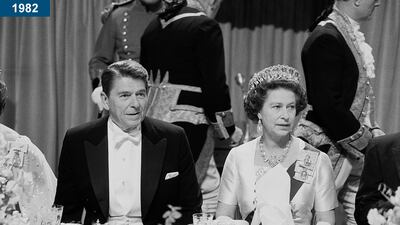
1982: US president Ronald Reagan and the queen at a gala dinner at Windsor Castle. -
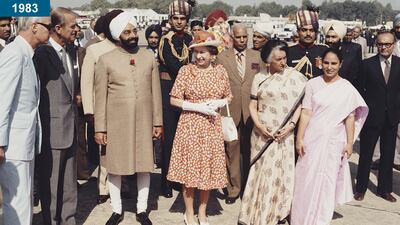
1983: The queen and Prince Philip are met by Indian prime minister Indira Gandhi and president Zail Singh at Palam Airport, New Delhi, during a Commonwealth tour of India. -
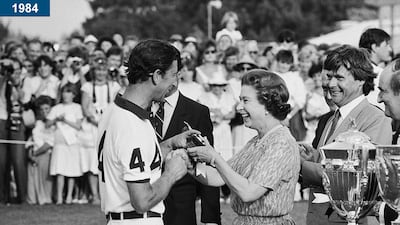
1984: Prince Charles is presented with an award by his mother, after a polo match at Smiths Lawn in Windsor. -
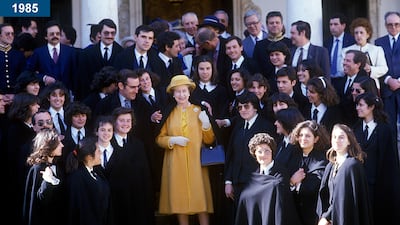
1985: The queen visits the University of Evora during a state visit to Portugal. -
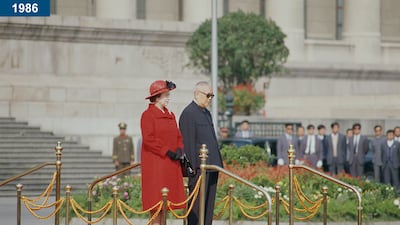
1986: The queen and Li Xiannian, president of China, outside the Great Hall of the People in Beijing during her visit to China. -
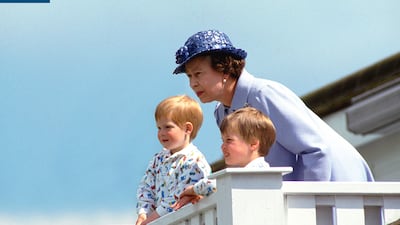
1987: The queen with Prince William and Prince Harry in the Royal Box at Guards Polo Club, Smiths Lawn, Windsor. -

1988: US president Ronald Reagan and his wife Nancy Reagan chatting with the queen at Buckingham Palace. -
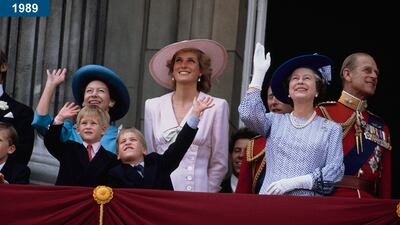
1989: The royal family gather on the balcony of Buckingham Palace in London for the Trooping the Colour ceremony. Pictured are Princess Margaret, Princess Diana, Prince Harry, Prince William, the queen and the Duke of Edinburgh. -
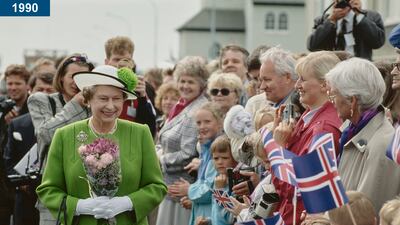
1990: The queen on a walkabout in Reykjavik, during a three-day state visit to Iceland. -
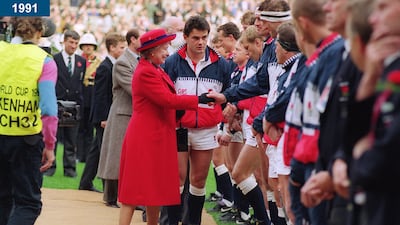
1991: England captain Will Carling introduces the queen to the England team before the Rugby World Cup Final against Australia at Twickenham. -
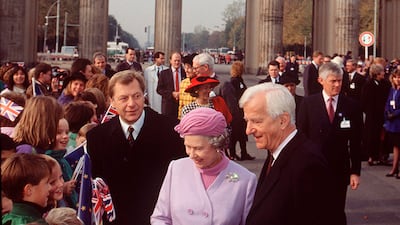
1992: The queen at the Brandenburg Gate in Berlin during an official tour of Germany. She is seen with President Richard Von Weizsaecker. -
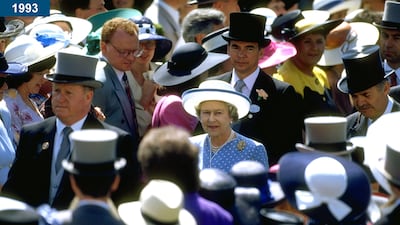
1993: The queen walking through the crowds at Royal Ascot. -
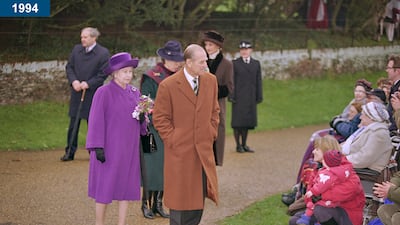
1994: The queen, Princess Anne, Prince Philip and Princess Diana greeting well-wishers as they attend the Christmas Day service at St Mary Magdalene Church on the Sandringham Estate in Norfolk. -
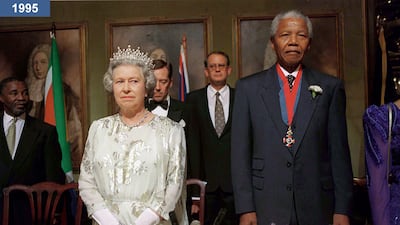
1995: The queen at a banquet in Cape Town, South Africa, with president Nelson Mandela. -
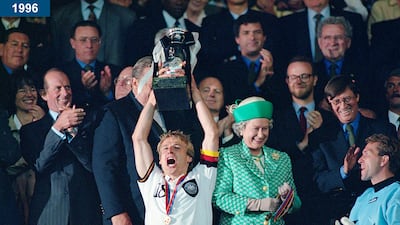
1996: Germany captain Jurgen Klinsmann lifts the trophy as the queen smiles, after the 1996 UEFA European Championships Final against Czech Republic at Wembley Stadium in London. -
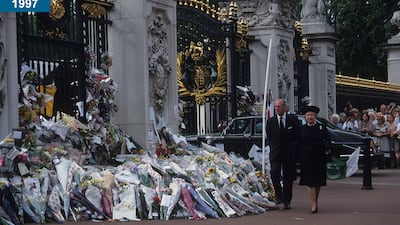
1997: The queen and Prince Philip view tributes from the public outside Buckingham Palace to Diana, Princess of Wales, after her funeral. -
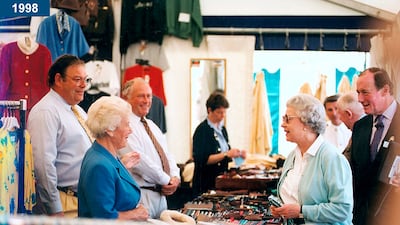
1998: The queen shopping at the trade stands at the Royal Windsor Horse Show. -
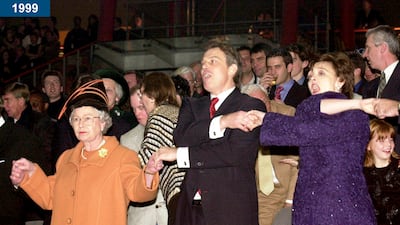
1999: With British prime minister Tony Blair and his wife Cherie Blair during the Millennium New Year celebrations in Greenwich, London. -
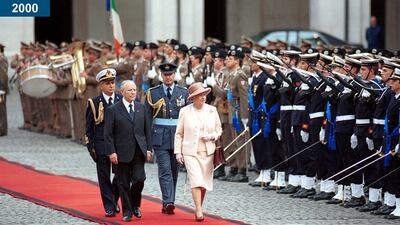
2000: The queen and Italy's president Carlo Azeglio Ciampi walk past the honour guard at the Piazza Di Siena in Rome. -
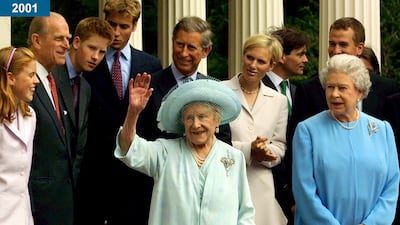
2001: The queen and other members of the royal family appear with the Queen Mother during celebrations to mark her 101st birthday in London. -
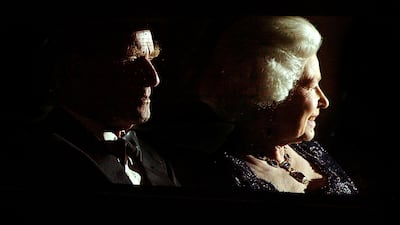
2002: The queen and Prince Philip leave after a party for close friends and family at The Ritz hotel in London. The monarch was thanking them for making her golden jubilee year a success. -
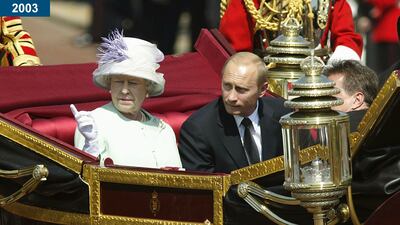
2003: Russian President Vladimir Putin is accompanied by the queen during a procession at the start of his state visit in London. -
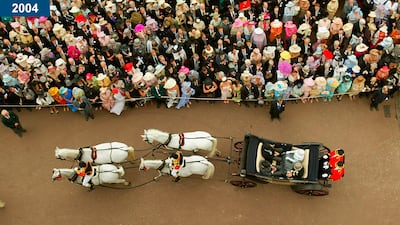
2004: The queen arrives in her horsedrawn carriage to attend Ladies Day at Royal Ascot. -
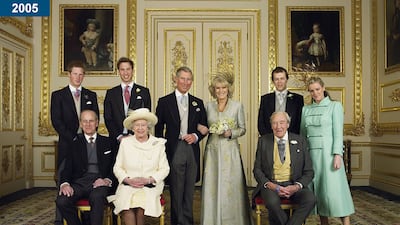
2005: Prince Charles and his bride, Camilla, Duchess of Cornwall, pose with their families and the queen at Windsor Castle after their wedding ceremony. -
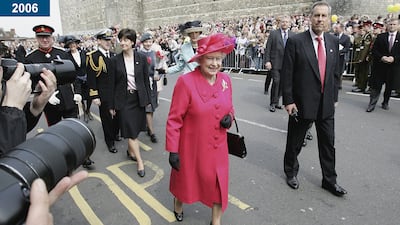
2006: The queen smiles at the crowds in Windsor, during a walk in the town to celebrate her 80th Birthday. -
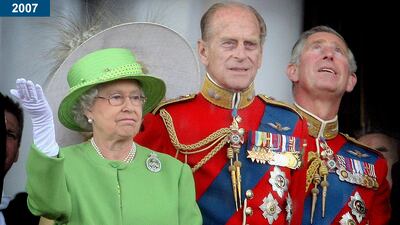
2007: A less-than-impressed queen raises her hand during a downpour as she stands with Prince Philip and Prince Charles on the balcony of Buckingham Palace after the Trooping the Colour ceremony. -
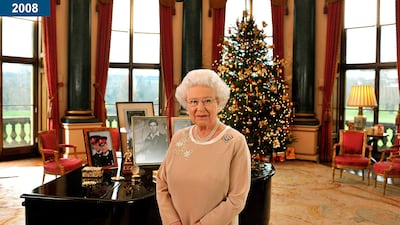
2008: The queen stands in the music room at Buckingham Palace after recording her Christmas day message to the Commonwealth. -
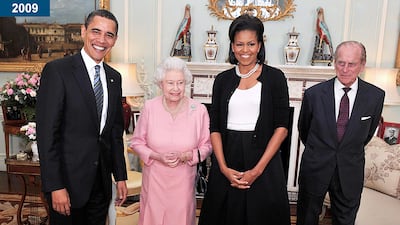
2009: US president Barack Obama and his wife Michelle Obama with the queen and Prince Philip during an audience at Buckingham Palace. -
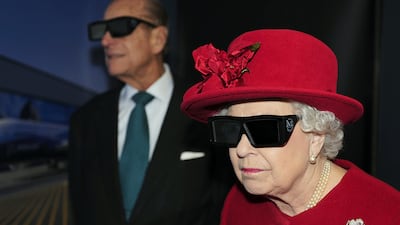
2010: The queen and Prince Philip wear 3D glasses to watch a demonstration, during a visit to the University of Sheffield Advanced Manufacturing Research Centre. -
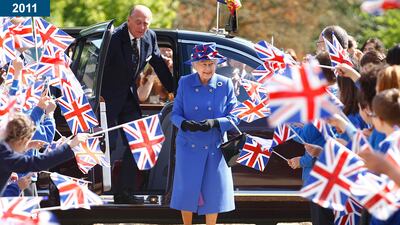
2011: The queen and Prince Philip arrive to open the Sainsbury Laboratory for Plant Sciences at the University of Cambridge Botanic Garden. -
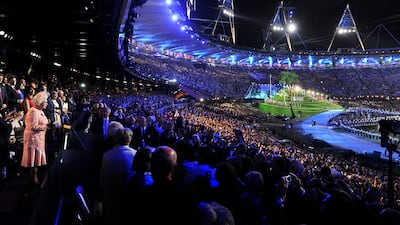
2012: The queen makes a speech at the opening ceremony of the London 2012 Olympic Games in London. -
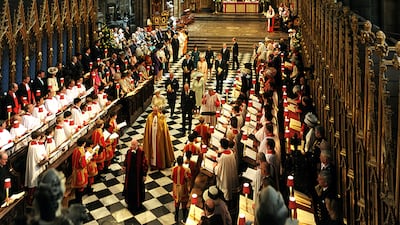
2013: The queen and other members of the royal family leave Westminster Abbey in London, after the service to celebrate the 60th anniversary of the coronation of the queen there. -
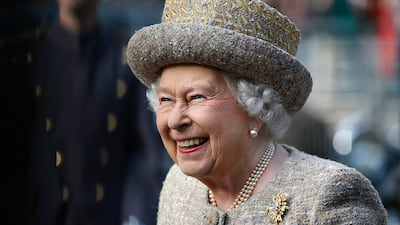
2014: A smiling queen arrives for the opening of the Flanders Fields Memorial Garden at Wellington Barracks in London. -
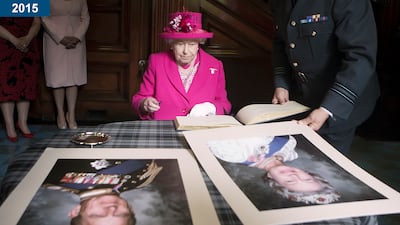
2015: The queen signs a book during a visit to the headquarters of the Royal Auxiliary Air Force's 603 Squadron in Edinburgh, Scotland. -
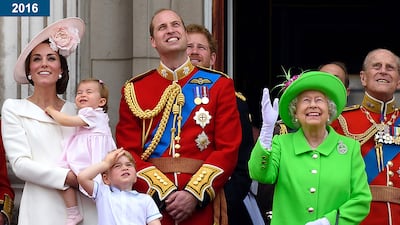
2016: Prince Charles, Catherine, Duchess of Cambridge, Princess Charlotte, Prince George, Prince William, Prince Harry, the queen, and Prince Philip stand on the balcony during the Trooping the Colour, this year marking the Queen's 90th birthday at The Mall. -
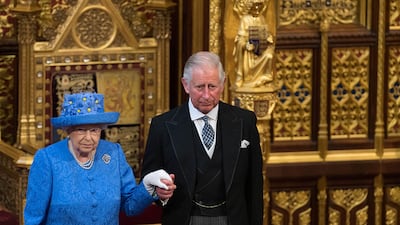
2017: The queen and Prince Charles attend the State Opening Of Parliament in the House of Lords at the Palace of Westminster, London. -
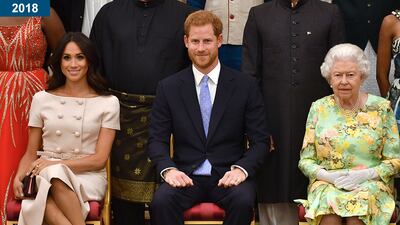
2018: Meghan Markle, Prince Harry, and the queen at the Queen's Young Leaders Awards Ceremony at Buckingham Palace. -
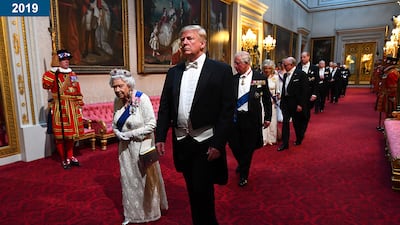
2019: The queen and US president Donald Trump arrive for a state banquet at Buckingham Palace. -
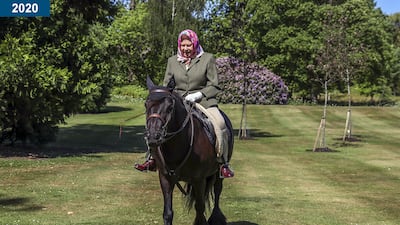
2020: Riding at Windsor. The queen has been in residence at Windsor Castle during the coronavirus pandemic. -

2021: The queen takes her seat at the funeral of Prince Philip, in St George's Chapel at Windsor Castle.



