Britain's Chancellor of the Exchequer Rishi Sunak arrives to attend a Cabinet away day at Middleport Pottery in Stoke on Trent. Getty Images

Sunday Times rich list 2022: Rishi Sunak and Akshata Murty enter with £730m fortune


Paul Carey
  • English
  • Arabic

Rishi Sunak may have seen his political fortunes tumble in recent months, but it does not appear to have dented his financial situation.

The UK chancellor and his wife, Akshata Murty, this made the Sunday Times Rich List for the first time with their joint £730 million ($910.38 million) fortune. Russian billionaires, meanwhile, tumbled down this year’s rankings.

There were a record 177 billionaires in the UK, according to the rankings.

Mr Sunak and his wife’s finances have come under intense scrutiny in recent months.

Last month, it was revealed that Ms Murty had non-dom status, which typically applies to someone who was born overseas and spends much of their time in the UK but still considers another country to be their permanent residence, or “domicile”.

It is estimated that Ms Murty’s non-dom status could have saved her £20 million in taxes on dividends from her shares in Infosys, an Indian IT company founded by her father.

She later agreed to pay UK taxes on her worldwide income.

Mr Sunak was cleared of breaching the ministerial code by Boris Johnson’s standards adviser after considering the tax affairs.

His financial affairs came under particular scrutiny as pressure mounted on him to produce a package of support to ease the cost of living for millions of people struggling with higher food and energy bills. A windfall tax on energy companies is one possibility.

He and his wife donated more than £100,000 to his alma mater, Winchester College, one of the most expensive private schools in Britain.

  • 1. Sri and Gopi Hinduja and family – £28.47 billion. Getty Images
    1. Sri and Gopi Hinduja and family – £28.47 billion. Getty Images
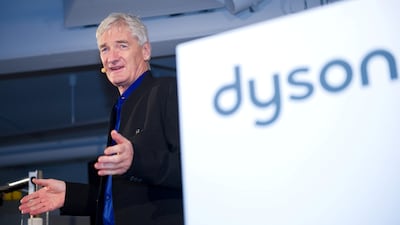
  • 2. Sir James Dyson and family – £23 billion. EPA
    2. Sir James Dyson and family – £23 billion. EPA
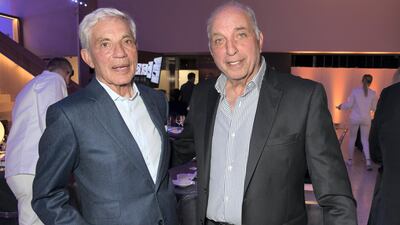
  • 3. David and Simon Reuben and family – £22.26 billion. Getty Images
    3. David and Simon Reuben and family – £22.26 billion. Getty Images
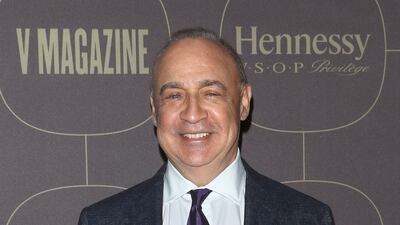
  • 4. Sir Leonard Blavatnik – £20 billion. WireImage
    4. Sir Leonard Blavatnik – £20 billion. WireImage
  • 5. Guillaume Pousaz – £19.26 billion. Photo: Checkout
    5. Guillaume Pousaz – £19.26 billion. Photo: Checkout
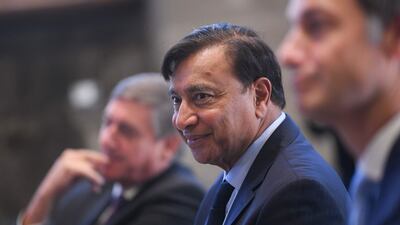
  • 6. Lakshmi Mittal and family – £17 billion. AFP
    6. Lakshmi Mittal and family – £17 billion. AFP
  • 7. Christoph Henkel, centre, and family – £15 billion. Getty Images
    7. Christoph Henkel, centre, and family – £15 billion. Getty Images
  • 8. Guy, George, Galen Jr and Alannah Weston – above with her father, Galen, now deceased – and family – £13.5 billion. Getty Images
    8. Guy, George, Galen Jr and Alannah Weston – above with her father, Galen, now deceased – and family – £13.5 billion. Getty Images
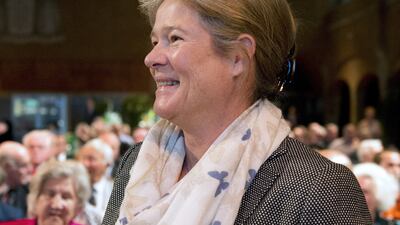
  • 9. Kirsten, pictured, and Jorn Rausing – £12 billion. PA
    9. Kirsten, pictured, and Jorn Rausing – £12 billion. PA
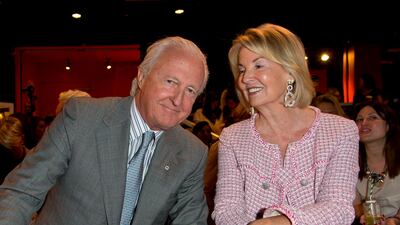
  • 10. Charlene de Carvalho-Heineken, pictured, and Michel de Carvalho – £11.42 billion. AFP
    10. Charlene de Carvalho-Heineken, pictured, and Michel de Carvalho – £11.42 billion. AFP

He also saw his political fortunes dive after he was fined, with Prime Minister Boris Johnson, over a breach of Covid regulations at Downing Street.

Justice Secretary Dominic Raab said it is “fantastic” that Mr Sunak has joined the rich list.

Mr Raab told Times Radio: “He’s a fantastic example of someone who’s been successful in business, who’s coming to make a big impact in public service.

“I think we want more of those people. I think it’s fantastic that you’ve got someone of British-Indian origin, showing all people in our country that you can get to the top of politics.

“And frankly, I think if I understood correctly, the Sunday Times Rich List was a reflection of not just him but his wife. His wife is an incredibly successful entrepreneur in her own right.

“Again someone that’s here, British-Indian, and actually I think we want to see more women succeeding in both business and politics.”

On Friday morning, the Sunday Times Rich List revealed the couple featured at 222 in the list with the joint forecast of £730 million, driven by Ms Murty’s £690 million stake in Infosys.

Meanwhile, Sri and Gopi Hinduja, who run the Mumbai-based conglomerate Hinduja Group, jumped to the top of the list after their wealth grew by more than £11 billion to £28.47 billion.

Entrepreneur Sir James Dyson and his family moved up to second in the list after a £6.7 billion increase to £23 billion.

Property investors David and Simon Reuben meanwhile were third with £22.26 billion, while Ukrainian-born Sir Leonard Blavatnik dropped from top spot to fourth.

One notable absentee from the upper reaches of the list is Roman Abramovich.

The former Chelsea FC owner slid from eighth to 28th in the rankings after his finances plummeted from £12.2 billion last year to £6 billion this year after sanctions, the enforced sale of Chelsea and the sharp fall in his Evraz shares.

Fellow Russians Alisher Usmanov and Mikhail Fridman dropped down the list after the value of their assets was hammered by financial measures in response to Russia’s invasion of Ukraine.

It comes as typical UK households face increased financial pressure from rampant inflation, which struck a 40-year high of 9 per cent in April.

Overall, the richest 250 in the UK this year are worth £710.72 billion, compared with £658.09 billion in 2021, an 8 per cent rise on last year, The Sunday Times said.

The 20 richest people in the UK according to the Sunday Times Rich List

  1. Sri and Gopi Hinduja and family – £28.47 billion
  2. Sir James Dyson and family – £23 billion
  3. David and Simon Reuben and family – £22.26 billion
  4. Sir Leonard Blavatnik – £20 billion
  5. Guillaume Pousaz – £19.26 billion
  6. Lakshmi Mittal and family – £17 billion
  7. Christoph Henkel and family – £15 billion
  8. Guy, George, Alannah and Galen Weston and family – £13.5 billion
  9. Kirsten and Jorn Rausing – £12 billion
  10. Charlene de Carvalho-Heineken and Michel de Carvalho – £11.42 billion
  11. Michael Platt – £10 billion
  12. Alisher Usmanov – £10 billion
  13. The Duke of Westminster and the Grosvenor family – £9.73 billion
  14. Barnaby and Merlin Swire and family – £9.6 billion
  15. Marit, Lisbet, Sigrid and Hans Rausing – £9.49 billion
  16. Anil Agarwal – £9.2 billion
  17. Denise, John and Peter Coates – £8.64 billion
  18. John Fredriksen and family – £8.31 billion
  19. Mikhail Fridman – £8.22 billion
  20. Moshe Kantor – £8 billion
SHAITTAN
%3Cp%3E%3Cstrong%3EDirector%3A%20%3C%2Fstrong%3EVikas%20Bahl%3Cbr%3E%3Cstrong%3EStarring%3A%20%3C%2Fstrong%3EAjay%20Devgn%2C%20R.%20Madhavan%2C%20Jyothika%2C%20Janaki%20Bodiwala%3Cbr%3E%3Cstrong%3ERating%3A%20%3C%2Fstrong%3E3%2F5%3C%2Fp%3E%0A
Islamophobia definition

A widely accepted definition was made by the All Party Parliamentary Group on British Muslims in 2019: “Islamophobia is rooted in racism and is a type of racism that targets expressions of Muslimness or perceived Muslimness.” It further defines it as “inciting hatred or violence against Muslims”.

Mercer, the investment consulting arm of US services company Marsh & McLennan, expects its wealth division to at least double its assets under management (AUM) in the Middle East as wealth in the region continues to grow despite economic headwinds, a company official said.

Mercer Wealth, which globally has $160 billion in AUM, plans to boost its AUM in the region to $2-$3bn in the next 2-3 years from the present $1bn, said Yasir AbuShaban, a Dubai-based principal with Mercer Wealth.

Within the next two to three years, we are looking at reaching $2 to $3 billion as a conservative estimate and we do see an opportunity to do so,” said Mr AbuShaban.

Mercer does not directly make investments, but allocates clients’ money they have discretion to, to professional asset managers. They also provide advice to clients.

“We have buying power. We can negotiate on their (client’s) behalf with asset managers to provide them lower fees than they otherwise would have to get on their own,” he added.

Mercer Wealth’s clients include sovereign wealth funds, family offices, and insurance companies among others.

From its office in Dubai, Mercer also looks after Africa, India and Turkey, where they also see opportunity for growth.

Wealth creation in Middle East and Africa (MEA) grew 8.5 per cent to $8.1 trillion last year from $7.5tn in 2015, higher than last year’s global average of 6 per cent and the second-highest growth in a region after Asia-Pacific which grew 9.9 per cent, according to consultancy Boston Consulting Group (BCG). In the region, where wealth grew just 1.9 per cent in 2015 compared with 2014, a pickup in oil prices has helped in wealth generation.

BCG is forecasting MEA wealth will rise to $12tn by 2021, growing at an annual average of 8 per cent.

Drivers of wealth generation in the region will be split evenly between new wealth creation and growth of performance of existing assets, according to BCG.

Another general trend in the region is clients’ looking for a comprehensive approach to investing, according to Mr AbuShaban.

“Institutional investors or some of the families are seeing a slowdown in the available capital they have to invest and in that sense they are looking at optimizing the way they manage their portfolios and making sure they are not investing haphazardly and different parts of their investment are working together,” said Mr AbuShaban.

Some clients also have a higher appetite for risk, given the low interest-rate environment that does not provide enough yield for some institutional investors. These clients are keen to invest in illiquid assets, such as private equity and infrastructure.

“What we have seen is a desire for higher returns in what has been a low-return environment specifically in various fixed income or bonds,” he said.

“In this environment, we have seen a de facto increase in the risk that clients are taking in things like illiquid investments, private equity investments, infrastructure and private debt, those kind of investments were higher illiquidity results in incrementally higher returns.”

The Abu Dhabi Investment Authority, one of the largest sovereign wealth funds, said in its 2016 report that has gradually increased its exposure in direct private equity and private credit transactions, mainly in Asian markets and especially in China and India. The authority’s private equity department focused on structured equities owing to “their defensive characteristics.”

Bahrain%20GP
%3Cp%3EFriday%20qualifying%3A%207pm%20(8pm%20UAE)%3C%2Fp%3E%0A%3Cp%3ESaturday%20race%3A%207pm%20(UAE)%3C%2Fp%3E%0A%3Cp%3ETV%3A%20BeIN%20Sports%3C%2Fp%3E%0A
The President's Cake

Director: Hasan Hadi

Starring: Baneen Ahmad Nayyef, Waheed Thabet Khreibat, Sajad Mohamad Qasem 

Rating: 4/5

Tributes from the UAE's personal finance community

• Sebastien Aguilar, who heads SimplyFI.org, a non-profit community where people learn to invest Bogleheads’ style

“It is thanks to Jack Bogle’s work that this community exists and thanks to his work that many investors now get the full benefits of long term, buy and hold stock market investing.

Compared to the industry, investing using the common sense approach of a Boglehead saves a lot in costs and guarantees higher returns than the average actively managed fund over the long term. 

From a personal perspective, learning how to invest using Bogle’s approach was a turning point in my life. I quickly realised there was no point chasing returns and paying expensive advisers or platforms. Once money is taken care off, you can work on what truly matters, such as family, relationships or other projects. I owe Jack Bogle for that.”

• Sam Instone, director of financial advisory firm AES International

"Thought to have saved investors over a trillion dollars, Jack Bogle’s ideas truly changed the way the world invests. Shaped by his own personal experiences, his philosophy and basic rules for investors challenged the status quo of a self-interested global industry and eventually prevailed.  Loathed by many big companies and commission-driven salespeople, he has transformed the way well-informed investors and professional advisers make decisions."

• Demos Kyprianou, a board member of SimplyFI.org

"Jack Bogle for me was a rebel, a revolutionary who changed the industry and gave the little guy like me, a chance. He was also a mentor who inspired me to take the leap and take control of my own finances."

• Steve Cronin, founder of DeadSimpleSaving.com

"Obsessed with reducing fees, Jack Bogle structured Vanguard to be owned by its clients – that way the priority would be fee minimisation for clients rather than profit maximisation for the company.

His real gift to us has been the ability to invest in the stock market (buy and hold for the long term) rather than be forced to speculate (try to make profits in the shorter term) or even worse have others speculate on our behalf.

Bogle has given countless investors the ability to get on with their life while growing their wealth in the background as fast as possible. The Financial Independence movement would barely exist without this."

• Zach Holz, who blogs about financial independence at The Happiest Teacher

"Jack Bogle was one of the greatest forces for wealth democratisation the world has ever seen.  He allowed people a way to be free from the parasitical "financial advisers" whose only real concern are the fat fees they get from selling you over-complicated "products" that have caused millions of people all around the world real harm.”

• Tuan Phan, a board member of SimplyFI.org

"In an industry that’s synonymous with greed, Jack Bogle was a lone wolf, swimming against the tide. When others were incentivised to enrich themselves, he stood by the ‘fiduciary’ standard – something that is badly needed in the financial industry of the UAE."

THE%20SPECS
%3Cp%3EBattery%3A%2060kW%20lithium-ion%20phosphate%3Cbr%3EPower%3A%20Up%20to%20201bhp%3Cbr%3E0%20to%20100kph%3A%207.3%20seconds%3Cbr%3ERange%3A%20418km%3Cbr%3EPrice%3A%20From%20Dh149%2C900%3Cbr%3EAvailable%3A%20Now%3C%2Fp%3E%0A
Updated: May 20, 2022, 8:43 AM