


An English surgeon who bought an extremely rare 18th century Chinese vase for a few hundred pounds in the 1980s has sold it at auction for almost £1.5 million ($1.8m).
The 60cm vase was created for the court of the Qianlong Emperor in the 1700s, is blue-glazed with silver and gold, and decorated with cranes and bats.
The original owner passed the vase to his son who placed it in his kitchen where a visiting antiques specialist saw it and realised its true value.
Dreweatts Auctioneers in Berkshire had estimated its value at between £100,000 and £150,000.
But on Wednesday the piece fetched £1.2m, with a buyer’s premium bringing the total closer to £1.5m.
It was reportedly sold to an international buyer who was bidding by telephone.
“We are delighted with this exceptional result, said Mark Newstead from Dreweatts.
"We saw widespread interest from China … America and the UK, which resulted in very competitive bidding."
This vase was described as “a testament to the creativity” of craftsmen working during the Qianlong period, who used “enamelling techniques” to cater to the emperor’s taste in exotic styles.
-
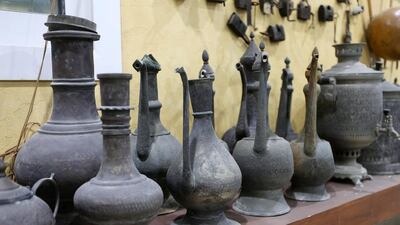
-
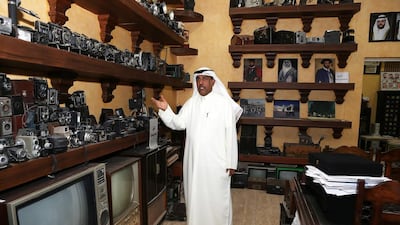
Jasim Al Ali shows off his antique cameras in his home museum in Sharjah. Pawan Singh / The National -
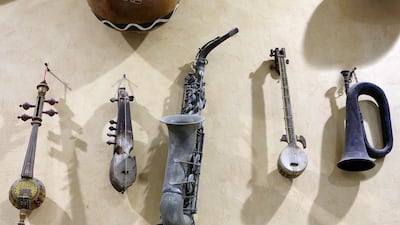
Old instruments on display at the museum of Jasim Al Ali at his home in Sharjah. Pawan Singh / The National -
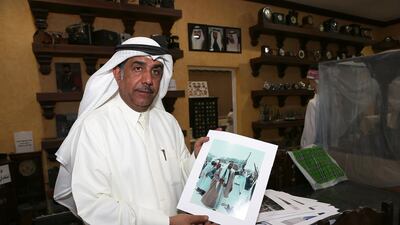
Jasim Al Ali holds a picture of Sheikh Zayed which he keeps on display in this museum at his home in Al Jurainah, Sharjah. Pawan Singh / The National -
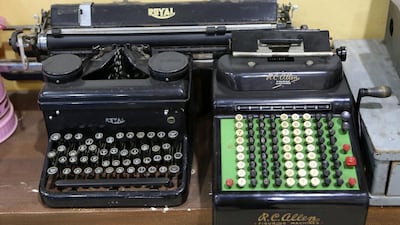
Typewriters on display Jasim Al Ali's museum in his Sharjah home. Pawan Singh / The National -
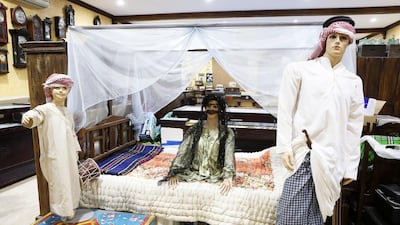
An old Emirati bed on display in the home of Jasim Al Ali in Sharjah. Pawan Singh / The National -
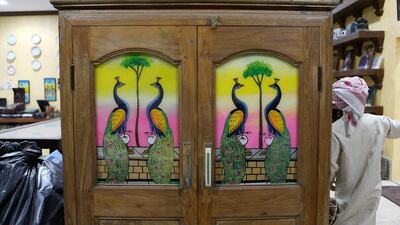
An antique, painted cupboard on display in Jasim Al Ali's museum home in Sharjah. Pawan Singh / The National -
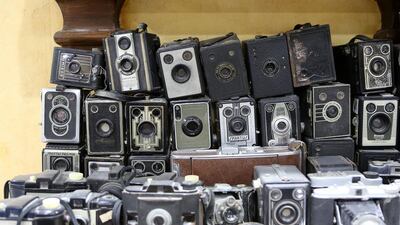
Antique cameras on display at the museum of Jasim Al Ali in his Sharjah home. Pawan Singh / The National -
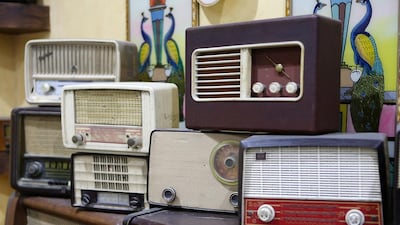
Antique radios on display in Jasim Al Ali's Sharjah home. Pawan Singh / The National -
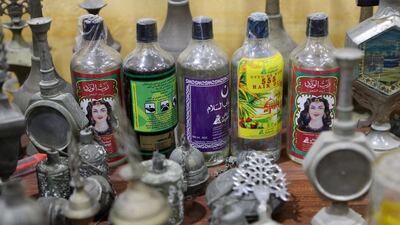
Old cosmetic items on display in the home of Jasim Al Ali an Emirati collector who has converted his Sharjah home into a museum. Pawan Singh / The National -

Old locks on display in Jasim Al Ali's Sharjah home. Pawan Singh / The National


It would require at least three firings in the kiln for the different colours, including at more than 1,200℃ for the cobalt blue.
“The rich cobalt blue is often referred to as ‘sacrificial blue’, deriving from the use of vessels in this colour glaze being used during sacrifices at the Imperial Altar of Heaven,” the auction house said.
“It is extremely rare to see blue vases painted in both gilding and slightly raised silver, thought to be due to the medium being difficult to control.
“Thrillingly, no other porcelain decorated with the same subject in gold and silver appears to have ever been documented.”
It also bears the distinctive six-character mark of the Qianlong period between 1736 and 1795 on its base.

