


Russia’s invasion of Ukraine has clearly failed to be the swift conquest envisaged by President Vladimir Putin.
His troops, more than 7,000 of whom have died, remain mired in battles almost a month into the conflict. With more than 20,000 soldiers wounded and hundreds of vehicles destroyed, Mr Putin’s grand plans have stalled.
There may now be an effort to withdraw in a way that minimises the humiliation of Russia’s leader. He could also gamble on a renewed push for a swift conquest, or settle into a long war of bombardment and siege.
Peace deal
Negotiations are continuing. The most optimistic scenario could culminate in a deal in which Ukraine agrees to repeal its constitutional commitment to joining Nato.
It would also accept that territory annexed in 2014 – the separatist areas Crimea and Donbas – would be attached to Russia. In exchange, Moscow would withdraw all its troops to pre-invasion positions and end the fighting. Despite calls for compensation for the huge damage Russia has caused, it would fall on Ukraine’s friends and allies to pay the reconstruction bill, estimated at $500 billion.
Though this would be a clear defeat for all of Mr Putin’s war aims, he would still be able to contrive it as a victory by denying Ukraine’s Nato application and the formal acceptance of seized territories. He would also seek the lifting of some sanctions so this too could be conjured as a triumph.
It is possible that Ukraine would still be able to apply to join the EU but it would want copper-bottomed guarantees from allies for its future security if it rejects the Nato route.
Ukraine divided
Despite suffering setbacks and substantial losses in the past month, Russia is now fighting the war with a slow but methodical approach of heavy bombardment and steady advance.
It could soon take the key port of Mariupol, establishing a contiguous land bridge from Russia to the Crimea – one of Mr Putin’s core war aims.
Moscow could also break through from the east, taking Kharkiv and pushing out from Donbas, forcing Ukrainian forces to beyond the River Dnieper that runs from north to south.

With the capital Kyiv looking increasingly resilient and difficult to take, and his troops exhausted, Mr Putin might choose to end the war there. Essentially, there would be an east and west Ukraine, perhaps similar to Korea’s division after the armistice reached in 1953.
But a western-backed insurgency would be launched with equipment far more sophisticated than that used by the Taliban to defeat US-backed forces in Afghanistan.
Russia could retaliate by attacking military supply convoys and stepping up its campaign of cyber warfare. But that could bring escalation, with heavy counter-cyber strikes by America and Britain that have to date not be used.
Long war
Progress by Russia’s military has been slow, ponderous and inept. But Moscow’s commanders have learnt some tough lessons and will now methodically apply pressure on Ukraine’s military.
It will use massed artillery and its air force to pummel Ukraine’s strongholds into submission before moving ground troops in. It could be very much a repeat of the grim, bitter fighting that levelled Grozny in Chechnya.
Ukraine probably lacks the personnel and equipment to launch major counter-attacks, making it near impossible to force Russia out.
-
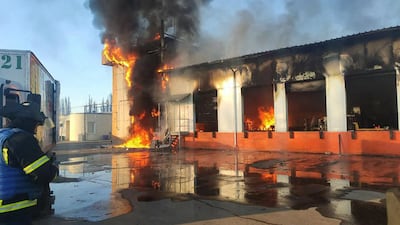
Firefighters put out a major blaze caused by Russian shelling at a food warehouse in Severodonetsk, a city in eastern Ukraine's Luhansk region. AFP -
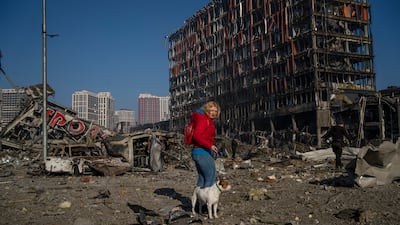
Irina Zubchenko walks her dog Max amid the destruction caused by the shelling of a shopping center in Kyiv. AP -
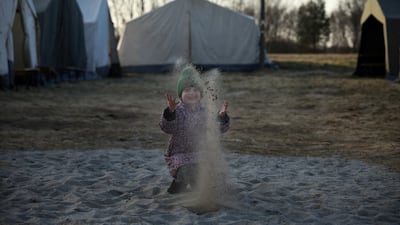
Ukrainian refugee Masha, 6, plays at the border crossing in Budomierz, Poland. Reuters -
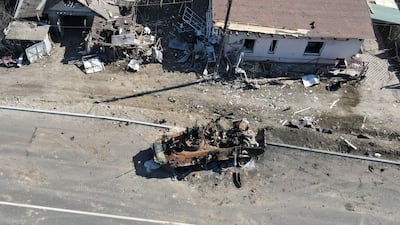
A charred Russian armoured personnel carrier on the front line in the Kyiv region. Reuters -
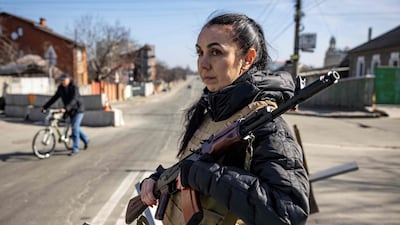
A volunteer takes position at a checkpoint in a district of Kyiv as Russian forces try to encircle the Ukrainian capital. AFP -
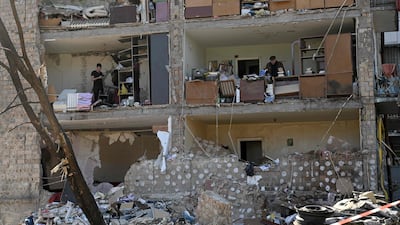
Residents of Kyiv retrieve belongings from their homes in a five-storey residential building that partially collapsed after shelling by Russian artillery. AFP -
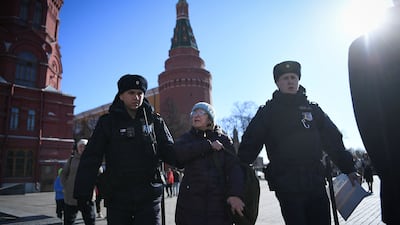
Police officers in Moscow detain a woman as she protests against Russia's invasion of Ukraine. AFP -
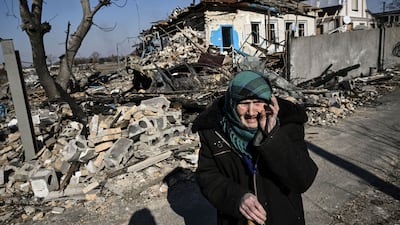
A resident of the village of Krasylivka after Russian bombardment, part of Moscow's effort to move on Kyiv. AFP -
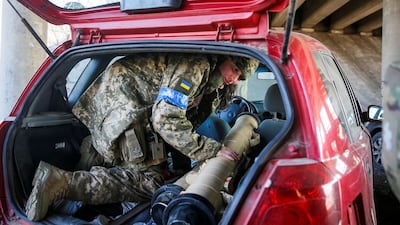
Tetiana Chornovol, a former Ukrainian MP, prepares to take position with an anti-tank missile on the front line in the Kyiv region. Reuters -
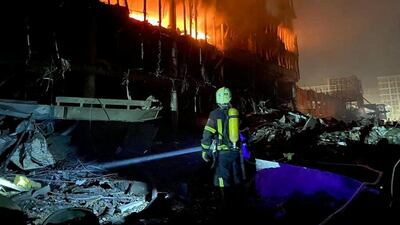
A rescue worker at a shopping mall in Kyiv after a Russian air strike. Reuters -
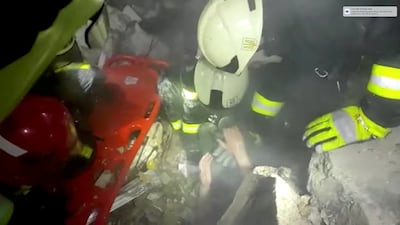
Ukrainian firefighters rescue a person buried beneath rubble after an explosion at a shopping centre in Kyiv. Reuters -
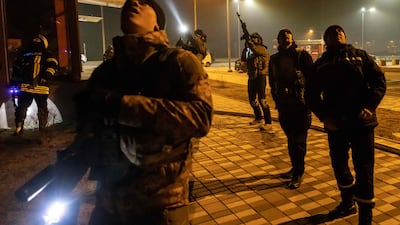
Ukrainian police officers stand near a warehouse that was hit by the debris of a downed rocket in Kyiv. AFP -
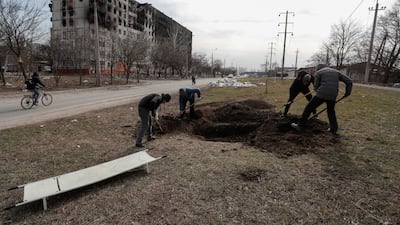
Graves are dug in a street in the besieged southern port city of Mariupol. Reuters -
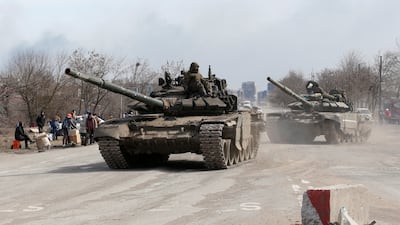
Pro-Russia militia fighters travel by tank to the outskirts of Mariupol. Reuters -
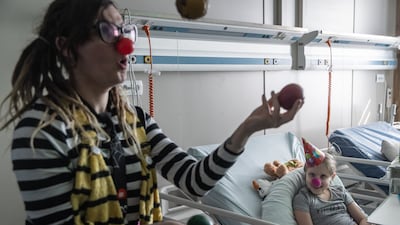
Milana, 6, who is recovering from leg wounds sustained when a Russian rocket hit her house on February 28, killing her mother, watches volunteers dressed as clowns at a children's hospital in Kyiv. Getty -
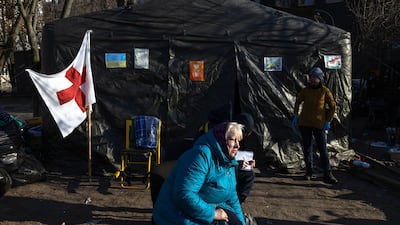
Tetyana and other residents wait in Kyiv, after being relocated from Irpin town. EPA -
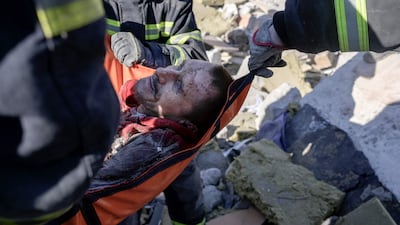
Rescuers carry a Ukrainian soldier saved after 30 hours trapped in the wreckage of a military school hit by Russian rockets, in Mykolaiv. AFP -

A Ukrainian refugee arrives with her dog at the reception centre about three kilometres from the Moldova-Ukraine border. EPA -
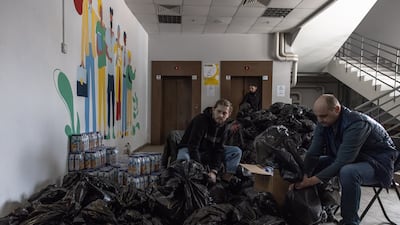
Volunteers in Kyiv prepare packages with food and other goods for Ukrainian soldiers and civilians in cities across the country. EPA -
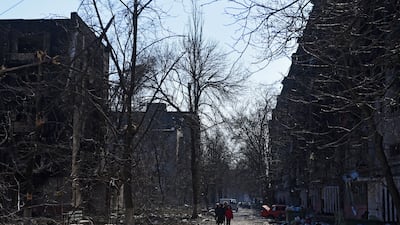
Residents walk between damaged residential buildings in Mariupol. Reuters -
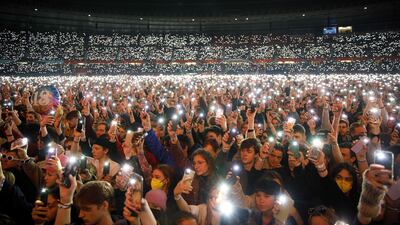
Participants illuminate the Ernst Happel Stadium in Vienna with the lights of their smartphones, during the charity concert We Stand with Ukraine. AFP -
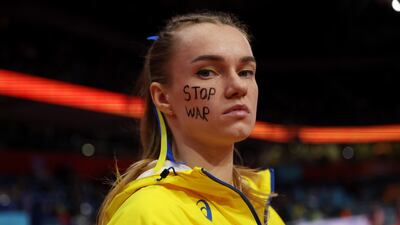
Yana Hladiychuk of Ukraine with a "Stop War" message on her face after the women's pole vault, on the second day of the World Athletics Indoor Championships in Belgrade. Getty -
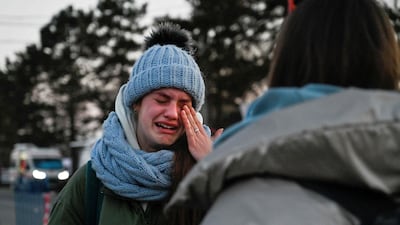
An Ukrainian girl in tears after crossing the border in Siret, northern Romania. AFP -
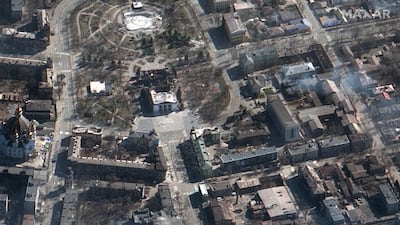
A satellite image shows the aftermath of the Russian air strike on the Mariupol Drama Theatre. EPA/Maxar Technologies -
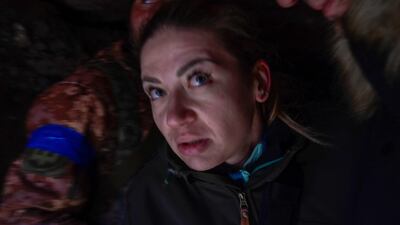
A woman takes cover in a military trench as a Russian jet fighter flies overhead, near the military school hit by Russian rockets the day before, in Mykolaiv. AFP -
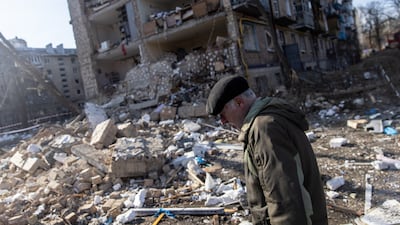
A man walks amid debris in front of a Kyiv residential apartment complex that was heavily damaged by a Russian attack on March 18. Getty -
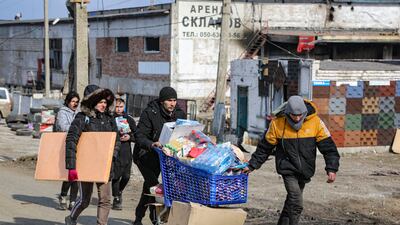
Residents carry water from a food warehouse, which is under the control of the breakaway Donetsk People's Republic, on the outskirts of Mariupol. AP -
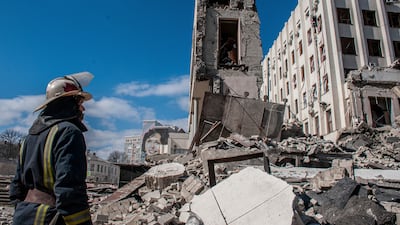
Rescuers work at the site of the National Academy of State Administration building damaged by shelling in Kharkiv. AP -
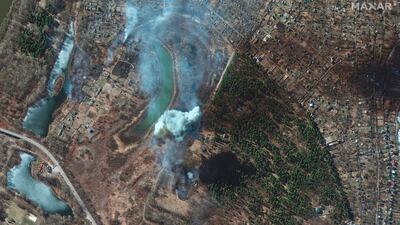
A satellite image shows artillery strikes and burning fields in Chernihiv. AP / Maxar Technologies -

A resident assesses her damaged flat in Mariupol. Reuters -
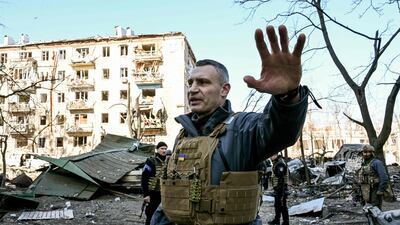
Kyiv's mayor Vitali Klitschko keeps people away from a five-storey residential building that partially collapsed after shelling on March 18. AFP -
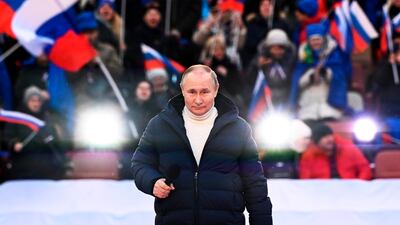
Russian President Vladimir Putin addresses crowds at a concert in Moscow to mark the eighth anniversary of the annexation of Crimea. AP -
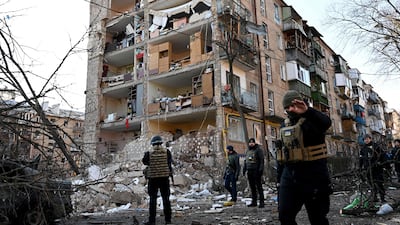
Ukrainian policemen secure a residential area in Kyiv. Sergei Supinsky -
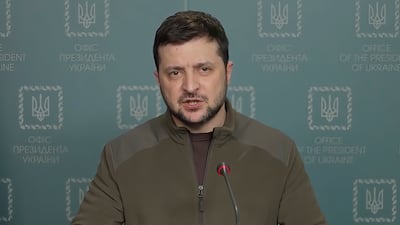
Ukrainian President Volodymyr Zelenskyy. AP -
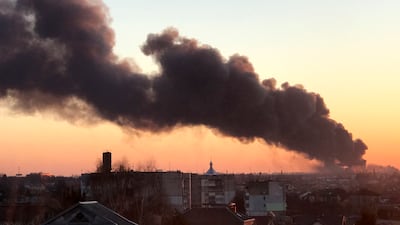
A cloud of smoke rises after an explosion in Lviv, western Ukraine, on March 18. AP -
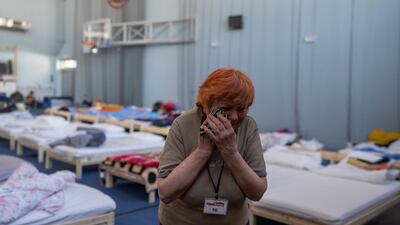
Zinaida Pivtsova, 75, who fled the war in Ukraine, takes shelter in a sports stadium in Przemysl, south-east Poland. AP -
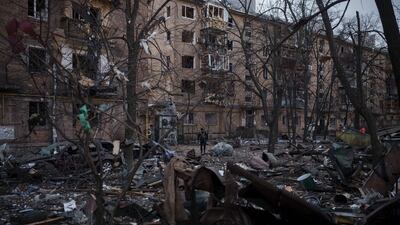
A police officer at abandoned residential buildings in Kyiv. AP -
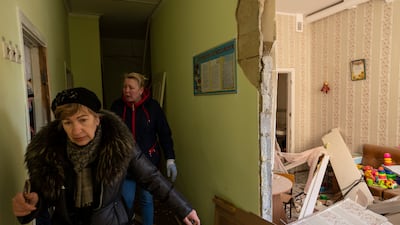
Inside a shell-damaged school in Kyiv. AP -
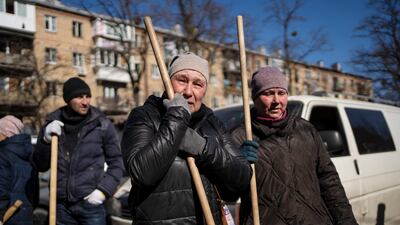
A woman cries before starting to clean the site where a bomb damaged residential buildings in Kyiv. AP Photo / Rodrigo Abd -
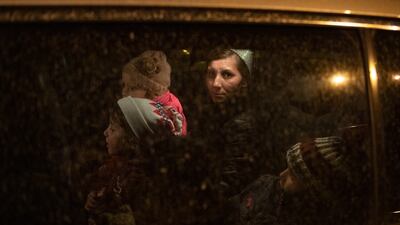
A woman from Ukraine sits in a car with her children as a volunteer takes them to a hostel in Budapest, Hungary. AP -
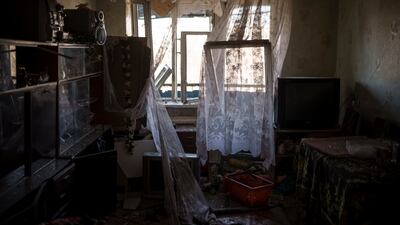
An abandoned flat in Kyiv. AP -

A man removes a curtain inside a school in Kyiv. AP -
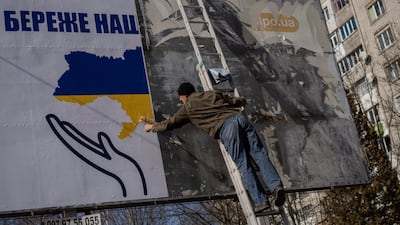
A worker sets up a billboard with the colours of the Ukrainian flag in Novoiavorisk, near Lviv. AP -
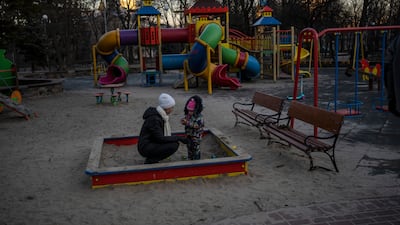
Olga plays with her daughter Vedeneya in an empty park in Kyiv. AP


Both sides could slug it out over the summer months, always with the potential that the war might escalate sharply with the use of chemical weapons or the unlikely, but possible, nuclear strike.
Sanctions will begin to have significant effects on the Russian economy, potentially turning popular opinion against Mr Putin and resulting in his downfall. But that could well be wishful thinking and the war might simply grind on and on, with the West gradually losing interest while Russia holds its gains.

