


Sixteen new genetic variants associated with severe Covid-19 have been identified by scientists taking part in the world’s biggest coronavirus gene study.
Patients can require extended hospital stays, with complications including blood clots, immune response and inflammation, and the study offers hopes for new treatments.
Researchers identified DNA differences that may explain why some people get more severely ill from coronavirus, and they also now know more about the virus than other conditions routinely seen in hospitals, such as sepsis and flu.
The GenOMICC consortium, a global collaboration led by University of Edinburgh, is the world's largest study of the genes involved in critical Covid-19 and included more than 57,000 people.
Sir Mark Caulfield, from Queen Mary University of London, said: "I think what we can say today is that these variants do denote people that are more likely to have a critical illness.
"And if we knew about them earlier in the course of their illness, we might be able to consider early intervention with some of the medicines we've been talking about, such as dexamethasone or others to try and prevent an adverse outcome."
The team found key differences in 16 genes in patients admitted to intensive care, compared with the DNA of the other groups.
-

Commuters, some wearing face masks, arrive at London Bridge station. UK Prime Minister Boris Johnson has said his “living with Covid” plan will bring the country “towards a return to normality”. PA -
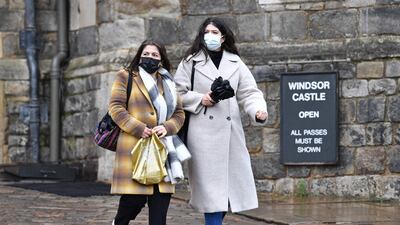
Visitors at Windsor Castle, the main residence of Britain's Queen Elizabeth. The queen tested positive for Covid-19 on February 20. AFP -

Mr Johnson speaks to patient Kathryn Wills during visit to a cancer hospital in Carlisle, northern England. AFP -

Prof Sarah Gilbert poses with her medal, after she was appointed a Dame Commander of the Order of the British Empire for her role in Covid vaccine development. AFP -

The Covid-19 Memorial Wall in London, which has more than 150,000 hearts painted on it. EPA -

British Health Secretary Sajid Javid during a visit to officially open the Robinson Building, a new research centre for Covid-19 vaccines. PA -

Anti-vaccination protesters demonstrate outside Downing Street against Covid-19 inoculations for children. PA -
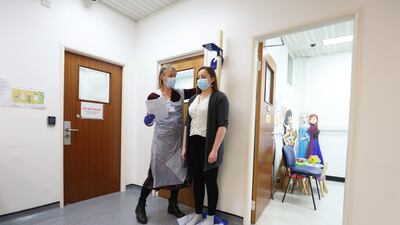
A woman is screened before receiving a Moderna booster vaccine in a clinical study at St George's University of London. PA


They also confirmed the involvement of seven other genetic variations already associated with severe Covid-19 discovered in earlier studies from the same team.
The findings, published in scientific journal Nature, included how a single gene variant was enough to increase a patient’s risk of severe disease.
Experts suggest that while doctors might be able to make predictions about patients based on their genome, the technology is not yet there.
"These results explain why some people develop life-threatening Covid-19, while others get no symptoms at all,” said Professor Kenneth Baillie, the project's chief investigator.
"But more importantly, this gives us a deep understanding of the process of disease and is a big step forward in finding more effective treatments.”
"Covid-19 is showing us the way to tackle those problems in the future," he said.

