



The largest fossilised remains of a prehistoric ‘sea dragon’ have been found in the UK.
Scientists called the ichthyosaur discovery “unprecedented”, “highly significant” and one of Britain’s “greatest finds”.
The 180-million-year-old creature, with a skeleton 10 metres long and a skull weighing about one tonne, is the largest and most complete ichthyosaur fossil to be found in the country.
The ichthyosaur, also known as the sea dragon, was discovered on a lagoon island in Rutland, East Midlands.
“Despite the many ichthyosaur fossils found in Britain, it is remarkable to think that the Rutland ichthyosaur is the largest skeleton ever found in the UK,” palaeontologist Dr Dean Lomax said.
“It is a truly unprecedented discovery and one of the greatest finds in British palaeontological history.”

The first ichthyosaurs were found by fossil hunter Mary Anning in the early 19th century and called sea dragons because of their large teeth and eyes.
Joe Davis, of the Leicestershire and Rutland Wildlife Trust, found the fossil while draining a lagoon island in February 2021.
Dr Mark Evans, of the British Antarctic Survey, said: “I've been studying the Jurassic fossil reptiles of Rutland and Leicestershire for over 20 years.
“When I first saw the initial exposure of the specimen with Joe Davis I could tell that it was the largest ichthyosaur known from either county.
“However, it was only after our exploratory dig that we realised that it was practically complete to the tip of the tail.
“It's a highly significant discovery both nationally and internationally but also of huge importance to the people of Rutland and the surrounding area.”
The marine reptiles first appeared about 250 million years ago and became extinct 90 million years ago.
They vary in length from one to more than 25 metres and resemble dolphins in body shape.
The remains were dug out by a team of expert palaeontologists from around the UK in August and September.
“It's not often you are responsible for safely lifting a very important but very fragile fossil weighing that much,” specialist palaeontological conservator Nigel Larkin said.
“It is a responsibility but I love a challenge. It was a very complex operation to uncover, record and collect this important specimen safely.”
Two incomplete and much smaller ichthyosaurs were found during the initial construction of Rutland Water in the 1970s. The 2021 discovery is the first complete skeleton found.
The excavation of the remains will feature on BBC Two's Digging For Britain on Tuesday at 8pm.
New dinosaur species discovered
-
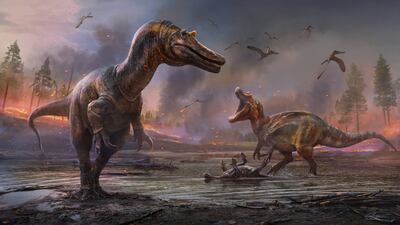
An artist's impression of 'Ceratosuchops inferodios', foreground, and 'Riparovenator milnerae'. These new species of dinosaur roamed what is now the Isle of Wight, off England's south coast, 125 million years ago. All photos: PA -
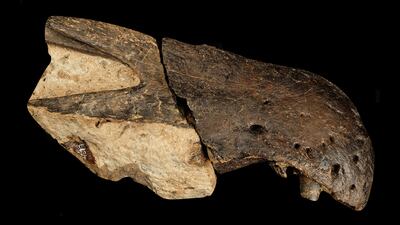
The snout of a 'Ceratosuchops inferodios'. The two carnivorous reptiles are thought to have been nine metres long, with skulls similar to those of crocodiles. -
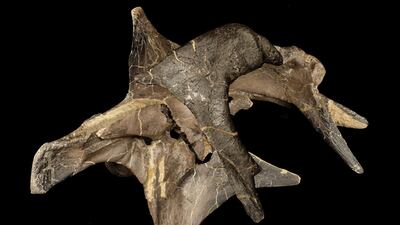
The braincase for a 'Ceratosuchops inferodios'. -
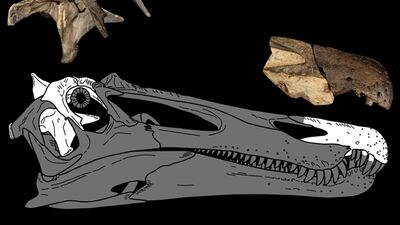
This graphic shows where the braincase and snout of a 'Ceratosuchops inferodios' would be located on its skull. -
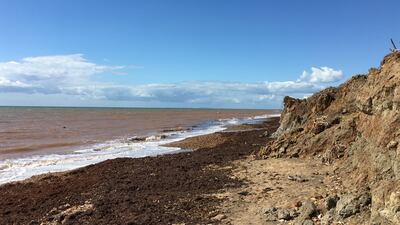
Early Cretaceous rocks on the Isle of Wight reveal the areas was once a floodplain with a Mediterranean-like climate. -

The braincase of a 'Riparovenator milnerae'. -
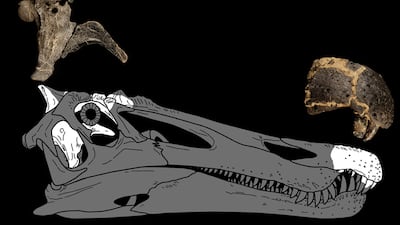
This graphic shows where the braincase and snout of a 'Riparovenator milnerae' would be located on its skull.



