
Afghan interpreters have urged the British government to evacuate their extended families and others at risk in Afghanistan.
Their plea came as the UK Parliament held an emergency debate, following the takeover of the country by the Taliban.
Dozens of people – including former employees of the British military in Afghanistan and fellow Afghans – protested outside the House of Commons in London on Wednesday.
Amid the Taliban’s rapid advance, chaotic scenes have taken place, as locals and foreign nationals attempted to flee the country.
A former interpreter, who has been in the UK for four years and worked for the British military for three years, said the Taliban would “target each and every person” who was in some way linked to the previous Afghan government or Nato.
“They will kill them without any hesitation,” the interpreter, who spoke on condition of anonymity, told The National.
“This is a very serious concern of all our colleagues and families and friends. We demand the British government give a safe refuge to our extended family, provide them with a safe shelter or evacuate them.”
Another interpreter said that while many interpreters had been brought over to the UK, some were still in Afghanistan.
“There are still many left behind. Their lives are in great risk.
“I think the UK government … it’s their obligation to bring those who are still in Afghanistan, because we know they’re hiding and if they’re seen they will be targeted.”
A third interpreter said his family in Kabul had been too fearful to leave their home since the Taliban took over the capital on Sunday.
Former soldiers turned politicians have been among the most vocal in criticism of the UK government as the Taliban has advanced.
Conservative Party Member of Parliament Tom Tugendhat, who chairs the Parliamentary foreign affairs committee, told Parliament that the past week had seen him “struggle through anger, grief and rage".
“The feeling of abandonment, of not just a country but the sacrifice that my friends made,” Mr Tugendhat, who served in Afghanistan with the UK's Territorial Army reserve force, said.
“I've watched good men go into the earth, taking with them a part of me, a part of all of us. This week has torn open some of those wounds, left them raw.”
On Parliament Square, the interpreters and supporters flew Afghan flags and held up posters as MPs returned.
Maj Andrew Fox, who retired from the elite Parachute Regiment in May, having completed three tours of Afghanistan, said he was outside Parliament to “stand side by side with our Afghan interpreters as they stood side by side with us when we were in Afghanistan”.
He welcomed the government’s announcement of a resettlement scheme for Afghan refugees, but said “we need to do more and we need to do it faster”.
The UK will take in 20,000 Afghans over the next few years, including 5,000 this year.
“There are people whose lives are in imminent danger in Afghanistan, in Kabul at the moment,” Maj Fox told The National.
“They’ve got bureaucratic hoops to jump through. It’s too complicated and too difficult, when they’re in hiding, when they’re trying to keep their phones and IT equipment sanitised in case they get caught the Taliban.
“We need to make it easier for them to get out faster.”

He said, for all his friends who had served or were still serving in the military, “I think we're united in our heartbreak at what's happened in Afghanistan.”
In Parliament, the government was accused of failing the Afghan people and the soldiers who served there. The UK’s relationship with the US, whose pullout from Afghanistan triggered Nato following suit, and the future role of the alliance were also questioned.
Former UK prime minister Theresa May said the situation was a “major setback for British foreign policy”.
“I do find it incomprehensible and worrying that the United Kingdom was not able to bring together, not a military solution, but an alternative alliance of countries to continue to provide the support necessary to sustain a government in Afghanistan,” she said.
Mr Tugendhat asked: “What does it say about us as a country about our willingness to defend our values if we are entirely dependent on a unilateral decision taken by the United States?
“This is a harsh lesson for all of us and if we’re not careful it could be a very, very difficult lesson for our allies.”
Prime Minister Boris Johnson said the Taliban would be judged on its “actions rather than by its words, on its attitude to terrorism, to crime and narcotics, as well as humanitarian access, and the rights of girls to receive an education”.
-

A man waves Afghanistan's national flag in Kabul, as the country marks its 102nd Independence Day on Thursday, August 20. This commemorates the country regaining full independence from British influence in 1919. AFP -
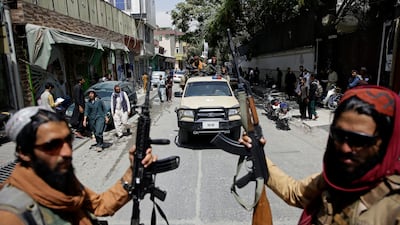
Taliban fighters patrol in Kabul. AP Photo -
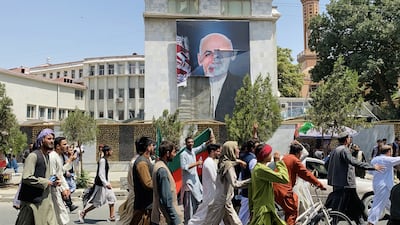
Afghans pass by the poster of Afghan President Ashraf Ghani who fled the country after Taliban took over, as they celebrate the Independence Day in Kabul. EPA -
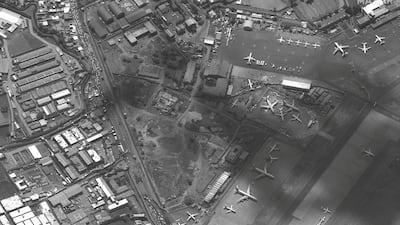
Cars and crowds are seen near the airport in Kabul. Reuters -
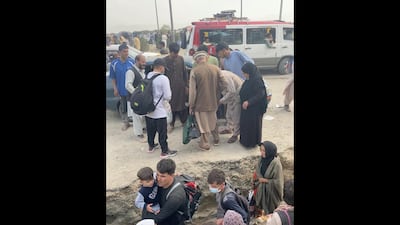
People gather round the scene of a shooting outside Kabul airport, while others move away from the incident. Reuters -

A Taliban fighter sitting on a vehicle guards the route of an Ashura procession in western city Herat. AFP -
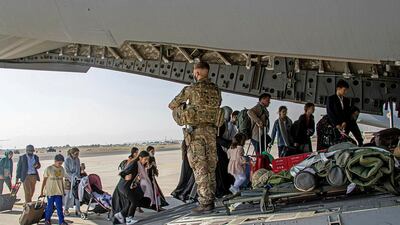
British and dual nationality citizens living in Afghanistan board a military plane at Kabul airport. Reuters -
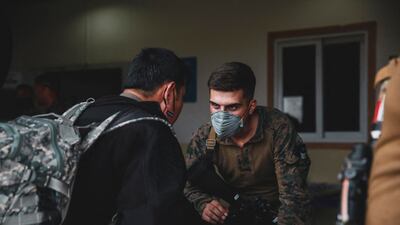
A US Marine processes an evacuee at Kabul's Hamid Karzai International Airport. AFP -

Afghan President Ashraf Ghani on his first video address since Taliban takeover. Facebook -
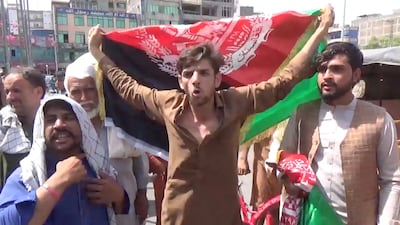
People carry Afghan flags as they take part in an anti-Taliban protest in Jalalabad, Afghanistan. Reuters -
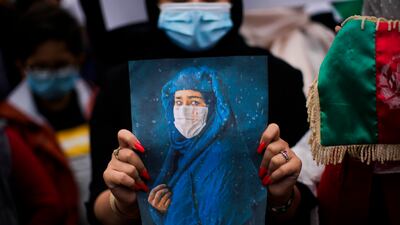
A woman holds a photograph during a protest to raise awareness of the situation in Afghanistan, outside EU headquarters in Brussels. AP Photo -
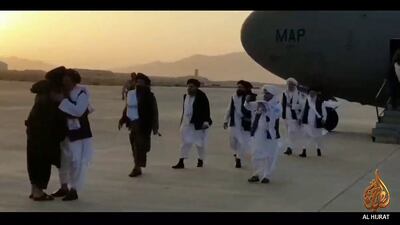
Senior Taliban figure Abdul Ghani Baradar arrives in Afghanistan on Tuesday, August 17, 2021. AFP -
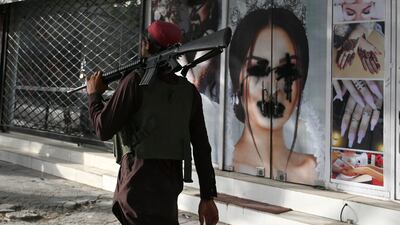
A Taliban fighter walks past a beauty saloon where images of women have been defaced, in Shahr-e Naw neighbourhood in north-west Kabul. AFP -
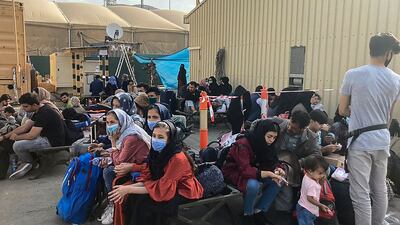
People wait to be evacuated from Kabul's Hamid Karzai International Airport, following the Taliban takeover of the capital. AFP -

Afghans make their way into Pakistan at the Chaman border crossing. AFP -

Khairullah Khairkhwa, right, a former governor of western Herat province and now a member of the Taliban's political office in Qatar, speaks to the media after arriving in Kandahar, southern Afghanistan. EPA -
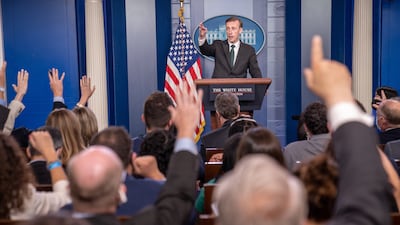
US National Security Adviser Jake Sullivan takes questions on events in Afghanistan, at a White House press briefing in Washington. EPA -

Taliban forces guard a checkpoint in Kabul. Reuters -
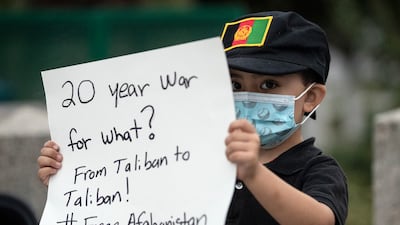
A young demonstrator attends a vigil in support of Afghanistan outside the West Los Angeles Federal Building, Los Angeles. EPA -

Taliban spokesman Zabihullah Mujahid, centre, holds the group's first press conference in Kabul since the insurgents took the capital. AFP -
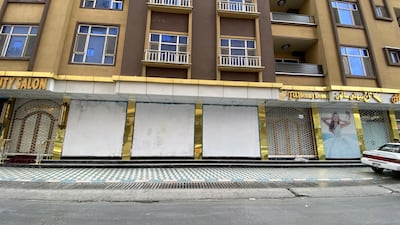
Images of glamorous women displayed outside a beauty salon in Kabul have been painted over since the Taliban took control. EPA -
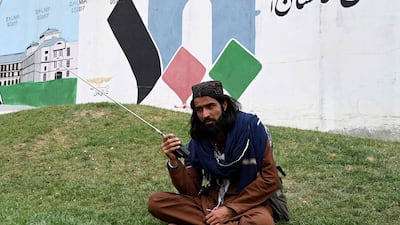
A Taliban fighter in Afghan capital Kabul, where the group has told government staff to return to work. AFP -
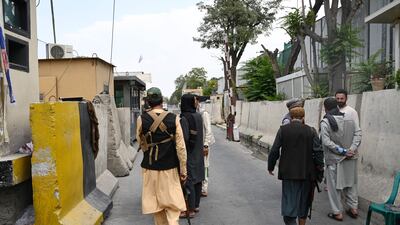
Taliban fighters on patrol in Kabul. AFP -

Taliban fighters in an Afghan government forces pickup patrol the streets of Kabul. AFP -

Taliban fighters pass a poster of Afghan President Ashraf Ghani in Kabul. AFP -

People queue outside Kabul airport as they try to leave Afghanistan following the Taliban takeover. Reuters -
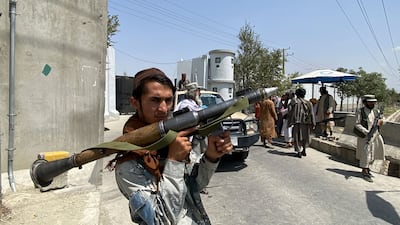
A Taliban fighter keeps watch outside the Interior Ministry in Kabul. AFP -
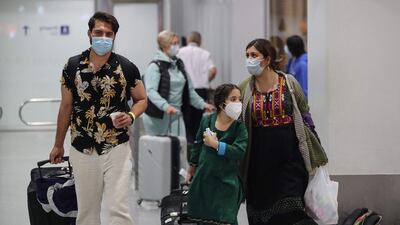
Some of the first people flown out of Kabul after the Taliban takeover arrive at Frankfurt International Airport in Germany. AFP -
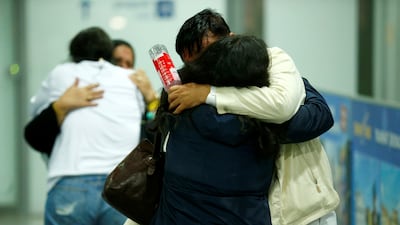
People have arrived in Frankfurt after fleeing the Afghan capital. AFP -
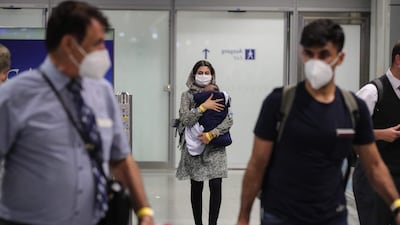
Western countries have been flying citizens and Afghans out of Kabul since it was seized by the Taliban. AFP


Mohamed Khalid, an Afghan who has lived in the UK for 17 years, was among those who demonstrated on Parliament Square.
Referring to the tens of thousands of people killed since the 2001 invasion, he asked what was the point of the past 20 years' sacrifices, now that the Taliban had returned.
Mr Khalid first left Afghanistan in 1997, a year after the Taliban had captured the country.
“It’s the same situation right now again”, he said, despite the insurgent group claiming it had changed.
Mr Johnson conceded the Afghan government had collapsed sooner than expected, but insisted that Nato had succeeded in its core mission when invading Afghanistan in diminishing Al Qaeda.
But now there are fears that the return of the Taliban could allow terrorist groups a safe haven to build.
“It is with utter disbelief seeing us make such an operational and strategic blunder by retreating at this time,” said Tobias Ellwood, chair of Parliament’s defence select committee, and a former captain in the British Army.
“A decision that’s already triggering a humanitarian disaster, a migrant crisis not seen since the Second World War and a cultural change in rights to women, and once again turning Afghanistan into a breeding ground for terrorism.”
‘

