

US President Joe Biden told his Afghan counterpart Ashraf Ghani on Friday that America remains committed to Afghanistan.
This reassurance comes as the US military moves to complete a withdrawal from the country after 20 years of conflict.
In their first meeting since he became president in January, Mr Biden pledged that support to Kabul “would be sustained”, but that “Afghans are going to have to decide their future, what they want".
“The senseless violence has to stop,” Mr Biden said.
Accompanying Mr Ghani to the White House was Abdullah Abdullah, Afghanistan’s former chief executive of a unity government and a long-time political rival of the Afghan president.
He now oversees the peace process for Kabul, in which government negotiators are supposed to be speaking with the Taliban in Doha.
But these talks have largely stalled as violence has flared across Afghanistan.
Mr Ghani expressed gratitude to the US, saying Afghanistan respects Mr Biden’s decision to withdraw.
“We are determined to have unity, coherence,” Mr Ghani said.
In a press conference following the meeting, Mr Ghani called Mr Biden's decision to withdraw transformational.
“It’s not abandonment, it’s a new chapter," he said.
Asked if he was able to convince the US to slow down the pace of the withdrawal, the Afghan president said he was not.
"This is a sovereign US decision. We respect that decision. Our course is to manage the consequences and to ensure that the people of Afghanistan rise to the challenge,” he said.
But Mr Ghani added that he was satisfied with the security commitments he had received from the US on the visit and that he expected rapid progress.
He described the outstanding security issues facing Afghanistan as logistical, related to supporting the air force and doing maintenance.
The Afghan president also called on the Taliban and their backers to abandon violence, arguing that it is not the way to compel Afghans into a settlement.
And if they do not heed that call, Mr Ghani said the Afghan forces stand “fully prepared".
The Afghan leader, who won re-election in 2019 after a poll that was marred by multiple fraud allegations, is hoping to slow the pace of the US withdrawal, even though the Biden administration has given no signal it will do so.
Before his trip, Mr Ghani said that should Afghanistan be engulfed in intense conflict, "no one in the region will be spared. The consequences will be spread."
Pentagon officials have outlined a worst-case scenario that envisions the swift collapse of the Kabul government followed by a resurgence of Al Qaeda or other terrorist groups within two years.
On Thursday, Associated Press reported the US is looking to leave 650 troops in Afghanistan, mostly to protect its embassy and diplomatic staff.
But the agency said Washington expects to have the rest of the withdrawal all but completed by July 4 – two months before the announced deadline of September 11.
Before his meeting at the White House, Mr Ghani met with Defence Secretary Lloyd Austin and CIA director William Burns.
“Secretary Austin reaffirmed the United States’ commitment to an enduring US-Afghan defence relationship … and is deeply invested in the security and stability of Afghanistan,” the Pentagon said.
"Both sides reaffirmed the importance of ensuring that Afghanistan never again serves as a safe haven for terrorists who threaten the Afghan people, the United States or our allies."
Mr Biden is facing criticism from some Republicans for pulling out of Afghanistan, even though then-president Donald Trump made the 2020 deal with the Taliban to withdraw all US forces by May 2021.
-
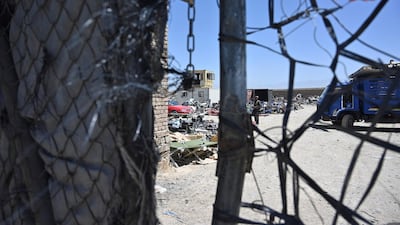
A man stands at a junkyard near the Bagram Air Base. AFP -
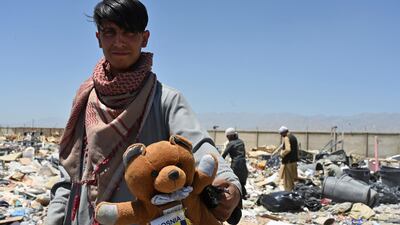
A man holds a teddy bear as people look for useable items at a junkyard near the Bagram Air Base in Bagram. AFP -
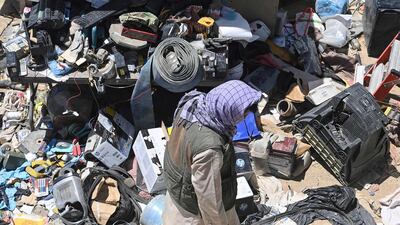
A man selects valuable items at a recycling workshop near the Bagram Air Base. AFP -
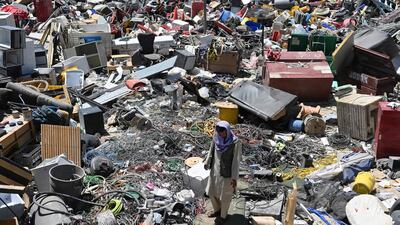
A man selects valuable items at a recycling workshop near the Bagram Air Base. AFP -
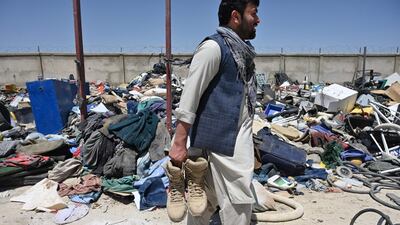
A man holds shoes as he selects valuable items at a recycling workshop near the Bagram Air Base. AFP -
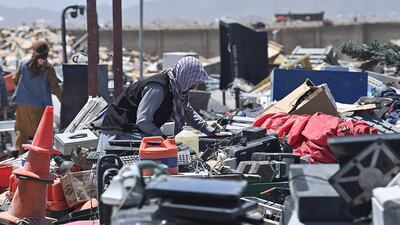
People look for useable items at a junkyard near the Bagram Air Base. AFP -
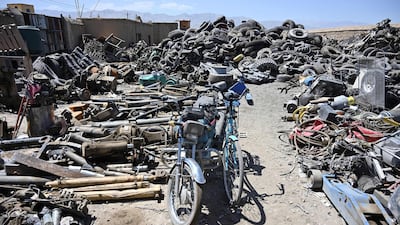
Various items at a junkyard near the Bagram Air Base. AFP -
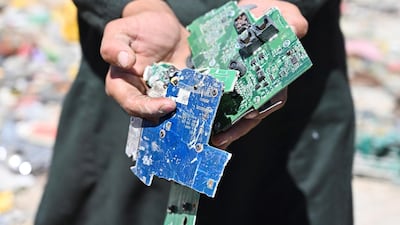
A man shows electronic motherboards at a junkyard near the Bagram Air Base. AFP -
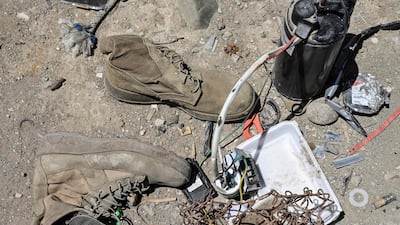
Used boots and other items at a junkyard near the Bagram Air Base. AFP -
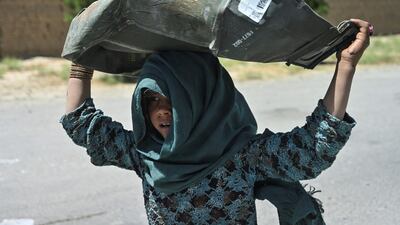
A girl carries a metal box she collected from a junkyard near the Bagram Air Base. AFP -

A policeman stands guard at a junkyard near the Bagram Air Base. AFP -
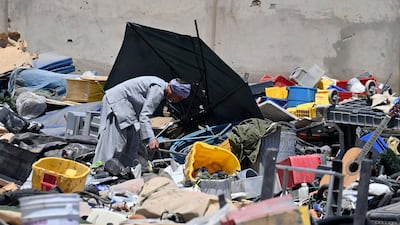
A man selects valuable items at a recycling workshop near the Bagram Air Base. AFP -
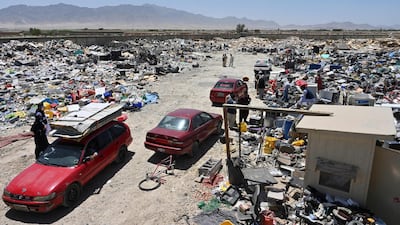
People select items at a recycling workshop near the Bagram Air Base. AFP -
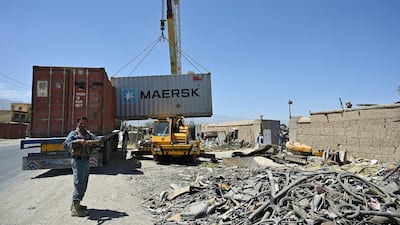
Policemen stand guard as workers unload a container at a junkyard near the Bagram Air Base. AFP


Senate Minority Leader Mitch McConnell on Thursday said Mr Biden has “chosen to abandon the fight and invite even greater terrorist threats” and urged the president to delay the withdrawal of US forces.
White House Press Secretary Jen Psaki said Mr Biden had inherited an untenable situation.
“That’s the hand we were dealt,” she said. “The president made a decision which is consistent with his view that this was not a winnable war.”
Ms Psaki said Washington would guarantee the safety and relocation of thousands of Afghans who aided the US in the last 20 years.
The Biden administration has promised to move them to an as-yet-unannounced location while their special visa applications are processed.
“They will be relocated to a location outside of Afghanistan before we complete our military drawdown by September,” she said.

