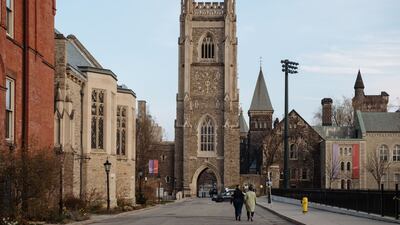
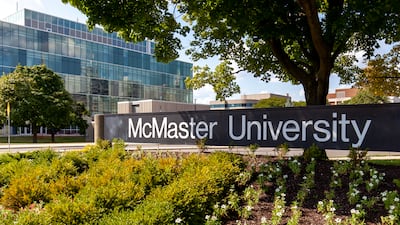
In the four or so years since moving to Canada, Shivangi Sharma has completed postgraduate work at York University in Toronto and found a fulfilling job as a corporate talent acquisitions specialist.
Originally from Chandigarh in northern India, Ms Sharma, 27, is one of the 8.3 million immigrants who call Canada home.
Immigrants now make up nearly a quarter of the Canadian population, according to the 2021 census, released by Statistics Canada this week.
Ms Sharma’s journey to Canada was born out of circumstance. Eager to study and live abroad, she had family and friends who were already settled in the country and so decided to move to the Toronto area in 2018 for postgraduate studies.
It hasn’t always been easy, she told The National.
“I had never lived outside my home until I came to Canada,” Ms Sharma said. “It was my very first time and it was rough.”
But once she adjusted to life on her own, she said she found Canada to be a welcoming place that quickly became “home”.
“The more time you invest in the country, it just gets better,” she said.
Canada has the largest percentage of immigrants of all Group of Seven countries.
The new statistics show that most immigrants come to Canada from Asia, with India making up more than 18 per cent of new arrivals.
From 2016 to 2021, more than 1.3 million people immigrated to Canada, the largest number ever recorded in a national census.
Statistics Canada expects immigrants to continue to make up a significant percentage of the population in the coming decades. It estimates new arrivals could make up between 29.1 per cent and 34 per cent of the population by 2041.
In 2021, Canada let in a record 401,000 immigrants. This year, it aims to accept more than 430,000 people.
Canada has always been a country of immigrants, noted Jeffrey Reitz, professor emeritus of ethnic and immigration studies at the University of Toronto.
“In the last several decades, the government has placed a lot of emphasis on increasing immigration,” he explained.
Canada’s relatively small population and a low birth rate make immigration a necessity.
“The US birth rates until recently have been higher than the Canadian and without immigration, our proportion of the North American population would be declining,” he said.
“So immigration is important in keeping that up.”
Immigrants tend to arrive in Canada through three channels: economic visas, family reunification or as refugees. The majority of new Canadians arrive for economic reasons and tend to be highly educated, making them valuable additions to the workforce.
“What the census is trying to tell us is just how fundamental immigration is, not only to our population growth, but also to the growth of our labour force,” said Jack Jedwab, president of the Association for Canadian Studies.
“It has been extremely clear that most of the growth in our labour force has been driven by immigration.”
Canada's best universities — in pictures
Mercer, the investment consulting arm of US services company Marsh & McLennan, expects its wealth division to at least double its assets under management (AUM) in the Middle East as wealth in the region continues to grow despite economic headwinds, a company official said.
Mercer Wealth, which globally has $160 billion in AUM, plans to boost its AUM in the region to $2-$3bn in the next 2-3 years from the present $1bn, said Yasir AbuShaban, a Dubai-based principal with Mercer Wealth.
“Within the next two to three years, we are looking at reaching $2 to $3 billion as a conservative estimate and we do see an opportunity to do so,” said Mr AbuShaban.
Mercer does not directly make investments, but allocates clients’ money they have discretion to, to professional asset managers. They also provide advice to clients.
“We have buying power. We can negotiate on their (client’s) behalf with asset managers to provide them lower fees than they otherwise would have to get on their own,” he added.
Mercer Wealth’s clients include sovereign wealth funds, family offices, and insurance companies among others.
From its office in Dubai, Mercer also looks after Africa, India and Turkey, where they also see opportunity for growth.
Wealth creation in Middle East and Africa (MEA) grew 8.5 per cent to $8.1 trillion last year from $7.5tn in 2015, higher than last year’s global average of 6 per cent and the second-highest growth in a region after Asia-Pacific which grew 9.9 per cent, according to consultancy Boston Consulting Group (BCG). In the region, where wealth grew just 1.9 per cent in 2015 compared with 2014, a pickup in oil prices has helped in wealth generation.
BCG is forecasting MEA wealth will rise to $12tn by 2021, growing at an annual average of 8 per cent.
Drivers of wealth generation in the region will be split evenly between new wealth creation and growth of performance of existing assets, according to BCG.
Another general trend in the region is clients’ looking for a comprehensive approach to investing, according to Mr AbuShaban.
“Institutional investors or some of the families are seeing a slowdown in the available capital they have to invest and in that sense they are looking at optimizing the way they manage their portfolios and making sure they are not investing haphazardly and different parts of their investment are working together,” said Mr AbuShaban.
Some clients also have a higher appetite for risk, given the low interest-rate environment that does not provide enough yield for some institutional investors. These clients are keen to invest in illiquid assets, such as private equity and infrastructure.
“What we have seen is a desire for higher returns in what has been a low-return environment specifically in various fixed income or bonds,” he said.
“In this environment, we have seen a de facto increase in the risk that clients are taking in things like illiquid investments, private equity investments, infrastructure and private debt, those kind of investments were higher illiquidity results in incrementally higher returns.”
The Abu Dhabi Investment Authority, one of the largest sovereign wealth funds, said in its 2016 report that has gradually increased its exposure in direct private equity and private credit transactions, mainly in Asian markets and especially in China and India. The authority’s private equity department focused on structured equities owing to “their defensive characteristics.”
Company profile
Name: Steppi
Founders: Joe Franklin and Milos Savic
Launched: February 2020
Size: 10,000 users by the end of July and a goal of 200,000 users by the end of the year
Employees: Five
Based: Jumeirah Lakes Towers, Dubai
Financing stage: Two seed rounds – the first sourced from angel investors and the founders' personal savings
Second round raised Dh720,000 from silent investors in June this year
Tips%20for%20holiday%20homeowners
%3Cp%3EThere%20are%20several%20factors%20for%20landlords%20to%20consider%20when%20preparing%20to%20establish%20a%20holiday%20home%3A%3C%2Fp%3E%0A%3Cul%3E%0A%3Cli%3E%3Cstrong%3ERevenue%20potential%20of%20the%20unit%3A%3C%2Fstrong%3E%20location%2C%20view%20and%20size%3C%2Fli%3E%0A%3Cli%3E%3Cstrong%3EDesign%3A%20furnished%20or%20unfurnished.%3C%2Fstrong%3E%20Is%20the%20design%20up%20to%20standard%2C%20while%20being%20catchy%20at%20the%20same%20time%3F%3C%2Fli%3E%0A%3Cli%3E%3Cstrong%3EBusiness%20model%3A%3C%2Fstrong%3E%20will%20it%20be%20managed%20by%20a%20professional%20operator%20or%20directly%20by%20the%20owner%2C%20how%20often%20does%20the%20owner%20wants%20to%20use%20it%20for%20personal%20reasons%3F%3C%2Fli%3E%0A%3Cli%3E%3Cstrong%3EQuality%20of%20the%20operator%3A%3C%2Fstrong%3E%20guest%20reviews%2C%20customer%20experience%20management%2C%20application%20of%20technology%2C%20average%20utilisation%2C%20scope%20of%20services%20rendered%3C%2Fli%3E%0A%3C%2Ful%3E%0A%3Cp%3E%3Cem%3ESource%3A%20Adam%20Nowak%2C%20managing%20director%20of%20Ultimate%20Stay%20Vacation%20Homes%20Rental%3C%2Fem%3E%3C%2Fp%3E%0A
Who's who in Yemen conflict
Houthis: Iran-backed rebels who occupy Sanaa and run unrecognised government
Yemeni government: Exiled government in Aden led by eight-member Presidential Leadership Council
Southern Transitional Council: Faction in Yemeni government that seeks autonomy for the south
Habrish 'rebels': Tribal-backed forces feuding with STC over control of oil in government territory