


Iraqi women have turned out in vast numbers during the current anti-government protests, ignoring societal norms and the danger posed by the violent response of security forces.
Throngs of women, young and old, were among the crowds packing Baghdad’s Tahrir Square well past midnight on Wednesday, where dozens of people had already died since the protests resumed on October 24. Earlier, women gathered together chanting: “Down, down with the regime.”
"It's important for the women to go out so the riot police, [political] parties and all of them see what we can do," said Da'a Mohamed Kahder, 17, a high school pupil who had come out to protest with her entire family. "This is us. These are the Iraqis. We are one good heart."
Her mother, Sanaa Ghrany, 50, said: "All the women, all the oppressed must go out, even if we die. We're not afraid. They want to step on us, but we will become the ones who can step on them."
Other women who spoke to The National expressed a similar attitude.
"We need to get rid of the idea that it's not all right for women to participate in everything," said Shaima. "Women must participate in everything. If women were inside government it would be better."
Shaima had come to the square for the first time the previous night, bringing with her her daughter, sisters and her nieces. She said the latest demonstrations were different from previous protests because people from across Iraqi society were taking part.
The protests that began on October 1 have been growing in strength, with students, teachers and professional groups joining the demonstrations in Baghdad and southern provinces despite a security crackdown that has claimed more than 250 lives so far. More than 100 people have died in the latest round of protests, according to the Iraqi High Commission for Human Rights.
Manal Jabar, 30, a civil and women’s rights activist, said that for many women, the violence against the protesters had made it impossible to stay at home.
“At the beginning of protests the presence of women was symbolic, it was small. Of course, there were threats and there was fear in the square, so they didn't want to go out in force,” she said.
-
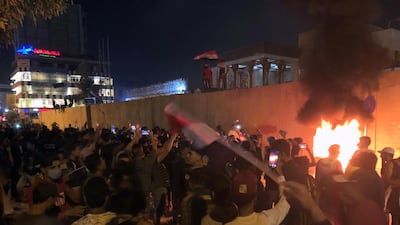
Demonstrators set fire in front of the Iranian consulate, as they gather during ongoing anti-government protests in Kerbala, Iraq November 3, 2019. Reuters -
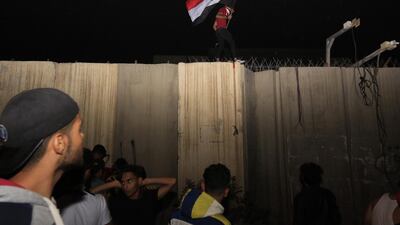
An Iraqi protester waves the Iraqi national flag as he stands on a concrete wall at the Iranian counsulate in Karbala, Iraq, 03 November 2019. EPA -
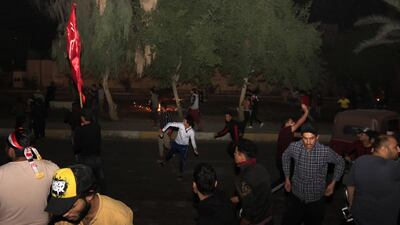
Iraqi protesters throw stones towards the Iranian counsulate during a protest in Karbala, Iraq, 03 November 2019. EPA -
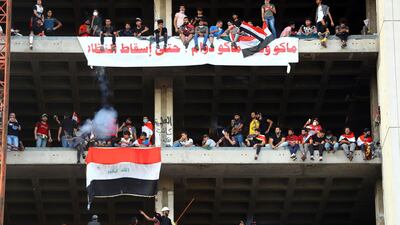
Iraqi demonstrators inside the Turkish Restaurant Building. Reuters -
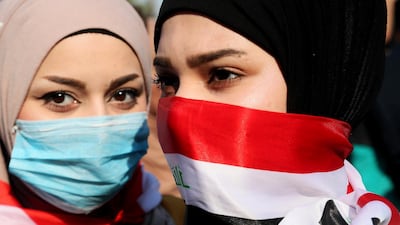
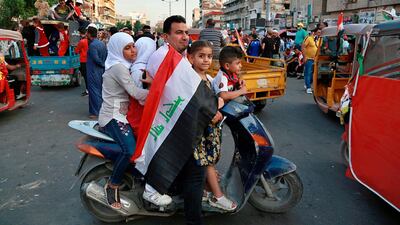
Iraqi women take part in anti-government protests in Tahrir Square, Baghdad. AP -
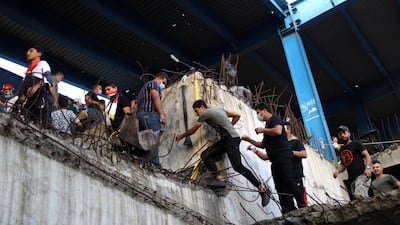
Iraqi demonstrators climb inside the high-rise Turkish Restaurant Building. Reuters -
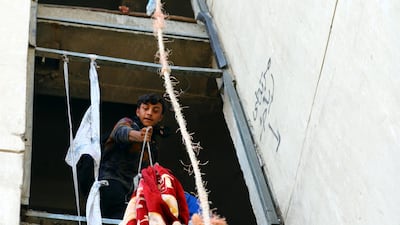
Iraqi demonstrators use blankets to supply food to their fellows inside the high-rise building. REUTERS -
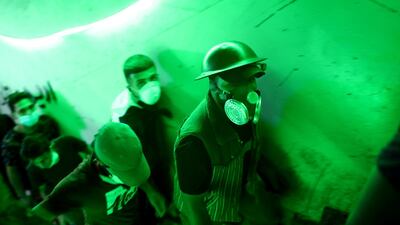
Iraqi protesters inside the Turkish Restaurant Building. Reuters -
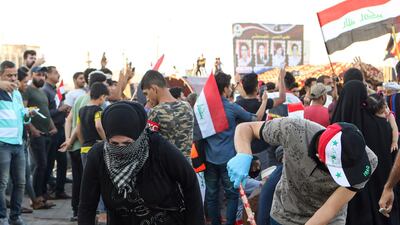
Volunteers clean the site of the protest near the Basra provincial council building during protests in the city. AP -
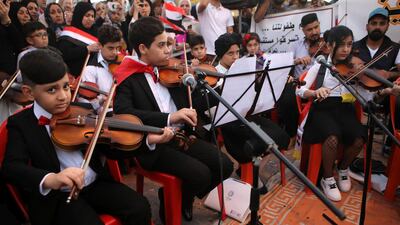
Music school students take part in the protests near the Basra provincial council building. AP -
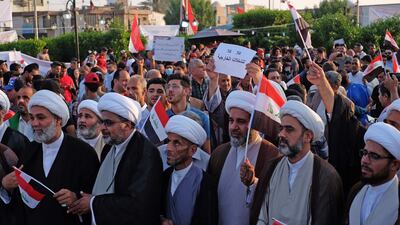
Iraqi Shiite clerics take part in anti-government demonstrations in Karbala city. AFP -
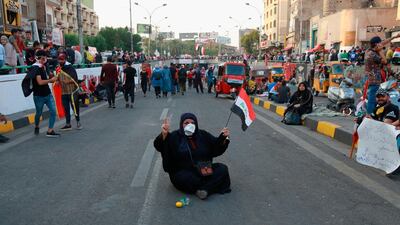
An Iraqi woman takes part in the anti-government protests in Baghdad. AP -
Protesters in Tahrir Square, Baghdad, during the anti-government protests. AP -
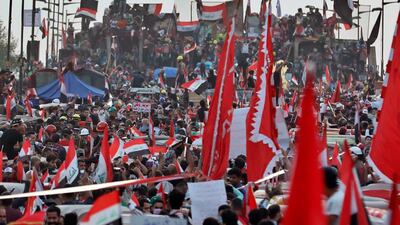
Anti-government protesters stand on barriers set up by Iraqi security to close the Joumhouriya bridge leading to the Green Zone government areas in Baghdad. AP Photo -
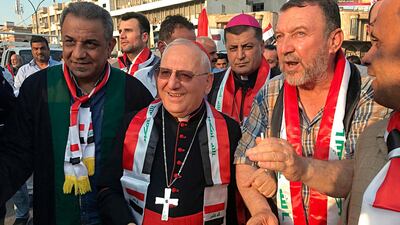
Cardinal Louis Raphael I Sako, patriarch of the Chaldean Catholic Church, visits Tahrir Square in Baghdad. AP


"But after the oppression of our young men and the widespread killing, women felt they had to be there next to their fathers, brothers and sons so that our protests would succeed.”
“Now, a woman when she's at home she watches TV and cries,” said Shaima, the protester in Tahrir Square. “We have traditions, unfortunately, that slightly held people back. But now, women in all the provinces have gone out. Even if a woman doesn't go out, you see her standing at her door carrying the Iraqi flag. This is the first time that has happened."
Shaima believes the young men who make up the majority of the protesters had begun to change their attitude towards the women joining them. “A boy sees his mother and sister carrying the Iraqi flag and does not reject it, because he sees there is something strong inside of us,” she said.
Later, at 2.30am, Ismaa Saoud Jabar, 35, stood in a line of protesters clearing rubbish from the streets in Tahrir Square. Wearing rubber gloves, she shoved plastic bottles, empty cans and discarded face masks into black plastic bags.
Like many of the women taking part, she has taken on a vital role in the informal organisation of the protests. "This is the third day I came out," she said. "I continue here until 4am, then in the morning I will go back to my work as a state employee."
Ms Saoud said she would not stop coming until the protests ended. “When you come to this place, you can expect everything in front of you,” she said. “Iraqi people, in general, are not afraid – even the young people and children, they all participate without fear. Quite the opposite – they participate with determination and will.”
The presence of women in the square proved that every section of Iraqi society stood behind the protests, and that women had to take part for them to succeed, she said.
“No one can represent our voices. No one can represent me. If my brother went out to protest he would only represent his voice.
“We want to present the voices of all of Iraq, all of society and all of its people.”

