


The US ambassador to Lebanon said that she had “turned the page” after a meeting with Foreign Minister Nassif Hitti on Monday during which they discussed attempts to prevent local media reporting on her comments she made about Hezbollah.
“We turned the page on this unfortunate distraction so we can all focus on the real crisis at hand, which is the deteriorating economic situation in Lebanon,” said US ambassador Dorothy Shea. “I can assure you that ours is a strong bilateral relationship that will continue to benefit the people of both countries.”
The diplomat was summoned by Mr Hitti after the Court of Urgent Matters in the southern city of Tyre on Saturday threatened legal action and a fine of up to $200,000 (Dh 734,000) if any Lebanese media outlets interviewed her.
This came one day after Ms Shea told Saudi-owned Al Hadath TV that Lebanese party Hezbollah, which is considered a terrorist organisation by the US, “jeopardised” the economic recovery of Lebanon.
Lebanon's anti-government protests
-
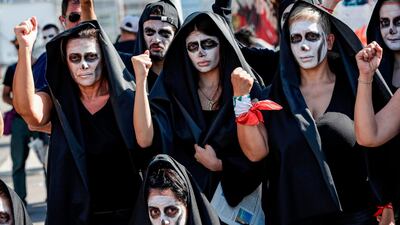
Lebanese anti-government protesters take part in a symbolic funeral for the country in the capital Beirut on June 13, 2020, the third consecutive day of demonstrations over a deepening economic crisis. AFP -
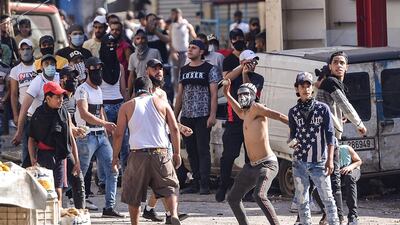
Lebanese anti-government protesters throw rocks at soldiers amid clashes in the Bab al-Tabbaneh neighbourhood in the northern port city of Tripoli on the third consecutive day of demonstrations against deepening economic crisis. AFP -
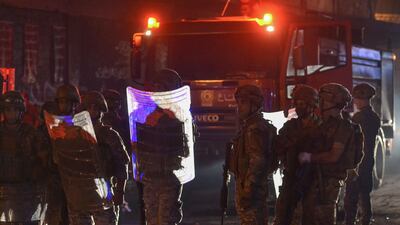
Lebanese soldiers deploy by a civil defence firefighting truck during clashes with anti-government protesters in the northern port city of Tripoli amid fresh demonstrations over a spiralling economic crisis. AFP -
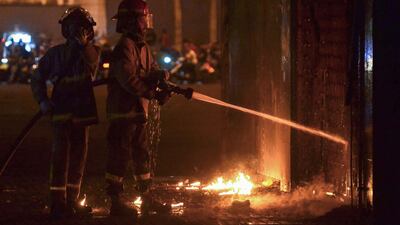
Lebanese civil defence firefighters extinguish flames in a shop as anti-government protesters and security forces clash in the northern port city of Tripoli amid fresh demonstrations over a spiralling economic crisis. AFP -
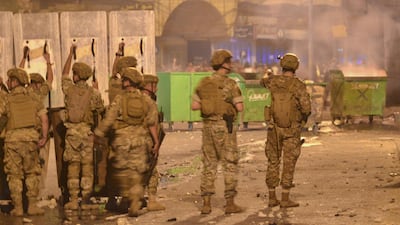
Lebanese soldiers with riot gear react during clashes with anti-government protesters in the northern port city of Tripoli amid fresh demonstrations over a spiralling economic crisis. AFP -
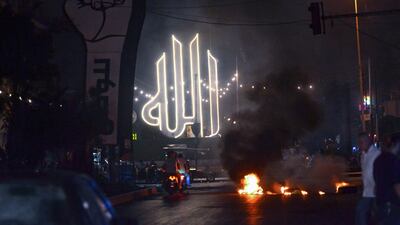
Lebanese anti-government protesters block a road with burning tyres in the northern port city of Tripoli amid fresh protests over a spiralling economic crisis. AFP -
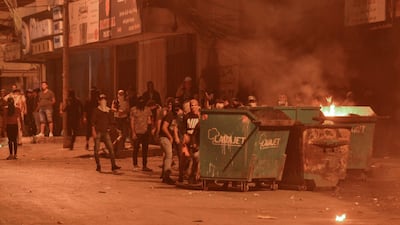
Lebanese anti-government protesters clash with security forces in the northern port city of Tripoli amid fresh protests over a spiralling economic crisis. AFP -
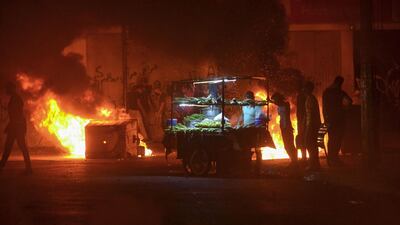
Lebanese anti-government protesters buy corn from a street vendor next to burning garbage bins during clashes with security forces in the northern port city of Tripoli amid fresh protests over a spiralling economic crisis. AFP -
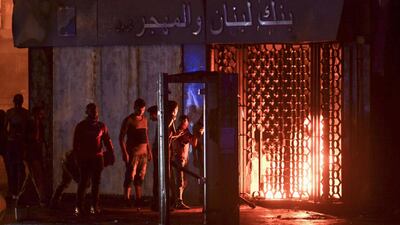
Lebanese anti-government protesters take shelter behind a public phone booth as a local bank's branch burns during clashes with security forces in the northern port city of Tripoli amid fresh protests over a spiralling economic crisis. AFP -
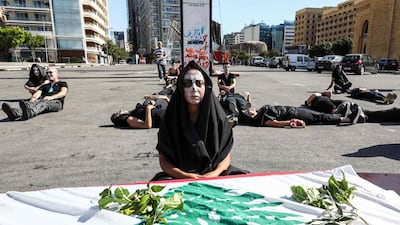
Lebanese anti-government protesters take part in a symbolic funeral for the country in the central area of the capital Beirut on the third consecutive day of demonstrations over a deepening economic crisis. AFP -
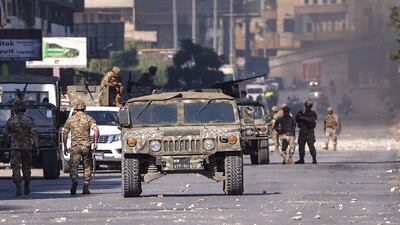
Lebanese soldiers deploy during an anti-government protest in the Bab al-Tabbaneh neighbourhood in the northern port city of Tripoli on the third day of demonstrations across the country over deepening economic crisis. AFP -
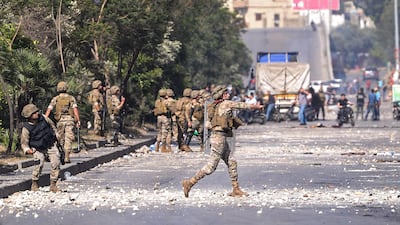
Lebanese soldiers clash with anti-government protesters in the Bab al-Tabbaneh neighbourhood in the northern port city of Tripoli on the third day of demonstrations across the country against deepening economic crisis. AFP


Mr Hitti did not comment on his meeting with Ms Shea on Monday.
Despite the Court of Urgent Matter's decision, Ms Shea spoke to local TV channel MTV on Sunday, saying that "the attempt to silence the Lebanese media in a country that is really known for having a vibrant media is really pathetic it doesn't belong in Lebanon, that kind of action belongs in a country like Iran."
Several politicians condemned the ruling and Ms Shea said that a "high ranking official in the Lebanese government" had reached out to apologise and assure her that "this ruling did not have proper standing" despite Information Minister Manal Abdel Samad denying any official had contacted the diplomat.
While she did not say whether it would damage overall US-Lebanese ties, she said, "unfortunately, I think because of this action Lebanon is going to have a bit of a black eye reputationally because international media got all over this, I would suggest we all try to put this chapter behind us."
Earlier this month, Hezbollah head Hassan Nasrallah accused the US of trying to starve Lebanon and Syria with sanctions after the Caesar Act came into force and accused Washington of preventing the Lebanese central bank taking action to address the country's collapsing economy.
"Nasrallah's threatening language was inappropriate, and it seemed very defensive, maybe Hezbollah felt threatened because I called them out for having contributed to this economic crisis," said Ms Shea. "When you think about Lebanese corruption, the spiralling currency crisis it has all created a very serious economic crisis that really needs to be addressed and I think this is all a distraction from that which is unfortunate as it also has a chilling effect on freedom of expression and freedom of the press."
Asked about further sanctions, and specifically the Magnitsky Act that targets human rights abuses and corruption, she said all measures so far had been "very targeted" against terror groups and those abetting the Syrian regime.
"There may be some people in Lebanese who could be candidates to be designated under the Magnitsky Act and I would imagine that they could very well cross the political and sectarian spectrum, but we'll have to see what happens on that,” she said.

