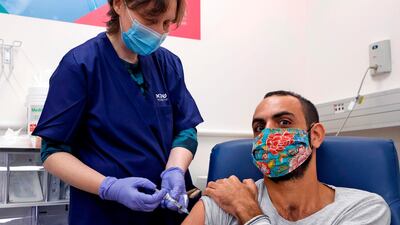

Israel has inoculated an impressive number of people in its coronavirus vaccine drive, but Palestinians in the occupied West Bank and Gaza are at the back of the line, the UN said on Thursday.
UN human rights investigators Michael Lynk and Tlaleng Mofokeng said that Israel is leading the world in Covid-19 vaccinations, with more than 16 per cent of its nine million citizens having already receiving doses.
“However, Israel has not ensured that Palestinians under occupation in the West Bank and Gaza will have any near-future access to the available vaccines,” the experts said.
Coronavirus pandemic – in pictures
-
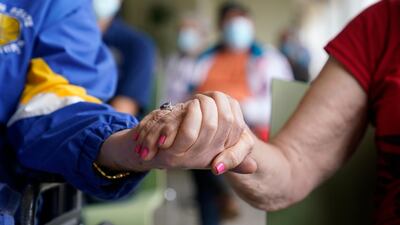
Residents Ken Fishman, 81, left, and Esther Wallach, 82, right, hold hands as they wait in line for the Pfizer-BioNTech vaccine at the The Palace assisted living facility in Coral Gables, Florida, USA. AP Photo -
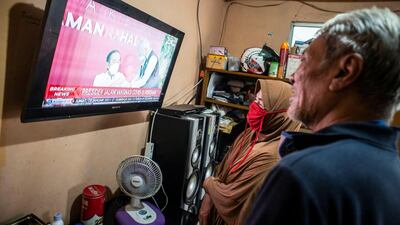
Indonesians watch a television showing live news of Indonesian President Joko Widodo receiving his Covid-19 vaccine shot in Jakarta, Indonesia. Reuters -

A medical worker prepares a syringe of the Pfizer-BioNTech Covid-19 vaccine at "Les Figuiers" retirement home in Villeneuve-Loubet in France. Reuters -

A medical worker prepares to take a sample at coronavirus testing site in Seoul, South Korea. AP Photo -
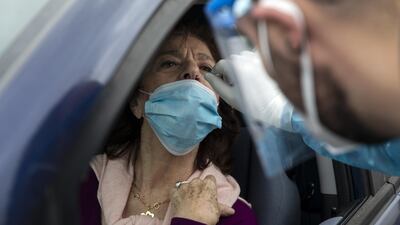
A medical worker for the Greek National Public Health Organisation takes a sample from a driver at a Covid-19 drive-through testing station, at Menidi suburb, near Athens, Greece. Bloomberg -

A man walks past a sign saying "2021 Happy New Year" on a shopping street in Shanghai, China. Reuters -
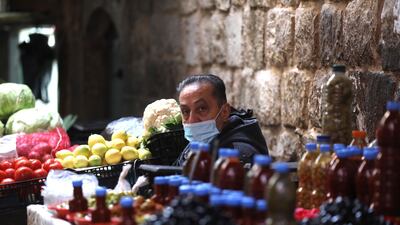
A Palestinian vendor wears a face mask while waiting for customers in Nablus, West Bank. EPA -
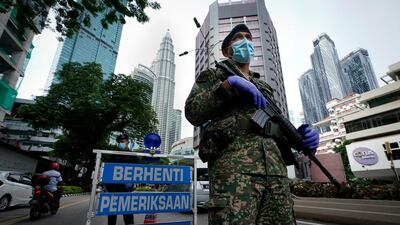
An armed soldier stands guard at a roadblock on the first day of a movement control order in downtown Kuala Lumpur, Malaysia. AP Photo -

Hotel guests are seen on a balcony at the Hotel Grand Chancellor in Brisbane, Australia, as the Queensland government is shutting it down after six people staying there contracted the UK strain of coronavirus. EPA -
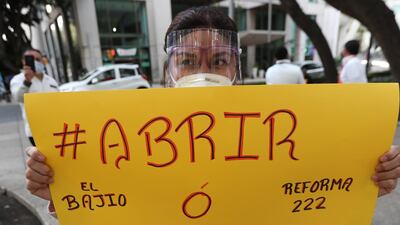
Restaurant employees demand to be able to reopen despite the ongoing restrictions amid the coronavirus pandemic, in Mexico City, Mexico. EPA -

Commuters pack out a tram during rush hour in downtown Tunis, Tunisia. AP Photo -
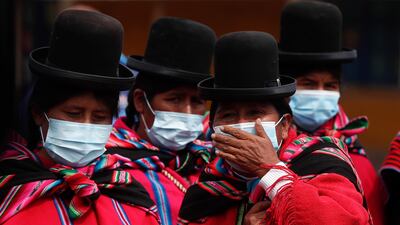
Aymara Indigenous women wait to enter the archaeological museum in Tiwanaku, Bolivia. AP Photo -

A kid looks on as a municipal healthcare worker walks after examining the body of Shirlene Morais Costa, who died at home at the age of 53 after reporting symptoms consistent with Covid-19, in Manaus, Brazil. Reuters


About 160,000 Palestinians living under occupation have tested positive for Covid-19 since March 2020 and more than 1,700 have died, the World Health Organisation said. Infection and death rates have risen steadily in recent weeks.
Palestinian residents of East Jerusalem were offered vaccines by Israel, the experts said, but those in the West Bank and Gaza will wait "many weeks" for inoculations ordered separately by the Palestinian Authority via a low-cost UN-backed scheme.
They are particularly worried about residents of Gaza, which suffers “serious water and electricity shortages, and endemic poverty and unemployment” as a result of a 13-year blockade.
“This means that more than 4.5 million Palestinians will remain unprotected and exposed to Covid-19, while Israeli citizens living near and among them – including the Israeli settler population – will be vaccinated,” the experts said.
Read More
Increased Israeli overflights rattle Lebanese
UN condemns Israel's East Jerusalem eviction orders
UK helps to raise more than £737m for global vaccine programme
“Morally and legally, this differential access to necessary health care in the midst of the worst global health crisis in a century is unacceptable.”
Israel's mission to the UN in New York did not immediately answer The National's request for comment.
Vaccinating its relatively small, dense population at a world-beating pace, Israel seeks to have administered one or both jabs to five million people and reopen its economy by mid-March.
Elderly, sick and high-risk Israelis have been prioritised so far. This may be expanded to include children aged over 12 in the coming weeks as vaccine shipments become more regular, Israeli officials said.
Israel is required by international law to provide decent health care to Palestinians living in East Jerusalem, the West Bank and Gaza – areas that Israel has occupied since the 1967 war – the experts said.

