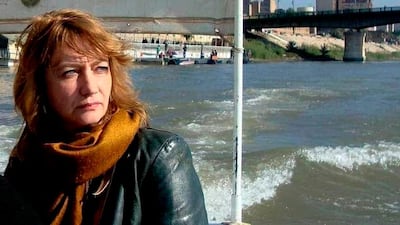

The kidnapping of a German art curator in Baghdad is a sign of the government's inability to control Iraqi militias, which could lead to foreigners leaving the country, activists told The National.
Hella Mewis, who has lived in Iraq since 2015, went missing on Monday night after she left her office in central Baghdad.
Security sources said Ms Mewis was "riding her bicycle when two cars, one of them a white pickup truck used by some security forces, were seen kidnapping her.”
There is no indication that she has been detained by any of the country's official security agencies. Police officers at the local station witnessed the kidnapping but did not intervene, the source told AFP.
The kidnapping presents a serious challenge to the government, said Hassan Wahab, an activist from the Amal Association human rights group.
"We consider it a real threat to all human rights defenders and activists in Iraq and is a sign of the collapse of the security system, especially since the kidnapping took place in an area that is considered secure and has military checkpoints," Mr Wahab told The National.
The government must restrict arms to groups outside of its control and must impose the rule of law on those committing serious crimes, he said.
“Crimes must not be tolerated at all because these acts will continue,” Mr Wahab said.
-
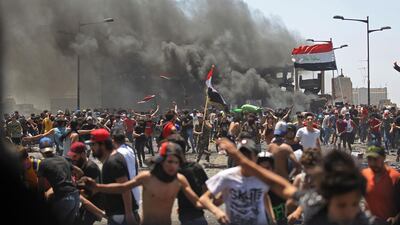
Iraqi protesters run for cover as they clash with security forces on Al Jumhuriyah in the capital Baghdad, following an anti-government demonstration. AFP -

Demonstrators gesture as they take part in the ongoing anti-government protests after newly-appointed Iraqi Prime Minister Mustafa Kadhimi called for the release of all detained protesters, at Al Jumhuriya bridge in Baghdad, Iraq. REUTERS -
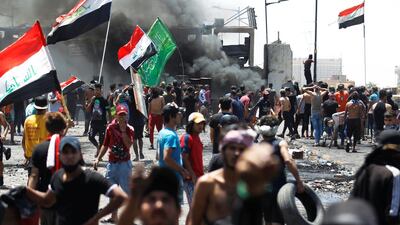
Demonstrators gesture as they take part in the ongoing anti-government protests after newly-appointed Iraqi Prime Minister Mustafa Kadhimi called for the release of all deatined protesters, at Al Jumhuriya bridge in Baghdad, Iraq. REUTERS -
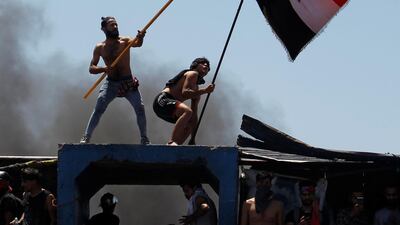
Demonstrators gesture as they take part in the ongoing anti-government protests after newly-appointed Iraqi Prime Minister Mustafa Kadhimi called for the release of all detained protesters, at Al Jumhuriya bridge in Baghdad, Iraq. REUTERS -
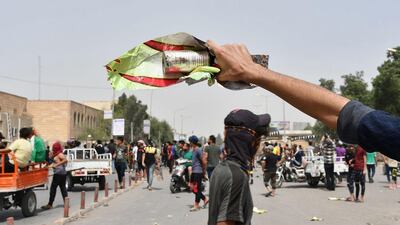
An Iraqi protester holds a smoke grenade fired by security forces amid clashes following an anti-government demonstration in Iraq's southern city of Nasiriyah in Dhi Qar province. AFP -
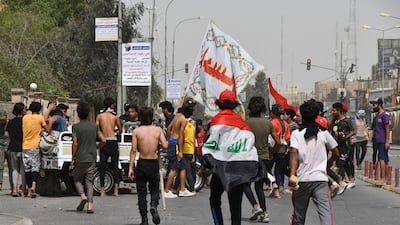
Iraqi protesters gather to block a street during an anti-government demonstration in Iraq's southern city of Nasiriyah in Dhi Qar province. AFP -
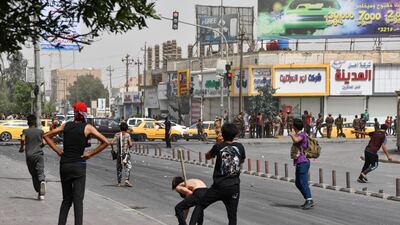
Iraqi protesters hurl stones at security forces amid clashes following an anti-government demonstration in Iraq's southern city of Nasiriyah in Dhi Qar province. AFP -
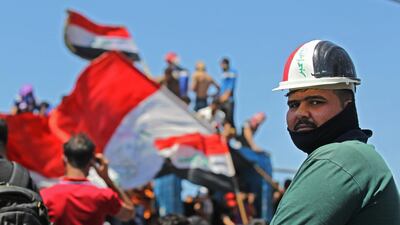
An Iraqi protester looks on as others wave national flags during an anti-government demonstration on Al Jumhuriyah bridge in the capital Baghdad. AFP -
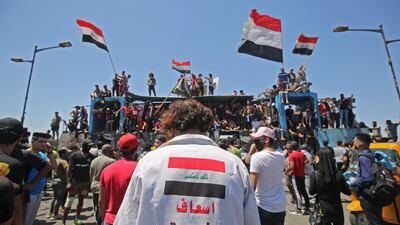
Iraqi protesters wave national flags during an anti-government demonstration on Al Jumhuriyah bridge in the capital Baghdad. AFP -
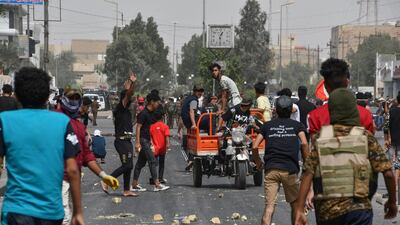
Iraqi protesters gather amid clashes with security forces following an anti-government demonstration in Iraq's southern city of Nasiriyah in Dhi Qar province. AFP -
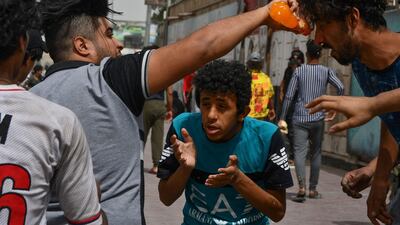
Iraqi protesters affected by smoke grenades receive help amid clashes with security forces following an anti-government demonstration in Iraq's southern city of Nasiriyah in Dhi Qar province. AFP -
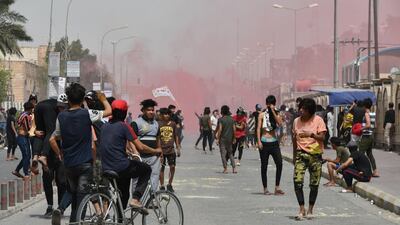
Iraqi protesters flee smoke grenades fired by security forces amid clashes following an anti-government demonstration in Iraq's southern city of Nasiriyah in Dhi Qar province. AFP -

An Iraqi demonstrator tries to smash a concrete wall during ongoing anti-government protests after newly-appointed Iraqi Prime Minister Mustafa al-Kadhimi called for the release of all detained protesters, at Jumhuriya bridge in Baghdad, Iraq. REUTERS


Ms Mewis is a curator who was working on establishing an art collective to promote young Iraqi artists.
The kidnapping is a dangerous indication of the government’s inability to protect foreign nationals in Iraq who are providing humanitarian and cultural services to the Iraqi public, said Ali Al Bayati, a member of the Iraqi High Commission for Human Rights.
"Certainly, without real, serious procedures for investigation, accountability and punishment, this situation will be repeated and it will result in the withdrawal of these missions from Baghdad to Erbil or out of Iraq," Mr Al Bayati told The National.
A friend of the German national told AFP she had been worried following the killing of Iraqi scholar Husham Al Hashimi, who had supported the anti-government protests last year.
"I spoke to her [Ms Mewis] last week and she was really involved in the protests too, so she was nervous after the assassination," said the woman's friend Dhikra Sarsam.
Gunmen killed Mr Al Hashimi outside his home in Baghdad on July 6, sending shock waves across Iraq. His was an authoritative voice on Al Qaeda, ISIS and the Iran-backed armed groups that operate in Iraq as part of the state-sanctioned Popular Mobilisation Forces (PMF).
Ms Mewis is the definition of "humanity" and is someone who is close to the Iraqi public, Inas Jabbar, a human-rights activist from Baghdad, told The National.
“We used to see her shopping at markets in Baghdad, especially in Karrada, everyone knew her,” Ms Jabbar said.
"She [Ms Mewis] has been in Iraq since 2015 and has not been subjected to any harassment by the community."
Ms Jabbar believes the abduction was intended to “escalate the cases of kidnappings and arrests in Iraq and to prove to the world that Iraq is no longer suitable to live in”.
“The Iraqi government is still silent about the atrocities that are committed against innocent lives despite condemnations made by civil society,” she said.
The public knows that the government is unable to take the “required measures to stop the abductees and to provide security, stability for the public,” she said.
Amnesty International has slammed the incidents as "a growing lethal campaign of harassment, intimidation, abductions and deliberate killings of activists and protesters".

