

European nations delivered medical supplies to Iran under a mechanism set up to bypass US sanctions on Tehran, Germany's foreign ministry said on Tuesday.
It said France, Germany and Britain had successfully concluded its first transaction using the Instex scheme.
“These goods are now in Iran," the ministry said.
The delivery of medical goods comes over a year after Britain, France and Germany announced the creation of Instex.
"Now, the first transaction is complete, Instex and its Iranian counterpart STFI will work on more transactions and enhancing the mechanism," Berlin said.
-
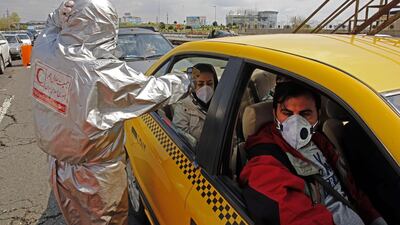
Members of Iranian Red Crescent test people with possible coronavirus Covid-19 symptoms, as police blocked Tehran to Alborz highway to check every car following ordered by the Iranian government, outside Tehran. AFP -
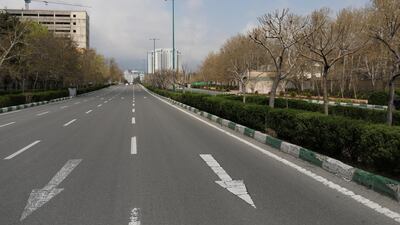
General view of a deserted street, during the intercity ban, amid fear of coronavirus disease (COVID-19), in Tehran, Iran. REUTERS -
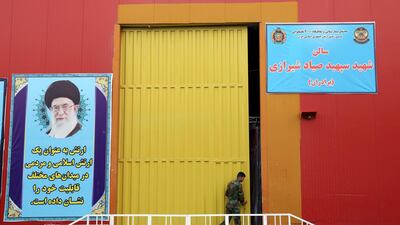
A member of the Iranian Army works at a temporary hospital in Tehran, Iran. AP Photo -
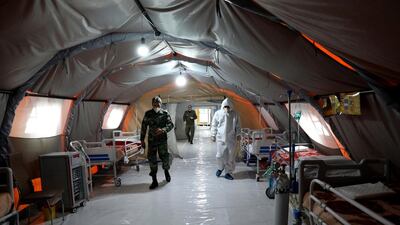
Iranian army soldiers work in a temporary 2,000-bed hospital for COVID-19 coronavirus patients set up by the army at the international exhibition center in northern Tehran, Iran. AP Photo -
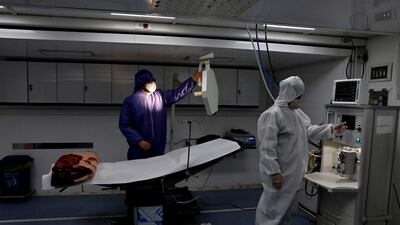
People in protective clothing work in a temporary 2,000-bed hospital for COVID-19 coronavirus patients set up by the Iranian army at the international exhibition center in northern Tehran, Iran. AP Photo -
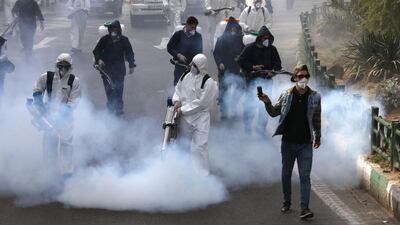
Firefighters disinfect a square against the new coronavirus as a man takes film, in western Tehran, Iran. AP Photo -
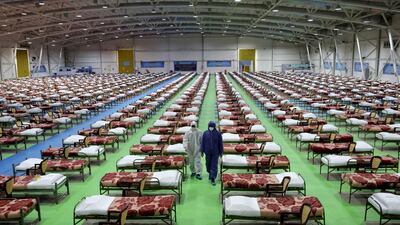
People in protective clothing walk past rows of beds at a temporary 2,000-bed hospital for COVID-19 coronavirus patients set up by the Iranian army at the international exhibition center in northern Tehran, Iran. AP Photo -
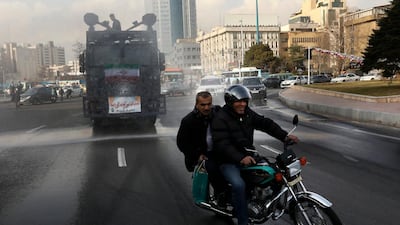
A police vehicle disinfects streets against the coronavirus, in Tehran, Iran. AP Photo -
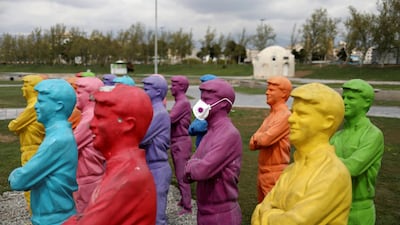
A statue wearing a protective face mask is pictured, amid fear of coronavirus disease (COVID-19), in Azadi square, in Tehran, Iran. REUTERS -
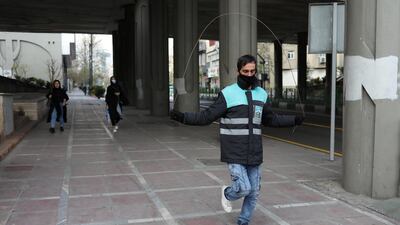
A man wearing a protective face mask and gloves, amid fear of coronavirus disease (COVID-19), jumps rope at Valiasr street in Tehran, Iran. REUTERS -
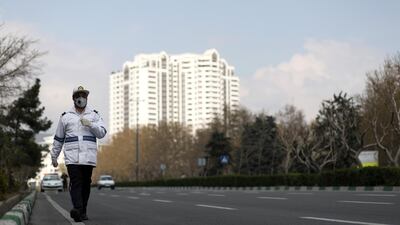
A traffic police officer wears a protective face mask and gloves, amid fear of coronavirus disease (COVID-19), as he walks in Tehran, Iran. REUTERS -
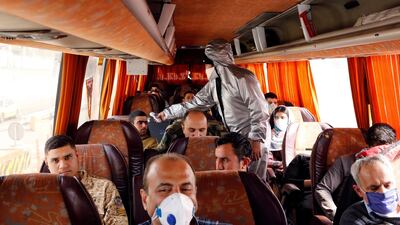
A member of Iranian red crescents test passengers of a bus for possible coronavirus Covid-19 symptoms, as police blocked Tehran to Alborz highway to check every car following ordered by Iranian government, outside of Tehran. EPA -
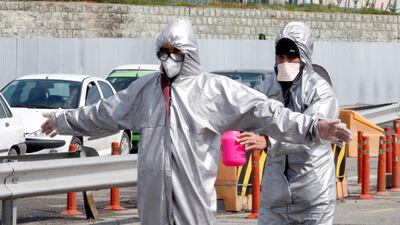
Members of Iranian Red Crescent get themselves disinfected after testing people for possible coronavirus Covid-19 symptoms, outside of Tehran. EPA


Advocacy group United Against Nuclear Iran (UANI) hailed the delivery but said it was "unfortunate that Instex took so long to become active," noting that the Swiss Humanitarian Trade Agreement (SHTA), the first channel established to facilitate aid to Iran, had been active since February.
UANI head David Ibsen said the group was "pleased to see a successful transaction ... providing much needed supplies to the Iranian people.
"This demonstrates once again that US sanctions do not stop the flow of humanitarian goods, food or medicine to the country, despite the cynical and opportunistic comments of mendacious regime spokespeople like Javad Zarif."
Mr Ibsen added that he hoped Europe would "increase its delivery of aid to Iran using SHTA as well as Instex".
The Islamic republic is struggling with one of the world’s worst outbreaks of the novel coronavirus, with more than 41,000 confirmed cases and at least 2,700 deaths.
Iran's foreign minister has repeatedly attacked the sanctions programme and accused the US of "medical terrorism".
The government on Monday warned the epidemic could run for several more months and cost more than 10,000 lives.
Tehran has been scrambling to contain the spread of the virus since it reported its first cases on February 19.
After weeks of refraining from imposing a lockdown or quarantine measures, Tehran decided last Wednesday to ban all intercity travel until at least April 8.
There is no official lockdown in Iran's cities, but the government has repeatedly urged Iranians to stay at home.
Tough sanctions were re-imposed under US President Donald Trump after he withdrew from a 2015 deal limiting Tehran's nuclear activities in exchange for easier access to global trade.
But the European sanctions-dodging programme aims to keep the 2015 deal alive and hold back Iran from developing a nuclear weapon.
Iran’s supreme leader Ayatollah Ali Khamenei said last week that his country would not accept help from Washington after Mr Trump offered aid at the end of February.
American proposals "to help us with medicines and treatments, provided we ask for them, are strange", he said, calling the US "Iran's most ferocious and vicious enemy".

