
Jordan’s daily coronavirus infection rate went from zero cases to an average of a dozen in recent days because of an iftar hosted by an infected lorry driver.
At least 58 of the 73 cases detected since Wednesday were linked to the feast hosted by the driver in the northern governorate of Mafraq early last week.
Jordanian authorities were continuing to test for new cases on Sunday among at least 140 people believed to have had contact with the driver, including more than 100 who attended the iftar at his home in the village of Al Khanaseri, 70km north of the capital Amman.
Health officials said the driver tested negative in late April when he was administered a mandatory test while returning from Saudi Arabia through the Al Omari crossing, 150 kilometres east of Amman. He only tested positive on Wednesday after new cases were traced to his village.
The new cases came shortly after officials eased a six-week lockdown to contain the coronavirus, and ended a run of eight straight days without a new infection.
With guests at the iftar coming from regions across the country including Karak in the south, Jordan Valley in the west and Irbid and Ramtha in the north, Jordan has gone from being on the verge of completely containing its Covid-19 outbreak to trying to prevent a nationwide resurgence. Four villages in Mafraq including Al Khanaseri and several neighbourhoods in Irbid have been placed under isolation.
-
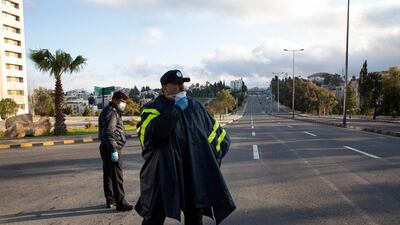
A Jordanian policemen stand guard at a check point on the first day of full curfew in Amman, Jordan, 21 March 2020. EPA -
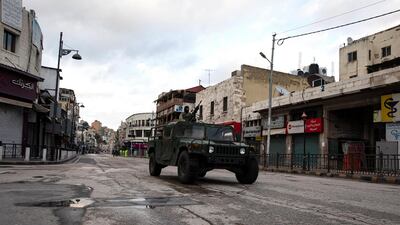
As part of the measures of protection against the spread of Covid-19 coronavirus disease, Jordan Prime Minister Omar Al Razzaz announced on 20 March that the country will be placed in full curfew from 21 March. EPA -
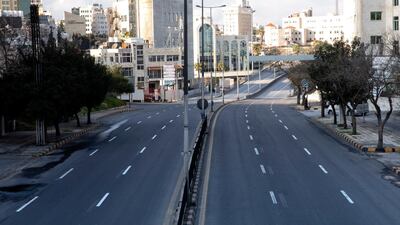
Inhabitants of the kingdom are not allowed out of their homes and from March 24, food and life essentials shopping will be allowed under specific terms and timings. EPA -
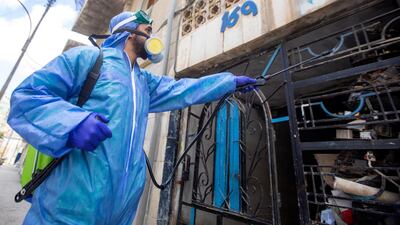
A municipal worker carries out disinfection at a street in downtown Amman, Jordan, 22 March 2020. EPA -
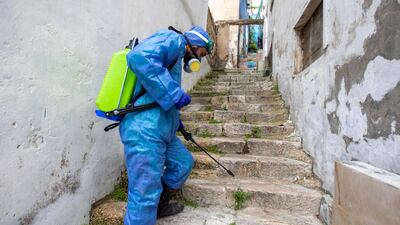
A municipal worker carries out disinfection at a street in downtown Amman, Jordan, 22 March 2020. EPA -

Jordan’s King Abdullah II holding a video conference meeting in the capital Amman with government officials including Prime Minister Omar Razzaz. Jordanian Royal Palace via Afp -
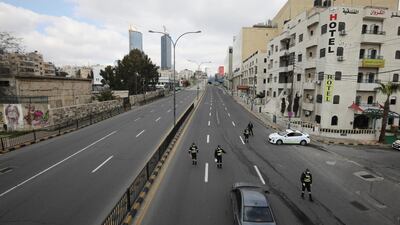
Jordanian police personnel guard at a checkpoint during the second day of a nationwide curfew, amid concerns over the spread of coronavirus disease, in Amman, Jordan March 22, 2020. Reuters -

Jordanian police personnel guard at a checkpoint during the second day of a nationwide curfew. Reuters -
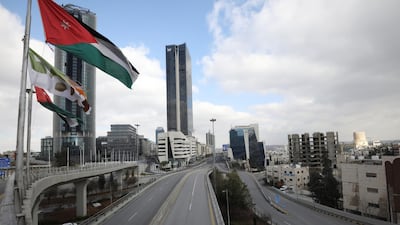
The streets of the Jordanian Capital are seen empty during the second day of a nationwide curfew. Reuters -
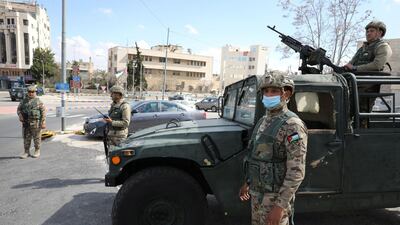
Jordanian army members stand guard outside a hotel transformed into a quarantine station amid concerns over the coronavirus in Amman. Reuters -
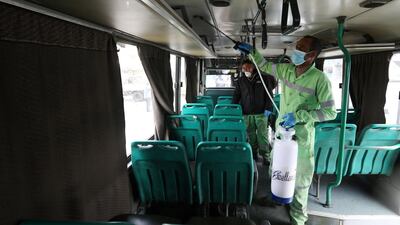
A Greater Amman Municipality employee sanitises public transport at one of stations. Reuters -
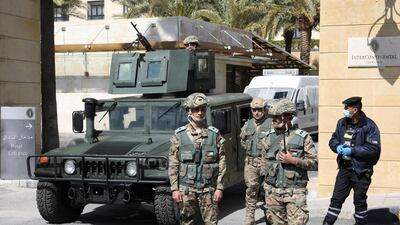
Jordanian soldiers stand guard outside a hotel that was transformed into a quarantine station amid concerns over the coronavirus in Amman, Jordan. Reuters -
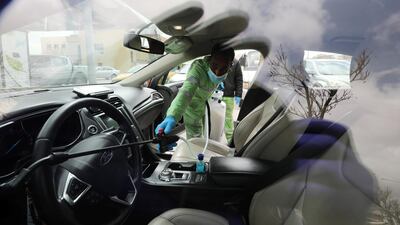
A Greater Amman Municipality employee sanitises public transport at one of stations. Reuters -
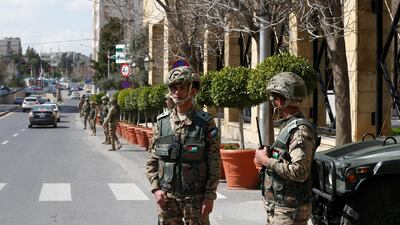
Jordanian soldiers stand guard outside a hotel that was transformed into a quarantine station amid concerns over the coronavirus in Amman, Jordan. Reuters -
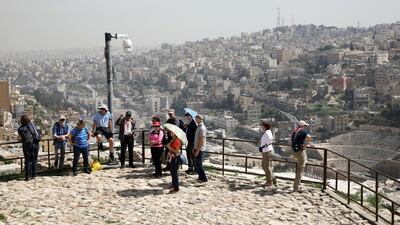
Tourists visit the Amman Citadel, an ancient Roman landmark, in Amman, Jordan. Reuters -
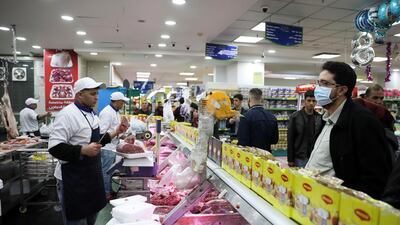
People shop in a mall amid concerns over the coronavirus spread in Amman, Jordan. Reuters -
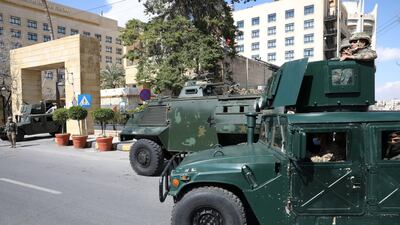
Jordanian soldiers stand guard outside a hotel that was transformed into a quarantine station amid concerns over the coronavirus in Amman, Jordan. Reuters -
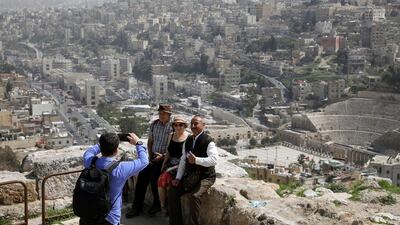
Tourists pose for a picture during their visit to the Amman Citadel, an ancient Roman landmark, in Amman. Reuters -
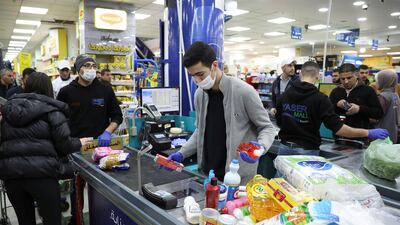
A cashier wearing a face mask and gloves amid concerns over the coronavirus spread works at a mall in Amman, Jordan. Reuters


Declaring the situation “under control”, Health Minister Saad Al Jaber said on Friday said that although the new cases were “a major setback and a sudden shock”, they “did not take the kingdom back to square one”.
“We will learn from our mistakes,” he said.
Jordan’s coronavirus cases rose from 461 before the new outbreak to 540 on Sunday. The death toll remained at nine.
Among the other new cases detected were six lorry drivers arriving from Saudi Arabia, a foreign diplomat and a student who arrived from Russia.
All lorry drivers entering Jordan are now being placed under a 14-day quarantine at a military barracks and school in Azraq, an isolated desert town 50km north-west of Al Omari. Drivers were previously allowed to self-isolate at home after signing a pledge to do so for 14 days or else face imprisonment.
Officials are expediting the construction of a special quarantine area near the Jordan-Saudi border to house the 2,000-odd lorry drivers who work the Jordan-Saudi route.
Under another new measure announced on Sunday, the clearance of goods will be done at Al Omari border rather than at Customs in Amman, in order to limit the contact of lorry drivers with citizens.
Meanwhile, lorries that are only passing through Jordan en route to either Syria, Iraq or Saudi Arabia will be accompanied by Jordanian police until they exit the kingdom.
However, Jordanian traditions and a national affinity for large social gatherings is emerging as perhaps the kingdom’s greatest challenge in countering Covid-19.
Weddings, funerals, engagement parties or feasts involve hundreds, sometimes thousands, of guests from different towns and cities. Jordan’s first large outbreak was traced to a wedding in Irbid in early March at which the bride’s father, recently arrived from Spain, was infected.
Authorities last week unveiled an app called “radar-C” which allows citizens to report gatherings or suspected Covid-19 cases, and share exact locations with officials.
Officials are currently studying whether to impose a lockdown for Eid Al Fitr, now two weeks away. The festival is marked by families visiting at least a dozen homes a day and hosting several waves of relatives.
With actions like the iftar in Al Khanaseri, “we are ruining our Eid”, Health Minister Al Jaber said on Friday.
_______________
Coronavirus in the Middle East
-

Indian nationals check in at the Muscat International Airport before leaving the Omani capital on a flight to return to their country. AFP -

Indian citizens queue at Kuwait International Airport before boarding a repatriation flight to India, in Kuwait City. AFP -
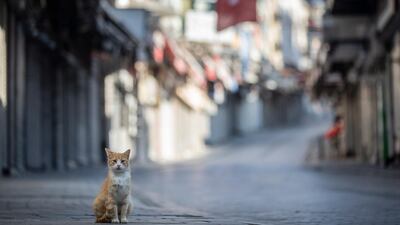
A cat stands at Istanbul's old bazaar Tahtakale during curfew in Istanbul, Turkey. EPA -

Closed shops at Istanbul's old bazaar Tahtakale during curfew in Istanbul, Turkey. EPA -
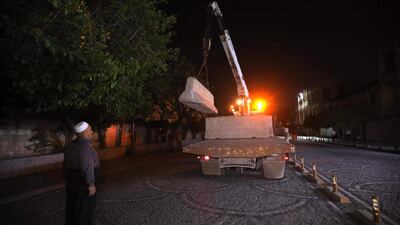
Arbil municipal workers prepare to remove concrete barriers previously placed around the citadel of Arbil, the capital of the autonomous Kurdish region of northern Iraq as authorities ease restrictions put in place for the COVID-19 coronavirus pandemic. AFP -
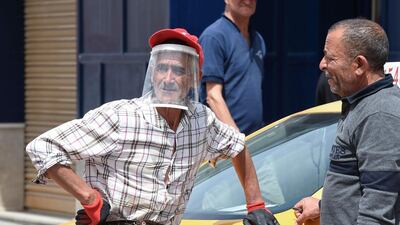
A Tunisian man wearing protective gear amid the COVID-19 pandemic looks on as he chats with another on a street in the Kram area of the capital Tunis, as authorities begin a gradual sector and region-based process to mitigate lockdown measures. AFP -

Hamra street is empty during the curfew imposed by the government to fight the spread of the COVID-19 coronavirus, in Beirut, Lebanon. EPA -
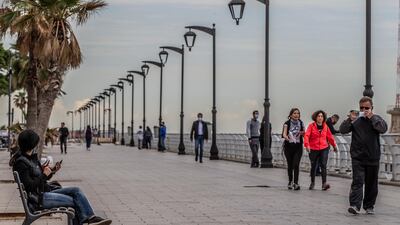
Citizens walk on the seafront on the Mediterranean coast during the curfew imposed by the government to fight the spread of the COVID-19 coronavirus, in Beirut, Lebanon. EPA -

Indian nationals check in at the Muscat International Airport before leaving the Omani capital on a flight to return to their country. AFP -

A man passes through a self-sterilisation gate set up at an entrance of the Kaaba and the Grand Mosque, as a preventive measure amid the the COVID-19 pandemic during the Muslim month of Ramadan in the Saudi holy city of Mecca. AFP



