


Global efforts to combat coronavirus have been stepped up in what has become a make or break week, as more cases were reported and new restrictions applied in Saudi Arabia, Egypt, Sudan, the Vatican and elsewhere.
Italy reported its largest daily increase in deaths, 368 in 24 hours. More than 1,800 people have died in the country with the virus.
The number of positive cases rose to 24,747 from 21,157 a day earlier.
Lombardy, Italy's worst affected region, saw its death toll rise by 252 to 1,218 on Sunday, from 966 a day earlier.
-
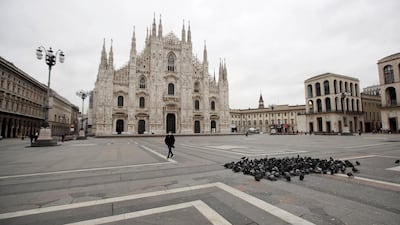
A woman crosses a nearly empty Duomo square in downtown Milan, Italy. AP Photo -
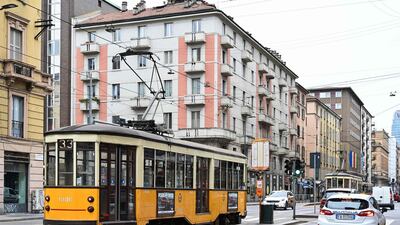
An empty tramway runs in Milan as Italy shut all stores except for pharmacies and food shops in a desperate bid to halt the spread of a coronavirus. AFP -
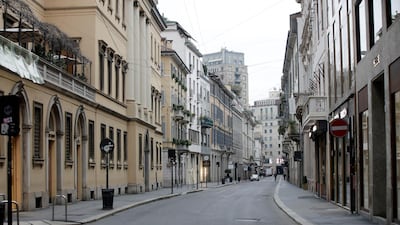
A view of a deserted street in downtown Milan. AP Photo -
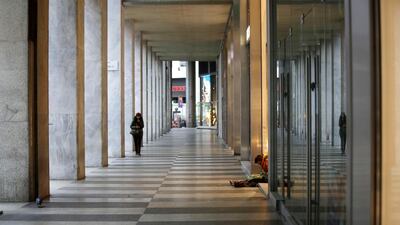
A man sits in downtown Milan. AP Photo -
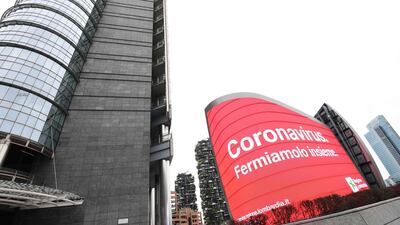
A poster reading "Coronavirus, let's stop it together" is pictured on Piazza Gae Aulenti in Milan. AFP -
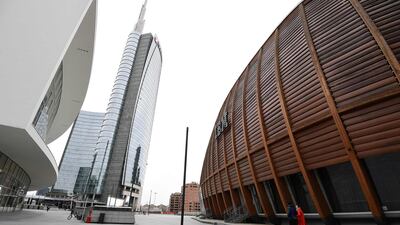
People go about Piazza Gae Aulenti in Milan. AFP -

Diaz square is deserted and shops are closed in Milan. EPA -
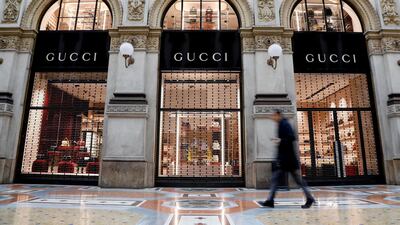
Shops are closed during the coronavirus emergency lockdown in Milan. EPA -
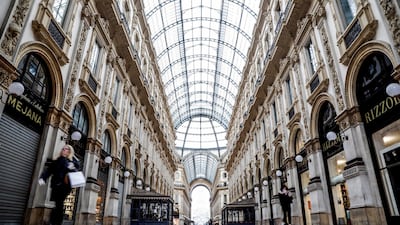
The Galleria Vittorio Emanuele II is nearly deserted with shops closed during the coronavirus emergency lockdown in Milan. EPA -
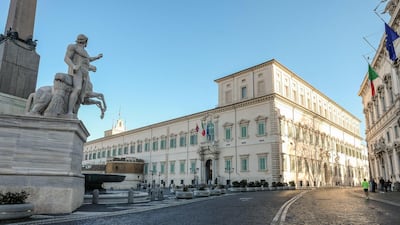
A deserted Via del Quirinale in early Thursday morning in Rome. EPA -
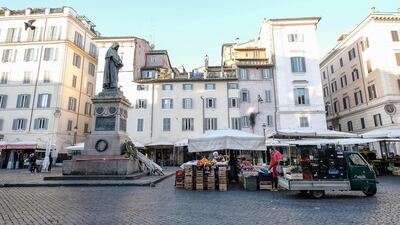
A deserted Campo de Fiori market during the coronavirus emergency lockdown. EPA -

A pigeon ambles next to the iconic Fontana di Trevi in Rome. EPA -
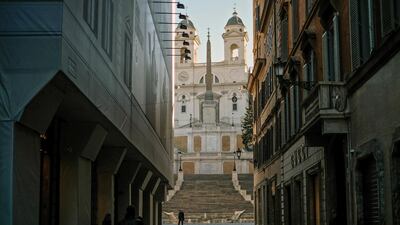
A view of the deserted Spanish Steps and Piazza Spagna in Rome. EPA -
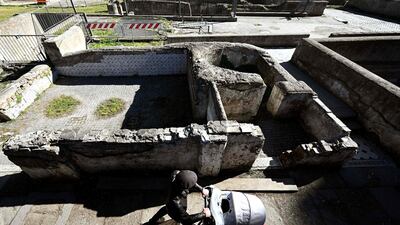
A man pushes a pram as he walks along the Foro Traiano Roman ruins in Rome. AFP -
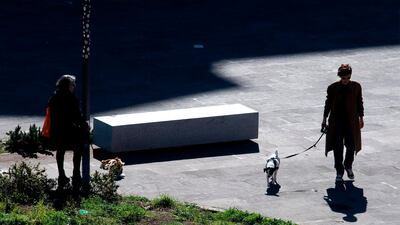
Residents walk their dog in Rome's Prati district. AFP -
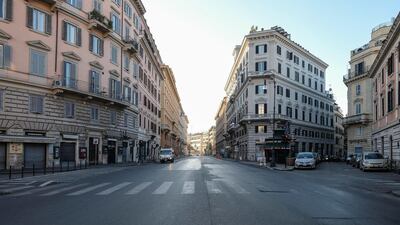
Corso Vittorio Emanuele is deserted during the Coronavirus emergency lockdown. EPA -
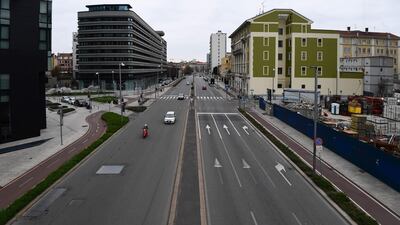
A general view shows a deserted Porta Nuova district in Milan. AFP -
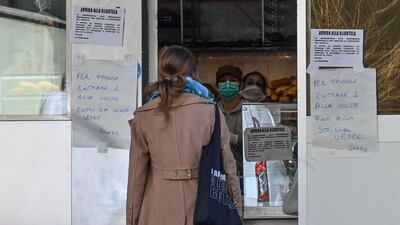
A resident waits in line to buy bread at a bakery in Rome's Monteverde Vecchio district. AFP -
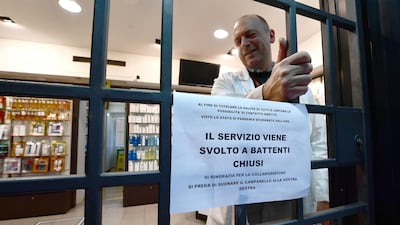
A pharmacist approaches the entrance gate of the drugstore during the national coronavirus emergency lockdown, in Genoa. EPA -
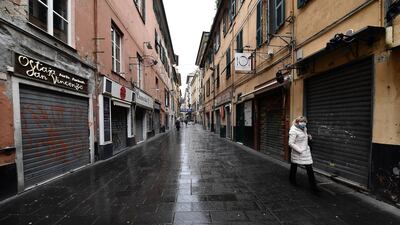
A person wearing a face mask walks in downtown past closed shops in Genoa. EPA


Iran’s Health Ministry reported another 113 deaths, bringing the country’s total death toll to 724, with the official leading the country's response acknowledging on Sunday that the pandemic could overwhelm health facilities.
In east Jerusalem, the Al Aqsa mosque, the third holiest site in Islam, is to be closed indefinitely due to concerns about the outbreak, with prayers continuing to be held on the sprawling esplanade outside.
Similar measures have been taken at the nearby Western Wall, the holiest place where Jews can pray. Outdoor prayers continue, but only 10 people at a time are permitted in enclosed areas, in keeping with measures taken by the Israeli government.
Egypt introduced school and university closures, while Iraq's President Barham Salih reportedly requested parliament move to impose a state of emergency on the nation.
Lebanon is also planning to declare a state of medical emergency following its third death on Thursday, and Sudan closed schools and universities for a month from Saturday, having announced its first death on Friday.
Saudi Arabia's capital Riyadh ordered the closure of all malls, restaurants, coffee shops and public parks and gardens on Sunday, the municipality said on Twitter, with food deliveries exempt.
The UAE's Sheikh Abdullah bin Zayed, Minister of Foreign Affairs and International Co-operation, discussed the with Iran's Foreign Minister Javad Zarif over the phone on Sunday.
The UAE announced 12 new cases of the virus on Sunday, bringing the total number of infections in the country to 98.
Sheikh Abdullah offered Mr Zarif his condolences to the victims of the global pandemic, affirming the UAE's support to the Iranian people as they come through this crisis.
Ali Reza Zali, who is leading the campaign against the outbreak in Iran, the worst affected country in the Middle East, told the state-run IRNA news agency that if the trend continues, there "will not be enough capacity" to contain it.
Iran is believed to have around 110,000 hospital beds, including 30,000 in the capital. However, Mr Zali acknowledged that “many” of those who have died from COVID-19 were otherwise healthy, a rare admission by local authorities that the virus does not only prey on the sick and elderly.
Iranian figures show that while 55 per cent of fatalities were in their 60s, some 15 per cent were younger than 40.
ISIS also warned its followers in its Al Naba newsletter against travel to Europe and for those who may have become ill with coronavirus not to leave the region, in order to prevent the disease spreading.
Elsewhere in the world, the Vatican is to hold its Holy Week ceremonies, but without public attendance as Italy tries to contain the virus.
“The Vatican announces that #PopeFrancis’ Holy Week liturgical celebrations will take place without the physical presence of the faithful, in an attempt to contain the spread of the Covid-19 #coronavirus,” the Holy See’s media arm tweeted on Sunday.
In an elaboration, Vatican media added that the office of the papal household was informing people that “until April 12 the General Audiences and the Angelus presided over by the Holy Father will be available only in live streaming on the official Vatican News website.”
Spain says deaths from the coronavirus have more than doubled in a day to 288, infections near 8,000. Greece's death toll rose to four and confirmed infections rose by 103 to 331.
Eswatini, Equatorial Guinea, Mauritania, Namibia and Rwanda reported their first cases on Saturday, with 24 of Africa’s 54 countries now having COVID-19 patients.
Sportswear brand Nike said on Sunday that is to close all of its stores in the US, Canada, western Europe, Australia and New Zealand from Monday March 27.
France held an election on Sunday to choose all of its mayors and other local leaders, despite a crackdown on public gatherings. Voting stations opened just as a drastic new order came into effect shutting down all of France's restaurants, museums, and most stores. The country has some 4,500 cases, including 91 people who have died.
Leaders and officials from the eight South Asian nations held a video conference on Sunday calling for closer co-operation. India's Prime Minister Narendra Modi, who initiated the conference, proposed creating a COVID-19 emergency fund to be used by South Asian nations to combat the spread of the disease.
Presidents and prime ministers from Afghanistan, Bangladesh, Bhutan, India, the Maldives, Nepal and Sri Lanka, and a representative from Pakistan, shared steps taken by their governments in their efforts to control the spread of the virus.

