
Iran will never ask the United States for help in the fight against the new coronavirus, Tehran's Foreign Ministry spokesman Abbas Mousavi said on Monday.
Supreme leader Ayatollah Ali Khamenei has rejected offers from Washington for humanitarian assistance for Iran, the Middle Eastern country worst affected by the coronavirus, with 3,739 deaths and 60,500 people infected, according to figures on Monday.
"Iran has never asked and will not ask America to help Tehran in its fight against the outbreak ... But America should lift all its illegal unilateral sanctions on Iran," Mr Mousavi said in a televised news conference.
Tensions between the two countries have been running high since 2018, when US President Donald Trump quit a 2015 agreement that lifted sanctions on Iran in return for curbs to its nuclear programme. Washington reimposed sanctions which have crippled the Iranian economy.
Coronavirus in the Middle East
-
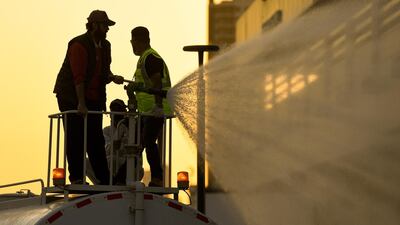
Municipality workers spray disinfectant as a precaution against the spread of coronavirus at the Kuwait Salmiya market. EPA -
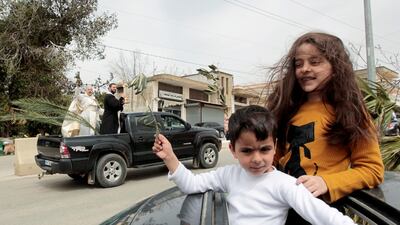
Children hold olive branches as they look out from the sunroof of a car to be blessed by priests to celebrate Palm Sunday, amid the lockdown to contain the coronavirus in Marjayoun, southern Lebanon. Reuters -
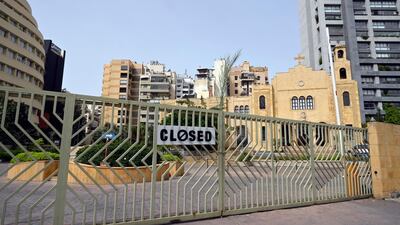
An empty Greek Catholic Church during a Mass on Palm Sunday in Beirut, Lebanon. EPA -
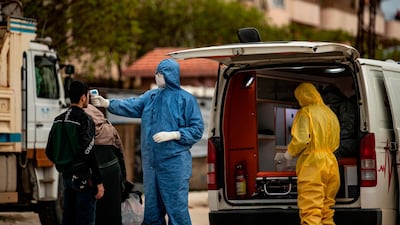
Members of the Kurdish Red Crescent check passengers who were stranded in Damascus upon their arrival at the Qamishli airport in Syria's north-eastern Hasakeh province. AFP -
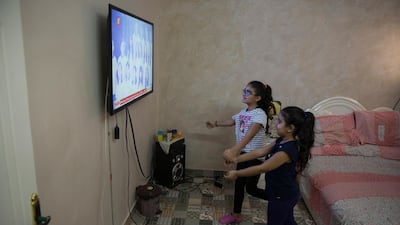
Coptic girls reacting while watching hymns performed on telelvision at home at Shubra Al Khema district in Cairo, Egypt. EPA -
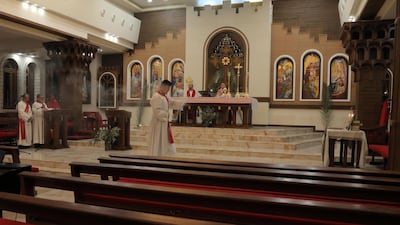
Iraqi priests celebrate the Palm Sunday Mass at the empty Saint Joseph Church in Erbil, the capital of the autonomous Kurdish region of northern Iraq. AFP -
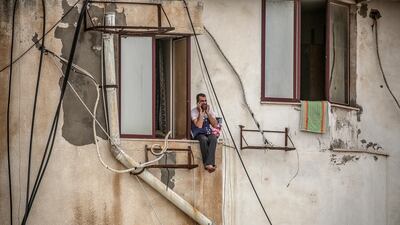
A Palestinian man, who was quarantined, talks on his phone on a hotel window in Gaza City. EPA -
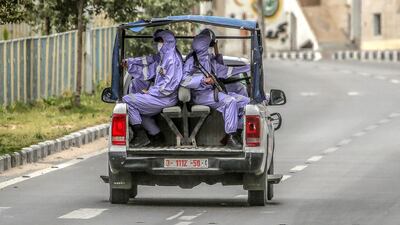
Palestinian security policemen wearing protective gear, patrol on the street of Gaza city. EPA -

A street vendor wearing protective face mask stands between lines of cars during a sandstorm in Cairo, Egypt. EPA -
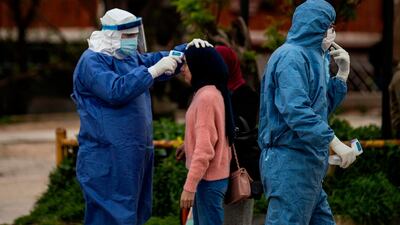
Members of the Kurdish Red Crescent check passengers who were stranded in Damascus upon their arrival at the Qamishli airport in Syria's north-eastern Hasakeh province. AFP -
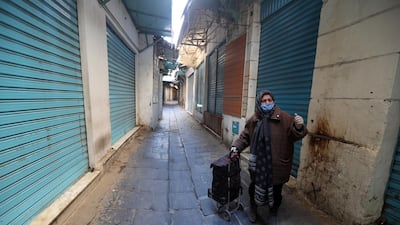
A view of an empty street during the coronavirus pandemic in Tunis, Tunisia. EPA -
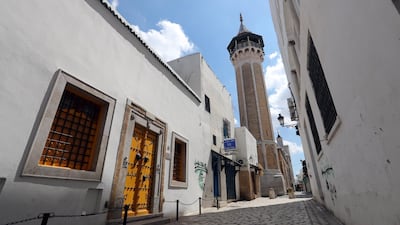
A view of an empty street during the coronavirus pandemic in Tunis, Tunisia. EPA -
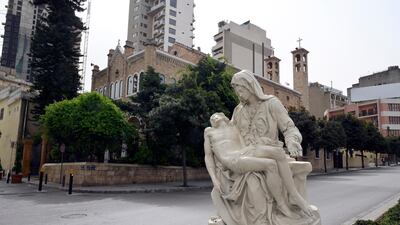
A statue representing the Virgin Mary and Jesus is seen in front of the closed St Maroun Maronite Catholic Church during Mass on Palm Sunday in downtown Beirut, Lebanon. EPA -

Municipality workers spray disinfectant as a precaution against the spread of coronavirus at the Kuwait Salmiya market following the outbreak of coronavirus in Kuwait. EPA -
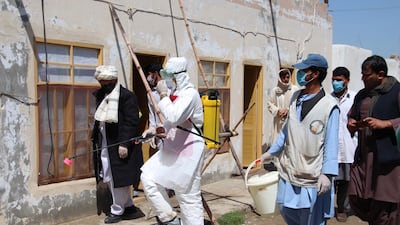
Afghan health workers spray disinfectants at public places in Helmand, Afghanistan. EPA


Iranian authorities say US sanctions have hampered their efforts to curb the outbreak, urging other countries and the United Nations to call on Washington to lift them. The US has pushed back on the accusation, saying they have offered humanitarian supplies amid the outbreak.
"They [the US] are trying to force Tehran to accept negotiations with America," Mr Mousavi said.
Mr Trump says the nuclear deal was not strong enough and wants to apply "maximum pressure" on Iran to accept tougher curbs to its nuclear programme, halt its ballistic missile work and end its support for proxy forces in the Middle East. Iran has long said it will not negotiate unless Washington lifts sanctions.
Iran also said the trajectory of coronavirus infections in the country appears to have started a "gradual" downward trend, but warned the disease is far from being under control.
The Covid-19 outbreak claimed 136 deaths in the past 24 hours, health ministry spokesman Kianoush Jahanpour told a televised news conference.
Iran registered 2,274 new cases of infection over the same period, he said.
The figure shows a drop in officially reported new cases of the novel coronavirus for the sixth consecutive day after a peak of 3,111 reached on March 31.
Iran is by far the country most affected by the pandemic in the Middle East, according to official tolls released by each state.
"Due to the intensification of the social distancing policy, we have seen a gradual and slow decline in the number of new cases in recent days," Mr Jahanpour said.
President Hassan Rouhani reiterated a call for people to stay at home as he warned Iran could be "put back in a difficult situation" unless people follow guidelines.
"I hope that the strongest possible adherence to these instructions... will allow us to enter a phase of disease control and containment," Mr Jahanpour said.
In an attempt to limit the spread of the disease, the authorities have not confined the population but have resorted to other restrictions such as closing most businesses deemed non-essential.
Mr Rouhani announced on Sunday that the authorities had given the go-ahead for the resumption of certain economic activities "step by step" from April 11.
Iran also welcomed a recent delivery of medical supplies by European states that was facilitated through a barter system to bypass US sanctions saying it was a "good omen" but more was needed.
Britain, France and Germany said last week they had carried out the first transaction through the Instex mechanism to deliver medical supplies to Iran, which has been hit hard by the coronavirus pandemic.
"We see the launch of Instex as a good omen," Mousavi said in a televised news conference.
But "what the Islamic Republic of Iran expects [from now on] is for the Europeans to fulfil the rest of their commitments in various fields [such as] banking, energy, insurance," he added.

