

A former World Health Organisation director said the Middle East was much better prepared to deal with the coronavirus outbreak after its experiences in dealing with Mers.
David Heymann, who led the body’s global response to the Sars outbreak in 2002, said prevention in the region had improved greatly.
In particular, Mr Heymann said preventive measures to stop respiratory diseases from spreading in hospitals, which was a key features of the Sars and Mers outbreaks, have “strengthened in all countries”.
About 700 people in Saudi Arabia are believed to have been infected by Mers since 2012, with around 280 deaths.
The first case of Mers in the UAE was reported in July 2013, with another 91 cases recorded since.
The Middle East’s first cases of coronavirus were confirmed by the UAE Health Ministry last week.
The ministry identified the virus in a Chinese family of four who came to the Emirates as tourists. A fifth case was announced on Saturday.
Mr Heymann said the world in general was better prepared to handle outbreaks of infectious disease.
“The global readiness is there,” he said at London’s Chatham House think tank.“The world is more prepared but it is not yet fully prepared."
Mr Heymann said that there was not yet a medicine known to cure coronavirus and it was “too early to tell if it’s more or less deadly than Sars”.
-
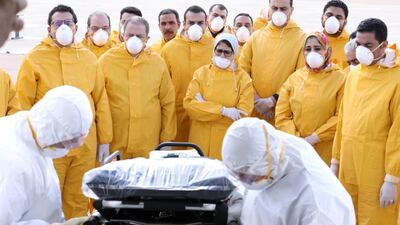
Egyptian Minister of Health Hala Zayed stands with a medical team at Borg El Arab airport, awaiting passengers that were evacuated from Wuhan, China, in Alexandria, Egypt. Reuters -
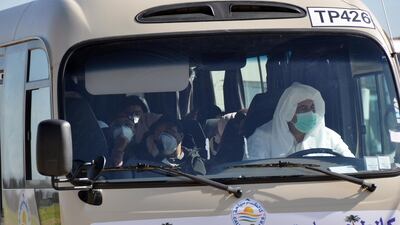
Algerians, Libyans and Mauritanians on a transport bus following their evacuation from China amid the coronavirus epidemic at the Houari Boumediene Airport in Algiers, Algeria. EPA -
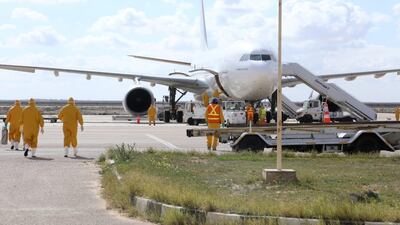
Medical team walk towards the aircraft to receive passengers that were evacuated from Wuhan, at Borg El Arab airport in Alexandria, Egypt. Reuters -
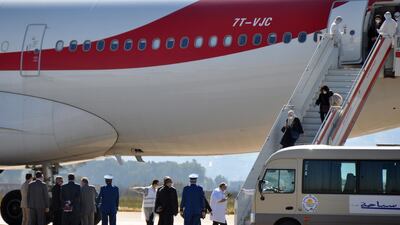
Algerian medical staff in protective suits prepare to accompany Algerians, Libyans and Mauritanians on a transport bus following their evacuation from China amid the coronavirus epidemic at the Houari Boumediene Airport in Algiers, Algeria. EPA -
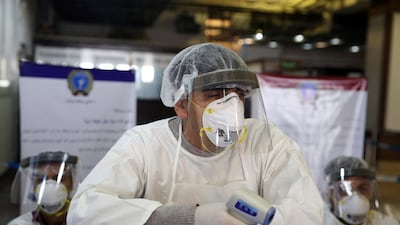
Afghan health workers wearing protective gear wait to check passengers who arrived from China as a preventive measure for Coronavirus, at the Hamid Karzai International Airport in Kabul, Afghanistan. AP Photo -
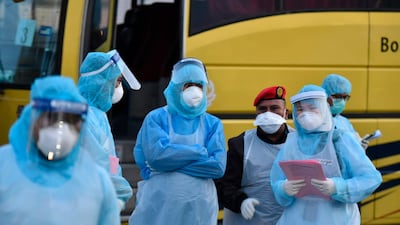
Health officials in protective suits at the Kuala Lumpur International Airport in Sepang, Malaysia waiting for arrivals that were evacuated from China's Wuhan, the epicenter of the novel coronavirus outbreak. AP -
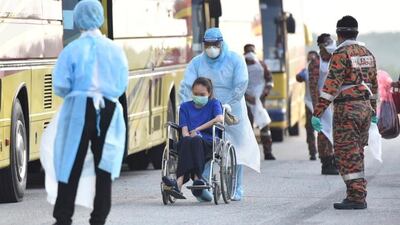
A Malaysian national being directed onto a bus by health officials in protective suits as she arrived at the Kuala Lumpur International Airport in Sepang, Malaysia, after being evacuated from China's Wuhan. AP -
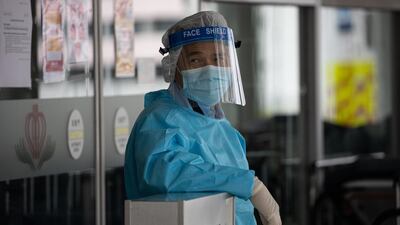
A guard in protective gear stands outside the Accident and Emergency building at Princess Margaret Hospital in Hong Kong, China. EPA -
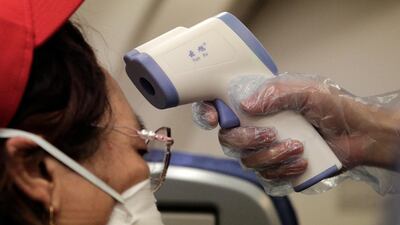
A stewardess takes the temperature of passenger as a preventive measure for the coronavirus on an Air China flight from Melbourne to Beijing before it landed at Beijing Capital International Airport in China. AP Photo -
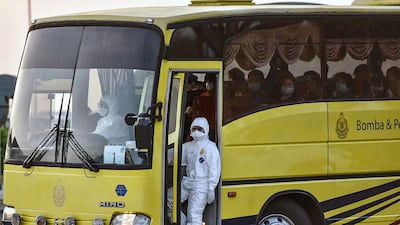
Evacuated Malaysian nationals on a bus after arriving at Kuala Lumpur International Airport, from the Chinese city of Wuhan, in Sepang, Malaysia. EPA -
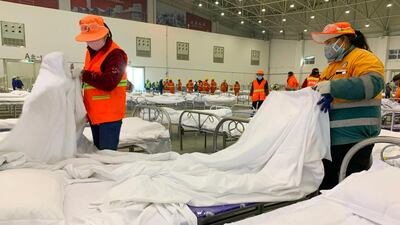
Workers set up beds at an exhibition centre that was converted into a hospital in Wuhan in China's central Hubei province. AFP -
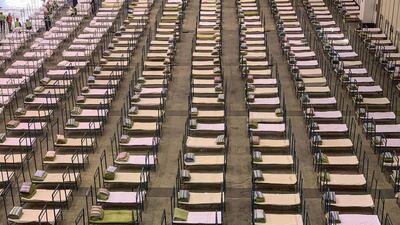
Workers set up beds at an exhibition centre that was converted into a hospital in Wuhan in China's central Hubei province. AFP -
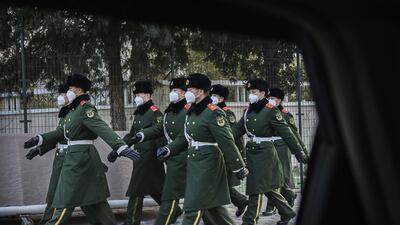
Chinese police march wearing masks during a duty change in Beijing, China. Getty Images -

The upper decks of the Diamond Princess cruise ship with over 3,000 people look empty as the ship sits anchored in quarantine off the port of Yokohama, a day after it arrived with passengers feeling ill. AFP -

A dog wears a paper cup over its mouth on a street in Beijing. AFP


More than 8,000 cases of Sars, or severe acute respiratory syndrome, were recorded in the 2002 outbreak, resulting in 774 deaths in 17 countries.
The former WHO specialist described steps people should take to avoid infection.
“One of the most important ways to stop respiratory outbreaks is to wash your hands,” Mr Heymann said.
He recommended avoiding “face-to-face contact” with people believed to be infected and said it was thought that it was possible to become infected with the coronavirus more than once.
Mr Heymann said countries had largely taken the WHO advice on screening passengers at airports.
He said screening measures to detect people suffering with a tell-tale fever on arrival at airports “give a good feeling to travellers entering a country".
“The most important part of any epidemic is to empower patients to take care of themselves,” Mr Heymann said.
He praised China for sharing information with world health bodies.
“They are being much more transparent than they were through the Sars outbreak," Mr Heymann said. “That’s the key to fighting all these outbreaks that become global: sharing information.
“It’s a very difficult job for them right now."

