

Egypt will allow foreign flights and tourists back into coastal areas with the smallest number of Covid-19 cases starting on July 1.
The move is part of the government’s plan to gradually reopen the country to avoid an economic meltdown as a result of the pandemic.
Egypt remains in the worst stretch of its three-month fight against the coronavirus, which causes the potentially deadly Covid-19.
Allowing foreign tourists back into coastal areas such as southern Sinai, which includes the popular Red Sea resort Sharm El Sheikh, was part of Egypt’s attempt to salvage what shaped up to be the best tourism season on record before the outbreak.
-
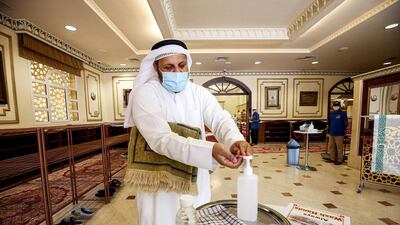
A worshipper sanitises his hands at a mosque in Kuwait City. AFP -
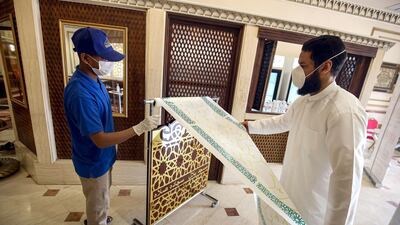
A worshipper pulls a sheet of paper to fashion as a disposable prayer mat for noon prayers at a mosque in Kuwait City. AFP -
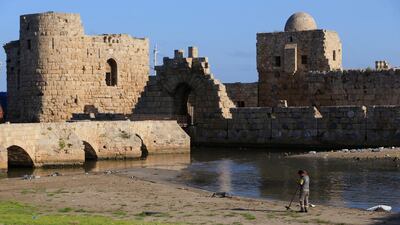
A worker cleans a beach outside the closed sea castle of the port city of Sidon. Reuters -
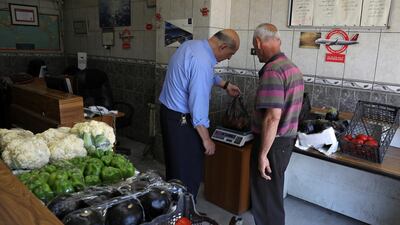
Mohammed Natour, who went from selling airline tickets to selling fruit and vegetables, after the coronavirus outbreak brought the tourism industry in Jordan to a sudden halt, serves a customer at his office in Amman, Jordan. Reuters -
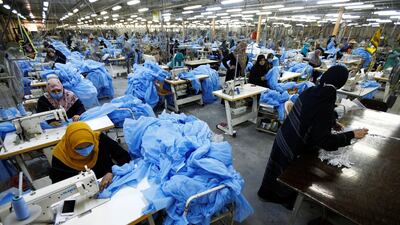
Women sew protective suits at a factory in Najaf, Iraq. Reuters -

Iraqi orphan children draw in the classroom of an orphanage house during a curfew in Baghdad, Iraq. Reuters -

A worker installs cut-out portraits of Fenerbahce fans at Fenerbahce Sukru Saracoglu Stadium in Istanbul, Turkey. Getty Images -

Mannequins are seen placed between tables to help customers adhere to new restaurant social distancing rules at Varuna Gezgin restaurant in Istanbul, Turkey. Getty Images -

Iraqi orphan children shave each other at an orphanage house in Baghdad, Iraq. Reuters -

A man repairs a vacuum cleaner at a repair shop in Iraq's southern city of Nasiriyah in Dhi Qar province. AFP -
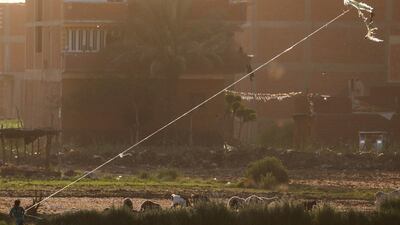
A boy flies a kite near sheep, in agriculture land named "El Shouna" at El-Marg district, east of Cairo. Reuters -

A man carries a television while wearing a face mask near the Medina of Rabat in Morocco. AP Photo -
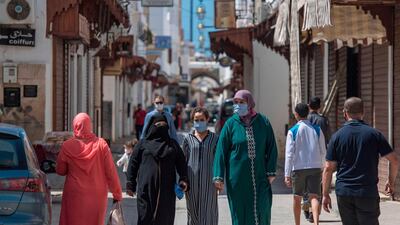
Pedestrians, wearing protective masks due to the pandemic, walk past closed shops in the Moroccan capital Rabat. AFP -
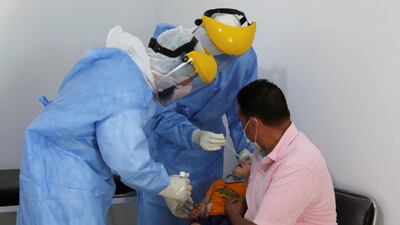
A member of a medical team wearing a protective suit takes a swab from a child at a medical clinic in Tripoli, Libya. Reuters -
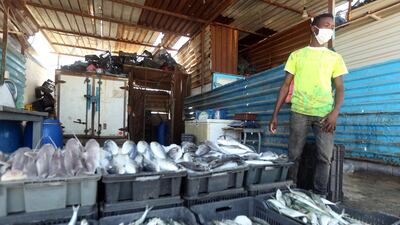
A man wearing a mask against the coronavirus Covid-19 stands at a fish stall in the Libyan capital Tripoli. AFP -
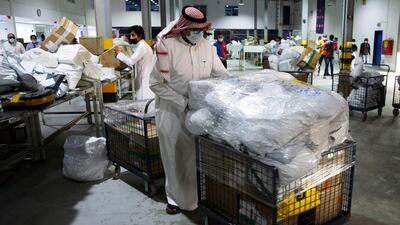
A Saudi employee sorts out boxes at the warehouse of Naqel Company Express in Riyadh, Saudi Arabia. Reuters


Tourists will also be able to visit Dahab, Noweiba and Taba which, like Sharm El Sheikh, are in the south of the Sinai Peninsula.
Hurghada, El Gouna and Marsa Alam along the Red Sea coast on the mainland, will also be open to tourists.
Areas west of the Mediterranean city of Alexandria can also receive holidaymakers for July 1.
Tourism, which accounts for nearly 15 per cent of Egypt’s gross domestic product and is a major source of foreign currency, was among the biggest casualties of the pandemic.
Authorities sought to minimise damage to the sector by allowing hotels to reopen last month, at reduced capacity and with stringent health measures.
They have set aside billions of pounds for the sector in tax relief and soft loans in a stimulus package to spare the country from an economic meltdown.
On Thursday, the government announced incentives to lure foreign tourists back to the coastal resorts.
They included reduced prices for aircraft fuel, and discounted landing fees at airports and for ground services.
Visa charges for visitors flying directly to the coastal resorts have also been waived until the end of October.
Information Minister Osama Heikal said in a televised speech that the government was considering reopening places of worship next month, but only in areas with the least number of Covid-19 cases.
However, Mr Heikal warned that keeping them open would depend on whether worshippers observed preventive measures while inside mosques and churches.
The minister also announced that the curfew between 8pm and 5am curfew would be reduced by an hour to end at 4am.
The new hours would remain in force until June 30 when it would be reviewed.
Shops' business hours were also extended by one hour to close at 6pm instead of 5pm.
Sports clubs would be reopened on June 15, but only to allow people to renew their membership and for clubs to upgrade their facilities before they become operational again on July 1.
Egypt is in its worst phase of the pandemic so far, with about half of the officially declared infections since the outbreak occurring in the past 15 days alone.
A compilation of figures released daily by the Health Ministry shows that 19,528 of the total confirmed Covid-19 cases, or about 50 per cent, were recorded between May 27 and June 10.
More than 10,000 have made a full recovery.
The 15-day period also saw a total of 545 Covid-19-related deaths, or more than a third of the 1,342 fatalities recorded since the outbreak of the coronavirus in mid-February.
The number of Covid-19 cases were likely to increase in June, said Hossam Hosny, the Health Ministry’s head of the counter-coronavirus committee.
Mr Hosny said late on Tuesday night that the worst government estimates for June was for the daily number to hit 2,500.
“July 15 will see the start of the journey of decline," he said. "The disease has greatly weakened but its spread has become more acute."
Mr Hosny said social distancing was still the best way to prevent the spread of the disease.

