When Dr Michael Khouzami received the phone call from his superiors, he already knew what it was about: the blast that had ripped apart his city.
Dr Khouzami, 28, recalled the rush to the American University of Beirut Medical Centre.
Teams were divided up. Some went to the operating room, some to the emergency department, and others to the intensive care unit.
Dr Khouzami did not know that half of Beirut had been devastated until the medical centre began to fill with the dead and wounded.
At least 135 people have been killed and 4,000 wounded in the blast that Lebanese officials say was caused by 2,750 tonnes of ammonium nitrate confiscated from a ship at Beirut port and stowed in a warehouse.
“The beds were full," Dr Khouzami says. "The recovery unit was overflowing.
"We had to take lots of people into the operating rooms urgently without doing any Covid tests or anything."
He and his colleagues worked until 2am when other medical workers came in to take over.
“Now we’ve come back to finish our work,” Dr Khouzami says, standing outside the main hospital entrance in his white overalls.

He calls on the Lebanese public to “stay indoors if possible” because of the risk from the chemicals and the coronavirus pandemic.
“Stay at home, help your neighbours," Dr Khouzami says. "Lebanon needs all the help it can get at the moment.”
The director of the medical centre, Dr Joseph Otayek, tells The National that his staff have received about 500 of the 4,000 wounded in the blast.
Those with mild to moderate injuries were immediately discharged or turned away.
The medics' task has been made harder by the closure of three major hospitals caused by the sheer force of the blast.
The city’s hospitals are so overwhelmed that the Lebanese Red Cross is co-ordinating with the Ministry of Health to set up makeshift morgues.
Dr Otayek says the rush of patients is “much more than what we can treat at a single point in time.
He says it is likely that they will be dealing with the consequences of the blast for some time, even though staff have the situation under control.
“We still have some corpses in the morgue that were not yet identified,” Dr Otayek says.
“There is a big problem in that there are missing people.”
Amid the tales of disaster, there were small tales of hope.
Lina Mokaddem tells The National how her father, Mohamed Mokaddem, 92, was covered in rubble by the blast but survived another day.
“He was covered and I couldn’t see him," Ms Mokaddem says. "He is a real angel, a tough guy.
"Why is this happening? Not only to him, to us, to Lebanon, to Beirut. We don’t deserve this.”
She holds on to her father’s arm. “This is my hero.”
Medical staff will see long-term effects in the treatment they can offer residents, including cancer patients, Dr Otayek says.
“The warehouse of the chemotherapy products that were distributed to all of the Lebanese patients was destroyed by the blast," he says.
"it was very close to the port. That’s why we will face a major problem in the chemotherapy provided to cancer patients as well as the treatment of chronic disease."
The doctors now fear a surge in coronavirus cases because social distancing had to be shelved on Tuesday in the rush to save lives.
Dr Otayek says there is also a shortage of personal protective equipment.
“Yesterday with all of the mingling in all of the emergency, we are afraid that corona will get a new surge, that’s why we will have a bad need for PPE in the coming days,” he says.
But like the city around him, he shows a defiant spirit, one that has risen from the lows of disaster before and will hopefully do so again.
"Our situation is very tense, very alarming," Dr Otayek says. "But we hope to be able to overcome it."
________________
-
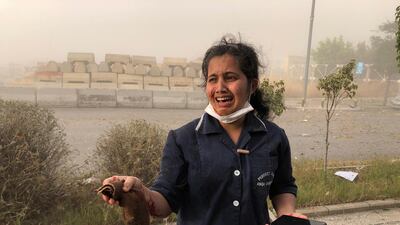
A migrant worker reacts in shock following an explosion at the Beirut port. EPA -
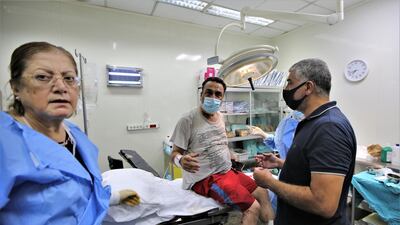
A man injured in the Beirut Port explosion receives treatment at Najjar Hospital in Al Hamra area in Beirut. EPA -

People injured in the Beirut Port explosion receive first aid at Najjar Hospital in Al Hamra area in Beirut. EPA -
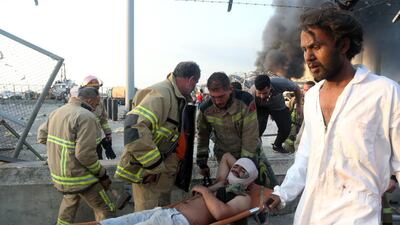
An injured man is rescued from the scene of an explosion at the Beirut port. EPA -
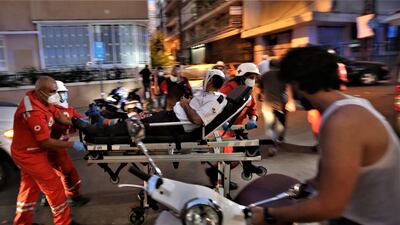
Medics shift an injured person from Najjar Hospital to another hospital in Al Hamra area in Beirut after port explosion. EPA -
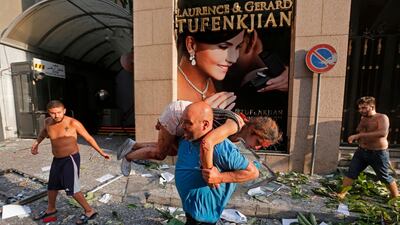
A man carries an injured girl while walking through debris in the Achrafiyeh district in Lebanon's capital Beirut. AFP -
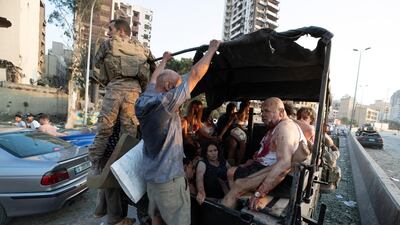
Injured people are rescued after a massive explosion in Beirut. AP Photo -
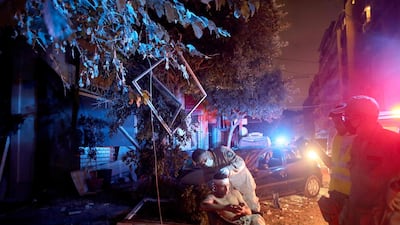
A rescue worker tends to an injured man following an explosion at the port of Beirut. AFP -

An injured man sits outside American University of Beirut medical centre following an explosion in Beirut. Reuters -
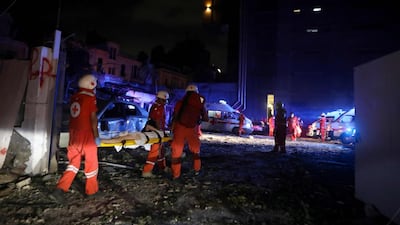
Lebanese Red Cross officers carry an injured woman following an explosion at the port of Beirut. AFP -
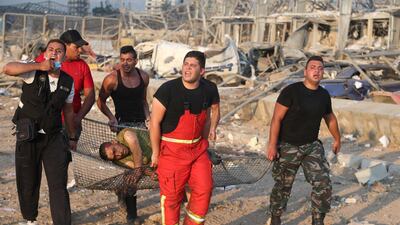
An injured man is taken from the scene of explosion at the Beirut port. EPA -
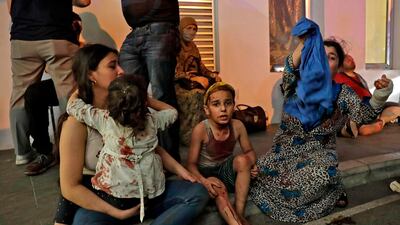
Wounded people wait to receive help outside a hospital following the explosion in Beirut. AFP -
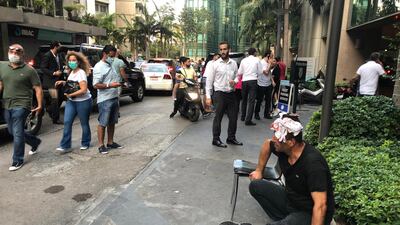
An injured man sits in shock on the pavement following an explosion at the Beirut port. EPA -
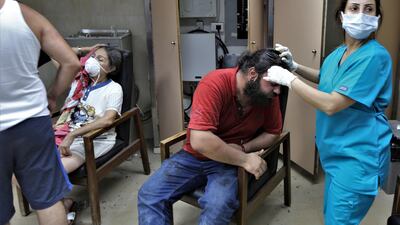
People injured in the Beirut port explosion receive first aid at Najjar Hospital in Al Hamra area in Beirut. EPA -

A man tries to walk in the mud near the scene of explosion at the Beirut port. EPA



