


With India’s capital gripped by its annual hot season water shortage, New Delhi’s so-called tanker mafia is doing a roaring trade. An estimated 2,000 illegal tankers ply its roads every day, lifelines to millions whose taps have run dry, and symptoms of a much bigger problem – the city’s desperately dysfunctional water system. Pictures by Patrick Reevell, AP Photo
-

-
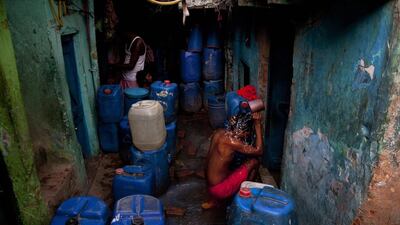
Every day, the city’s water supply falls short by more than 160 million gallons. -

Most residents have piped water for just a couple of hours a day, and almost a quarter have none at all. -

With a leaky water infrastructure long overwhelmed by new arrivals, New Delhi is grappling with a dizzying social and environmental challenge, worsened by chaotic management. -

While New Delhi has had water troubles for decades, the shortage has become critical in recent years as the city’s population has grown, rising from 9 million in 1991 to almost 17 million today. -

Even many of the wealthiest neighbourhoods get water for just an hour in the morning, with residents rushing to turn on pumps and fill storage tanks when the municipal supply flows. -

The most urgent problem is getting water to the sprawling neighbourhoods of illegally constructed buildings – home to 40 per cent of the city’s residents and largely without water pipelines. -

Critics say the water board has squandered its resources. -

Management failures mean New Delhi wastes the water it has, distributing it unevenly and, by its own admission, losing 40 per cent of its supply a day.
In pictures: India’s water crisis
Most popular today

