

The UAE says it has joined the US-led coalition to protect shipping in the Arabian Gulf and Strait of Hormuz after an attack on Saudi oil installations.
The UAE joined the International Maritime Security Construct on Thursday to “ensure global energy security and the continued flow of energy supplies to the global economy," said Salem Alzaabi, director of the UAE's International Security Co-operation Department.
Saudi Arabia joined the coalition on Wednesday. Australia, Bahrain and the UK also are taking part.
Members of the effort have committed troops, planes and ships to accompany and track vessels passing through the Gulf after a series of attacks and seizures of boats as tension with Iran rises.
The US formed the coalition after attacks on oil tankers that American officials blame on Iran, as well as Iran’s seizure of tankers in the region. Iran denies being behind the tanker attacks.
The UAE's decision to join the mission comes as Sheikh Mohamed bin Zayed prepares to meet US Secretary of State Mike Pompeo to discuss the latest developments in the region.
The Crown Prince of Abu Dhabi and Deputy Supreme Commander of the UAE Armed Forces spoke to Saudi Crown Prince Mohammed bin Salman this week and reaffirmed the UAE's support for all measures taken by the kingdom to ensure the safety of its citizens and all those living in it, Wam reported.
“UAE and Saudi Arabia are standing as partners in facing besetting challenges," Sheikh Mohamed said. "Our shared goals are the security of our nations."
Saudi Arabia's ambassador to Germany, Prince Faisal bin Farhan, told German radio station Deutschlandfunk that all options were on the table in retaliation to attacks on the kingdom’s oil processing facilities on September 14.
"We're still working on where they were launched from but wherever they came from, Iran is certainly behind them as Iran built them and they could only be launched with Iranian help," Prince Faisal said.
"Of course everything is on the table but you have to discuss that well."
On Wednesday evening, Saudi Arabia displayed remnants of ranian drones and cruise missiles used in an attack on the Saudi oil facilities, saying they were "undeniable" evidence of Iranian aggression.
The Iran-backed Houthi rebels in Yemen have claimed responsibility and after the Saudi presentation, they held their own press conference to reiterate the claims of responsibility and make fresh threats to hit regional targets.
-
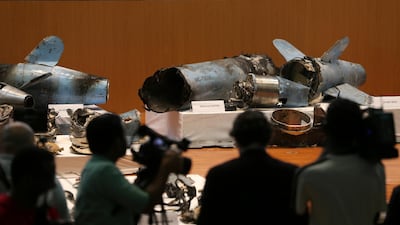
Remains of the missiles which were used to attack an Aramco oil facility are displayed during a news conference in Riyadh, Saudi Arabia September 18, 2019. Reuters -
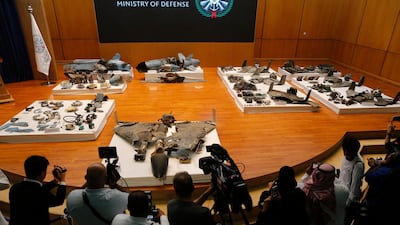
Journalists film what Saudi military spokesman Col. Turki al-Malki said was evidence of Iranian weaponry used in the attack targeted Saudi Aramco's facilities, during a press conference in Riyadh, Saudi Arabia, Wednesday, September 18, 2019. AP Photo -
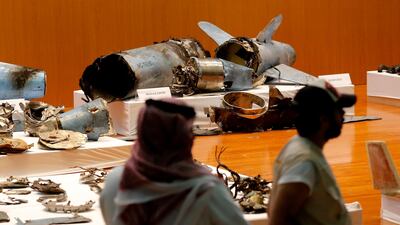
The Saudi military displays what they say are an Iranian cruise missile and drones used in recent attack on its oil industry at Saudi Aramco's facilities, during a press conference in Riyadh, Saudi Arabia, Wednesday, September 18, 2019. AP Photo -
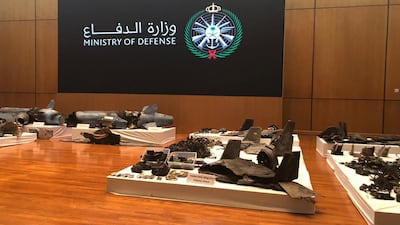
Drone wreckage said to be from the attack on the Aramco Aquaiq oil refinery sits on display during a Ministry of Defense news conference in Riyadh, Saudi Arabia, on Wednesday, September 18, 2019. Bloomberg -
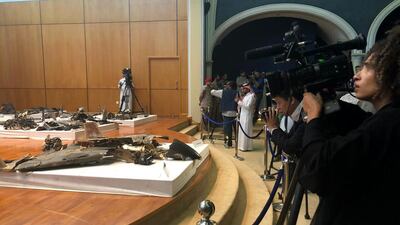
Journalists look at drone wreckage said to be from the attack on the Aramco Aquaiq oil refinery displayed during a Ministry of Defense news conference in Riyadh, Saudi Arabia, on Wednesday, September 18, 2019.Bloomberg -
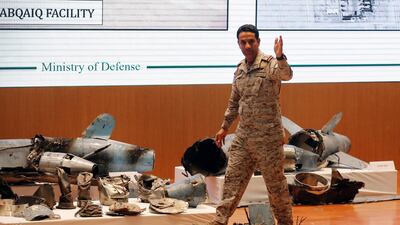
Saudi military spokesman Col. Turki Al Malki displays what he describes as an Iranian cruise missile and drones used in the attack, during a press conference in Riyadh, Saudi Arabia, Wednesday, September 18, 2019. AP Photo/Amr Nabil -
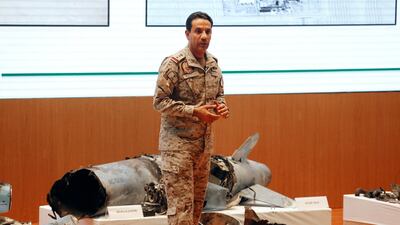
Saudi military spokesman Col. Turki Al Malki displays what he describes as an Iranian cruise missile and drones used in the attack, during a press conference in Riyadh, Saudi Arabia, Wednesday, September 18, 2019. AP Photo/Amr Nabil -
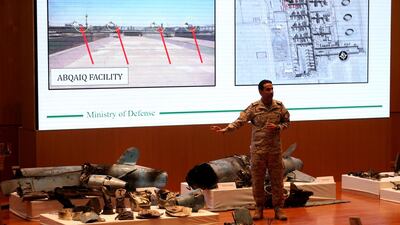
Saudi defence ministry spokesman Colonel Turki Al-Malik displays remains of the missiles which Saudi government says were used to attack an Aramco oil facility, during a news conference in Riyadh, Saudi Arabia September 18, 2019. REUTERS/Hamad I Mohammed -
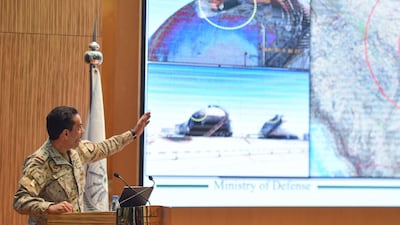
Saudi Colonel Turki bin Saleh al-Malki speaks during a press conference in Riyadh on September 18, 2019, following the weekend attacks on Saudi Aramco's facilities in Abqaiq and Khurais. Saudi Arabia said that strikes on its oil infrastructure came from the "north" and were sponsored by Iran, but that the kingdom was still investigating the exact launch site. / AFP / Fayez Nureldine


But French Foreign Minister Jean-Yves Le Drian said on Thursday that it was not very credible that the Yemen rebels attacked the Saudi oil facilities.
The kingdom has also denied that the Houthis could have carried out the attack.

