


Silkworm production has hiked in recent years in India thanks to the adoption of modern techniques. The boom has attracted new farmers, giving them a handing them a way out of poverty. All photos by Dibyangshu Sarkar / AFP Photo
-
-
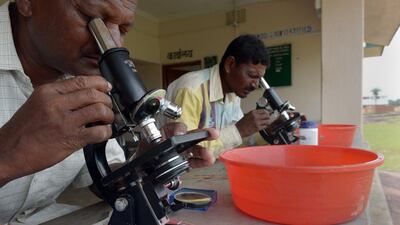
Tribal silkworm farmers examine moths under the microscope to check for diseases. -
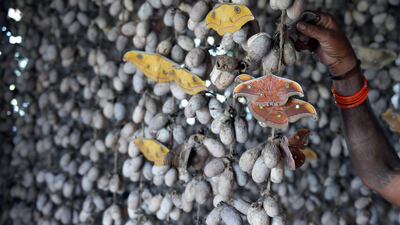
Members of tribal communities, also known as Adivasis, have traditionally been near the bottom of India’s socio-economic ladder, with some of the worst rates for poverty, malnutrition and life expectancy. The silkworm boom has attracted new farmers, giving them a handing them a way out of poverty. -
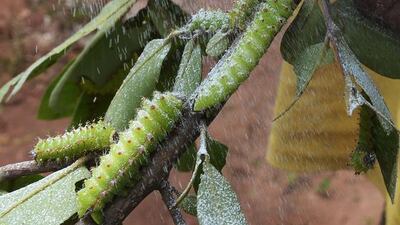
A man sprays disinfectant as silkworms cling on the branches of Arjuna trees. Adivasis have long reared silkworms in the dense forests of Bihar and neighbouring Jharkhand states to make tasar, a copper-coloured silk coveted for its unique texture. -

Local NGO Pradan has helped train the farmers in several ways, including how to use microscopes to examine and discount diseased moths. -
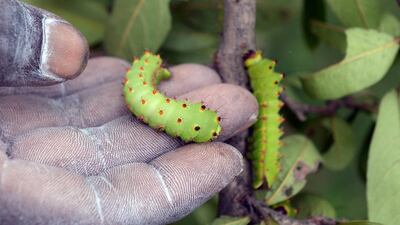
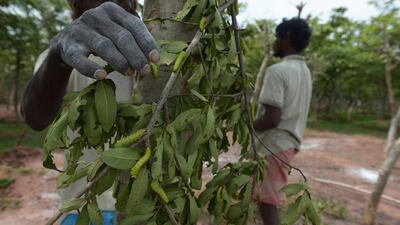
“We have helped the farmers plant arjuna trees on the wastelands here. These trees serve as hosts to the moths,” said Pradan’s Shamshad Alam. -
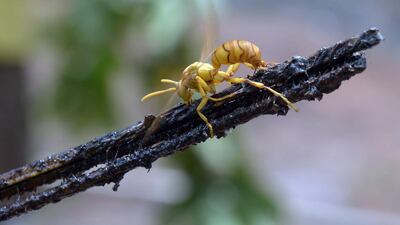
A silkworm farmer catches a predatory insect. -
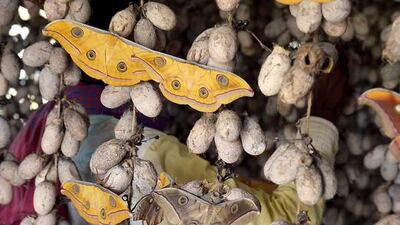
India is the world’s second largest producer of all types of silk, including tasar, after China, and is its largest consumer. -
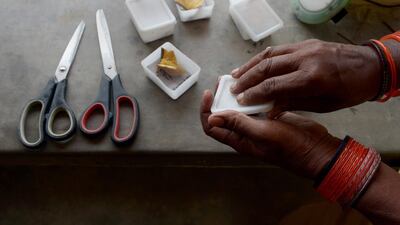
A female moth is put inside an egg laying box. The thriving industry in Bihar supplements the tribal communities’ traditional rice farming in a region which lacks irrigation and is at the mercy of poor monsoon rains. -

A silkworm farmer cuts off the branches of a Arjuna tree to transfer a silkworm on to a leafy tree. It normally takes between 250 and 700 cocoons to make one sari.
Fresh spin on farming silkworms in India — in pictures
Most popular today

