

In the eyes of some, a landmark assault on British values comes into effect on Friday as shoppers are finally mandated to wear face masks to limit exposure to Covid-19.
Despite being the worst hit European country by the pandemic, with more than 45,000 deaths, the government is only now introducing measures to compel face coverings as a barrier to infections.
Research released last week by YouGov found that the proportion of Britons wearing face masks during the crisis “has remained stubbornly low” compared to other countries, with 37 per cent of those surveyed admitting they had not worn a mask in the last week.
The reasons why are complex and can in part be blamed by confused messaging from Conservative government, which has constantly been criticised for its sluggishness in imposing lockdown measures. Even on Thursday it still remained unclear exactly when people would have to wear the mask inside.
At Liverpool Street train station in central London, observance public transport mask rules was not universal. Marcus Donnelly, 27, wears a plastic visor covering his entire face as he handed out flyers offering discounted haircuts.
While supportive of the public health needs, he was equivocal about the covering over the nose and mouth. The full mask is “quite restrictive”, said Mr Donnelly and he was put off by the potential negative reaction of others. Nonetheless he added Friday’s new rules should have been introduced sooner.
“I personally feel it’s a bit too late in my opinion. Because I’m doing a job now where I’m communicating with people, it’s more of a respect thing. But I think that had they made people wear masks earlier on a lot more people would have taken it seriously,” he said.
“I think a lot of people are wearing them because they have to like on public transport. If you didn’t have to I don’t think people would. I don’t think people wear it as many because they’re scared, I think people do it because they’ll get told off if they don’t.”
Roughly 22 per cent of those questioned by YouGov said they had not recently worn a mask because it wasn’t mandatory.
Others said they had instead been abiding by social distancing rules or felt they were at low risk of the disease.
Peter Hansen sells clothes – including fashionable face masks – in London’s Spitalfields Market and believes there has been a complete lack transparency from the government.
“I’m not opposed to masks. I’m opposed to the fact that when something is killing people that there’s not a public debate about the effects of wearing masks. This has not happened.”
But the antipathy in parts towards wearing a face mask point towards a much deeper sentiment in British society, according to Raj Persaud, a consultant psychiatrist working in private practice on Harley Street.
-
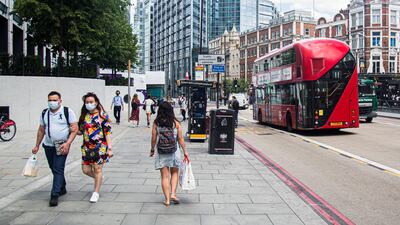
Face masks will become mandatory in UK shops on Friday. Rob Greig for The National -
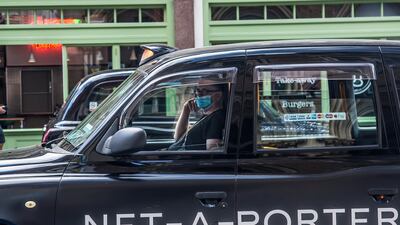
The British government says at least 45,000 people have died from the coronavirus in the country. Rob Greig for The National -
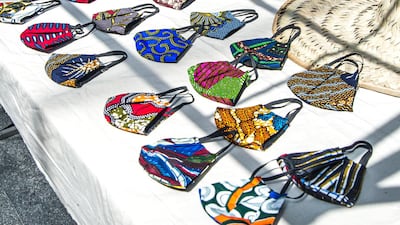
Face masks at a stall in Spitalfields Market. Rob Greig for The National -
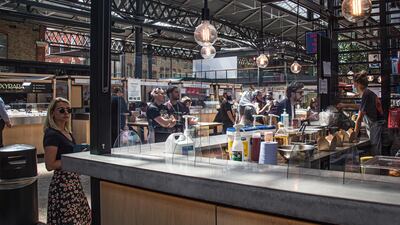
An expert said that face masks appear to provoke a greater reaction in people than other coronavirus measures. Rob Greig for The National -
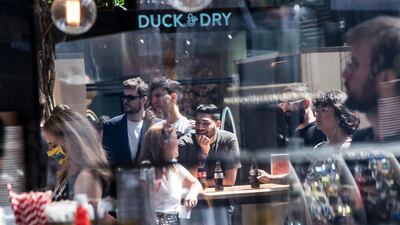
A YouGov survey found that the proportion of Britons wearing face masks during the crisis 'has remained stubbornly low'. Rob Greig for The National -
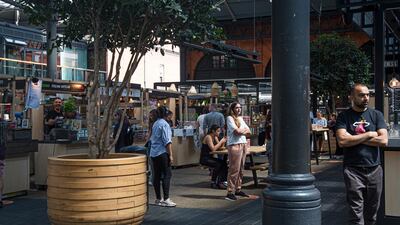
The government has been accused of sending out confused messages. Rob Greig for The National -
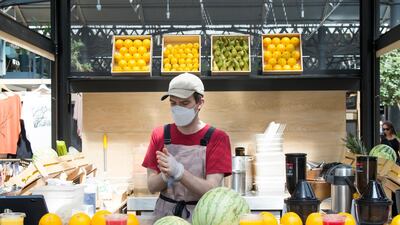
London is slowly emerging from months of lockdown. Rob Greig for The National -
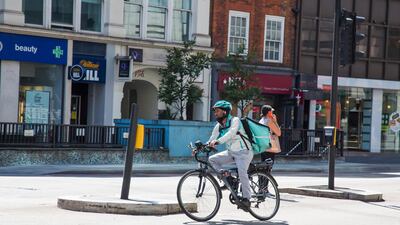
Many high street shops reopened in mid-June. Rob Greig for The National -

Footfall in London's financial districts has fallen. Rob Greig for The National -
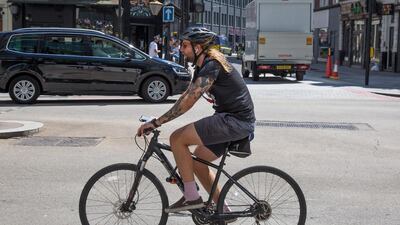
People are increasingly turning to cycling instead of using the London Underground. Rob Greig for The National -
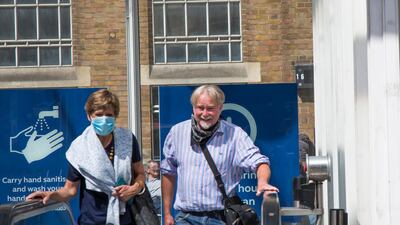
Outside Liverpool Street Station. Rob Greig for The National -
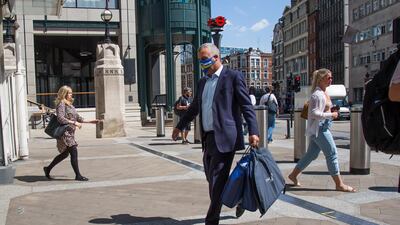
Failing to comply with the mask rules could see people fined up to £100 (Dh467). Rob Greig for The National -
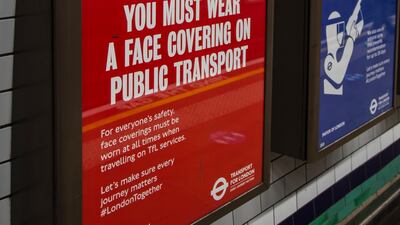
The London Underground remains comparatively empty. Rob Greig for The National


“It seems to raise very strong feelings and more so than other things like asking people to socially distance, doesn’t seems to cause such strong emotions,” he said. “There’s a very strong sense of western culture that values individualism and individual identity” in how people look or what they wear.
“It’s a deeply embedded part now of our sense of freedom and rights. So the face mask directly attacks that in taking away our ability to decide how we want to look and in a particularly important bit, the facial area,” he said.
There’s even evidence that face masks proved controversial during the deadly Spanish flu epidemic 100 years ago. Last week in parliament Conservative MP Desmond Swayne took up the rebellion's cause as he railed against the government’s face mask order, declaring it a “monstrous imposition”.
Many people do follow the advice, even on a hot summer’s day in central London. A teacher, who asked to remain anonymous because of his job, said that in recent months he would cycle to school, take his mask off as required “and I’m in a room with 15 children who are coughing in my face”.
After travelling on the London Underground for the first time in months on Wednesday, the teacher said not everyone was wearing masks and questioned how offenders were really being held to account.
Dr Persaud, the psychiatrist, said it seemed "that a lot of people find face masks uncomfortable to wear and again it’s a cultural thing".
“What’s particularly interesting is it’s seen much more as an infringement of personal rights than practically anything else the government’s asking people to do,” he added.

