


Russia will set out an alternative to the Black Sea grain deal, which was struck to keep food supplies moving to some of the world’s most vulnerable people, when Turkey’s Foreign Minister visits Moscow on Thursday.
Under the plan, Moscow would send a million tonnes of grain to Turkey at a discounted price, with financial support from Qatar. The grain would be processed in Turkey and sent to countries most in need, the Russian Foreign Ministry said on Wednesday.
“We consider this project as the optimal working alternative to the Black Sea deal,” it said.
Turkey, a Nato member that has friendly relations with Russia, helped negotiate the UN-backed deal to ship grain from Ukrainian ports across the Black Sea to avert a global food shortage – the only major agreement signed since the outbreak of the war.
Russian Foreign Minister Sergey Lavrov and his Turkish counterpart Hakan Fidan will discuss the proposal by Moscow on Thursday and Friday. The Kremlin said on Wednesday that Turkish President Recep Tayyip Erdogan would also visit Russia soon.
The Russian statement added that Mr Lavrov would restate Moscow's position that following the collapse of the grain deal, it would consider all ships heading to Ukraine as potentially carrying military cargo.
Ukraine and Russia are both major exporters of grain, and the deal initially helped to bring down global food prices and provide relief to poor countries.
Moscow withdrew from the agreement last month, citing the UN's non-compliance with provisions aimed at easing Russia's exports of agricultural products and fertiliser.
Ukrainian ports have since come under attack, with Russia warning it considers any ships in the Black Sea as potential military targets. Kyiv has also attacked Russian targets around the Black Sea.
-

Aftermath of a Russian missile strike on the Chernihiv Regional Academic Ukrainian Music and Drama Theatre on Saturday morning. All photos: Getty Images -
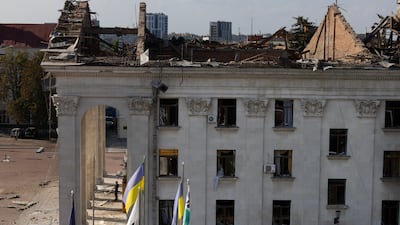
Seven people, including a six-year-old girl, were killed and at least 144 injured in the attack on the theatre, which was hosting a gathering of drone manufacturers. -
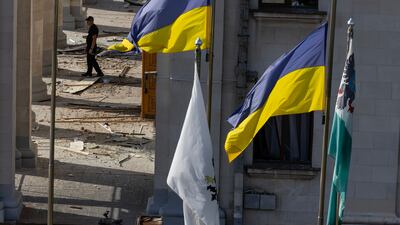
The theatre building was badly damaged in the missile strike, along with several structures near it. -
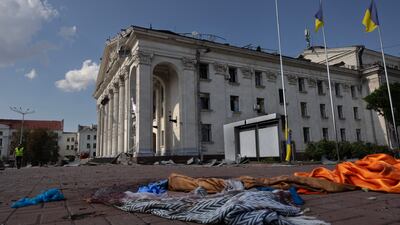
The UN has said it was "extremely disturbed" by the "heinous" attack. Among those injured were people who had been attending church for an Orthodox Christian holiday. -

Residents of Chernihiv clean up debris after the Russian missile attack in the city centre. Ukrainian President Volodymyr Zelenskyy has promised a 'notable response' to the strike. -
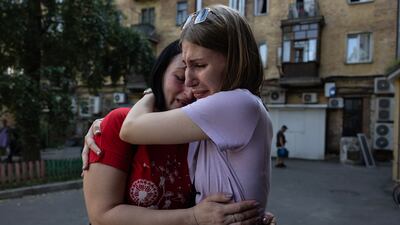
Ukrainian women cry as they survey the damage caused by a Russian missile strike on the northern city of Chernihiv, about 50km from the border with Belarus. -

A Ukrainian woman surveys the damage outside her home after a Russian missile strike that killed seven people in Chernihiv. -
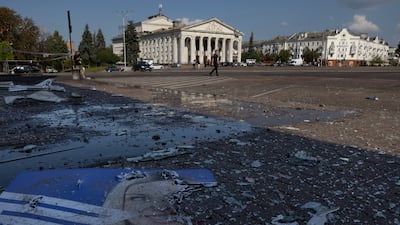
Debris litters the ground of a square in Chernihiv after a Russian missile strike damaged a theatre and several surrounding buildings in the city on Saturday.


Turkey played a key role in mediating between Moscow and Kyiv to secure the grain deal.
Although Turkey is a member of Nato, which opposes Russia's invasion and whose members have provided arms and support to Ukraine, Mr Erdogan has used his country's good relations with both sides to take on the mediator role.

