

A tourist from the UK who carved his and his girlfriend's names on a wall at Rome's ancient Colosseum has said he did not realise how old the site was.
Ivan Dimitrov made the admission in a letter in which he apologised to the city's mayor. He added that he now understood “the seriousness of the deed”.
The tourist scored “Ivan + Hayley 23" with a key on to the 2,000-year-old amphitheatre.
His actions prompted a five-day police search and he now faces legal proceedings, according to reports.
In the letter, published by Italian newspaper Il Messaggero, Mr Dimitrov offered his “heartfelt and honest apologies to the Italians and to the whole world”.
“I admit with profound embarrassment that only after what regretfully happened did I learn of the antiquity of the monument,” he added.
He said he praised those who “guard the inestimable historical and artistic value of the Colosseum with dedication, care and sacrifice”.
Another visitor filmed the 27-year-old and verbally reprimanded him before handing the recording to security officials.
The video was shared on YouTube and across social media.
Rome's Colosseum reopens after extensive restoration – in pictures
-
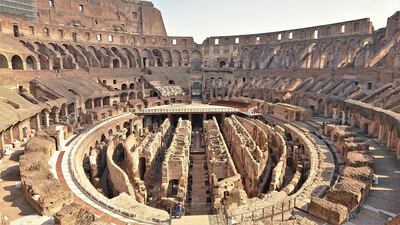
The Colosseum’s 15,000-square-metre hypogea has been restored and is now open to visitors for the first time. Courtesy Tod’s Group -
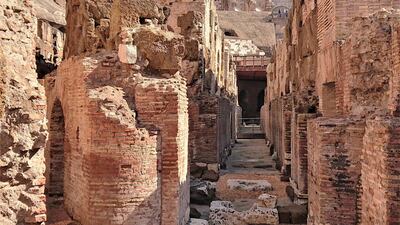
The hypogea is home to the underground passages, cages and rooms where prisoners, animals and gladiators waited, or were kept, before they entered the arena above. Courtesy Tod’s Group -
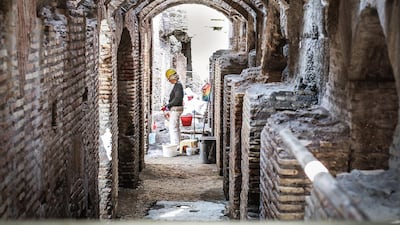
The hypogea is home to the underground passages, cages and rooms where prisoners, animals and gladiators waited, or were kept, before they entered the arena above. Courtesy Tod’s Group -
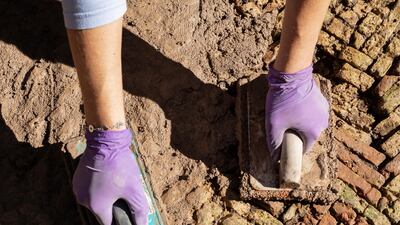
The restoration involved more than 80 people, including archaeologists, restorers, architects, engineers, surveyors and construction workers. Courtesy Tod’s Group -

The restoration took more than 55,000 man hours. Courtesy Tod’s Group -
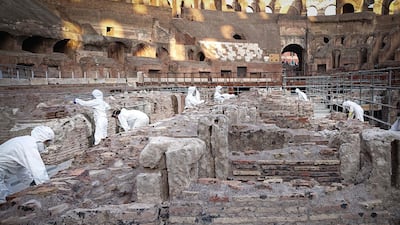
The restoration involved more than 80 people, including archaeologists, restorers, architects, engineers, surveyors and construction workers. Courtesy Tod’s Group -
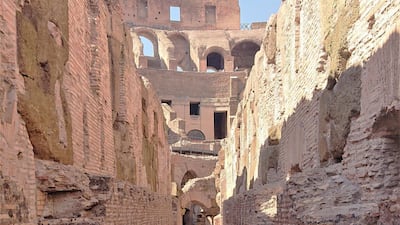
The hypogea is home to the underground passages, cages and rooms where prisoners, animals and gladiators waited, or were kept, before they entered the arena above. Courtesy Tod’s Group -
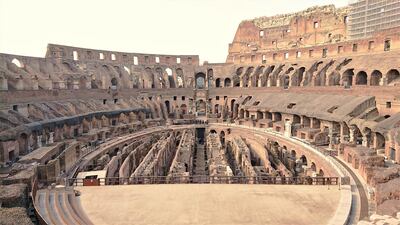
The Colosseum’s 15,000-square-metre hypogea has been restored and is now open to visitors for the first time. Courtesy Tod’s Group -
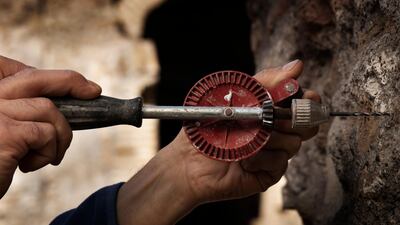
The project took 781 days of construction. Courtesy Tod’s Group -
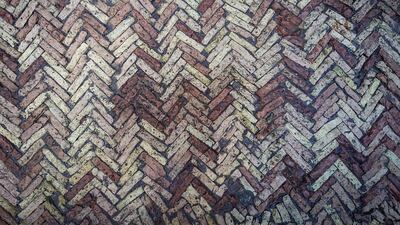
This is the second phase of a wider $30 million restoration project that started in 2013 and is funded by Italian fashion house Tod’s Group. Courtesy Tod’s Group -
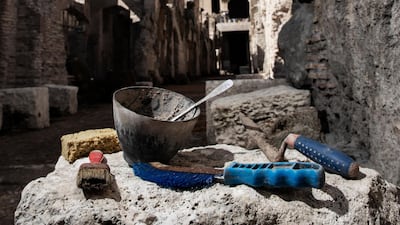
The Colosseum’s 15,000-square-metre hypogea has been restored and is now open to visitors for the first time. Courtesy Tod’s Group -

The restoration involved more than 80 people, including archaeologists, restorers, architects, engineers, surveyors and construction workers. Courtesy Tod’s Group -

The restoration involved more than 80 people, including archaeologists, restorers, architects, engineers, surveyors and construction workers. Courtesy Tod’s Group -
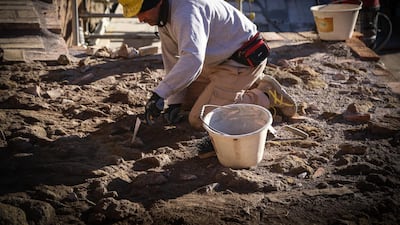
This is the second phase of a wider $30 million restoration project that started in 2013 and is funded by Italian fashion house Tod’s Group. Courtesy Tod’s Group -
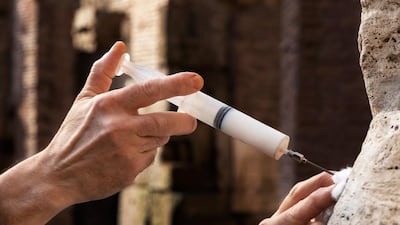
The restoration involved more than 80 people, including archaeologists, restorers, architects, engineers, surveyors and construction workers. Courtesy Tod’s Group -
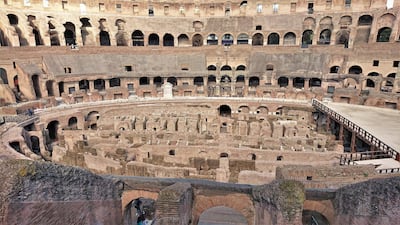
The Colosseum’s 15,000-square-metre hypogea has been restored and is now open to visitors for the first time. Courtesy Tod’s Group


Mr Dimitrov could face a fine of up to €15,000 (£12,500) as well as a prison sentence of between two and five years if he is convicted.
His solicitor hopes the letter will help Mr Dimitrov avoid the harshest penalty.
The Colosseum is Italy's most popular tourist site and one of the best-known monuments from Imperial Rome.
It is a protected Unesco World Heritage Site, which deems it a place of “outstanding universal value”.
Mr Dimitrov's actions have received widespread condemnation in Italy and around the globe.
It “was offensive to everyone around the world who appreciates the value of archaeology, monuments and history”, Italian Culture Minister Gennaro Sangiuliano said of the incident.

