


A video has emerged online in which Turkish President Recep Tayyip Erdogan appears to hand out cash to voters at a polling station in Istanbul during Sunday’s run-off election.
As voters surrounded the President some chant “Our president!” and “You’re so handsome!”
In what has caused much online debate, Mr Erdogan is seen taking cash from the pocket of his jacket and handing a 200 lira ($10) banknote to a supporter.
He then appears to take out more notes and hand them to other members of the crowd.
Mr Erdogan has a tradition of handing out gifts on special occasions, such as money or toys, usually during the Muslim holidays of Eid Al Fitr and Eid Al Adha.
The video was widely shared online, with some users saying Mr Erdogan was just following the Middle East tradition of giving gifts to children at a happy time.
"If you check the video it’s absolutely clear that Erdogan is lending pocket money only to kids," one Twitter user said.
"There is nothing to hide there as that is an old tradition in many places.
"Would you prefer that he lends big money to lobbies secretly like happens in most of the EU and US?"
Others were a little more sceptical, with one Twitter user saying: "Erdogan hands out money to supporters outside a polling station.
"Amazing that such a thing can happen just next to where ballots are cast.
"The sign of a desperate man in my opinion."
Mr Erdogan is unlikely to face questions as a recent change in the law has made campaign breaches more difficult to identify.
International observers led by the Organisation for Security and Co-operation in Europe have yet to comment on the video, but said media bias and restrictions to freedom of expression had created “an unlevel playing field” and “an unjustified advantage” for him in the election.
Some opposition supporters faced intimidation and harassment while both sides used “inflammatory and discriminatory language” by accusing each other of collaborating with “terrorist organisations”, exacerbating tensions, they added.
Erdogan claims victory in Turkish presidential election – in pictures
-

Turkish President Recep Tayyip Erdogan acknowledges supporters in Ankara after winning re-election in a run-off vote. EPA -
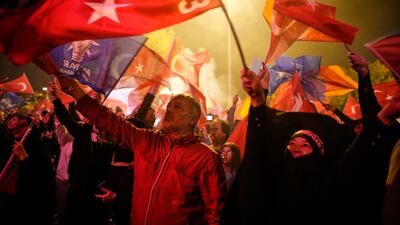
Mr Erdogan's supporters celebrate in Istanbul. AP -
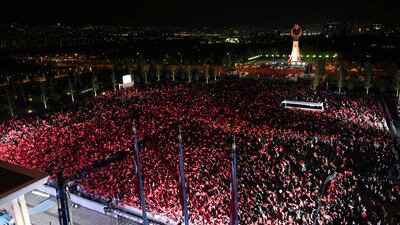
Mr Erdogan's supporters wave Turkish flags as they wait for him to make a speech at the Presidential Palace in Ankara. Reuters -
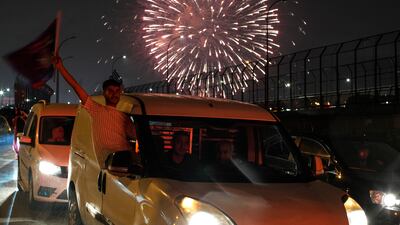
The Turkish President won 52.14 per cent of the vote. AP -
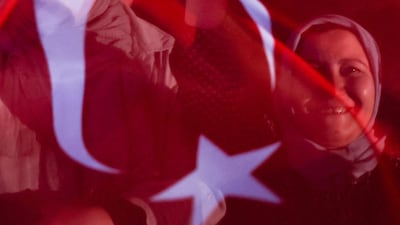
Turkey's lira weakened to 20.05 against the dollar on Sunday after Mr Erdogan claimed victory. Reuters -

Mr Erdogan said the election was Turkey's 'most important' of the modern era. Reuters -
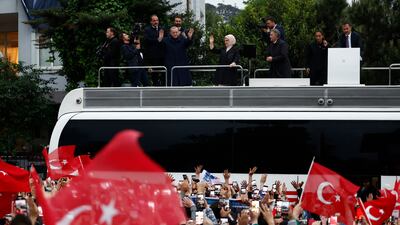
The Turkish leader acknowledged that inflation was the most urgent issue for the country, but said it would also fall. Getty -

Mr Erdogan was congratulated by world leaders, including President Sheikh Mohamed, US President Joe Biden, Russian leader Vladimir Putin and Ukrainian President Volodymyr Zelenskyy. Reuters -
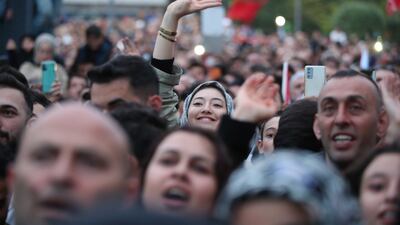
Mr Erdogan's supporters cheer in Istanbul. EPA -
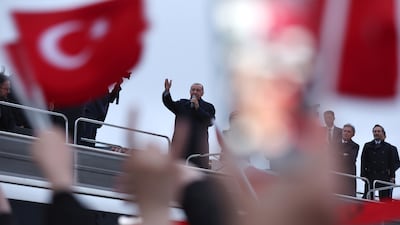
Mr Erdogan speaks to Turkish flag-waving supporters. EPA -
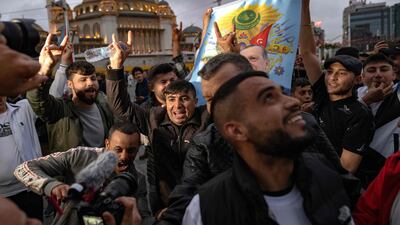
Mr Erdogan's supporters celebrate near Taksim Mosque in Istanbul. AFP -

Mr Erdogan's supporters celebrate outside the offices of his Justice and Development Party (AKP) in Istanbul. AP -
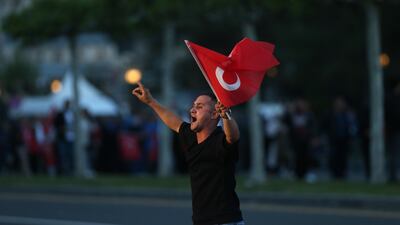
A man waves a Turkish flag outside the presidential palace in Ankara. EPA -
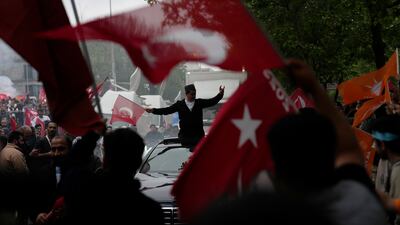
Mr Erdogan's supporters gather outside the AKP's offices in Istanbul. AP -
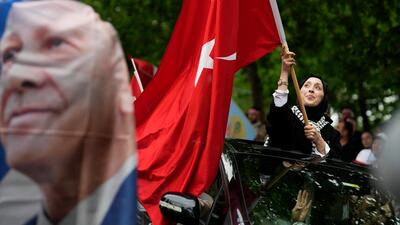
Investors are now looking for any signs that Mr Erdogan will start to relax the state’s tight grip over markets. AP -

Total foreign holdings of Turkish stocks and bonds are down by about 85 per cent, or $130 billion, since 2013. Getty -
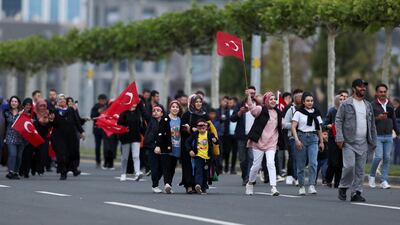
AKP supporters walk to the Presidential Palace in Ankara to attend his victory speech. Reuters -
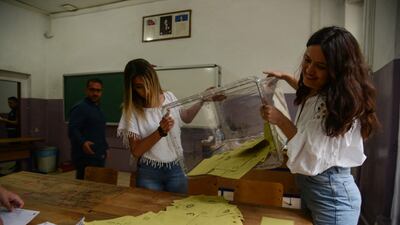
Electoral officials empty a ballot box in Diyarbakir. AFP -
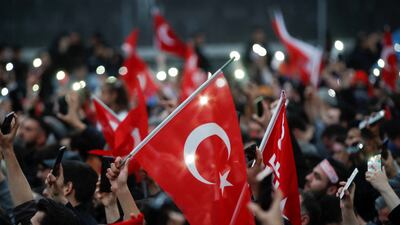
There was a gap of more than two million votes between Mr Erdogan and his rival Kemal Kilicdaroglu. Reuters -
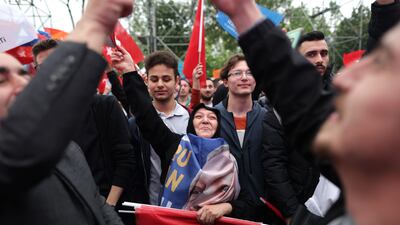
AKP supporters after early election results were announced. EPA -
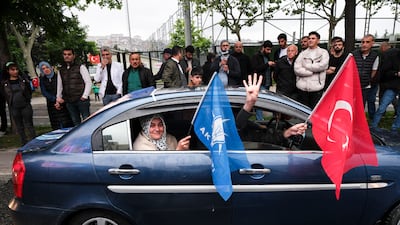
AKP supporters wave flags and chant slogans. Getty -

People react after the early election result. EPA


Turkey's long-time leader won the presidency in a run-off election on Sunday, gaining 52.14 per cent of the votes, according the High Election Board.
Mr Erdogan's rival Kemal Kilicdaroglu received 47.86 per cent of the votes.
On Monday, the President confronted the tough task of uniting his divided country after extending his two-decade rule to 2028.
He brushed aside a powerful opposition coalition, an economic crisis and anger after a devastating earthquake in February to beat secular challenger Mr Kilicdaroglu.
But the four-point victory margin was Mr Erdogan's narrowest of any past election, highlighting the sharp polarisation the Islamic-rooted conservative will contend with in his final term.
Turkey votes in run-off election – in pictures
-
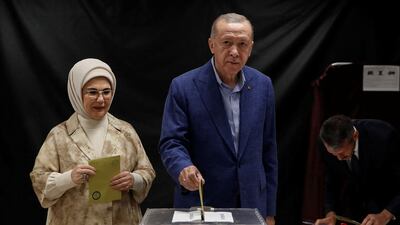
Turkey's President Recep Tayyip Erdogan and his wife Emine casts their ballots in Istanbul in the run-off election on Sunday. AFP -
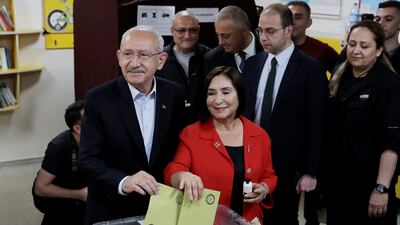
Main opposition alliance presidential candidate Kemal Kilicdaroglu and his wife Selvi arrive to vote at a polling station in Ankara. Getty -
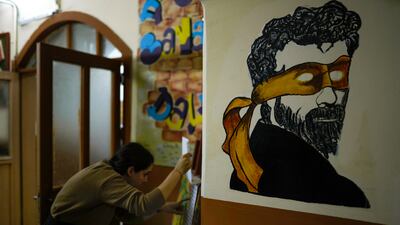
A woman checks a voting list at a polling station as people wait to vote in Istanbul. AP -

Voters in Turkey returned to the polls on Sunday to decide between Mr Erdogan and Mr Kilicdaroglu. AP -
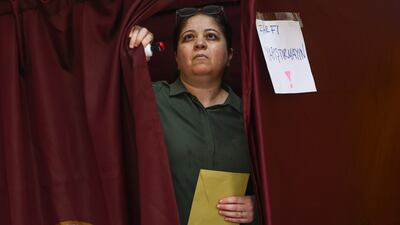
A woman casts her ballot at a polling station in Ankara. EPA -
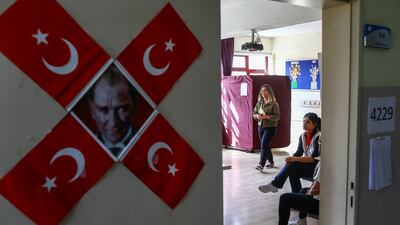
A first election was held on May 14, when none of the candidates exceeded the 50 per cent mark. EPA -
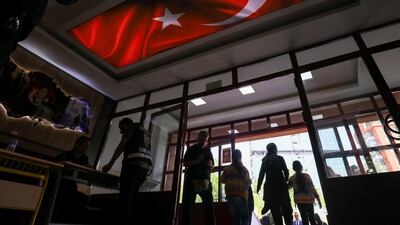
People leave a polling station in Ankara. Reuters -

A woman casts her ballot in Adana. AFP -

A woman casts her ballot at a polling station in Ankara. Reuters -

An election representative checks a stamp at a polling station in Istanbul. AP -
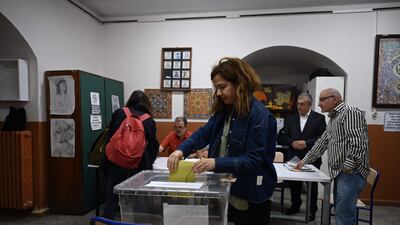
A woman votes in Istanbul. AFP -
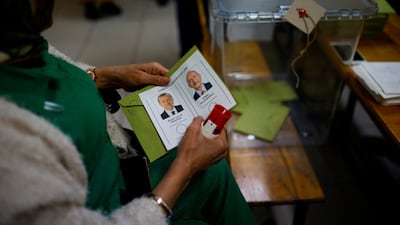
A woman holds a ballot in Istanbul. Reuters -
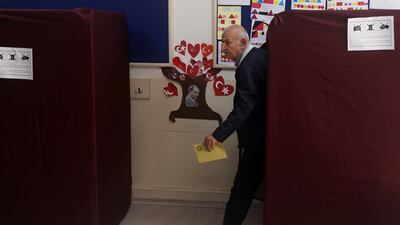
A man arrives to vote in Ankara. Getty -
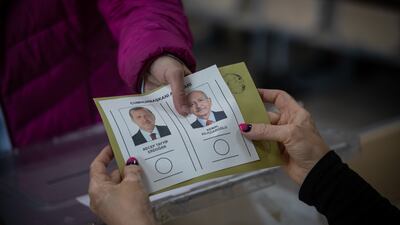
A ballot slip featuring Mr Erdogan and Mr Kilicdaroglu is seen at a polling station in Ankara. Getty Images -
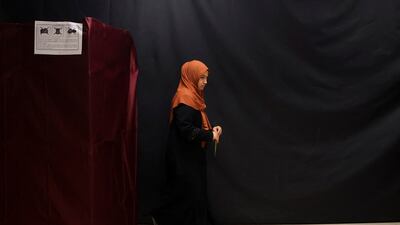
A voter in Istanbul. Reuters -
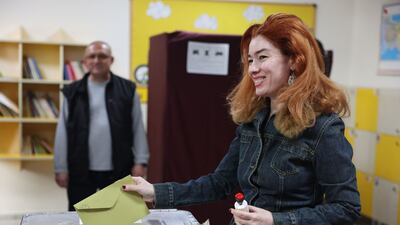
A voter casts her ballot at a polling station in Ankara. AFP


Mr Erdogan, 69, called on Turks to “come together in unity and solidarity”, while Mr Kilicdaroglu vowed to “continue the struggle” against the President and his AKP, which has dominated Turkish politics since 2002.
Having harnessed a coalition of nationalist, conservative and religious voters, Mr Erdogan “will double down on his brand of populist policies … political polarisation is here to stay”, said Emre Peker of the Eurasia Group consultancy.
Relieving Turks of the country's worst economic crisis since the 1990s is an urgent priority.
Inflation is running at more than 40 per cent amid criticism of Mr Erdogan's unorthodox policy of cutting interest rates to try to cool rising prices.
Analysts say Mr Erdogan's lavish campaign spending pledges and unwavering attachment to lower interest rates will further strain banks' currency reserves and the lira, which edged down against the dollar on Monday.
Hopes for “an abandonment of the crazy, unconventional economic model and a return to the favour of international investors are finally dashed”, said Bartosz Sawicki, market analyst at fintech Conotoxia.

