


Countries outside the EU that refuse to take back irregular migrants risk tighter visa restrictions to Europe, the bloc's interior ministers agreed on Thursday.
They reached consensus that the system, in place since 2020, "should be fully used" to boost the number of migrants returning home after their asylum applications fail, said Sweden's Migration Minister, Maria Malmer Stenergard.
Sweden currently holds the EU presidency and chaired the meeting in Stockholm.
"Should intensified political and diplomatic efforts not produce the desired results, member states call on the Commission to come back to the Council with proposals on visa restrictions," Ms Malmer Stenergard said.
The tougher line was reflected in a letter European Commission President Ursula von der Leyen sent to leaders of EU countries on Thursday, before a February 9-10 summit that will discuss the issue.
Ms Von der Leyen said EU member states could sign up to a pilot scheme over the first half of this year to speed up screening and asylum procedures for eligible migrants, and "immediate return" for those not deemed to qualify.
Migrants cross from Morocco to Spanish enclave of Melilla - in pictures
-
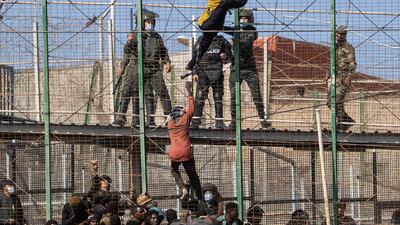
Migrants attempt to cross from Morocco into the Spanish enclave of Melilla on Friday. All photos: AP Photo -

It was the first such incursion since Spain and Morocco mended diplomatic relations last month. -

Riot police cordon off the area. -
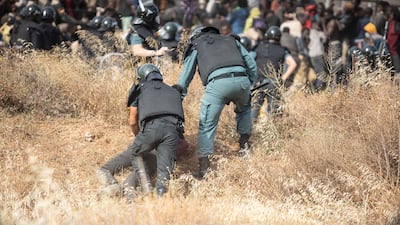
A migrant is detained by police on Spanish soil. -

Migrants attempt to run free after crossing into the Spanish enclave. -

Hundreds of African migrants attempted the crossing. -

More than 500 migrants managed to enter a border control area after cutting through a fence with shears. -
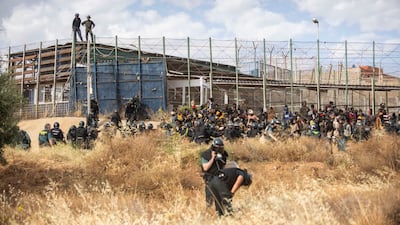
Thirteen migrants died of injuries sustained in the incursion, in addition to five who were confirmed dead earlier in the day. -

Seventy-six migrants were reportedly injured trying to cross. -
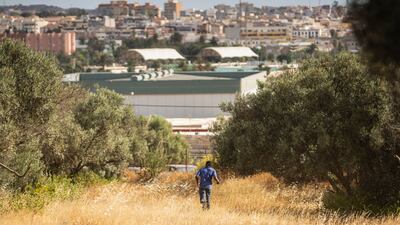
Spanish Prime Minister Pedro Sanchez condemned the 'violent assault'.


She said she wanted the EU to draw up a list of "safe countries of origin", and for the bloc to strengthen border monitoring on the Mediterranean and western Balkans routes migrants use to get to Europe.
The EU planned to put in place migration deals with countries such as Bangladesh, Pakistan, Egypt, Morocco, Tunisia and Nigeria "to improve returns … and to prevent departures", Ms Von der Leyen said.
In Stockholm, EU home affairs commissioner Ylva Johansson said many of the bloc's member countries were under "huge pressure", receiving nearly one million asylum applications last year.
Migrant children rescued in French waters - in pictures
-
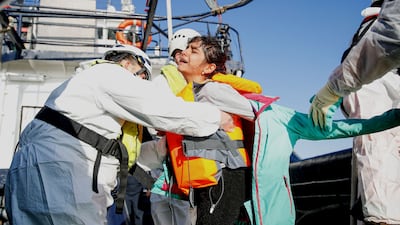
Migrants are rescued by crew members of the 'Abeille Languedoc' ship after their boat's generator broke down in French waters as they were trying to cross the Channel illegally to Britain. All photos: AFP -
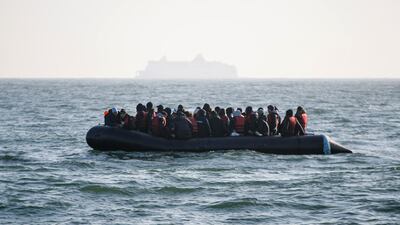
Migrants wait for help in the Channel. -
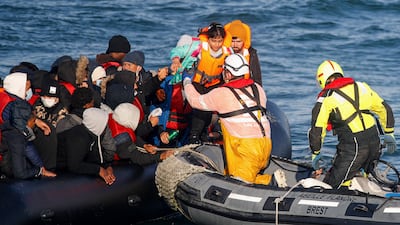
A child is rescued by crew members of the 'Abeille Languedoc'. -
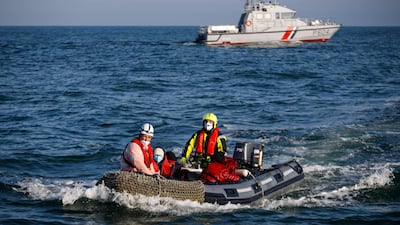
The 'Abeille Languedoc' is an ocean-going tug specialising in the rescue of vessels in distress. -
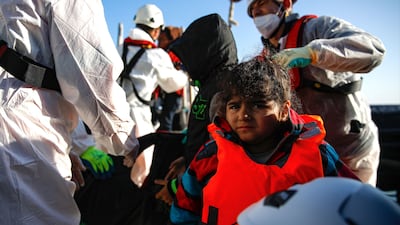
Migrant children on the rescue boat. -
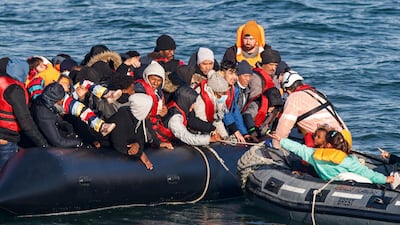
The 'Abeille Languedoc' has been moored in Cherbourg for 26 years, monitoring the Channel between the Cotentin and the Pas-de-Calais. -
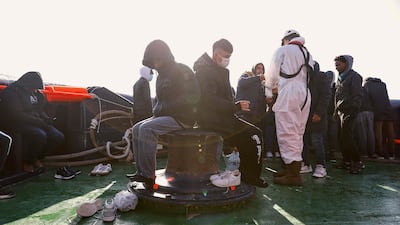
Migrants sit on board the 'Abeille Languedoc' after being rescued. -
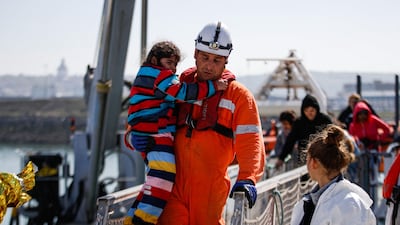
A rescuer carries a child as they disembark from the 'Abeille Languedoc'.


Capacity was further stretched by the EU hosting nearly four million Ukrainian refugees who had fled Russia's war in their country, she said.
European Commission statistics show a low rate of effective returns.
In 2021, out of 340,500 orders for migrants to be returned to their countries of origin, only 21 per cent were carried out.
The EU funds various reintegration programmes in countries that readmit their citizens who have been denied asylum in Europe.
These are separate from deportations or forced returns based on a court or administrative order, which are often carried out under escort and typically do not include in-country assistance.
Sweden, the government of which relies on a far-right party, the Sweden Democrats, to stay in power, wants EU countries to use visas, foreign policy and development aid to press outside countries on the returns issue.
So far, the EU has applied the visa restriction against only one country: the Gambia, for whose citizens obtaining a Schengen visa is more difficult and costly.
Afghan migrants in France set sights on the UK – in pictures
-
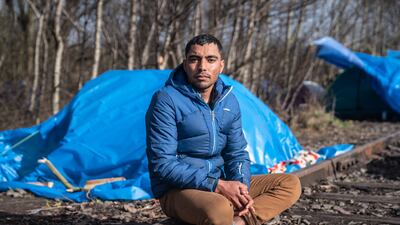
Baheer is a doctor from Afghanistan. He left for England when the Taliban took over. All photos: Abdul Saboor for The National -
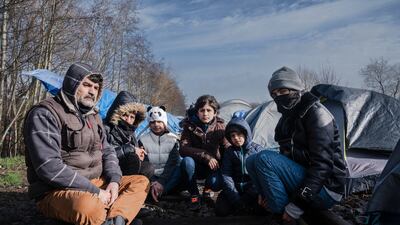
Mohammed left Kurdistan with his wife and three children in August. 'The National' met him in a camp in Grande-Synthe near Dunkirk, France. 'The UK is our best option for safety", he said. -
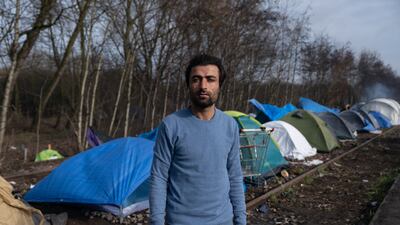
Kamran was a translator for the US army in Kandahar, Afghanistan. He is looking to find refuge in the UK where he has relatives. -

Hundreds of displaced people live in makeshift shelters and small tents in Dunkirk. -
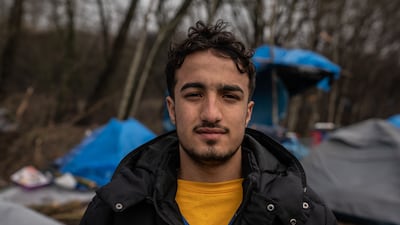
Parvez, 16, arrived in France a week ago. He left Afghanistan after the government collapsed and is trying to reach family in England. -
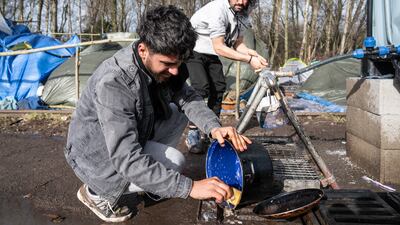
Because of regular police evictions camps are not permanent and have no amenities. NGOs try to provide water and food.


The commission in 2021 proposed the mechanism be extended to Bangladesh and Iraq, but that has not happened.
Ms Johansson said after a November visit to Bangladesh that the threat of the visa sanctions had prompted Dhaka to become more "politically open" to accepting irregular migrants back from Europe.
The overall tone on migration has hardened in Europe since 2015-2016, when it took in more than a million asylum-seekers, most of them Syrians fleeing the war in their country.
The bloc in 2016 struck a deal with Turkey to prevent much of the onward passage of irregular migrants into Europe.
Austria backs the strengthening of a fence built along the border of EU member Bulgaria with Turkey to further reduce the flow of asylum-seekers.
Afghan migrants detained in Turkey - in pictures
-
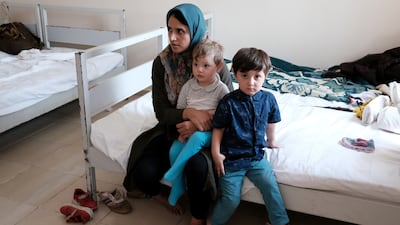
Morsal Mousavi, a 22-year-old Afghan woman, was caught by Turkish security forces after crossing into the country illegally from Iran, and is pictured with her children at a migrant processing centre in the border city of Van. They are just some of thousands of people who have fled Afghanistan since the Taliban takeover. Reuters -

Afghan migrant Benevse and her son Rehimullah, 2, wait for a medical check in Van after being picked up by security forces for entering illegally. Reuters -

A security official checks migrants, most of whom are coming from Afghanistan, in Van. British Prime Minister Boris Johnson and Turkish President Recep Tayyip Erdogan agreed that countries must commit to share the burden of Afghan aid and refugees, during a phone call between the leaders on Sunday. AP -

Afghan migrant couple Sayyed Fahim Mousavi and Morsal Mousavi, caught by Turkish security forces after crossing illegally into Turkey from Iran, are pictured with their children at a migrant processing centre in Van. Reuters -

Traffic on this key migration route from central Asia to Europe has remained relatively stable compared to previous years. But European countries, as well as Turkey, fear the sudden return of Taliban rule in Afghanistan could change that. AP -

Mr Erdogan told German Chancellor Angela Merkel at the weekend that Turkey 'cannot support an additional migratory burden' from Afghanistan as it was already housing millions of refugees. AP -

As the influx from Afghanistan is expected to continue, Mr Erdogan has complained to the EU about the situation facing Turkey. ‘We have received a request to welcome local employees of a European Union mission in Afghanistan,’ the Turkish President told European Council President Charles Michel. ‘The member states do not open their doors even to a tiny portion of the people who served them and who are in difficulty.’ Reuters -

Turkish security forces apprehend a group of migrants in an operation aimed at stemming the recent influx. ‘You cannot expect Turkey to take on the responsibility of third countries,’ President Erdogan said. AP -

Another group of Afghan migrants trudges towards a detention centre after being detained by Turkish security forces in the border city of Van. Reuters -

The number of migrants arriving in Turkey is thought to have risen sharply in the days since the Taliban swept to power in Afghanistan. European Commission chief Ursula von der Leyen has urged all countries, especially European countries, to take in some Afghan refugees. Reuters -

A new border wall separating Turkey from Iran covers a third of the 540-kilometre frontier, leaving plenty of gaps for migrants to slip across in the dead of night. AP -

Turkish soldiers get ready for a night patrol on the Turkish-Iranian border in Van. Reuters


Austrian Chancellor Karl Nehammer said on Monday, during a visit to that border region, that the fence would cost about €2 billion ($2.18 billion) and called on the European Commission to fund it.
The commission has been reluctant to do that, emphasising instead the role of Frontex, the bloc's border patrol agency, which EU member states can call on.
"It's about strengthening the fence that is there," Mr Nehammer said in Vienna on Thursday.
"The commission categorically says, 'No, there is no money for fences'. That can't be the final word."
The current system to manage asylum and the visa-free Schengen zone had failed, he said.
Ms Johansson said she objected to the fence proposal on financial grounds, as the European Council representing member states had cut her department's budget for the 2021-2027 cycle.

