Iskander missiles during a demonstration at a range near Moscow. Reuters

Russia down to a month's supply of shells and missiles, western officials believe


Thomas Harding
  • English
  • Arabic

Russia’s military has just a month’s supply of artillery ammunition left after exhausting its stocks in Ukraine, western officials say.

The drastic depletion of Moscow's key offensive stockpile has ruled out future offensives and it is “clear for now that the Russian occupation of Ukraine is a defensive operation”, an official said.

It also appears that the Russians have nearly exhausted their supply of Iskander surface-to-surface missiles, after it was confirmed in a media briefing that just 120 remained.

The official agreed that a Ukraine intelligence assessment on the Iskanders and the month’s supply of artillery were “in the right ballpark”, adding that munitions supply was “a big limiting factor for both sides”.

“That's why we've seen the Russians going to great lengths to to replenish rare resources, including through working with international partners, and the Ukrainians are doing exactly the same thing,” he said. “So this is a critical factor.”

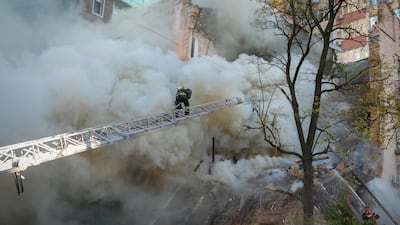
Despite the shrinking supplies, two residential buildings were hit during a Russian missile strike on Kyiv on Tuesday, the mayor of the Ukrainian capital said.

Mayor Vitali Klitschko, citing preliminary information, wrote on the Telegram messaging app that medics were on the scene in central Kyiv and that several missiles had also been shot down.

The coming winter period is crucial in relation to which side can resupply themselves quickest, “in terms of personnel, munitions and equipment ready for the next offensive,” the western official said.

But the intelligence assessment of Russia’s withdrawal from the city of Kherson was that it had been orderly, with the invaders abandoning just a handful of vehicles and getting an estimated 20,000 troops back across the Dnipro river.

They have now set up strong defensive positions on the east bank, including crocodile teeth tank-traps, that make it very unlikely that Ukrainian forces will attempt a crossing.

Russian servicemen load a Iskander tactical missile system near Moscow. It is now estimated that just 120 of the weapons with a 500km range remain in their inventory. Reuters

“Despite the considerable political and reputational cost to the Kremlin, there was a clear military rationale for the withdrawal,” the official said. “Ukrainian long-range fires had critically undermined Russian supply lines and command and control.”

However, Ukrainian special forces strikes are expected to covertly cross the 1km-wide river and get behind enemy lines to find targets for missile strikes and conduct sabotage.

It was also disclosed that about a 10th of the 100,000 Russian forces in occupied Ukraine are recently mobilised reservists who are poorly trained and equipped.

“This contrasts to increasing evidence of the quality of Ukrainian small unit leadership, officers and NCOs which now have a wealth of combat experience from the last nine months and they've all benefited as well from international training.”

At least half of the experienced Russian troops from Kherson are likely to redeploy to the Donbas area where Moscow could order a new offensive after replenishing stocks.

The entire Ukraine campaign is now under the sole command of Moscow’s ruthless but competent Gen Sergei Surovikin, who is making sensible military decisions, officials said, and Russia still poses a considerable threat.

“If people are expecting the collapse of forces on either side, we can't see anything which would indicate that from now through to the end of the year,” the official concluded. “Neither side is in such a condition that its forces will collapse.”

Ukraine under fire

  • Firefighters in action after a drone fired on buildings in Kyiv, Ukraine. AP
    Firefighters in action after a drone fired on buildings in Kyiv, Ukraine. AP
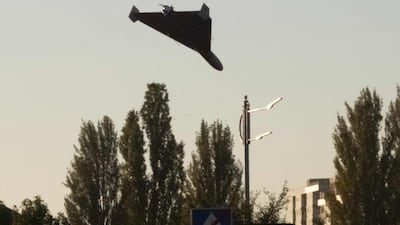
  • A drone approaches for an attack in the Ukraine capital. AFP
    A drone approaches for an attack in the Ukraine capital. AFP
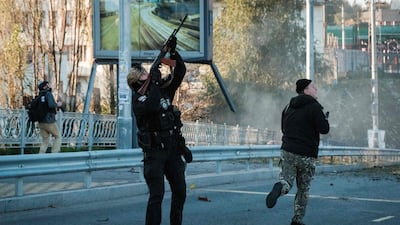
  • A police officer fires at a drone flying overhead. AFP
    A police officer fires at a drone flying overhead. AFP
  • Smoke rises from a building after a drone attack. AFP
    Smoke rises from a building after a drone attack. AFP
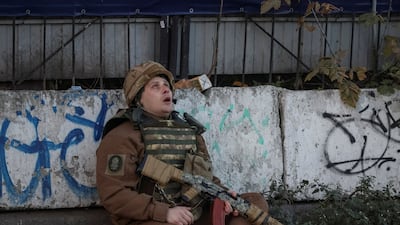
  • A Ukrainian serviceman takes cover as an air-raid siren sounds. Reuters
    A Ukrainian serviceman takes cover as an air-raid siren sounds. Reuters
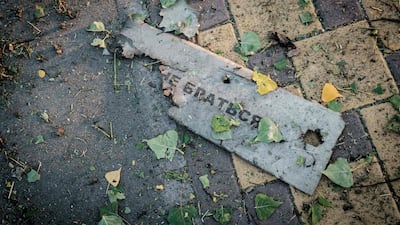
  • Debris near the site of a drone attack. AFP
    Debris near the site of a drone attack. AFP
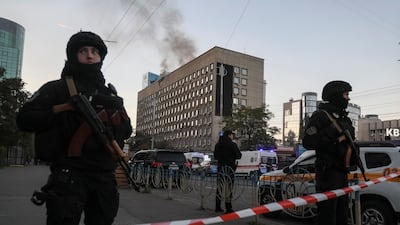
  • Police stand guard as smoke rises from buildings. Reuters
    Police stand guard as smoke rises from buildings. Reuters
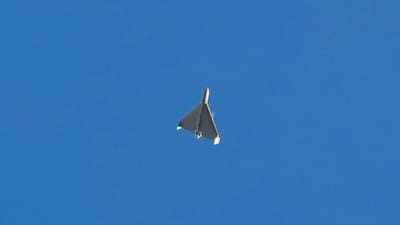
  • A drone in the sky seconds before it fired on buildings. AP
    A drone in the sky seconds before it fired on buildings. AP
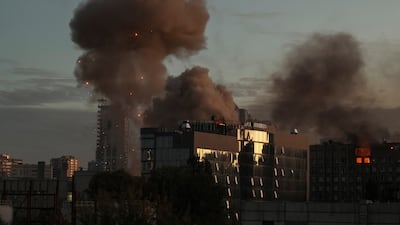
  • Plumes of smoke rise after a Russian drone strike. Reuters
    Plumes of smoke rise after a Russian drone strike. Reuters
Key findings of Jenkins report
  • Founder of the Muslim Brotherhood, Hassan al Banna, "accepted the political utility of violence"
  • Views of key Muslim Brotherhood ideologue, Sayyid Qutb, have “consistently been understood” as permitting “the use of extreme violence in the pursuit of the perfect Islamic society” and “never been institutionally disowned” by the movement.
  • Muslim Brotherhood at all levels has repeatedly defended Hamas attacks against Israel, including the use of suicide bombers and the killing of civilians.
  • Laying out the report in the House of Commons, David Cameron told MPs: "The main findings of the review support the conclusion that membership of, association with, or influence by the Muslim Brotherhood should be considered as a possible indicator of extremism."
Milestones on the road to union

1970

October 26: Bahrain withdraws from a proposal to create a federation of nine with the seven Trucial States and Qatar. 

December: Ahmed Al Suwaidi visits New York to discuss potential UN membership.

1971

March 1:  Alex Douglas Hume, Conservative foreign secretary confirms that Britain will leave the Gulf and “strongly supports” the creation of a Union of Arab Emirates.

July 12: Historic meeting at which Sheikh Zayed and Sheikh Rashid make a binding agreement to create what will become the UAE.

July 18: It is announced that the UAE will be formed from six emirates, with a proposed constitution signed. RAK is not yet part of the agreement.

August 6:  The fifth anniversary of Sheikh Zayed becoming Ruler of Abu Dhabi, with official celebrations deferred until later in the year.

August 15: Bahrain becomes independent.

September 3: Qatar becomes independent.

November 23-25: Meeting with Sheikh Zayed and Sheikh Rashid and senior British officials to fix December 2 as date of creation of the UAE.

November 29:  At 5.30pm Iranian forces seize the Greater and Lesser Tunbs by force.

November 30: Despite  a power sharing agreement, Tehran takes full control of Abu Musa. 

November 31: UK officials visit all six participating Emirates to formally end the Trucial States treaties

December 2: 11am, Dubai. New Supreme Council formally elects Sheikh Zayed as President. Treaty of Friendship signed with the UK. 11.30am. Flag raising ceremony at Union House and Al Manhal Palace in Abu Dhabi witnessed by Sheikh Khalifa, then Crown Prince of Abu Dhabi.

December 6: Arab League formally admits the UAE. The first British Ambassador presents his credentials to Sheikh Zayed.

December 9: UAE joins the United Nations.

Key facilities
  • Olympic-size swimming pool with a split bulkhead for multi-use configurations, including water polo and 50m/25m training lanes
  • Premier League-standard football pitch
  • 400m Olympic running track
  • NBA-spec basketball court with auditorium
  • 600-seat auditorium
  • Spaces for historical and cultural exploration
  • An elevated football field that doubles as a helipad
  • Specialist robotics and science laboratories
  • AR and VR-enabled learning centres
  • Disruption Lab and Research Centre for developing entrepreneurial skills
Gulf Under 19s final

Dubai College A 50-12 Dubai College B

Structural%20weaknesses%20facing%20Israel%20economy
%3Cp%3E1.%20Labour%20productivity%20is%20lower%20than%20the%20average%20of%20the%20developed%20economies%2C%20particularly%20in%20the%20non-tradable%20industries.%3Cbr%3E2.%20The%20low%20level%20of%20basic%20skills%20among%20workers%20and%20the%20high%20level%20of%20inequality%20between%20those%20with%20various%20skills.%3Cbr%3E3.%20Low%20employment%20rates%2C%20particularly%20among%20Arab%20women%20and%20Ultra-Othodox%20Jewish%20men.%3Cbr%3E4.%20A%20lack%20of%20basic%20knowledge%20required%20for%20integration%20into%20the%20labour%20force%2C%20due%20to%20the%20lack%20of%20core%20curriculum%20studies%20in%20schools%20for%20Ultra-Othodox%20Jews.%3Cbr%3E5.%20A%20need%20to%20upgrade%20and%20expand%20physical%20infrastructure%2C%20particularly%20mass%20transit%20infrastructure.%3Cbr%3E6.%20The%20poverty%20rate%20at%20more%20than%20double%20the%20OECD%20average.%3Cbr%3E7.%20Population%20growth%20of%20about%202%20per%20cent%20per%20year%2C%20compared%20to%200.6%20per%20cent%20OECD%20average%20posing%20challenge%20for%20fiscal%20policy%20and%20underpinning%20pressure%20on%20education%2C%20health%20care%2C%20welfare%20housing%20and%20physical%20infrastructure%2C%20which%20will%20increase%20in%20the%20coming%20years.%3C%2Fp%3E%0A
Updated: November 15, 2022, 1:58 PM