


The situation at the Zaporizhzhia nuclear power plant remains “very risky” after two of its six reactors were reconnected to the grid, said Ukrainian President Volodymyr Zelenskyy on Friday.
The reactors were disconnected from Europe's largest nuclear power plant for the first time in history on Thursday following shelling in the area.
Both of the plant's two functioning reactors have been reconnected to the grid and are again supplying electricity, said Ukraine's state nuclear company Energoatom on Friday evening.
“Let me stress that the situation remains very risky and dangerous,” Mr Zelenskyy said in his regular evening address, praising Ukrainian experts working to “avert the worst-case scenario”.
“Any repeat of yesterday's events, meaning any disconnection of the station from the grid, any action by Russia that could provoke the disconnection of reactors, would once again place the station one step away from a catastrophe,” he said.
Russia, which invaded Ukraine in February, took control of the nuclear plant in March, though it is still operated by Ukrainian technicians working for Energoatom.
The two sides have traded the blame for shelling near the plant, which on Thursday sparked fires in the ash pits of a nearby coal power station, disconnecting the plant from the power grid.
Zaporizhzhia nuclear power plant attacked — in pictures
-
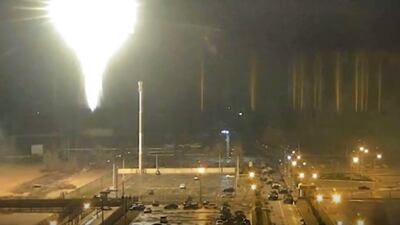
A bright flaring object lands near the nuclear plant in Enerhodar, Ukraine. AP -
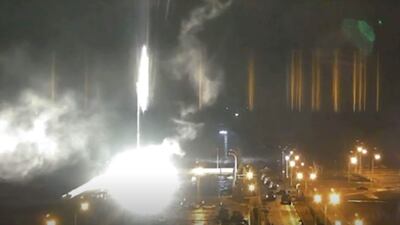
Russian forces shelled Europe’s largest nuclear plant early on Friday. AP -
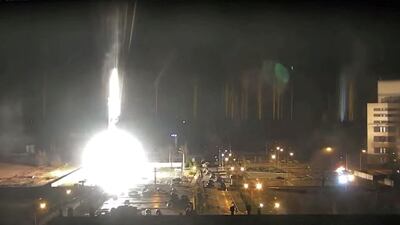
Surveillance camera footage shows a flare landing at the Zaporizhzhia nuclear power plant. Reuters -
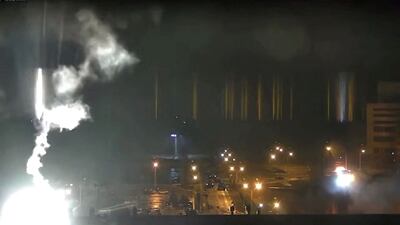
The flare lands at the plant. Reuters -

Multiple blasts at the plant were recorded. AFP -

Ukrainian President Volodymyr Zelenskiy makes a statement following the attack. Reuters -
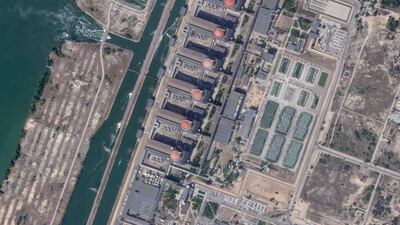
The Zaporizhzhia nuclear power plant in Enerhodar, Ukraine, on September 2, 2019. AP -

A power-generating unit at the Zaporizhzhia nuclear power plant. AP Photo


Satellite images showed a fire near the plant but Reuters could not verify its cause.
Mr Zelenskyy also reiterated Ukraine's demand that the UN's nuclear watchdog the International Atomic Energy Agency be urgently allowed to visit the Zaporizhzhia plant.
Moscow, which has forces based in the plant's complex, said it was doing everything to ensure that an IAEA visit, expected in the coming days, could take place safely. Foreign Ministry spokeswoman Maria Zakharova said Ukraine was trying to disrupt such a visit by attacking the plant.
UN chief: 'Humanity one miscalculation away from nuclear annihilation' — video
Residents of Zaporizhzhia city, 50 kilometres north-east of the plant, expressed alarm over the situation.
“Of course I am scared. Everyone is scared, we don’t know what will happen next, what is waiting for us every next minute, second,” said social media manager Maria Varakina, 25.
Schoolteacher Hanna Kuz, 46, said people were afraid that Ukrainian authorities might not be able to warn residents in time in case of radiation fallout.

