


A general who commanded forces in Syria is responsible for recent Russian Army advances in Ukraine, western officials said.
Gen Sergei Surovikin is believed to be the strategist responsible for Russian forces “making genuine headway” against two recently captured Donbas cities.
Gen Surovikin, 55, is said by western sources to have used “controversial” tactics against Syrian rebels in his time as the longest-serving Russian commander there.
A few weeks ago, he replaced Gen Alexander Dvornikov, who appeared to have lost the trust of President Vladimir Putin after slow advances and heavy losses in Ukraine.
“Russia has made some significant command changes in recent weeks, notably General of the Army Sergei Surovikin, who has taken over command of the Southern Group of Forces, which is overseeing occupation of southern Ukraine and advances on the Donbas from the south,” a western official said.
“He is a controversial figure, even by the standards of Russian general officers.
“It is unclear whether it’s his influence that has led recent successes around Lysychansk, but certainly there’s been better co-operation among the groups of forces on the Russian side than we saw in the earlier phases of the war.”
Mr Putin on Monday congratulated troops for “liberating” Lysychansk and told them to rest.
The appointment of Gen Surovikin in Syria was a turning point in the conflict, and the government of Bashar Al Assad regained control of more than 50 per cent of the country.
Military analysts attributed advances by Syrian government forces and their allies to the refined but harsh tactics of Gen Surovikin, who became a Hero of the Russian Federation for his leadership.
The official told The National Gen Surovkin's experience as an army officer and a commander of the Russia Air Force made him a significant threat to Ukrainian forces.
“He has run the air service for a period of time, which is unusual for an army general,” the official said.
“It's all about combined arms integration and using the different services in totality to create the effect, and you'd expect from his experience in Syria and across the services this would bring some benefits in that regard. He has a long pedigree.”
On Wednesday, Britain’s Ministry of Defence said that the general’s 30-year career was “dogged with allegations of corruption and brutality”.
The official said the Russians had “regained some momentum in the last few weeks” and “consolidated beyond the defendable line of the Donets River”.
But Ukraine had been fighting a “rear-guard action within a 25-mile [40-kilometre] wide bulge, or salient. Ukrainian forces have now fallen back and it's created a straightened front”.
The fight to hold that line “would likely be particularly influential for the eventual fate of Donetsk oblast”, he said.
“We're paying particular attention to the potential for Sloviansk to become the site of a next major battle.”
But Ukraine’s military had made withdrawal in “relatively good order”, thereby “preserving some of its more capable troops to fight another day”.
Long-range weapons supplied by western powers were having an effect on the Russians but had not yet proved decisive in halting their advance, the official said.
Ukraine war in pictures
-

Ukrainian servicemen in a shelter at the frontline near Kharkiv. AP -

A Ukrainian and his puppy in the Donetsk region. AP -
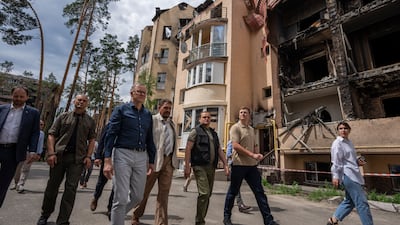
Australian Prime Minister Anthony Albanese, third left, is shown apartment buildings damaged by Russian shelling during his visit to Irpin on the outskirts of Kyiv. AP -
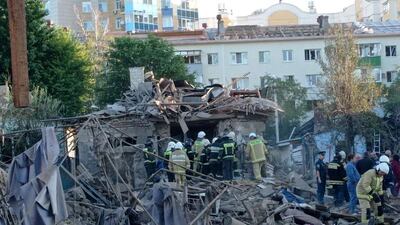
Rescue specialists work at the site of a destroyed residential building after blasts in Belgorod, Russia. Reuters -
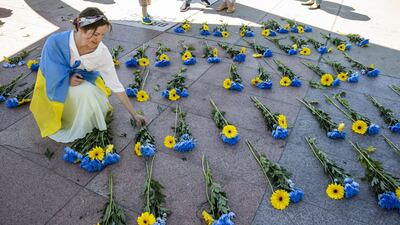
A woman lays flowers during a demonstration against the invasion of Ukraine in front of the Palais des Nations, in Geneva, Switzerland. EPA -
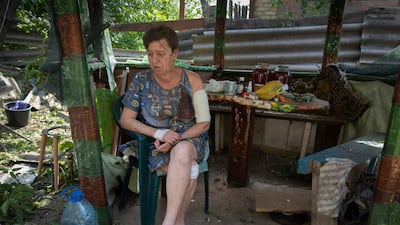
A woman injured when her house was damaged by the Russian shelling sits in the yard of her house, in Bakhmut, Ukraine. AP -
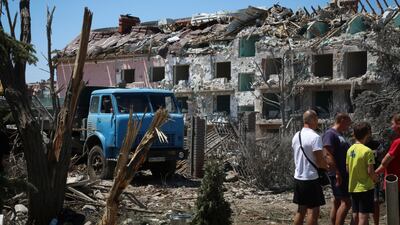
Local residents stand next to a damaged residential building in the town of Serhiivka, about 50 kilometres south-west of Odesa, Ukraine. AP -

Viktor Shevchenko stands in a crater to show its depth after a Russian shelling in the Saltivka district in Kharkiv. AP -
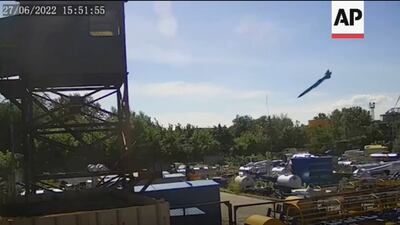
An image taken from a video provided by the Ukrainian Presidential Press Office purports to show the moment a missile struck the shopping mall in Kremenchuk. AP -

People watch as smoke rises after a Russian missile strike hit a crowded shopping mall, in Kremenchuk. AP -
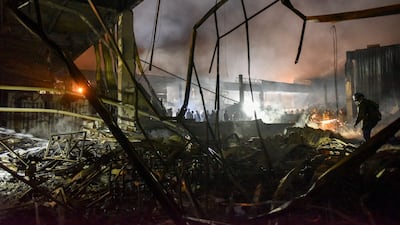
Firefighters clean the rubble of the destroyed Amstor shopping mall in Kremenchuk. EPA -
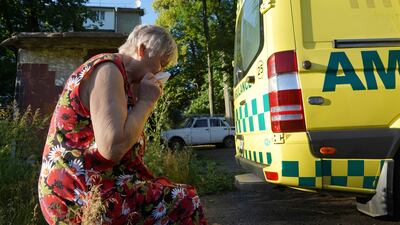
A woman cries after the body of her husband, who was killed in the yard of an apartment building during shelling, was loaded into an ambulance in Kharkiv, Ukraine. AP -

Firefighters and rescue workers at the destroyed Amstor shopping mall. EPA -
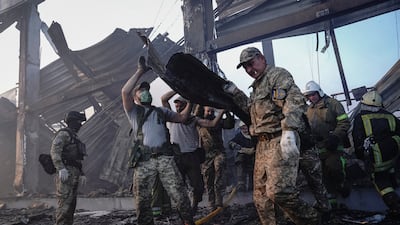
Rescuers work at the site of a shopping mall hit by a Russian missile strike, in Kremenchuk. Reuters -

A couple wounded by a Russian missile strike hold hands in a hospital, in Kremenchuk. Reuters -
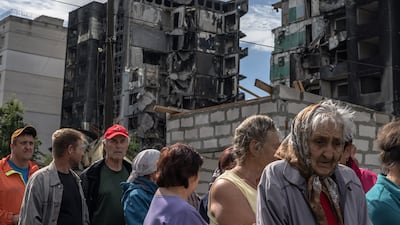
People wait to receive humanitarian aid in front of a residential building damaged during a Russian attack in Borodyanka, Ukraine. EPA -
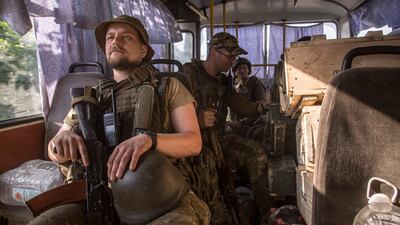
Ukrainian servicemen take a bus to their positions near Severodonetsk, in Luhansk area. EPA -
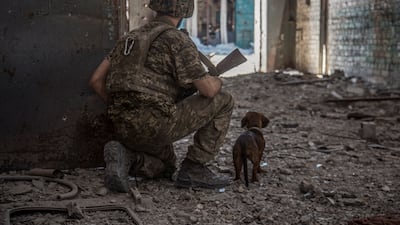
A Ukrainian service member and a dog in the industrial area of the city of Severodonetsk. Reuters -
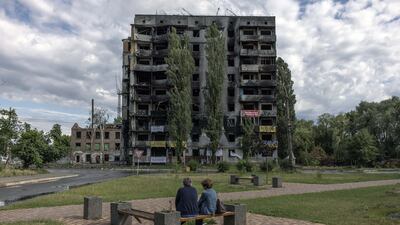
A couple sits in front of a residential building that was damaged during a Russian attack, in Borodyanka. EPA -
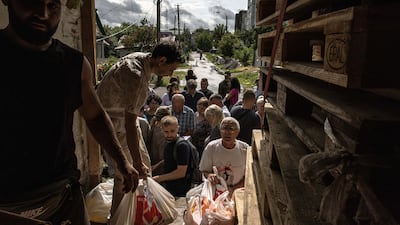
Local residents receive humanitarian aid in Borodyanka. EPA -
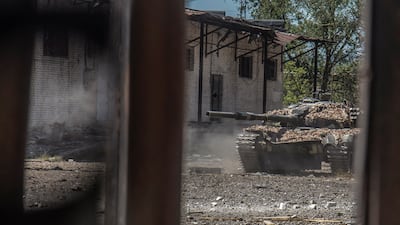
A Ukrainian armed forces tank in Severodonetsk. Reuters -
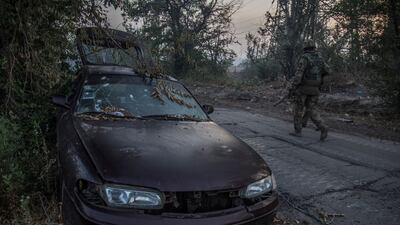
Ukrainian service members walk past a damaged car in Severodonetsk. Reuters -
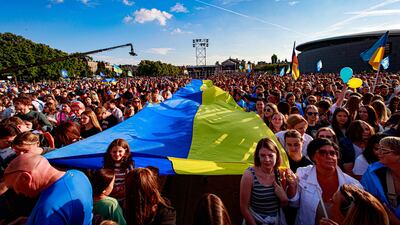
A giant Ukrainian flag is held up during the benefit concert 'Embrace Ukraine' on the Museumplein in Amsterdam. The free event will raise money for victims of the war in Ukraine and the purchase of mobile X-ray equipment that the country needs. EPA -
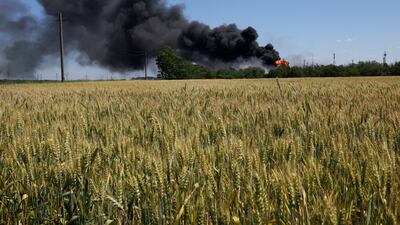
A fire from a gas processing plant continues to burn behind a field of wheat after it was hit by shelling a few days earlier in Andriivka, in the Kharkiv region. Reuters -
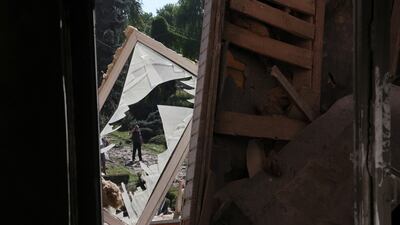
An onlooker takes in the damage from overnight shelling on Kharkiv's Housing and Communal College. Reuters -
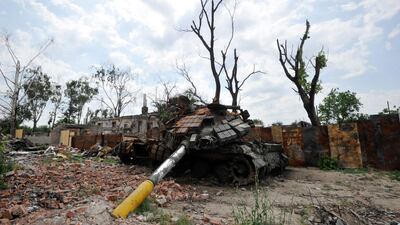
A destroyed tank in the village of Novoselivka, outside Chernigiv. AFP -
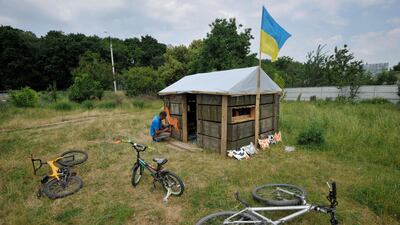
A man decorates a toy cabin for children made from used ammunition crates in the village of Novoselivka, outside Chernigiv. AFP -
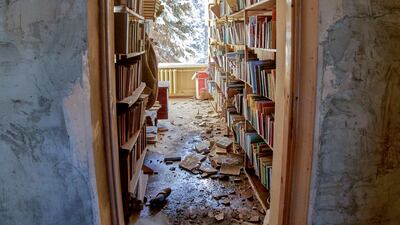
An internal view of the Housing and Communal College building damaged by recent shelling in Kharkiv. EPA



