

Extreme ice melting events in Greenland have become significantly more frequent and unpredictable over the past 40 years, according to research that places even more significance on this week's climate summit, Cop26.
The findings are based on measurements from the European Space Agency's CryoSat mission. They show that meltwater run-off from the world's largest island has risen 21 per cent during this period and become 60 per cent more erratic every year, increasing sea levels and the risk of flooding worldwide.
Further proof of Greenland's climatic volatility came this August, when rain fell at the highest point on its ice sheet for the first time on record.
Quantifying the extent of the island's polar melt, the 3.5 trillion tonnes of ice that have melted in the past 10 years would cover the entire UK in meltwater 15 metres deep. This volume would also be enough to cover the entire city of New York in meltwater 4,500 metres deep.
“As we’ve seen with other parts of the world, Greenland is also vulnerable to an increase in extreme weather events," said study lead author Dr Thomas Slater, a research fellow in the Centre for Polar Observation and Modelling at the University of Leeds, UK.
“As our climate warms, it’s reasonable to expect that the instances of extreme melting in Greenland will happen more often – observations such as these are an important step in helping us to improve climate models and better predict what will happen this century.”
The global effects of Greenland's ice melt
An intensification of Greenland's ice melt would be cataclysmic.
Between 2011 and 2020, the global sea level rose by one centimetre as a result of meltwater run-off from Greenland, with a third of this rise generated in 2012 and 2019 by dint of two extremely hot summers.
Concomitant with heightened sea levels are heightened risk of flooding; damaged Arctic Ocean marine ecosystems – so vital to the food supply of indigenous communities; and altered planetary weather patterns, namely the extreme weather events that have proliferated in recent years.
It is an inauspicious paradigm, yet Dr Slater sees cause for hope that Greenland ice sheet disintegration will not prove to be a climate tipping point.
"We know that setting and meeting meaningful targets to cut emissions could reduce ice losses from Greenland by a factor of three, and there is still time to achieve this,” he said.
Climate tipping points – in pictures
-
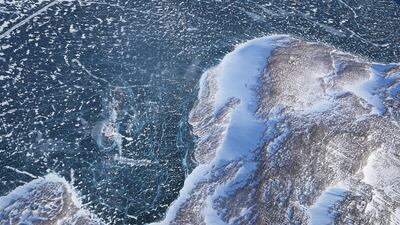
Greenland ice sheet disintegration – Rising temperatures causing the retreat of the ice sheet, which would cause sea levels to rise. -
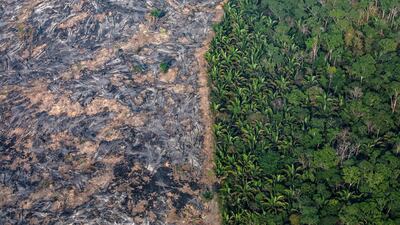
Amazon rainforest dieback – Large-scale dieback of the forest, via increased temperatures and drying, or direct deforestation, would amplify global warming. -
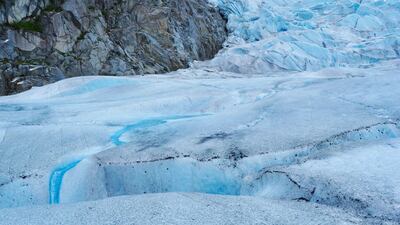
Permafrost loss – Thawing of carbon-rich soils, which releases greenhouse gas into the atmosphere. -

Atlantic meridional overturning circulation breakdown – An increased amount of freshwater in the Northern Atlantic disrupting the system of currents. -
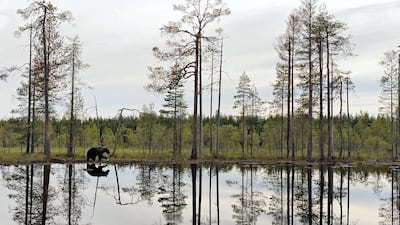
Boreal forest shift – Warming causes dieback in the south of the forests, and expansion into the tundra in the north, which would cause regional warming. -
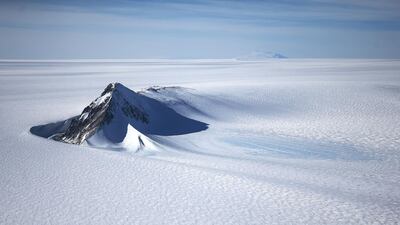
West Antarctic ice sheet disintegration – The melting of major ice sheets would lead to significant increases in sea level. -
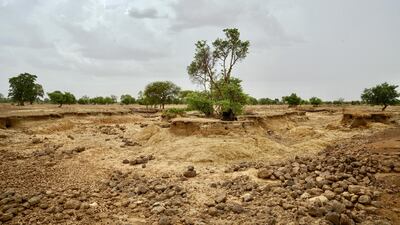
West African monsoon shift – A change in the monsoon season would lead to agricultural disruption and effect the ecosystem. -
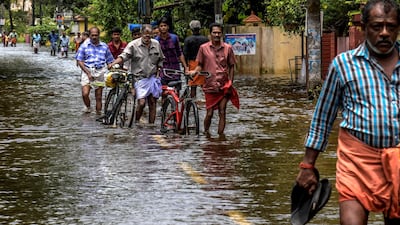
Indian monsoon shift – An increase in the planetary albedo (increases in the atmospheric brown cloud haze over India) has the capability of switching off the monsoon, which is crucial for the local economy, as well as being important for agriculture. -
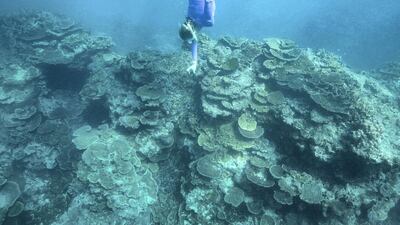
Coral reef die-off – Exposure to increased sea temperatures can kill off reefs, which has a serious effect on ecosystems and local economies.


Knowledge of the likely volume of Greenland ice melt in years come also provides a degree of power.
“Model estimates suggest that the Greenland ice sheet will contribute between about three and 23 centimetres to global sea-level rise by 2100," said study co-author Dr Amber Leeson, senior lecturer in Environmental Data Science at Lancaster University, UK.
“This prediction has a wide range, in part because of uncertainties associated with simulating complex ice-melt processes, including those associated with extreme weather.
"These new spaceborne estimates of run-off will help us to understand these complex ice-melt processes better, improve our ability to model them, and thus enable us to refine our estimates of future sea-level rise.”
A more immediate benefit derived from the study is the discovery that polar-orbiting satellite altimeters can provide real-time estimates of summer ice melt. This will aid the expansion of hydropower in Greenland, as well as Europe's planned Copernicus Sentinel Expansion Cristal mission, which will monitor Earth's vulnerable ice tracts from space in decades to come.

