
The coronavirus pandemic is “a human crisis fast becoming a human rights crisis”, UN Secretary General Antonio Guterres said on Thursday.
The UN chief said in a video message that there is discrimination in the delivery of public services to tackle Covid-19 and there are “structural inequalities that impede access to them”.
Mr Guterres said the pandemic has also seen “disproportionate effects on certain communities, the rise of hate speech, the targeting of vulnerable groups and the risks of heavy-handed security responses undermining the health response”.
He warned that with “rising ethno-nationalism, populism, authoritarianism and a push back against human rights in some countries, the crisis can provide a pretext to adopt repressive measures for purposes unrelated to the pandemic”.
In February, Mr Guterres issued a call to action to countries, businesses and people to help renew and revive human rights across the world, laying out a seven-point plan amid concerns about climate change, conflict and repression.
“As I said then, human rights cannot be an afterthought in times of crisis – and we now face the biggest international crisis in generations,” he said.
The secretary general said he was releasing a report on Thursday on how human rights must guide the response to the virus and recovery from the pandemic. Neither he nor the report name any countries or parties responsible for human rights violations.
Coronavirus around the world
-
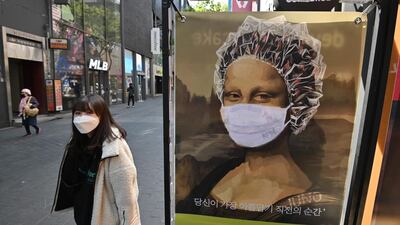
A woman wearing a face mask walks past an advertisement of a hair shop at a shopping district in Seoul. AFP -

Pacific Park's solar-powered Ferris wheel lights show a green "Earth" logo at sunset on Santa Monica Pier for Earth Day, in Santa Monica, California. AP -
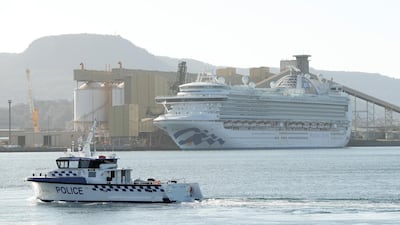
A water police boat is seen as the Ruby Princess cruise ship docks at Port Kembla in Wollongong, Australia. Getty -
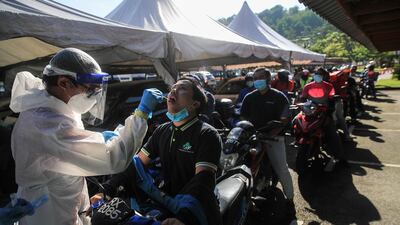
A health worker collects a sample from a man at a free coronavirus community screening service in Kuala Lumpur, Malaysia. EPA -
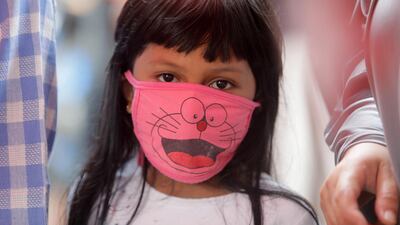
An Indonesian child wears a hand made protective mask at a temporary meat market, ahead of Ramadan in Banda Aceh, Indonesia. EPA -

A pedestrian is reflected in the window of a nail salon during a nationwide social distancing and stay-at-home order imposed due to coronavirus in Ho Chi Minh city, Vietnam. Bloomberg -
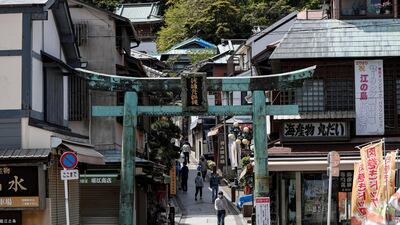
Visitors wearing protective face masks walk on a sightseeing spot on Enoshima Island after government asked citizens to be more diligent on social distancing under the state of emergency in Fujisawa, south of Tokyo, Japan. Reuters -
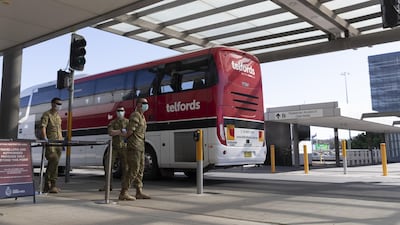
Army personnel watch as a charter bus that unloaded crew from the Ruby Princess Cruise ship departs Sydney Airport in Sydney, Australia. Getty -
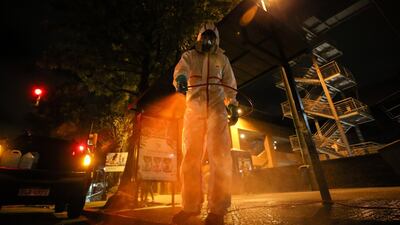
A municipality worker sprays disinfectant at a bus stop as a preventive measure against coronavirus in Montevideo, Uruguay. EPA -
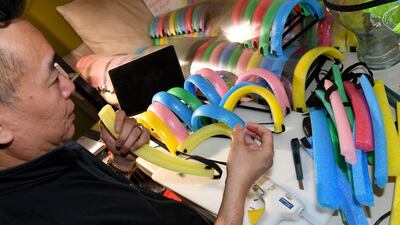
School of Nursing assistant professor Dr Rhigel Jay Tan, a licensed nurse practitioner in psychiatric mental health, makes custom-made face shields called "iCareFaceShields" at his home for health care workers amid the coronavirus pandemic in Las Vegas, Nevada. AFP -
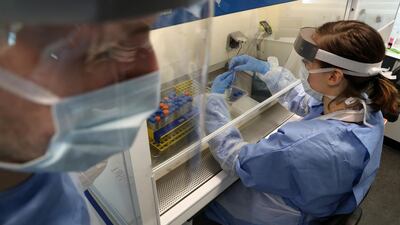
Technicians carry out a sample transfer during the opening of the new Covid-19 testing lab at Queen Elizabeth University Hospital in Glasgow, Scotland. Getty -
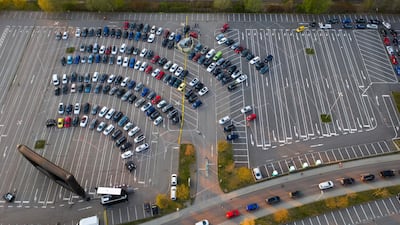
Visitors gather for a drive-in cinema event in Chemnitz, Germany. AP -

The Italian-operated cruise ship the Costa Atlantica is anchored at a port in Nagasaki, southern Japan. AP


Mr Guterres said governments must be “transparent, responsive and accountable,” and stressed that press freedom, civil society organisations, the private sector and “civic space” are essential.
The report said governments also need to take action to mitigate the worst impacts of Covid-19 on jobs, livelihoods, access to basic services and family life.
Mr Guterres said any emergency measures – including states of emergency – must be “legal, proportionate, necessary and non-discriminatory, have a specific focus and duration and take the least intrusive approach possible to protect public health.”
The report warned that “emergency powers may be needed but broad executive powers, swiftly granted with minimal oversight, carry risks.
“Heavy-handed security responses undermine the health response and can exacerbate existing threats to peace and security or create new ones.”
The report said the best response is proportionate to the immediate threat and protects human rights.
“The message is clear: People – and their rights – must be front and centre,” Mr Guterres said.

