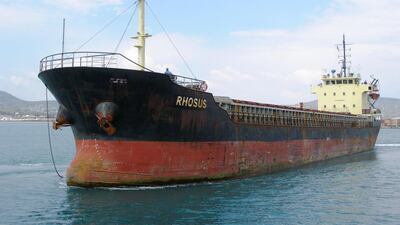

A wad of money was needed when going into the fenced Beirut port storage area that was destroyed on Tuesday by the explosion of ammonium nitrate, which was offloaded years ago from the Rhosus, a Russian-owned, Moldovan-flagged vessel.
Hangar 12, where the hazardous material was stored, was next to other structures where Customs kept commercial cargo and personal belongings of people who had shipped them to Lebanon.
Money would have to be handed to the different factions among the port’s bureaucracy if one was to retrieve their belongings.
If an intermediary company were used, its bill was itemised as charging for stamps, Customs duty and stevedores.
A fourth item, "formalities", signified bribes the clearing agent paid on the customer’s behalf.
Shipping data showed that the Rhosus stopped in Beirut because it broke down on its way from Georgia to Mozambique, and that it has been in waters off the Lebanese capital since 2014.
Two shippers in Beirut confirmed the dates and the route of the Rhosus.
-
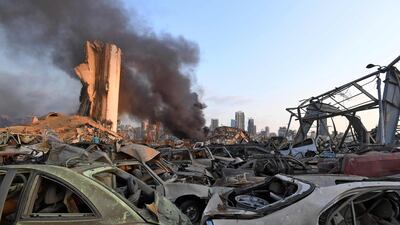
Damaged cars are pictured in front of billowing smoke behind the grain silos at the port of Beirut. AFP -

A drone picture shows smoke from the scene of an explosion at the seaport of Beirut. AP Photo -
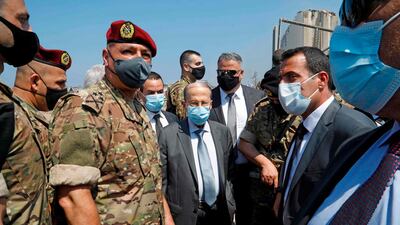
Lebanon's President Michel Aoun wears a protective face mask as he visits the scene of Tuesday's explosion in Beirut. AFP -
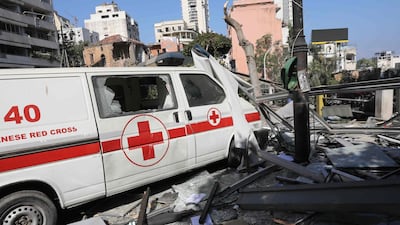
An emergency command vehicle of the Lebanese Red Cross is pictured in the aftermath of yesterday's blast. AFP -

A man inspects the damage of yesterday's blast. AFP -
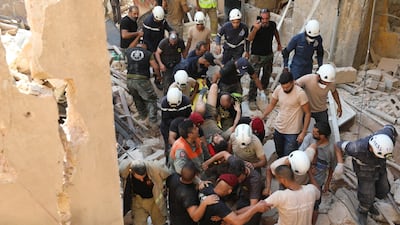
A survivor is taken out of the rubble after a massive explosion in Beirut. AP Photo -
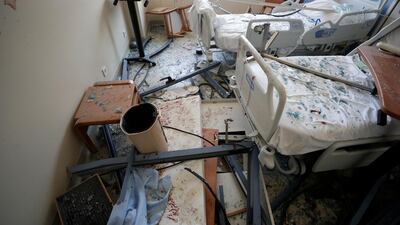
A damaged hospital is seen after a massive explosion in Beirut. AP Photo -
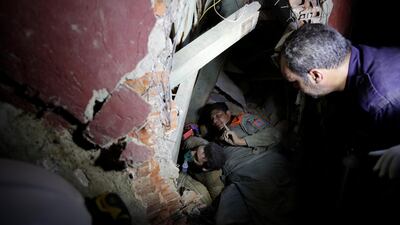
Lebanese soldiers search for survivors after a massive explosion in Beirut.AP Photo -
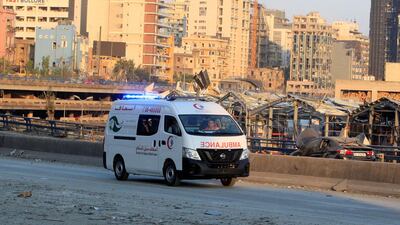
An ambulance drives near the site of Tuesday's blast in Beirut's port area. Reuters -
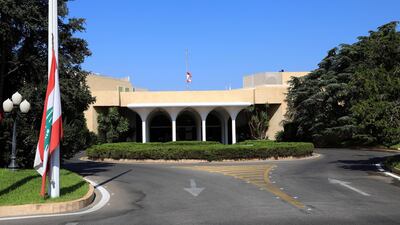
Lebanese national flags fly at half-mast outside the presidential palace in Baabda, following Tuesday's blast in Beirut's port area. Reuters -
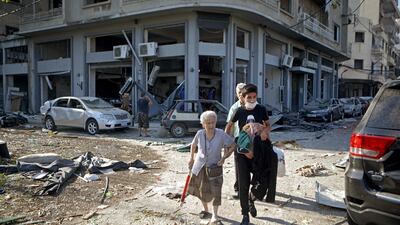
A woman is evacuated from the partially destroyed Beirut neighbourhood of Mar Mikhael. AFP -
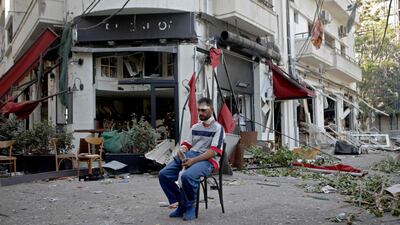
An injured man sits next to a restaurant in the trendy partially destroyed Beirut neighbourhood of Mar Mikhael. AFP -
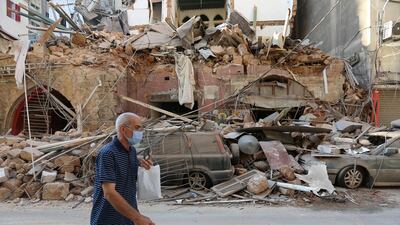
A man walks past damaged building and vehicles near the site of Tuesday's blast in Beirut's port area. Reuters -
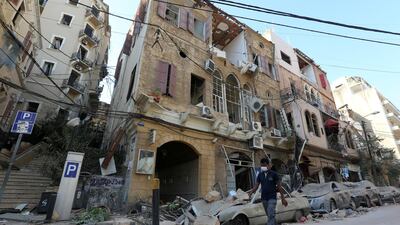
A man wearing a protective face mask walks past damaged buildings and vehicles near the site of Tuesday's blast in Beirut's port area. Reuters -
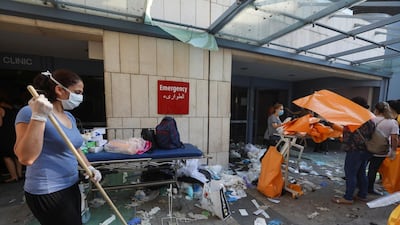
A woman sweeps at a damaged hospital following Tuesday's blast, in Beirut. Reuters -
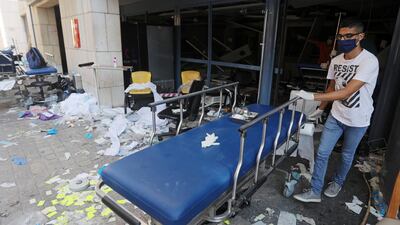
A man wearing a face mask moves a gurney at a damaged hospital following Tuesday's blast in Beirut. Reuters -
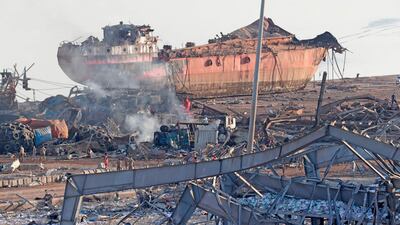
The wreckage of a ship is seen following yesterday's blast at the port of Lebanon's capital Beirut. AFP -
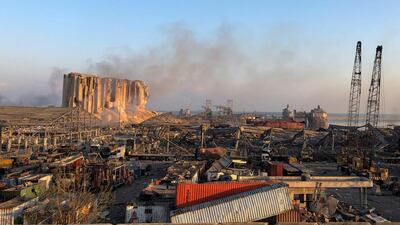
A view shows the aftermath at the site of Tuesday's blast in Beirut's port area. Reuters -

Lebanese soldiers and people gather outside American University of Beirut medical centre following the explosion in Beirut. Reuters -

An injured man sits outside American University of Beirut medical centre following an explosion in Beirut. Reuters -
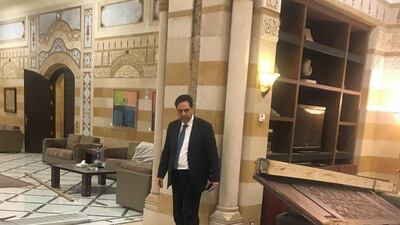
The explosion caused damage to Lebanon's PM Hassan Diab's office -
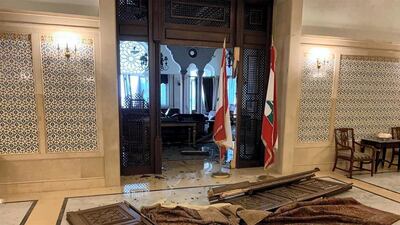
The damage at Lebanon's PM Hassan Diab's office following the blast. -

Pictures of the damage at Lebanon's PM Hassan Diab's office -
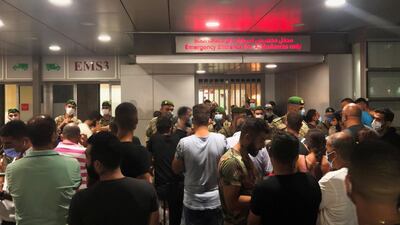
People gather outside American University of Beirut medical centre following the explosion in Beirut. Reuters -
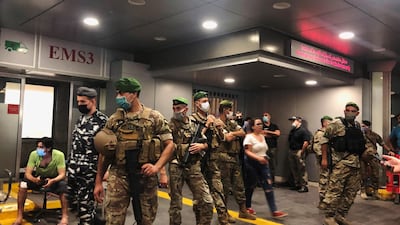
Lebanese soldiers stand outside American University of Beirut medical centre following the explosion in Beirut. Reuters -
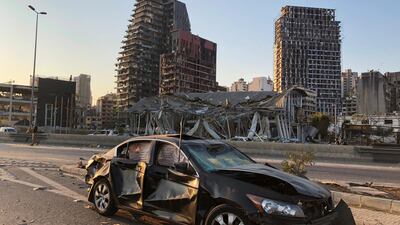
Damaged vehicle and buildings near the scene of Tuesday's blast in Beirut's port area. Reuters -
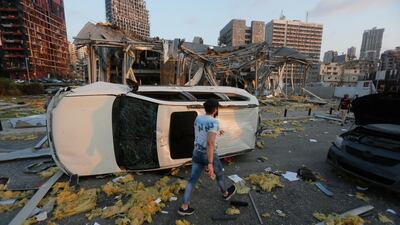
A man walks by an overturned car and destroyed buildings. Getty Images -
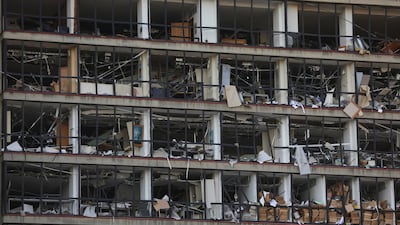
A view shows the damaged facade of a building following Tuesday's blast in Beirut's port area. Reuters -

A view shows the aftermath of yesterday's blast at the port of Beirut. AFP -
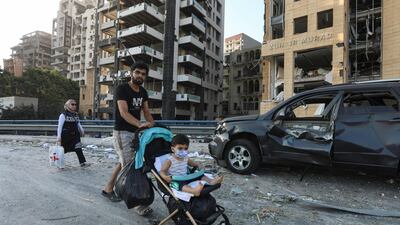
A man pushes a buggy with a child on Wednesday past a damaged vehicle near the scene of overnight blast in Beirut's port area. Reuters -
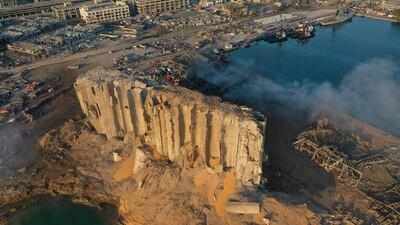
In this drone picture, the destroyed silo sits in rubble and debris. AP Photo -
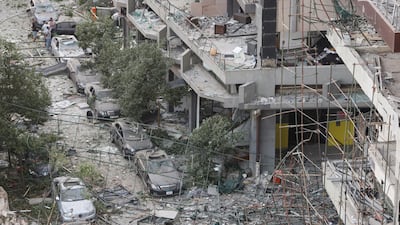
People inspect the damage near the scene of Tuesday's blast in Beirut's port area. Reuters -
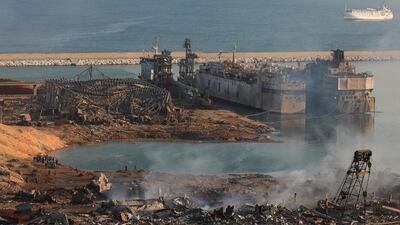
People inspect the scene of Tuesday's blast in Beirut's port area. Reuters -
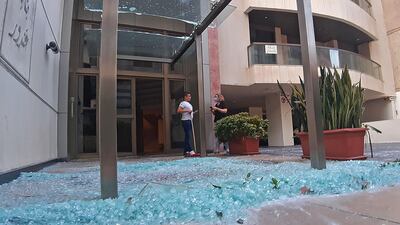
Shattered glass lies in front of a building following a blast in the Lebanese capital Beirut. AFP -

Lebanese army troops carry a wounded man evacuated from a ship at Beirut's port. AFP -

This picture shows damage at Beirut-Rafic Hariri International Airport. Courtesy Lebanese Plane Spotters / Facebook


The trail of the carnage its cargo caused, and the trading of accusations among Lebanese officials that followed, are hallmarks of the murky dealings that have engulfed trade in Lebanon since the civil war 45 years ago.
Lebanese officials say the Rhosus cargo of 2,750 tonnes was offloaded and sat in storage for years before igniting and devastating half of Beirut.
The ammonium nitrate arrived as cargo on the Rhosus in 2014, Bloomberg reported, citing two letters issued by the director general of Lebanese Customs.
For reasons that are unclear, dockworkers unloaded the chemical, which can be used to make fertilisers and explosives, and put it into storage.
After Tuesday's blast, every government department involved with the vessel mounted its own defence as to why it should not be implicated in the disaster, revealing more information about the course of events since the Rhosus left the Georgian port of Batumi on the Black Sea in in 2013.
The head of the Beirut port, Hassan Koraytem, told pro-government broadcaster OTV that the Customs department and state security had wanted the material to be exported or removed, but that “nothing happened”.
Mr Koraytem said a court had ordered the cargo to be offloaded from the Rhosus but he did not say why.
Lebanese law firm Baroudi & Associates said in 2015 that it was hired on behalf of "various creditors" who came forward with claims against the Rhosus.
The firm said in an article that two of its lawyers wrote about the rights of the crew that it acted on the instruction of these creditors and obtained three arrest orders against the vessel.
"Efforts to get in touch with the owners, charterers and cargo owners to obtain payment failed," the 2015 article on Ship Arrested, a newsletter on maritime legal issues, stated.
It said that, after inspection, the vessel was forbidden from sailing and shortly afterwards was abandoned by its owners, leading to various creditors coming forward with legal claims.
"Owing to the risks associated with retaining the ammonium nitrate on board the vessel, the port authorities discharged the cargo onto the port's warehouses," it said.
The National contacted the lawyers who wrote the article, but they did not reply. The Beirut landline for Baroudi & Associates was not operational.
The Serbian Times news site identified the owner as Russian businessman Igor Grechushkin, born in Khabarovsk.
A document leaked to Lebanese media showed that the Customs department made repeated requests to the judiciary, with the last being in 2017, for the cargo to be re-exported or to be sold to the Lebanese Explosives Company.
The company is in Al Koura in north Lebanon, and an official permit shows that it had previously imported ammonium nitrate, which is commonly used in Lebanon to blast rocks for construction.
The material is also a weapon of choice for militant groups across the world.
A large-scale Lebanese trader who owns a fleet of ships told The National that one potential player in the saga is missing among the trail of official documents and public pronouncements about the cargo of the Rhosus.
“Everyone has a share in the port. But nobody can move so much ammonium nitrate without getting the OK from Hezbollah,” he said.
“This is how the system works.”

