

If 25-year-old Pashtana Durrani thought running schools in Afghanistan was tough in 2020, three years later, her work has become almost impossible.
She nevertheless spends every waking hour hustling, constantly looking for new ways that the three girls' schools run by her charity, Learn Afghanistan, can evade detection.
In the chaotic days after the US withdrawal from Afghanistan in 2021 and the swift return to Taliban rule, Ms Durrani, who has been an outspoken critic of the militant group, was threatened and forced into hiding.
She later left the country to protect her family, and many of her colleagues and staff followed suit.
Despite assurances to the international community to the contrary, the Taliban have been rolling back advances in women's rights. Most girls are barred from attending secondary school and women are no longer allowed to teach, attend university or engage in many professions.
The UN said on Wednesday that Afghanistan is now the world's most repressive country for women and girls.
Watching from afar, Ms Durrani says each new restriction on women's rights has made her more determined to keep Learn Afghanistan open.
After agreeing that their work “was more important now than ever before”, she said staff at Learn Afghanistan regrouped and “discussed many options on how to continue safely and sustainably, drawing plans and scenarios”.
Community backing
-
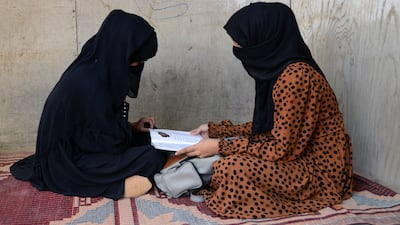
Schoolgirls Marwa Ayoubi (R) and Madina Mohammadi study at home in Kandahar, Afghanistan. The Taliban have ordered girls' secondary schools to shut only hours after they had reopened. All photos: AFP -
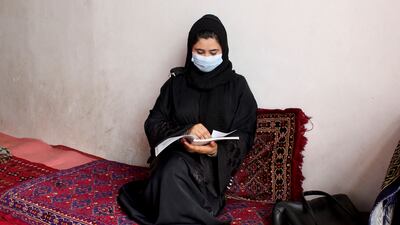
Raihana studies at home in Kunduz province. Education ministers offered no coherent explanation even as officials held a ceremony in the capital to mark the start of the academic year, and said it was a matter for the country's leadership. -

The Taliban insisted that pupils aged 12 to 19 would be segregated, even though most Afghan schools are already same-sex and operate according to Islamic principles. -

School girl Alina Nazari (R) holds a book after the Taliban ordered girls' secondary schools in Afghanistan to shut. -
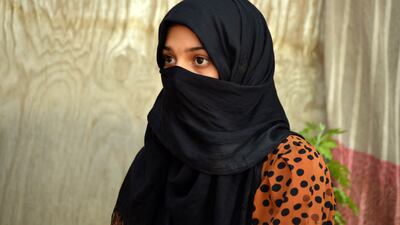
Marwa Ayoubi was sent home in Kandahar, while crestfallen girls at Zarghona High School in the capital Kabul tearfully packed up their belongings after teachers halted lessons. -
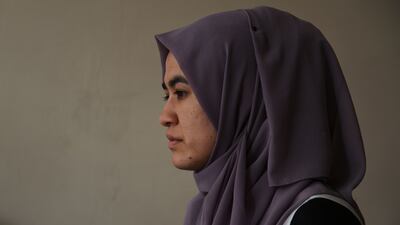
The latest education policy reversal by the hardline leaders sparked heartbreak and confusion. -

The U-turn came shortly after thousands of girls had resumed lessons for the first time since August, when the Taliban seized control imposed harsh restrictions on women. -
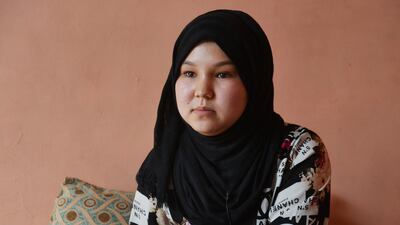
Schoolgirl Alina Nazari said she fears that the Taliban will shut down all formal education for girls, as they did in their first stint in power from 1996 to 2001. -

Nobel Prize laureate Malala Yousafzai, who survived a Pakistani Taliban assassination attempt when she was 15, tweeted: ‘They will keep finding excuses to stop girls from learning – because they are afraid of educated girls and empowered women.' -
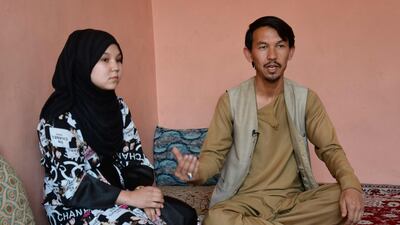
Mohammed Anwar Nazari and his daughter Alina give an interview. Even if schools do reopen fully, barriers to girls returning to education remain, with many families suspicious of the Taliban and reluctant to allow their daughters outside. -
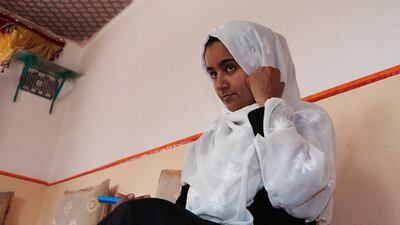
‘What will be our future?’ schoolgirl Qahera Mohammadi asks from her home in Panjshir province.


Within a month of the Taliban takeover, Learn Afghanistan — which was founded in 2018 — resumed operations, albeit underground.
“We were invited by communities we had previously worked with to resume some of the schools in their homes and offices,” Ms Durrani said.
“We didn’t have any money, initially, since all our accounts were blocked, but it was heartwarming to see how community elders extended support to help us get back on our feet. They valued the work we did with them.”
Communities are making huge sacrifices to support girls' education. Every penny counts in a nation in which the UN Development Programme estimates almost all people are now living in poverty.
Ms Durrani still faces challenges in paying her staff due to international sanctions and restrictions on the banking sector in Afghanistan. But the team finds unique ways of getting funds to those who need them through a network of traditional money transfer agents called hawalas or transfers to allies of the organisation.

Staff inside and outside Afghanistan teach classes for almost 400 female pupils online, and women and girls who would not otherwise be able to receive an education gather in discreet locations, set up with computers, internet access and generators.
“We persist because if we don't then we will be burnt and perish,” pupil Qamar Parsa said in a video shared by Ms Durrani.
“Even though they have limited us, put decrees against us, we continued. We are teaching ourselves that education should not be forgotten, humanity should not be forgotten.”
Her classmate Farida Mekzad added: “The only way to survive this, to defeat the enemy is with the power of the pen.”
Both pupils enrolled for courses with Learn Afghanistan following the announcement of the ban on girls' secondary schools in the hope of continuing their education.
“Even though it has been hard to leave the house every day, I am so happy for this opportunity to study and remain hopeful,” Farida said, urging other girls not to lose faith in the power of education.
Ms Durrani's pupils have diverse ambitions and many aspire for careers in Stem. Many are enrolled in courses on computer programming and similar fields of study that can help them be financially independent.
But both teachers and their ambitious pupils run the risk of arrest or kidnapping.
“We have to constantly change locations; we’ve moved our schools three times this past year because our location was leaked to the Taliban,” Ms Durrani said.
“We keep improvising as we go, because this is important.”
A legacy of learning

Ms Durrani’s introduction to education activism began at an early age, with her family's motto being: “You can go hungry, but not without a day of learning.”
Her parents and aunts operated girls’ schools in refugee camps in Pakistan, going door-to-door in attempt to convince parents to send their daughters to school.
“As a child, I believed that this was normal, that everyone’s father ran a school in their house and their aunt went around making families in the neighbourhood send their girls to school,” she said.
She was in for a big shock when she moved back to Afghanistan in 2013 at the age of 16 and realised that this was not the case in many families.
“On my very first night back, I learnt from my cousins that their whole district — with over four hundred families — doesn’t have a single school for girls. My immediate response was, why didn’t you open it up in your homes, like my father did in the camps?” she recalled.
But eventually, Ms Durrani came to realise that, apart from a few well-meaning if scattered efforts, women’s education was not a priority for local or even the national government.
“At one point, one of my cousins came to me and said, ‘I want to be just like you’; because I was educated, I had my laptop and travelled to Kabul for conferences, but most of all, I had a supportive father,” said Ms Durrani .
Before she left for one of these conferences, her cousin wrote her a note to take along with her. It contained her wish for the government to open a school for girls in her district so that they could continue their education.
The government did not respond to the message, but it got Ms Durrani on the path to ensure that girls in her district who wished to study had the option to do so — starting with her own cousin.
“I started tutoring her, I would download course materials for her to learn from, and videos of classes to help her study,” said Ms Durrani.
“She was so dedicated and hardworking and eventually we got her to move to Kandahar city to enrol in a public school.”

