
The Taliban beat women protesters and fired into the air as they violently dispersed a rare rally in Afghanistan's capital Kabul on Saturday, days before the first anniversary of the hardliners' return to power.
Since seizing power on August 15 last year, the extremist group have rolled back the marginal gains made by women during the two decades of US intervention in Afghanistan.
About 40 women chanting “Bread, work and freedom” marched in front of the education ministry building in Kabul, before Taliban members dispersed them by firing their guns into the air.
Some of the women who took refuge in nearby shops were chased and beaten with rifle butts.
The protesters carried a banner reading “August 15 is a black day” as they demanded the right to work and participate in politics.
“Justice, justice. We're fed up with ignorance,” chanted the protesters, many of whom were not wearing face veils.
Some journalists covering the protest — the first women's rally in months — were also beaten by the Taliban fighters.
Afghan women living under Taliban rule - in pictures
-
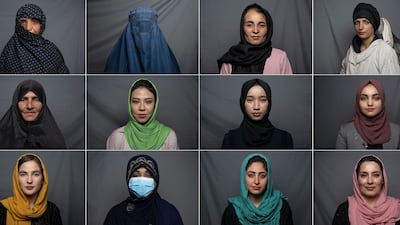
This combination of photos shows women posing for portraits in different cities in Afghanistan. Since their takeover two years ago, the Taliban have squeezed Afghan women out of public life, imposing suffocating restrictions on where they can work, how they can travel and what they can wear. All photos by AFP -
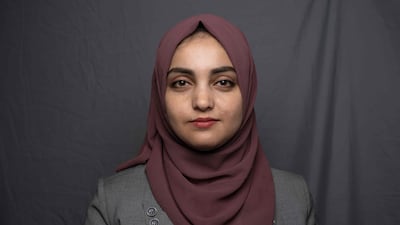
TOLOnews TV anchor Tahmina Usmani, 23, is one of a handful of female journalists who have been able to continue working in the sector. 'I was able to join TOLOnews and be the voice for women in Afghanistan, which makes me feel great,' she says. -
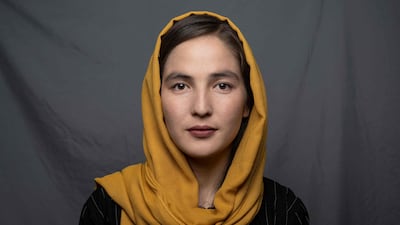
TV journalist and university student Farkhunda Muhibi, 21. Muhibi is one of a small number of female journalists who have been able to continue working under the Taliban regime. -
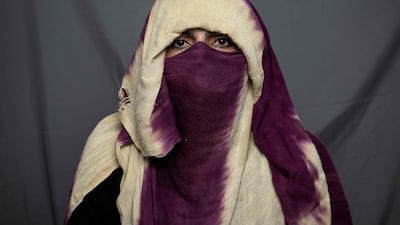
Baker Shapari, 40, poses for a portrait in Kandahar. 'During these hard times, it is my job that has made me happy,' she says. 'My husband is jobless, and staying at home. I am able to find food for my children.' -
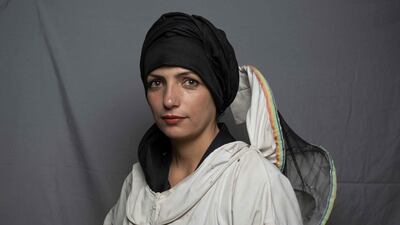
Businesswoman and beekeeper Ghuncha Gul Karimi, 35, poses for a portrait in Herat. Karimi expanded her beekeeping business to produce honey for sale after her husband left the country. 'I've taken up two extra jobs and bought a motorcycle to drive myself from the honey farm and back,' she says. 'I am determined to become the queen of honey bees.' -
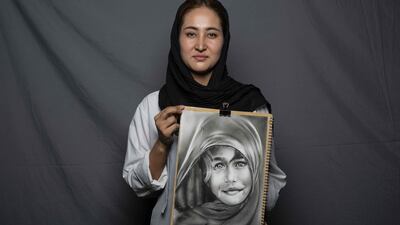
Artist and art teacher Manezha Sultani, 24, poses for a portrait in Herat. 'Before the Taliban took over, I had no fear - I used to attend exhibitions, go to events and see everything I desired. But when the takeover happened, I was afraid of how it would impact my job and my rights,' she says. 'I have not had any good experiences since the Taliban took over.' -
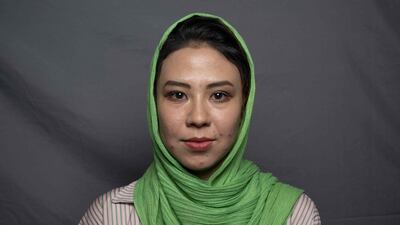
Mathematics and robotics teacher Sumaya Sultani, 27, poses for a portrait in Herat. 'Before the collapse, I participated in international technology events, and I used to work late nights on various projects and coach the Afghan girls’ robotics team. But after the Taliban takeover, everything we worked for and achieved turned to dust.' -
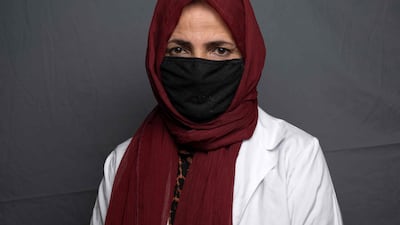
Doctor and mental health counsellor Mursal, 35, poses for a portrait at an undisclosed location in Afghanistan. Since their takeover a year ago, the Taliban have squeezed Afghan women out of public life, imposing suffocating restrictions on where they can work, how they can travel and what they can wear. -
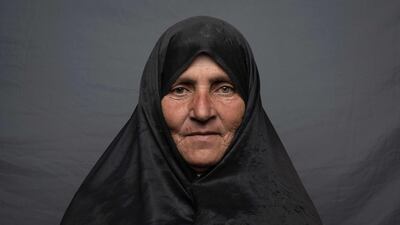
Silk weaver Maryam Osmani, 50, poses for a portrait in Herat. -
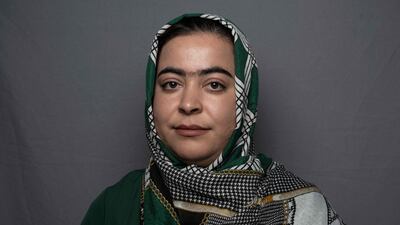
Afghanistan Women’s Chamber of Commerce and Industry director Nargis Hashimi, 27, poses for a portrait in Herat. -
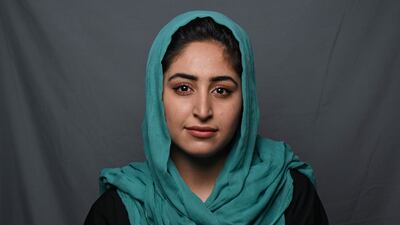
Radio journalist and artist Rozina Sherzad, 19, poses for a portrait in Kandahar. -
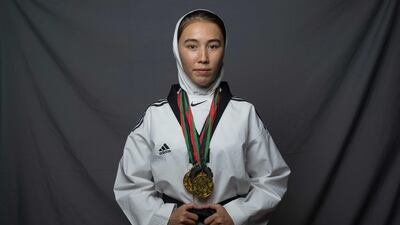
Taekwondo athlete Zarghunna Noori, 23, poses for a portrait in Herat. -
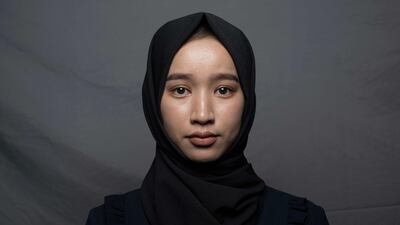
Student Mahtab Jamshidi, 17, poses for a portrait in Herat. -
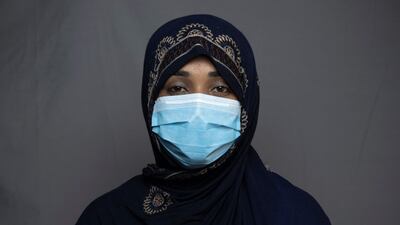
Seamstress Rozia Khpalwak, 23, poses for a portrait in Kandahar. -
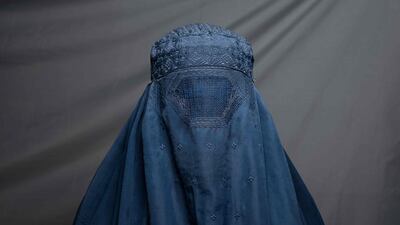
Shampoo factory worker Robina, 40, poses for a portrait in Kandahar. There is hardly a woman in the country who has not lost a male relative in successive wars, while many of their husbands, fathers, sons and brothers have also lost their jobs or seen their income shattered as a result of a deepening economic crisis. -
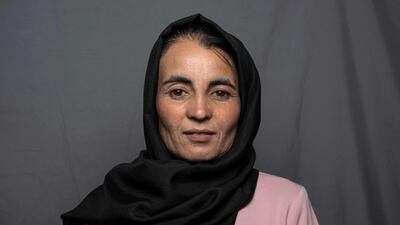
The deputy director of the women’s bazaar in Herat, Freshta Ishaqzai, 32. -
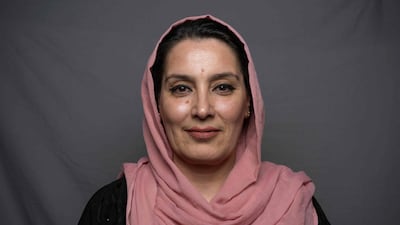
Shaima Wafa, 40, a cultural affairs reporter for an Iranian media outlet, poses for a portrait in Herat. -
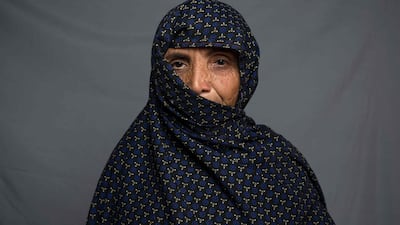
Knitter and garment maker Gul Guti, 55, poses for a portrait in Kandahar.
After seizing power, the Taliban had promised a softer version of the harsh interpretation of Islamist rule that characterised their first stint in power from 1996 to 2001.
But many restrictions have already been reimposed.
Tens of thousands of girls have been shut out of secondary schools, while women have been barred from returning to many government jobs.
Women have also been banned from travelling alone on long trips, and can only visit public gardens and parks in the capital on days separate from men.
In May, the country's leader and chief of the Taliban, Hibatullah Akhundzada, ordered women to fully cover themselves in public, including their faces — ideally with an all-encompassing burqa.
Some Afghan women tried to stand firm against the curbs, holding small protests.
But the Taliban soon rounded up the protest leaders, holding them incommunicado while denying they had been detained.

The%20Little%20Mermaid%20
The specs
Engine: 0.8-litre four cylinder
Power: 70bhp
Torque: 66Nm
Transmission: four-speed manual
Price: $1,075 new in 1967, now valued at $40,000
On sale: Models from 1966 to 1970
The specs: 2018 Renault Megane
Price, base / as tested Dh52,900 / Dh59,200
Engine 1.6L in-line four-cylinder
Transmission Continuously variable transmission
Power 115hp @ 5,500rpm
Torque 156Nm @ 4,000rpm
Fuel economy, combined 6.6L / 100km
KILLING OF QASSEM SULEIMANI
National Editorial: Suleimani has been killed, now we must de-escalate
Mina Al Oraibi: Air strike casts a long shadow over the decade ahead
Jack Moore: Why the assassination is such a monumental gamble
Matthew Levitt: Iran retains its ability to launch terror attacks
Hussein Ibish: Trump's order on solid constitutional ground
Simon Waldman: Cautious Israel keeping a low profile
Rashmee Roshan Lall: Sound of silence in South Asia
Fanar Haddad: The Iranian response will be gradual
Richard Olson: Why Afghanistan will be very wary
Sholto Byrnes: Multilateralism needs a reboot
While you're here
The BIO:
He became the first Emirati to climb Mount Everest in 2011, from the south section in Nepal
He ascended Mount Everest the next year from the more treacherous north Tibetan side
By 2015, he had completed the Explorers Grand Slam
Last year, he conquered K2, the world’s second-highest mountain located on the Pakistan-Chinese border
He carries dried camel meat, dried dates and a wheat mixture for the final summit push
His new goal is to climb 14 peaks that are more than 8,000 metres above sea level
Russia's Muslim Heartlands
Dominic Rubin, Oxford
Who was Alfred Nobel?
The Nobel Prize was created by wealthy Swedish chemist and entrepreneur Alfred Nobel.
- In his will he dictated that the bulk of his estate should be used to fund "prizes to those who, during the preceding year, have conferred the greatest benefit to humankind".
- Nobel is best known as the inventor of dynamite, but also wrote poetry and drama and could speak Russian, French, English and German by the age of 17. The five original prize categories reflect the interests closest to his heart.
- Nobel died in 1896 but it took until 1901, following a legal battle over his will, before the first prizes were awarded.
WHAT%20IS%20THE%20LICENSING%20PROCESS%20FOR%20VARA%3F
While you're here
Andrew Wilks: The violent legacy of a group that France plans to ban
Damien McElroy: Biden must not fall for Erdogan's promised reforms
David Lepeska: 16th-century pirates inspire Erdogan's foreign policy
THE%C2%A0SPECS
Why it pays to compare
A comparison of sending Dh20,000 from the UAE using two different routes at the same time - the first direct from a UAE bank to a bank in Germany, and the second from the same UAE bank via an online platform to Germany - found key differences in cost and speed. The transfers were both initiated on January 30.
Route 1: bank transfer
The UAE bank charged Dh152.25 for the Dh20,000 transfer. On top of that, their exchange rate margin added a difference of around Dh415, compared with the mid-market rate.
Total cost: Dh567.25 - around 2.9 per cent of the total amount
Total received: €4,670.30
Route 2: online platform
The UAE bank’s charge for sending Dh20,000 to a UK dirham-denominated account was Dh2.10. The exchange rate margin cost was Dh60, plus a Dh12 fee.
Total cost: Dh74.10, around 0.4 per cent of the transaction
Total received: €4,756
The UAE bank transfer was far quicker – around two to three working days, while the online platform took around four to five days, but was considerably cheaper. In the online platform transfer, the funds were also exposed to currency risk during the period it took for them to arrive.
Mercer, the investment consulting arm of US services company Marsh & McLennan, expects its wealth division to at least double its assets under management (AUM) in the Middle East as wealth in the region continues to grow despite economic headwinds, a company official said.
Mercer Wealth, which globally has $160 billion in AUM, plans to boost its AUM in the region to $2-$3bn in the next 2-3 years from the present $1bn, said Yasir AbuShaban, a Dubai-based principal with Mercer Wealth.
“Within the next two to three years, we are looking at reaching $2 to $3 billion as a conservative estimate and we do see an opportunity to do so,” said Mr AbuShaban.
Mercer does not directly make investments, but allocates clients’ money they have discretion to, to professional asset managers. They also provide advice to clients.
“We have buying power. We can negotiate on their (client’s) behalf with asset managers to provide them lower fees than they otherwise would have to get on their own,” he added.
Mercer Wealth’s clients include sovereign wealth funds, family offices, and insurance companies among others.
From its office in Dubai, Mercer also looks after Africa, India and Turkey, where they also see opportunity for growth.
Wealth creation in Middle East and Africa (MEA) grew 8.5 per cent to $8.1 trillion last year from $7.5tn in 2015, higher than last year’s global average of 6 per cent and the second-highest growth in a region after Asia-Pacific which grew 9.9 per cent, according to consultancy Boston Consulting Group (BCG). In the region, where wealth grew just 1.9 per cent in 2015 compared with 2014, a pickup in oil prices has helped in wealth generation.
BCG is forecasting MEA wealth will rise to $12tn by 2021, growing at an annual average of 8 per cent.
Drivers of wealth generation in the region will be split evenly between new wealth creation and growth of performance of existing assets, according to BCG.
Another general trend in the region is clients’ looking for a comprehensive approach to investing, according to Mr AbuShaban.
“Institutional investors or some of the families are seeing a slowdown in the available capital they have to invest and in that sense they are looking at optimizing the way they manage their portfolios and making sure they are not investing haphazardly and different parts of their investment are working together,” said Mr AbuShaban.
Some clients also have a higher appetite for risk, given the low interest-rate environment that does not provide enough yield for some institutional investors. These clients are keen to invest in illiquid assets, such as private equity and infrastructure.
“What we have seen is a desire for higher returns in what has been a low-return environment specifically in various fixed income or bonds,” he said.
“In this environment, we have seen a de facto increase in the risk that clients are taking in things like illiquid investments, private equity investments, infrastructure and private debt, those kind of investments were higher illiquidity results in incrementally higher returns.”
The Abu Dhabi Investment Authority, one of the largest sovereign wealth funds, said in its 2016 report that has gradually increased its exposure in direct private equity and private credit transactions, mainly in Asian markets and especially in China and India. The authority’s private equity department focused on structured equities owing to “their defensive characteristics.”
Mina Al-Oraibi: Iraq is in a fight to show its people who is really in charge
Khaled Yacoub Oweis: Iraq PM goes from shy writer to the political peak
The National Editorial: Iran's 'failed model' should be discontinued
The cost of Covid testing around the world
Egypt
Dh514 for citizens; Dh865 for tourists
Information can be found through VFS Global.
Jordan
Dh212
Centres include the Speciality Hospital, which now offers drive-through testing.
Cambodia
Dh478
Travel tests are managed by the Ministry of Health and National Institute of Public Health.
Zanzibar
AED 295
Zanzibar Public Health Emergency Operations Centre, located within the Lumumba Secondary School compound.
Abu Dhabi
Dh85
Abu Dhabi’s Seha has test centres throughout the UAE.
UK
From Dh400
Heathrow Airport now offers drive through and clinic-based testing, starting from Dh400 and up to Dh500 for the PCR test.
Avatar: Fire and Ash
Director: James Cameron
Starring: Sam Worthington, Sigourney Weaver, Zoe Saldana
Rating: 4.5/5
The more serious side of specialty coffee
While the taste of beans and freshness of roast is paramount to the specialty coffee scene, so is sustainability and workers’ rights.
The bulk of genuine specialty coffee companies aim to improve on these elements in every stage of production via direct relationships with farmers. For instance, Mokha 1450 on Al Wasl Road strives to work predominantly with women-owned and -operated coffee organisations, including female farmers in the Sabree mountains of Yemen.
Because, as the boutique’s owner, Garfield Kerr, points out: “women represent over 90 per cent of the coffee value chain, but are woefully underrepresented in less than 10 per cent of ownership and management throughout the global coffee industry.”
One of the UAE’s largest suppliers of green (meaning not-yet-roasted) beans, Raw Coffee, is a founding member of the Partnership of Gender Equity, which aims to empower female coffee farmers and harvesters.
Also, globally, many companies have found the perfect way to recycle old coffee grounds: they create the perfect fertile soil in which to grow mushrooms.
Juliot Vinolia’s checklist for adopting alternate-day fasting
- Don’t do it more than once in three days
- Don’t go under 700 calories on fasting days
- Ensure there is sufficient water intake, as the body can go in dehydration mode
- Ensure there is enough roughage (fibre) in the food on fasting days as well
- Do not binge on processed or fatty foods on non-fasting days
- Complement fasting with plant-based foods, fruits, vegetables, seafood. Cut out processed meats and processed carbohydrates
- Manage your sleep
- People with existing gastric or mental health issues should avoid fasting
- Do not fast for prolonged periods without supervision by a qualified expert

