
Anti-coup protesters in Myanmar staged a “silent strike” on Friday, closing businesses and emptying the streets of cities and towns across the country, in a show of opposition to military rule on international Human Rights Day.
The streets in the centre of Yangon, Myanmar's commercial hub, were deserted, with no street vendors and little traffic.
The famous Shwedagon pagoda, a Buddhist site usually bustling with visitors and pilgrims, was also quiet.
“Restaurants, shops, and the main market are all closed,” a resident of second city Mandalay told AFP.
“There have been no street vendors since this morning, no early morning walkers.
-
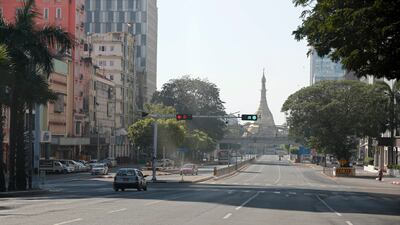
An almost-deserted street in Yangon, Myanmar's largest city. Activists had called on the public to take part in a silent strike on Friday. EPA -
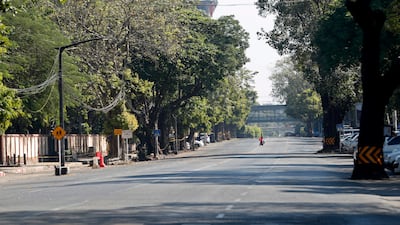
A woman crosses an empty street in downtown Yangon. For the silent strike, members of the public stayed at home and businesses closed from 10am to 4pm. EPA -

A church at the top of a deserted Yangon street. The silent strike is a protest against military rule, following a coup in February. EPA -
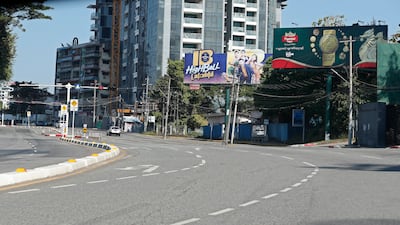
A taxi travels along an empty street in downtown Yangon. The military overthrew leader Aung San Suu Kyi and her government on February 1, triggering protests. EPA -

Military vehicles parked in downtown Yangon. On Monday, Ms Suu Kyi was sentenced to four years in prison – subsequently reduced to two years – after being convicted of the first of many charges she faces. EPA -
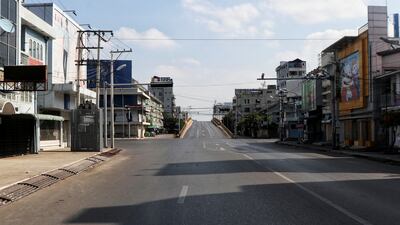
An almost empty road in Mandalay, central Myanmar. Social media posts indicated that the silent strike took place in a number of towns and cities. Reuters -
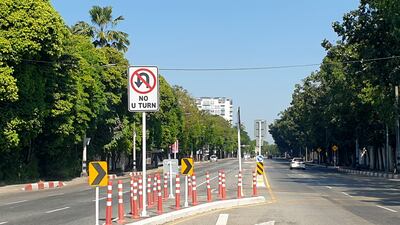
A car drives along an empty road in Yangon. On Sunday, five people were killed when security forces drove a car into an anti-coup protest in the city. EPA -
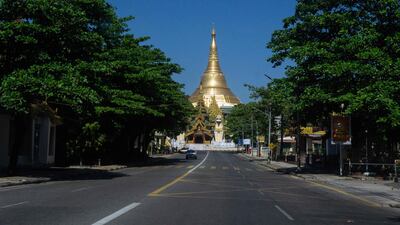
An empty street leading to the Shwedagon Pagoda in Yangon, during the silent strike. AFP -
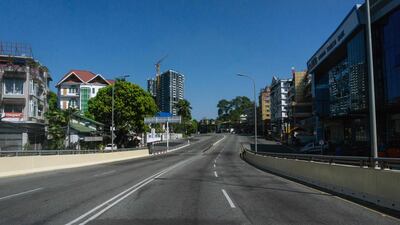
A deserted street in Yangon. Protests against the country's military are continuing despite the deaths of more than 1,300 people since the coup. AFP -
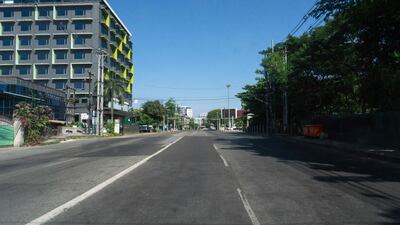
An empty street in Yangon. Myanmar's military has said it staged the coup because a November election won by Ms Suu Kyi's party was rigged. The country's election commission dismissed the claim. AFP -
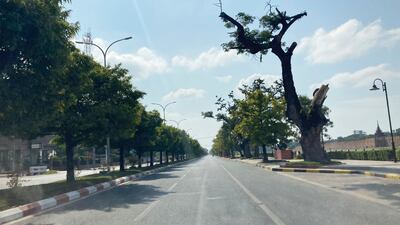
An empty street in Mandalay. The silent strike coincided with International Human Rights Day. AP -
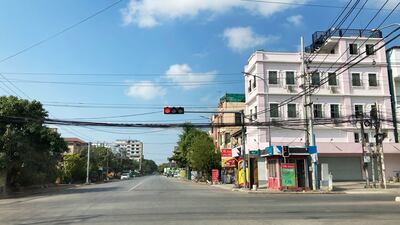
An deserted street in Mandalay. AP -
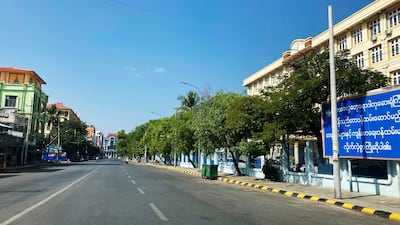
An empty street in Mandalay. A student activist from the General Strikes Collaboration Body protest group said participation in the silent strike had been widespread. AP


Myanmar was plunged into crisis when the military overthrew leader Aung San Suu Kyi and her government on February 1, triggering daily protests in towns and cities and fighting between the military and ethnic minority insurgents. More than 1,300 people have been killed by security forces, according to a local monitoring group.
Photos published by Myanmar media showed deserted streets and markets in towns across the country, including in the south-eastern city of Mawlamyine and in towns across the northern Sagaing region, where protesters in the city of Shwebo wore black and marched in silence.
“We need to send a message to the world about Myanmar's terrible human rights violations,” protest leader Khin Sandar said.
“Silence is the loudest shout. We want our rights back. We want revolution. We express sadness for our fallen heroes,” she said.
The US embassy in Yangon advised its citizens to stay off the streets on Friday, citing a heightened risk of violence by security forces against any gatherings or protests.
Mass demonstrations that rocked Myanmar's cities and towns immediately after the coup were met by a brutal and indiscriminate crackdown by the military.
Those still taking to the streets to protest now do so in smaller flash mobs lasting just minutes in order to avoid arrest.
Myanmar soldiers rammed a car into one such rally in Yangon last Sunday, killing five people, according to local media.
The junta said only three protesters were injured.
Ms Suu Kyi, 76, is facing various charges and was sentenced to four years in prison on Monday on the first of them — incitement and breaching coronavirus regulations — drawing international condemnation of what critics described as a “sham trial".
The junta chief later reduced her sentence by two years on “grounds of humanity” but the charges she faces could see her jailed for many years.
The junta also issued a denial on Friday of reports that troops were involved in a widely reported massacre in the country’s north-west region in which soldiers allegedly rounded up and killed 11 civilians whose charred bodies were later discovered by fellow villagers.
A report in the state-run Global New Light of Myanmar newspaper accused “the nation-destroying media” of spreading a video that it said misrepresented the massacre as having been carried out by security forces.
“The initial on-ground investigation revealed that such a video file was not (at all) related to undertakings of the Tatmadaw and that it was a conspiracy to tarnish the image of the Tatmadaw,” the report said, using the formal name for the country’s military. It gave no further details about the killings.
“The video has been immediately and widely circulated on social media because of a conspiracy by local and international connections,” the report said.
Photos and video of smouldering corpses in Done Taw village in Sagaing region circulated widely, sparking outrage. They were said to be have been taken shortly after the men were killed and their bodies set on fire.
Independent media in Myanmar, generally forced to operate underground due to government restrictions and intimidation, issued accounts of the killings based on interviews with witnesses and residents of the area. Their reports said it was believed to have been in retaliation for an attack on government forces by members of a local unit of the People’s Defence Force, a lightly armed militia that confronts security forces.

